Showing posts with label eric beetner. Show all posts

Thursday, March 6, 2025

An Interview With Eric Beetner, Author of Real Bad, Real Soon

 Among the joys of being a writer is getting to know people like Eric Beetner. As nice a person as I know, Eric is, in addition to being a gifted author, a musician, an artist, and a telented video editor with seven Emmy nominations to his credit.

It’s been way too long since he’s been here, so the occasion of hois newest book, Real Bad, Real Soon, the sequel to last year’s outstanding The Last Few Miles of Road.

One Bite at a Time: Your books read as though theyre passing directly into the readersmind with little or no authorial intrusion. As a writer myself, I know thats a lot harder todo than it might sound. How do you manage it?

Eric Beetner: As much as I love a well-crafted sentence that makes you pause and marvel over the word choice, the simile, the metaphor I’d have never thought of – they also risk taking a reader out of the story. The scenario I just described means I’ve stopped reading and am now thinking of the author. I don’t want people to think about me at all when they read my books. I should be invisible.

In a way, I think my day job as a TV/Film editor may influence that. My craft, when done right, is invisible to the viewer. You should never come out of a movie and think, “Man, that was so well cut.” If you notice it, then it’s not really well cut except in instances of music montage or specifically designed editorial moments, but even those are there as showpieces and outliers when it comes to telling the story. You have your moment (think of the many music montages in Goodfella, let’s say) then the song fades, and you go back to being invisible.

 approach writing the same way. My favorite books to read are ones where the story moves along as if by an unseen hand. There is craft in that. It’s not dumbing down language so the reader doesn’t have to “think” about it. Rather, it’s being aware that language is there to be understood easily and in most cases, simplicity is best to communicate your story.


OBAAT: You always have a unique take on hit men. First there were Lars and Shaine inthe Devil books. Now its Carter McCoy, Breanna, and a third person I wont namebecause it will spoil the ending of The Last Few Miles Of Road. Im not asking youwhere you get your ideas – well, sort of, maybe – but what inspired these twists on agenre that has been done to death?

EB: If I’m starting to write a crime novel I assume going in there will be death, so I think how can I make it something you might not have seen before? I like exploring the consequences of violence. I don’t ever want to take it lightly. I want there to be a cost to any death on the page. If I’m thinking in those terms, then the characters have to adjust and they sort of automatically get this extra layer on top you don’t get if someone is just a cold-blooded killer.

If you look at the best books and films where there is a cypher of a person whose only job is to be the best killer out there with zero emotion, then the true center of the story is usually someone else who the audience can connect with because there’s no empathizing with an emotionless killing machine.

OBAAT: This is mostly for the fledgling writers out there, but how has your experienceas an author differed from what you expected?

EB: You are catching me on a day where my only answer is that is has been SO MUCH HARDER than I wanted it to be. I’ve been kicked in the crotch by this business more times than I can count and I often wonder why I persist. I could run down the list of all the indignities and bad breaks I’ve gotten, but we don’t have the space and nobody wants to hear me complain.

When I started publishing in 2009, I had a Freshman class of other writers who I knew and was close with and others who I was aware of and have followed their careers. I’d say easily 75% of them have fallen away. Cancelled contracts, dropped by agents, lost the fire – whatever the cause, I’m still hanging around where so many have quit. Others of the peer group are still going because they’ve achieved a measure of success which is great to see.

I’m sure I’ve made some poor choices, trusted some wrong people, which has contributed to my frustration and my lack of sales. But every time I think of writing my big send-off letter on my way out the door and detailing the crushing lows of what I’ve endured, I’m reminded of how many kind people I’ve met, how many hands up, favors, kindnesses small and large I’ve been on the receiving end of over my time and I realize it’s not at all bad. Not in the least.

So yeah, I’ve never been a best seller. Can’t seem to make a foreign sales deal, never had a movie made. I’ve had MULTIPLE publishers go out of business while publishing my stuff. Had books I delivered in full end up never coming out. Had to pivot and adjust and re-think everything at every turn. But what makes it worth it are the friends I’ve made. Many are the same names on my shelf who I love to read year after year. And the experiences I’ve had, even in the relatively small-time world of my publishing career.

It is NOT for the weak or the thin skinned. It’s a brutal, heartbreaking, commerce-driven business that will chew you up and spit you out. But if you need to tell stories, if you love other book people, if you want to meet your heroes up close and see how down-to-earth they really are, then come on in. Even if you only last a short time, once you write and publish a book, it’s something nobody can take away from you and something relatively few people actually do (though on most days it feels like everyone and their mother has written a book)

OBAAT: When we chatted in 2017, you said, I’m always fighting my instinct to write acharacter who is fifty as the olderguy.” Carter McCoy is well past fifty, so you clearlygot over it. What changed in your outlook, and not just that you got older. A lot of writersget older and never get past that hurdle.

EB: I like writing characters with a history and some life experience. For Carter, I needed someone with nothing to lose. Literally. You can’t take his life from him because he’s only got weeks, maybe months to live. I could have given a young guy his disease, but I also liked the idea of a man who has reached his 70s and lived a good life and now has to struggle with himself to see if he can become someone else, and if killing someone who he thinks deserves it will fundamentally change who he is. These were all interesting ideas to me that carried more weight when he had a few more years in him. Everyone changes in their 20s in a thousand different ways. Far fewer people reinvent themselves in their 70s.

But hey, I’m smart enough to give him a younger person to interact with and readers to react to. The Carter McCoy books aren’t written for a geriatric crowd, even as I quickly approach that stage myself.

OBAAT: When you were here in 2015 I asked, If you could have written any book of thepast hundred years, what would it be, and what is it about that book you admire most?”Your reply: Ill say Wild at Heart. Im a huge Barry Gifford fan and this is ground zero formost people on his work and the start of his most famous creation, the Sailor and Lulabooks.”

Its been ten years. Would your answer be the same?

EB: I’m not sure. Maybe the cynical answer would be to pick something that has sold much better. I honestly think that the satisfaction for me lies in the fact that I have written books and created now a body of work of which I am enormously proud. I’d hate to think of writing someone else’s book. That’s their story to tell just as I think my books could only have been written by me. When I think about quitting or the inevitable day when I’ll be done by choice or by circumstance, I know that I did what I set out to do creatively. Commercially, there are many goals still left to attain. I have ambitions and goals both big and small. But I can rest easy knowing I have created more in the fiction world than I ever thought possible. I’ve told stories that are different and while I know I’ve recycled themes that are interesting to me, I’ve written mostly vastly different books. I’ve taken chances, experimented, stretched beyond my comfort zone. I have books I’d put up against most of my favorite authors and can think, “Yeah, that belongs on the same shelf.”

It’s gratifying to think that and it took a while, but I’m at a sort of peace with what I’ve done for myself, even if I haven’t cracked a wide readership. Knowing I connected at all with even a small audience is amazing and beyond my expectations when I began.

OBAAT: You are a master of the short series, two or three books. Have you ever been tempted to go back and revisit an old series, say, for instance, Lars and Shaine, or the McGraws from the Rumrunners books?

EB: Three seems right to me. I don’t know that I could write a ten- or twenty-book series. Hats off to those who do. It’s a challenge.

When Wolfpack picked up the Rumrunners books there were only two. A trilogy seems better, especially in a book bundle the way they are packaged now, so I wrote a third book many years after the last stab at that series. It’s called Sideswipe and it’s only in that ebook bundle and because of that it may be my least read novel, but I still like it.

Going back after so long was easier than I expected.

I co-wrote a trilogy with Frank Zafiro, The ‘List’ Series (The Backlist, The Short List, The Getaway List) and he floated the idea that we revisit that one. I hesitated, then he suggested two novellas we could pair into one volume and that sparked an idea (because the end of Book Three felt fairly final). So I did write that and Frank is going to write his half when he has time in his very busy writing schedule. That’ll technically be four books in that series, which will make it the longest I’ve done.

Lars and Shaine for sure is done. I can’t see another story with them. The McGraws as well. After Carter I may be done with series entirely, even trilogies. But I know myself enough to know that if an idea comes or if someone wants more books with characters I created in any of the unsold books I’ve written, then I doubt I’d say no. If someone challenged me (and gave me contracts) for a ten-book series, I’d take the challenge and try to push myself because that’s just what I do, ill-advised or not.

Monday, July 3, 2017

June's Best Reads

This is the summer where I decide whether to fish or cut bait on the Western I’ve been toying with for several years now. My reading list reflects that, and likely will for the next couple of months. It’s okay. There’s no dearth of great stuff to read in this area.

Deadwood: Stories of the Black Hills, David Milch. This is the inside story book written to accompany the HBO series. In it Milch details how and why he made many of the creative decisions that made the show what it was, some of his research, and includes sections by various actors about how they played their roles and how the characters grew as the show moved on. A fascinating ‘inside baseball” look at what may have been TV’s most fascinating series, though with a melancholy ending: the closing article was written with the full expectation that the series would conclude with two two-hour movies, which we now know never happened.

Six Guns at Sundown, Eric Beetner. It’s a good thing Beetner is such a nice guy and so generous in his aid to other writers because he’s so good and so prolific it would be easy to hate him otherwise. Even so, I may give it a try. Not content to write some of the best and most concise crime fiction around, he branched out into Westerns and nailed it. All of the things one loves about his crime stories are here, including the cinematic textures that lead the reader to visual a movie scene while reading.

True Grit, Charles Portis. A re-read, and well worth it. As good as everyone who loves it says it is, a book that will survive endless readings. Portis was a treasure and should be better remembered for his other works (which include Masters of Atlantis and Dog of the South) but it’s no crime that True Grit holds the primary position. The only shame is that so many read this one and stop there.
                                                                                                     

Dodge City: Wyatt Earp, Bat Masterson and the Wickedest Town in the American West, Tom Clavin. I stumbled onto this at a book event and it followed me home. Lucky me. Meticulously researched and written with a dry and appropriate wit, Dodge City captures not just the flavor of the town but gives a good, broad look at the origins of law enforcement on the American frontier circa 1870 – 1890 or so, including why there was a need for it. Highly recommended.

Friday, April 28, 2017

A Conversation With Eric Beetner

Those who say perpetual motion is impossible haven’t met Eric Beetner. I don’t know anyone else who maintains his pace. I don’t know two people who combined can match his pace on Eric’s day off. To give a brief idea of his resume, his books include Rumrunners and its sequel Leadfoot, The Devil Doesn't Want Me, When The Devil Comes To Call and Book 3 in the trilogy, The Devil At Your Door (released last week), Dig Two Graves, White Hot Pistol, The Year I Died Seven Times, Stripper Pole At The End Of The World, and the story collection, A Bouquet Of Bullets.

He co-authored The Backlist and The Short List, both with Frank Zafiro, and, with JB Kohl, the novels One Too Many Blows to The Head, Borrowed Trouble, and Over Their Heads. He’s also penned two novellas in the popular Fightcard series, Split Decision and A Mouth Full of Blood, and two novellas in The Lawyer series of Westerns, Blood Moon and Six Guns at Sundown.

(Pause here to give the reader a chance to catch her breath.)

He co-produces, edits, and hosts the highly-acclaimed podcast Writer Types with S.W. Lauden and has designed over ninety book covers, three of which I am proud to call my own.

Eric has toured as a musician, painted, written screenplays, acted in short films, been to China twice, fished in the Mississippi, met Barry Manilow, and directed films and music videos. His name has been on television over a hundred times, and he owns a real human skull.

He lives in Los Angeles where he co-hosts the Noir At The Bar reading series in his copious free time.

In spite of all that, he still found time to shoot the shit with me. As you might expect, he started:


Eric Beetner: Your Penns River series is ongoing and I'm just wrapping up a trilogy, which
felt like the right amount of story for those characters. Did you have a plan going in about how many books [the] story would entail, or are you just following the stories as they come to you?

Dana King: I don’t know I had the idea it would even be a series when I started. Once I had the universe in place stories started to find me. I came to like that world so much I even made the PI from my other series into the cousin of the main character in Penns River so I could overlap the two. Now I’m curious to see how far I can take it.

I thought Lars and Shaine were great characters from early on in The Devil Doesn't Want Me. When you say three felt about right for them, is that an idea that came to you after you wrote the third, or did you have three stories in mind when you started, kind of how David Simon had a five-year arc in mind when he started The Wire?

EB: I really start every book as a standalone so at the end of The Devil Doesn't Want Me it could have been one and done. But at the same time the ending was very leading, at least for me, to wonder what came next for these characters. The relationship they establish in the first book is just beginning almost like he's adopted a new child. There was plenty of story left to tell. I haven't traditionally been a big fan of series work, or long series anyway. I think the Parker books over read ten or eleven. Beyond that I tend to tap out after three, with a few exceptions like Owen Laukkanen's Stevens and Windermere series, Joe Lansdale's Hap and Leonard series. I'm coming around to longer series. Maybe it's my age. J

But for me I like a story with real stakes and that means not knowing if a character is going to make it through to the end. If I go in knowing full well that Phillip Marlowe, for example, is going to be fine it takes a little away from the story. It might be why even in the sequels I've written I tend to still kill off a lot of people. That threat has to be there.

Part of me has wanted to do a series where the main character gets killed off and the books pick up with a minor character who gets pushed forward, then they die and so on. Something tells me a publisher might not be into that idea.

But for books two and three of Lars and Shaine I had a trilogy plotted out by the time I was pitching that book to publishers. Neither idea of the second and third books ended up being what they were about. I came up with new stuff when the time came.

All that said, I was sad to see them go. I've always wondered if writers who do a series 20-plus books deep, if there is some basic reluctance to let these characters go. Like if or when they do, do they go through a depression like losing a family member?

DK: I’ll let you know about that depression business if people can bear to read that many of my books. You do touch on a problem with many series: the reader knows the main character can’t die. That’s why I think—well, I hope—I can keep the Penns River series going. Because it’s an ensemble cast and the town is the continuing focal point, I can kill off anyone I want. Maybe not Ben Dougherty, but there’s nothing that says something terrible can’t happen to him and maybe move him off the front line.

I had an idea years ago for an anthology where the main character in each story played a minor role in the previous story. Ideally the last story in the book would include the first story’s main character in a supporting role to close the loop and make it truly a book you could start anywhere and read. Patti Abbott started a cycle of flash pieces like that and it was great fun to fill a niche.

EB: That anthology sounds like a lot of fun. A different approach to a collection.

I like your approach with Penns River, too. I think it's interesting to make a series more about a place than a person. Like you say, there is a central character in Ben, but if you populate the world around him with compelling people and situations, your limit of stories is endless.

Not to name drop but I recently had the chance to interview Sara Paretsky (for my podcast Writer Types with me and SW Lauden) and we asked her how her character of VI Warshawski ages as the series progresses. Without giving away her answer, it is an interesting thought that most writers probably don't consider at the start of a series. I guess there is always the option to have them perpetually one age like The Simpsons or something, but crime novels generally try to stick to the realism. My characters Lars and Shaine go through some significant changes in just the three books over the course of only a few years, but it was important to me to show that growth, especially since age is such an important thing in the first book, The Devil Doesn't Want Me.

Of course I'm always fighting my instinct to write a character who is fifty as the "older" guy while seeming to deny that I am approaching that milestone myself in the fast lane. I suppose time marches on for us too. We don't get the luxury of being frozen on the page. *sigh*

DK: I bleed for you. I vaguely remember being fifty.

I thought a lot and made conscious decisions about how characters aged in the Penns River books. I haven’t been writing them long enough for anyone but me to notice, but the characters do age, just not in real time. I drop into each story little hints about how long it’s been since its predecessor, even though there may have been a few years since the previous books came out. Doc’s parents will start to show their age, Chief Napierkowski will retire at some point, but most likely at times when those actions will be of most benefit to a story. I borrowed the idea—okay, I stole it—from Ed McBain’s 87th precinct series. He wrote them for almost fifty years and the characters aged some, but not dramatically. The passage of time was most obvious in how Steve Carella’s kids grew up.

You mentioned the podcasts you’re doing with Steve Lauden a minute ago. I’ve heard both that are currently available, featuring names such as Megan Abbott, Joe Lonsdale, Reed Farrel Coleman, and Lou Berney. (Others became available since this interview took place.) What made you decide these were a good idea—they are, I look forward to the next one—and how do you get such good production values? They sound like they could’ve been lifted from NPR.

EB: Well thank you, I'm glad you are liking them. Steve and I both come from a music background that celebrated a do it yourself aesthetic that we both have stuck with into our forays in publishing. We had each been approached separately about doing podcasts as part of a larger "network" and while that appealed to us, we each had the same reservations of wanting to have total control over the product our names would be on. Add to that Steve's experience in marketing, my experience in editing and film and TV productions and we knew we could do something of the quality we required before we attached our reputations to it.

I'm glad to see you reference NPR because that really was our model. We wanted a variety show for crime and mystery fans. We have so many people we want to talk to and interview that we didn't want to limit ourselves to one guest per episode. Nor did we want the work load of doing a show a week. So we decided on once a month and heavily edited (there went that whole workload thing for me). It's been great fun for us to do and we look forward to doing it for a long time.

With being our own producers and engineers we can do it however we want. We recently have done mobile recording. We have two authors who are on tour out there with a list of things I want them to record and which I will then edit into a mini tour diary. We can play with those kinds of ideas.

Steve and I both try our best to promote other authors and build up the crime fiction community much like a music scene. Writer Types has provided us a new platform to do that which allows us to go national instead of just local with a Noir at the Bar or similar reading or event. If we can keep up the quality of the first four episodes, I'll be thrilled.

DK: You mentioned your workload. In addition to knocking out excellent books at a rate any 50s pulp writer would be proud of and everything else you mentioned just now, you also do book cover designs. Really good cover designs, if I do say so myself, having seen the three you did for me recently for the Penns River series. Not only are they good, you’re far more consultative with the author than are most cover artists. How did you get into that? Even better, how did you find time for that?

EB: Honestly, this gets back to the DIY thing and my lifelong curiosity of any art form, usually with the attitude of, "I want a painting in my wall. Why don't I paint one?" "I want to hear a song like the one in my head. Why don't I write it?" And in this case, "I need a book cover. Why don't I do it myself?"

I would not recommend this to everyone. That said, it's not like I have any special skills or anything. I am untrained in design or PhotoShop. I just like to get in and do things. I'm amazed people have trusted me for what is now more than 90 covers. There are many more talented designers, but I am happy to do it if it means helping out a fellow writer who doesn't have the means to do it on their own or a small press who needs it done on a small budget. (Yes, I come cheap.) For every cover I usually throw out four or five concepts and let the author weigh in, depending on the policy of the publisher. Sometimes that can backfire and it means a lot of cooks in the kitchen. But my overall goal is to have the author be happy with their cover.
As for the time, it's time I should be writing. You will see a slowdown in my output for the next year or two. My agent has three completed manuscripts yet to find a home, I'm working on a fourth now. I wrote some TV stuff that I doubt will ever see the light of day. But I did let myself get overextended in many ways and I am trying to really focus back on writing alone, at least for a while. The podcast takes time, other obligations come and go like signing on to write for anthologies or editing my own anthology (Unloaded Vol. 2 - out early next year) but I really need to be focused on only the book I'm writing when I get into it so I'm trying to clear the decks for the next few months to write this new one.

So quit bugging me, Dana! Are we done here? Sheesh!

Seriously though, it's been a fun chat.

Sincere thanks to Eric Beetner, the James Brown of Crime Fiction, for chatting here today. Eric’s newest book, The Devil at Your Door, Volume 3 of the Lars and Shaine trilogy, is available for Kindle now.


Tuesday, January 3, 2017

December's Best Reads

What can I say? The year went out with a bang and I haven’t even gotten to the Christmas gelt yet.

The Reversal, Michael Connelly. Mickey Haller and Harry Bosch working together. What’s not to like? Great story, expertly told. The only problem I have with Connelly is his journalism roots show in each book, as the writing rarely sings.

The Four Last Things, Timothy Hallinan. Reaching back to Hallinan’s original series featuring PI Simeon Grist. He could start writing these again and I’d pick right up on them. I think the whole series is now available for cheap on Kindle, which is how I scored the first three. Well worth the time.

Unloaded, Eric Beetner, editor. All anthologies—all of them—have the curse of unevenness. Combining different authors guarantees some stories aren’t as good as others. (I often fill this role.) Having acknowledged that, this is as well-conceived and well-rounded an anthology as I can remember—including some of the “Year’s Best” efforts—with no story containing a gun. Proceeds go to a gun control organization. Even if the motive was pure, unbridled avarice, this is a worthy collection that has earned all its accolades.

Dove Season, Johnny Shaw. I finally broke my Johnny Shaw cherry after falling in love with his work at Bouchercon Noirs at Bars. Not as wacky as his readings there, Dove Season is a remarkably diverse book that runs the gamut. The first half is borderline goofy in a Carl Hiaasen way, Jimmy Veeder tasked with finding a particular Mexican prostitute for his dying father. (The story of his first reconnaissance mission to Mexicali is worth the entire price of the book.) The story takes a couple of hard turns after that to remind me more of Lou Berney’s The Long and Faraway Gone in its ability to mix drama and comedy. Shaw’s in the rotation for sure now.

Fields Where They Lay, Timothy Hallinan. I try to spread my reading of a single author out more than this, but it’s a Christmas story, and it was Christmas week and it was on my shelf and so what I’m an adult and can read whatever the hell I want. The newest Junior Bender has Junior almost on the right side of the law—almost—working security for a disreputable, run-down mall at Christmastime. All the things you’ve come to expect from Junior, with a holiday twist.


Once Were Cops, Ken Bruen. Bruen’s one of the authors I have to be sure not to let fall through the cracks, as he’s so uniformly good it’s easy to take him for granted. This is no exception. Not a Jack Taylor story—though he makes a cameo appearance—this is the tale of a Galway cop who dreams of moving to New York and has his wish come true. That it comes true in no way implies the wish is altruistic, as Shea is as mean and sick a fuck as you’re likely to encounter. Bruen’s work is Irish through and through and gives a wee hint of what James Ellroy might have sounded like had he come of age across the sheugh.

Monday, October 10, 2016

Worst Enemies and Grind Joint Re-launch October 26!

You may have noticed things are different here at OBAAT. With Down & Out Books announcing the October 26th re-launch of both Worst Enemies and Grind Joint, it’s time for the Relentless Self-Promotion Machine™ to get cranked up for another assault on your sensitivities and good taste.

Never heard of either of them? You must be new to the blog. Not wishing to be remiss, this should catch you up.

Penns River is an amalgam of three small towns in Western Pennsylvania where I grew up and still have close family ties. (My parents live in the same house I grew up in, bought in 1960, a couple of weeks before Bill Mazeroski’s home run won the World Series.) My memory of the local economy is a constant stream of mills closing and jobs lost. A lot of people my age—me, for example—left for brighter economic futures.

Pittsburgh recovered to become a hub of medicine, education, and finance. The North Hills and South Hills came back with it. Not so much farther up the Allegheny, where population fell along with the economy. Land that used to be a diary farm, with the easiest access to the expressway that runs into Pittsburgh, is now a relatively affluent bedroom community with homes on two-acre lots. The people who live there neither earn nor spend their money locally.

Worst Enemies spends a lot of time around those houses. Tom Widmer makes good money in Pittsburgh’s financial industry. He and his wife Marian spend it just as fast, if not faster. Neither really wants the other around anymore. This is a murder story. You can see where this leads.

Not two miles away as the crow flies sits what used to be a busy shopping center. Montgomery Ward on one end, J.C. Penny on the other, with a connecting waist of small local businesses. Wards closed in 2003; Penney’s two years later. Nothing replaced them. The city is in constant dispute with the owner and has declared the remaining hulk to be unsafe. The owner refuses to do anything with it, including sell it. The city can’t afford to seize it under eminent domain. It decays a little each year, a monument to failure.

Grind Joint’s focus is here. A real estate developer who missed out on the big money when
the commonwealth legalized casino gambling in Pittsburgh had taken over the building and renovated it into a low-roller casino; a “grind joint,” in the parlance of the trade. The casino brings problems of its own. The feeder streets lack the capacity to support the traffic, and ancillary businesses spring up around it that draw crime the way clover attracts bees.

You wouldn’t think organized crime would be an issue in such a town. Ordinarily it isn’t. The towns that inspired Penns River were once hotspots of mob activity, with afterhours clubs and pretty much any action anyone could want. The underboss of the Pittsburgh crime family—a national figure in his day—lived there along with his brother and his crew. The leader of what’s left of the Pittsburgh mob still lives in the fictional Penns River and has declared it a crime-free zone as a way to build goodwill in a town where everybody knows who—and what—he is, but the old-timers still remember the good old days when the Mob had an even bigger presence and life was good.

Tasked with maintaining order among these disparate forces are fewer than 40 cops, hindered by a city government in thrall to whatever might bring some money back to town. There aren’t enough of them, most of those who are there didn’t sign on for this kind of duty, and no help is on the horizon.

Those are the stories I hope to tell in Penns River.

The books are available for pre-order now; the formal release date is October 26. Full information on ordering is on each book’s page at the Down & Out web site:


I’ll have more on both books as the date approaches.

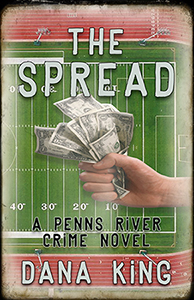
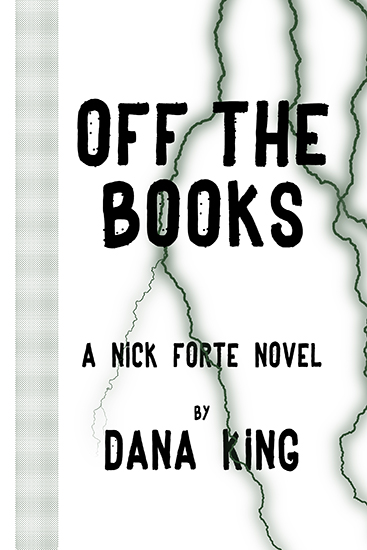
(Editor's Note: Thanks are owed to everyone connected with Down & Out Books; they're day is coming. I do want to point out the brilliant cover art provided by the indefatigable and seemingly ubiquitous Eric Beetner. Well done, sir, and thank you.)
  

Thursday, October 15, 2015

Bouchercon 2015: Day One


(Editor’s note: There are no photographs of the dignitaries mentioned in this and subsequent Bouchercon-related posts. Between Witness Protection and wanted posters, many of those described are leery of any attempt to distribute their likeness.)

The Raleigh Bouchercon is over. For me, it was the best of the half dozen I’ve attended. I know more people now, so the ice breaking issues that made my first couple awkward are past. I also bring The Beloved Spouse with me, and she’ll talk to an aardvark. A lot went on those four days, and I could only be one place at a time, so let’s get to my personal highlights.

THURSDAY, OCTOBER 8
Here’s how author speed dating works: authors are paired up and spend six minutes at each of 15 tables over the course of an hour and a half, talking to anywhere from one to six people at each table. (The numbers were lower than expected due to bad weather south of Raleigh, and, just possibly, people realizing it was eight o’clock in the goddamn morning.) Given the rate things moved, it was more like an author drive-by. Speed dating implies two-way communication. A drive-by is more unidirectional.

They paired me with Ed Aymar, which was good. (For me, at least.) I know and like Ed, so I was comfortable. He’s also drop-dead funny. He handed out goody bags to our readers that contained sunglasses (so you can look cool while you read his book), temporary tattoos (so you can look tough while you read his book), a mask (so you can do some of the crimes described in his book), and a paddle ball (so you can take a break). Also included, a pen that lit up and flashed, which he guaranteed to produce seizures inside of 30 seconds.

Was it worth it? It was fun, though exhausting. I did sell one book for sure because of it. On the other hand, a woman who was in my last group asked me for directions 15 minutes later and had no idea who I was. Probably too much drinking from the fire hose for everyone.

11:30 True Criminals / True Detectives

One researcher claims women read true crime to put themselves in the victim’s place in the hope of recognizing things to be aware of. Some apparently use things learned there to get out of bad situations.

Carla Norton gives rides to hitchhikers, along with copies of her book The Perfect Victim as a caution.

If a person “confesses” to a clergyman in a non-confessional setting—say a place where they could be overheard—that if not a privileged conversation.

1:00 Just the Facts: The Police Procedural

My favorite panel of the weekend, though my impartiality is questionable because I was on it. Jim Born did a great job of keeping things entertaining and moving, while panelists Colin Campbell, Stephanie Gayle, and Larry Kelter did yeomen’s work in carrying me. I’d learned to seek out Colin’s panels because he’s always fun, so it was a treat to get to sit next to him. Jim Born was a revelation. Funny, and someone it’s about impossible to feel uneasy around. (Unless maybe you’re a crook.) That’s not to take anything away from Stephanie and Larry, who were more than up to the challenge.

I was brought back to earth in the signing room, where alphabetical order put me next to Michael Koryta. I signed one book while he signed at least 50. The Beloved Spouse worked hard to photograph me from the opposite side of Michael’s line, so it looks like those people were there to see me. The she crossed over when things calmed down and took a few shots to make it appear I’m sitting there chatting with my close personal friend Michael Koryta. The good news from that arrangement was getting to talk with him a bit, and finding out he’s writing PI stories again.

2:30 Beyond Hammett, Chandler, Macdonald, and Spillane

This was a Peter Rozovsky panel. He’s the best moderator there is, so the organizers gave him a sow’s ear of a panel from which to make a silk purse: Jordan Foster, Laura Lippmann, Kevin Burton Smith, and Sarah Weinman. (Imagine what he could do with a worthy panel.) Each discussed a favorite author the general public may not be aware of.

Laura Lippmann’s description of Dare Me may have summed up why I am the only person who read the book and didn’t like it: these are things girls do that boys have no concept of. She also described Chandler as a “mean boy,” for how he talked behind people’s backs, and was overly critical of his closest competitors. (Much as I love Chandler’s writing, the more I learn about him as a person, the more I agree with her evaluation.)

Sarah Weinman explained how often writers fall off the radar because the heirs either can’t be found, or they can’t agree among themselves about how to handle the rights.

Neither The Beloved Spouse nor I had eaten all day, so we wandered off early and found Clyde Cooper’s on Wilmington Street, not three blocks from the hotel. Best fired chicken I can remember eating, and without question the best hush puppies. Well worth a trip if you’re in Raleigh and hungry.

After that it was off to Common 414 for Noir at the Bar. Eryk Pruitt put this one together, and he did himself proud. The venue was perfect, the crowd was as raucous as was necessary and no more, and the readings were dead on. The only people who didn’t have a good time were those who weren’t there. I hate to single anyone out—everyone was worthy—but, looking back several days, Eric Beetner, Jedidiah Ayres, and Johnny Shaw stood out among even this cast of luminaries.

After that it was off to the Marriott bar. Recollections are hazy, though one sticks out. Heartfelt thanks to the den mother of crime writers, Michelle Turlock Isler, for introducing me to Eric Campbell. I asked her if that was him, she said why, I said I’m supposed to find him and now I know what he looks like, and she grabbed my arm and drug me over to meet him right now.

(Come back Monday for more.)


Monday, May 18, 2015

Twenty Questions With Eric Beetner

I first became aware of Eric Beetner when, preparing for a Bouchercon panel, I read his novel, The Devil Doesn't Want Me and couldn’t help but visualize what a great movie it would make. Then only issue I have with Mr. Beetner’s writing is what a hard time I have keeping up with him. In addition to The Devil Doesn't Want Me and his newest, Rumrunners, he has also written Dig Two Graves, The Year I Died Seven Times, White Hot Pistol, Stripper Pole At the End Of The World; the story collection A Bouquet Of Bullets; co-authored (with JB Kohl) the novels One Too Many Blows To The Head and Borrowed Trouble; and has written the novellas FIGHTCARD: Split Decision and FIGHTCARD: A Mouth Full Of Blood under the name Jack Tunney. This is all since last Wednesday. The man’s a machine.

Eric lives in Los Angeles where he co-hosts the Noir at the Bar reading series.

One Bite at a Time: Tell us about Rumrunners.

Eric Beetner: It's a story about a family who has been doing driving for a criminal enterprise for generations, dating back to prohibition when they were genuinely running rum in the back of model Ts. Now, though, the youngest McGraw, Tucker, doesn't want any part of the family business. Until his dad goes missing during a run. Now Tucker must team up with his grandfather to find the missing McGraw. Things get ugly from there, as usually happens in my books.

OBAAT: Where did you get this idea, and what made it worth developing for you? (Notice I didn’t ask “Where do you get your ideas?” I was careful to ask where you got this idea.)
EB: I liked the idea of a guy who has turned his back on the life of crime his father and grandfather have led, only to be sucked into it against his will. From there, I guess I liked the idea of drivers. Getaway drivers, liquor runners, anyone specializing in that part of a criminal operation was interesting to me. It grew out of that. My favorite kinds of stories are ordinary guys thrust into circumstances that are beyond them, and watching them work their way out, often awkwardly and with terrible consequences. 

OBAAT: How long did it take to write Rumrunners, start to finish?
EB: I write fairly quickly, after long periods of thinking about a story and hammering out an outline. I'd say four months from when I knew I was ready to go. I write at night after my day job and after the kids are in bed. If I could do this full time, I'd knock out four or five novels a year easily, I think. 

OBAAT: Rumrunners takes in three generations of “protagonists:” Calvin (the old man), Webb (his son), and Tucker (Webb’s son). In what ways are they like, and unlike each other? For that matter, in what ways are they like, or unlike you?
EB: They're all unlike me except that they are from Iowa. But even with that, I haven't lived there in 35 years. Calvin and Webb are cut from the same cloth, and Tucker is, too, but he doesn't want to admit it. There are many instances in the book where you see his skills as a driver and as a criminal that have been dormant inside him for years. In a way this is Tucker's coming of age story, even though he's already in his thirties. 

OBAAT: In what time and place is Rumrunners set? How important is the setting to the book as a whole?
EB: The time is now the place is Iowa. I wanted a setting that was off the beaten path. It was more interesting to me to have these families – the McGraws and the Stanleys, who they drive for – be big fish in a very small pond. To set this story in New York or Chicago would have taken it in a very different direction. In backwoods Iowa they can live in their own world and all the pressure on them is from that alone, not the extras that come from living in a big city or being a part of a huge criminal empire. These guys are small potatoes, but they take pride in what they do and no matter how small your world is, when it comes crashing in on you it has the same impact as anyone else. 

OBAAT: How did Rumrunners come to be published?
EB: It was a long road. This book is over four years old. When I originally had sent it to my agent we were shopping another book which eventually got picked up by a division of a Dutton/Penguin. (That book, The Devil Doesn't Want Me has been my most popular book to date) so Rumrunners kind of took a back seat. Then I kept writing more and more novels and I'd get excited about whatever was shiniest and new.

I always liked the book a lot and had plans for a trilogy with these characters, but it was always kind of the forgotten child of my books. When 280 Steps came calling and asking if had anything they could look at, I pulled this one out of the pile and sent it to them. Thankfully they saw the potential and it was saved from obscurity.

OBAAT: What kinds of stories do you like to read? Who are your favorite authors, in or out of that area?
EB: I read almost exclusively crime novels. Some nonfiction, the occasional sci-fi. I love old-school pulp and noir novels about ordinary sad suckers trapped in a web of their own making. I like pulp writers like Harry Whittington, Cornell Woolrich, Day Keene, William Ard. 

Some of the most consistent writers I read today who have yet to fail me with their brilliant work are people like Urban Waite, Roger Smith, Jake Hinkson, Sean Doolittle, Joe R Lansdale, Grant Jerkins, Allan Guthrie, John Rector, Max Allan Collins.

OBAAT: What made you decide to be an author?
EB: I've been writing since high school. I started in screenplays for a long time before ever attempting a novel. I loved that in writing a script you could play all the roles in your head. You were director, actor, set designer, editor. It was the only time you ever had complete control over a script. 

When I started writing novels and short stories I enjoyed that same aspect. While you were in the act of writing you weren't beholden to anyone else but yourself and the story. You could move all the pieces on the chessboard without any repercussions. Once it's out and with a publisher or out to readers, you face expectations, personal opinions, skewed perspectives. But when you're writing you control that world fully. And I guess deep down I'm a storyteller, even if my main audience is myself. If I can entertain me, then I figure I have decent shot of doing it for other people.

OBAAT: How do you think your life experiences have prepared you for writing crime fiction?
Eric Beetner is, in life, a pleasant and not
unattractive young man, yet all his photos
make it appear they are remaking In Cold Blood
and he got a sweet part.
EB: I make stuff up. As a writer, and as a reader, I want to be taken out of my life and shown different people doing different things. I would be a terrible criminal, I'm sure. I've never done drugs, never carried a gun around, never committed a crime worth mentioning. I'm a straight-laced guy and a good citizen. So that's prepared me for wanting to delve into the total opposite of my real world, so if people sometimes think I get dark with my fiction, it's only because my real life is so bright.

OBAAT: What do you like best about being a writer?
EB: Aside from what I said above about creating and controlling your made-up world, I'd say it's creating a story and characters out of thin air.  I used to play music in bands and I always loved that there would silence, nothing, and then suddenly here was a song. Out if nothing! It's the same way with a book. There are blank pages, and then after a while there are people and situations that never would have existed had I not written them down. That's kinda cool, I think.

OBAAT: Who are your greatest influences? (Not necessarily writers. Filmmakers, other artists, whoever you think has had a major impact on your writing.)
EB: My early life was far more influenced by films than books. I read as a kid, but I didn’t have the same passion for what I was reading as I do now. Mostly it was that thing where the required reading in school wasn’t speaking to me and so I didn’t get out a search for what I really loved in books because I found it in movies.

And even there I liked it pulpy. I love Blade Runner, John Carpenter films, I loved horror movies growing up. I also was very eclectic in my film tastes. By the time I graduated high school I had seen everything from Italian gore-fest horror films to Marx Borthers comedies to Bergman films. I frequented the art house cinema in the town next to mine and went to subtitled films alone all the time. I worked in a video store (remember those?) so I saw anything and everything I could get my hands on. I sampled it all and I loved across genres. Blues Brothers is as good as Citizen Kane to me. Big Trouble in Little China is as funny as Annie Hall.

OBAAT: Do you outline or fly by the seat of you pants? Do you even wear pants when you write?
EB: I'm an outliner. They are skeletal, but I know where I'm going. And things can change. A good outline is flexible. 

OBAAT: Give us an idea of your process. Do you edit as you go? Throw anything into a first draft knowing the hard work is in the revisions? Something in between?
EB: I hate rewriting. Hate revisions. I try to get it as right as I can the first time out. I'll never let a plot hole sit unattended in hopes of figuring it out later. I fix it then. I don't really go back and read anything as I go. I plow ahead and only read back once I've finished. I've seen people get hung up on reworking something midstream and it sucks all the momentum out of it. I think momentum is a lot of writing. 

OBAAT: Do you listen to music when you write? Do you have a theme song for this book? What music did you go back to over and over as you wrote it, or as you write, in general?
EB: I write on silence. Being a musician maybe, or just how deeply I relate to music means I can't use it as background noise. 

If this book had a soundtrack it'd probably be a lot of outlaw country. The Smokey and the Bandit soundtrack. Fast paced bluegrass. In other words, nothing I listen to very often in real life, but stuff I like when I hear it.

OBAAT: As a writer, what’s your favorite time management tip?
EB: I think just to focus hard when you are working. Don't take frequent breaks. Finish a thought before you stop for the night. When you sit down to write, don't start by checking email and all that junk. Twitter can wait. Sit. Focus. Work. 
And then please don't end by tweeting your word count. Nobody cares. The finished product is what matters. 

OBAAT: If you could give a novice writer a single piece of advice, what would it be?
EB: Write what you would want to read. I think that's the first step toward finding your own voice. If you try to study what sells you will fail every time. Don't go for someone else's style, no matter how much you admire that writer. Write your book, not theirs.

OBAAT: Generally speaking the components of a novel are story/plot, character, setting, narrative, and tone. How would you rank these in order of their importance in your own writing, and can you add a few sentences to tell us more about how you approach each and why you rank them as you do?
EB: Story and character are so inextricably linked that it’s hard to put one above the other. They’re co-dependent. You can have a book with interesting characters but if the plot doesn’t go anywhere they are wasted lives. Conversely, you can have a runaway train of a plot but if you fill it with cliches and empty characters, the reader won’t be thrilled because they won’t relate to it on a human level, which is why we read.

Setting might be last on my list. I write a lot of anonymous places. Cities that aren’t named, stuff like that. It can help add to the universal relatability of a story. I’ve read some great books that I felt were bogged down by a little too much site-specific detail. If a reader isn’t already intimately familiar with your locale, it might not matter if you get every street corner exactly right. Those are details sometimes best left out.

Tone is important, but I think it often comes subconsciously for a writer. If you write from the gut, the tone will follow.

OBAAT: If you could have written any book of the past hundred years, what would it be, and what is it ab
out that book you admire most?
EB: What a great and difficult question. I’ll say Wild at Heart. I’m a huge Barry Gifford fan and this is ground zero for most people on his work and the start of his most famous creation, the Sailor and Lula books.

I’m fascinated by people in the margins. The outcasts and the ones living in shadows. That’s who Gifford writes about. He has such a distinct voice and he breaks a ton of rules. All those asides and tangents! But I love it.
I wrote a script once that almost got made that, looking back on it now, has a very Barry Gifford style, although this was before I’d read anything of his. It was all short vignettes and weird, unconnected scenes. We did a staged reading of it and some great actors read including Joe Mantegna, Charles Durning, David Alan Grier, Dan Lauria. A studio guy came up to me after and said, “Great stuff. I loved it. Funny and wild. Y’know, it’s not a movie, but I loved it.”

I feel that when I read Gifford. I’m sure some people think, “But it’s not a novel.”
So, yeah, I wish I’d written Wild at Heart.

OBAAT: Favorite activity when you’re not reading or writing.
EB: I work in the TV/Film industry so I can claim watching TV and movies as research. I’ve been known to paint – badly. I still play music – not often enough. I love being with my kids and my wife. I’m pretty easy to entertain since if I’m ever at a loss I tend to create my own entertainment. I’m never bored. I won’t let myself be.

OBAAT: What are you working on now?
EB: This is a very busy year for me. I have a number of books coming out over 2015, but those are already written. Over Their Heads is a crime novel I wrote with JB Kohl. The Backlist is an old school mafia hit man/woman novel I wrote with Frank Zafiro. I have a novella I wrote that will come out near the end of the year called Nine Toes in the Grave. And I just released the full omnibus version of my serialized novel The Year I Died 7 Times.

I’m working now on some short stories I have due for anthologies I’ll be in. Always working a new novel, though at this point I’m trying to pick which of the outlines I have that I want to start.

And if all goes well and there is a decent response to Rumrunners, I would love to complete the trilogy I always wanted it to be. So, fingers crossed people want to read more about the McGraws.