Showing posts with label tom pitts. Show all posts

Friday, May 15, 2020

Tom Pitts, Author of Coldwater


Tom Pitts is one of my favorite people. Even just to see him pass by and exchange smiles at Bouchercon is a treat. His talent as an author is a bonus, but that’s not to say it’s insubstantial. He has his own way of pouring his life into his books without about his life, just letting his experiences inform the writing as few can. His new book, Coldwater, drops May 18 from Down & Out Books.

One Bite at a Time: First, welcome back. I don’t keep formal stats but this is the fifth time you have graced this site and I always look forward to getting a chance to catch up with you. The Beloved Spouse and I aren’t going to Bouchercon this year—decided well before all the coronavirus business started—so this will have to do for this year.

Your new book is titled Coldwater. Give us a two hundred word or less
description.
Tom Pitts: Fifth time? Do I get one of those jackets like they have on Saturday Night Live?
I can answer this one with a lot less than two hundred words. Coldwater is my take on a real-life horror story. What happens when regular people are pulled into a nightmarish pool of criminal quicksand.

OBAAT: Your books tend to deal with criminals, usually drug-related (either users of dealers or both), and sometimes cops. In Coldwater you make a suburban couple the focal point of the action. What was it that drew you to that bit of departure?
TP: I think the Everyman facing insurmountable odds is a powerful theme, and very relatable. I wanted to write something akin to Joe Lansdale’s Hot in December or Cold in July, but my own version. And in Northern California. And I wanted it to play out in a few locations, not just San Francisco. I think the suburban sprawl is under-represented in fiction. Gentrification has made the big cities so banal. Where’s the hunger, where’s the struggle, where’s the passion? In the burbs, baby.

OBAAT: I don’t know of many writers who can make their stories as unique as you do. Knuckleball was a fairly straightforward police procedural. Hustle tells the story of two young street hustler addicts. Your previous book, 101, focused on the marijuana trade as legalization approached. Now Coldwater is kind of a suburban horror story. What is it that draws you to such different types of stories and what kinds of adjustments, if any, are needed to write them?
TP: I grouped my four novels together as a “Northern California Quartet” because I think they do have a common denominator. And not just geographically. Really, what I wanted to do with Hustle is a realistic take on drug addiction, which I feel writers often get wrong. With 101, I wanted to do the same thing with the weed industry. With Coldwater, I wanted to capture my version of Sacramento. I want to show the world the view from where I stand, especially on topics I still feel like I have a little input on. My next book will be my take on the homeless situation, which I don’t think people really understand. Not in an empathetic way. I’ve been down in the trenches, and I want to convey what it’s like to be living like an animal on the streets of a big city.

OBAAT: The only thing I don’t like about your writing is that I get so invested in the characters I want more when the book ends. Have you ever considered even a short series? A trilogy, maybe?
TP: Weirdly enough, I thought about it with this book. Mostly because I like the name Calper Dennings so much. I started another book with Calper as the catalyst, but it crashed at about twenty thousand words. But yeah, I’d consider it. I better stop killing everyone off at the end of my book though.

OBAAT: What do you do when you’re not writing?
TP: These days, not much because of the pandemic, but I’m not kidding in the bio where it says I’m trying to survive. Being on the bottom end of the financial ladder in one of the priciest cities in the world doesn’t leave you with a lot of leisure time. I work too much, I worry too much. Not really pastimes, but they do pass the time.


OBAAT: We talked last time about your love of the Bay Area, though you’re a Canadian native. What part of Canada are you from and what was it that drew you to California so this love affair with San Francisco could begin?
TP: The short story is that I moved here from Calgary when I was 17 to play music. SF was punk rock mecca in the 80s, a very different place. But the truth is, when I was younger, my dad’s hockey team would come to Santa Rosa every summer to play. On one day each trip, we’d drive down to San Francisco, do North Beach, Chinatown, etc. And I remember being up near Coit tower, looking across at the density of North Beach, and I thought, I’m moving here when I grow up. This is America, this is where I belong.

OBAAT: You and Joe Clifford go way back, well before you were writers. How did you meet and how did your paths to becoming acclaimed writers vary? Or were similar? (I’m going to ask Clifford these same questions when I get a chance. Get some Newlywed Game action going.)
TP: Now that’s a loaded question. I really should write the story of the day we met, because it was a perfect snapshot of our lives then. It started with a shot of dope, but it ended with Joe attacking some guy in the house over a deal gone bad. But I digress. Basically, we were both living on the floor of different junkie scumbags who lived in the same flat—this horrific place we called Hepatitis Heights—and Joe was introduced to me by this awful person named Skipper Nick. Don’t get me started on that piece of work. Anyway, Joe was dope sick and bent in half. I’d just copped a gram of junk and a half gram of coke, and I threw most or all of it in a spoon and split it with him. Now, that’s a pretty big fuckin’ dose, and trust me, nobody was sharing. It just wasn’t done. I don’t know why I shared it with him, he seemed like a good guy. But that action started a pact between us, we’d split whatever we had, money or drugs, and keep each other well. You see, in Hepatitis Heights, it was a constant free-for-all. Lying, stealing, begging, borrowing, pawning, whoring, everyone was out for themselves. With me and Joe actually able to trust each other, it gave us half a chance to survive.

OBAAT: We’ve both been around long enough, and written enough books, that we can look back at our books with a little perspective. Which of your books is your favorite and which means the most to you? Doesn’t have to be the same book. I know mine wouldn’t be.
TP: I think Hustle means most to me. Maybe because it was my first novel, or maybe because the movie option made me the most money, but I think it’s because there’s a lot of my personal experience in there. But I think my favorite is 101. I feel like, at least with pacing, I’m at the top of my game in 101. That said, readers seem like American Static the most, so, who knows?
                                                        
OBAAT: With Coldwater hitting the stores, what’s in the pipeline?
TP: Absolutely nothing. I’m writing, of course, but I’m not sure this next one is truly crime fiction. And I’m not sure what’ll happen with it. It’s a book about a homeless man in San Francisco who thinks he’s a prophet and the lives that intersect because of him. I’m trying a very different approach, so we’ll see if it works. Trying to push the envelope and create something new.

Thank you, Dana, it’s always good to talk with you. Hopefully we’ll both be around for a sixth round.

OBAAT: Always a pleasure, Tom. Come back any time.

Friday, November 9, 2018

Tom Pitts, Author of 101


Tom Pitts became one of my favorite writes by stealth. He’s a nice guy, there was a download available of Knuckleball, I need something to read on a train ride back from Connecticut, what the hell. The end result was I was disappointed it didn’t last longer. Hustle was completely different yet just as good. Now 101 touches a whole nuther aspect of criminal activity and nails it.

It’s also always fun to have Tom on the blog. He’s an entertaining and thoughtful guy who always leaves me with something to think about.

One Bite at a Time: You sustain action through multiple POVs as well as anyone I’ve read. Do you plot it out first of just write from the perspective that seizes you at the moment?
Tom Pitts: I go by feel, scene by scene. I know the chapters are going to be eight to twelve pages, but beyond that, I just have to hope I’m getting a balance. I think that’s what I’m shooting for, a balance in the story. I’ve always liked that “meanwhile back at the ranch” portion of a novel. I feel like I have to remind the reader of what’s happening with the other plot threads so it’ll make sense when they tie together. With 101 it was a conscious decision to push the multi-POV as far as I could, so the effect would be cinematic, cutting from storyline to storyline.

OBAAT: I see from the acknowledgements you did quite a bit of research. How much of that was to make sure you got the things you wanted to do right, and how much of it was to help you decide what it was you were going to do?
TP: Mostly it was for details. Quite literally the flora and fauna. I’ve never been good at naming trees and plant life and that was one of the bigger challenges. I went up North a few times and got my hands dirty, but it was for the setting more than the plot. I needed the physical place firm in my mind. The cabin, the generators, the weird open-ended greenhouses they call hoopers, I had to see that stuff firsthand to really get it down.

OBAAT: What are the chances we see Vic in another book? The hook is set for a sequel but he also has the look of a character who can series on his own.
TP: Not very good because I wasn’t super happy with his name. I often come up with names phonetically, trying to give a tone for the kind of character I’m writing. Ollie, Ripper, those were names that were birthed with the character. With Vic I was a bit stuck. I wrote the first part of the novel with the name Victor, and it really wasn’t working for me. When I shortened it to Vic, I got back in the groove. Sounds silly, but the name means a lot. There’s a character in my next book, Coldwater, named Calper Dennings. I thought about writing another book featuring him just ‘cause I liked the name so damn much.

OBAAT: You wrote the story to take place specifically a couple of years ago when California was on the cusp of legalizing marijuana, which plays into the story. Was that the plan all along, or were you part way into writing the book and realized, “Oh, shit! They’re about to legalize the relevance right out of my story!”
TP: True, my present-day piece turned into a period piece right as I was wrapping it up. I was pretty sure it was coming, but not 100% positive. There were a lot of people you’d think would’ve voted yes, but were adamantly against it. Of course everyone in the outlaw weed business was voting against it. I’m sure if you broke it down, a lot of the northern counties went against legalization across the board. They knew they’d have the cash cow yanked from their hands. It’s now morphing into something no one saw coming. People thought it’d be big tobacco coming in and taking over, but it’s just big money. Tech money too. It takes a lot of capitol to stay in the game now. They’re making laws every day that’re designed to cut out the little guy. Who knows, if it keeps going this way, maybe the black market will open back up. It’s easy to grow good weed. It’ll be like bathtub gin. It’s tough to put that genie back in the bottle.

OBAAT: Barbara and Ghia are both thrust into impossible situations and handle them very well, though neither has a history of this kind of action the way the male characters clearly do. (Not that Barbara’s a virgin in this regard.) How they’re able to rise to the occasion without becoming stereotypical badasses is a key element of what makes the book work so well, its credibility. How much work was it to strike such an outstanding balance with them?
TP: Ghia’s character is based on a few women I’ve met. The “old hippie” type who has still got a bit of that frontier woman thing going. Tough as nails, but still a smartass. It’s not an easy life out there in the bush. There’s a lot of isolation and a lot of hard work to be done. Barbara on the other hand is a mother, and that’s what drives her. It makes her tough in some ways and blind in others. Barbra and Vic have a sort of PTSD from what they shared in their past and it’s calloused them both. Both women are decidedly independent, and I think that’s at the core of why they’re relatable.

OBAAT: The first book I read of yours was Knuckleball, which is pretty much a police procedural. A good procedural, but something in my reading wheelhouse. Then I read Hustle, which was anything but. 101 is something altogether different from either of them. Without asking where you get your ideas, how are you able to cultivate such a diverse range of stories? (I don’t mean to omit American Static. I just haven’t got around to reading it yet.)
TP: I know where I get that first idea. (Hustle’s impetus was a conversation between prostitutes I overheard while driving a cab. Knuckleball came from the vague wanted posters in a case where a Giants fan was assaulted. 101, oddly enough, came from a movie trailer that was about a young man visiting an old criminal—and, no, I’ve never seen the movie.) But where they go is beyond my ability to see when I start the book. I will say I try to show my own take on a subject, which is usually an attempt to add a Murphy’s Law flare. With Hustle, it was drug addiction, I wanted to show what drugs were really like, not how they’re portrayed in the movies. With 101 I wanted to show what I’d seen firsthand in the marijuana business, and I think that portion is accurate.  

Tom Pitts, looking severe
OBAAT: We got to hang out some at Bouchercon in St. Petersburg, where I learned you’re a native Canadian, yet your affinity and affection for the Bay Area comes through every book. What is it about the place that appeals to you so much?
TP: It’s just the only place I’ve known as an adult. But it’s true, over the years I’ve come to love San Francisco and I’m always learning more about its history, its people. Most every job I’ve had has been on, or dealt directly with the streets. A messenger, dispatcher, drug courier, taxi driver. I think being out the street and having your ear to the ground gives you a special appreciation for a city. Sharing donuts with cops at four AM, giving hookers rides home to Oakland, driving bookies on their rounds, delivering heroin to artist junkies—I’ve had a good view of the underbelly of San Francisco. That said, I think if I were to live in anywhere else for a year, I’d write about it. In fact, for a few years, my wife and I were splitting our time between Sacramento and San Francisco and I ended up with a book set in Sac. (It’s called Coldwater and will probably be out in 2020.)

Monday, June 5, 2017

A Conversation With Tom Pitts

Tom Pitts is one of those writers who lingered on the periphery of my attention for quite a while before forcing his way to the head of the queue. I’d heard his name bandied about by people I trusted and heard great things about Hustle. Still, I hear good things about a lot of writers, and justifiably so, but there’s not time to keep up with all of them. Then I helped The Sole Heir move to Connecticut (did I mention she’s in medical school?) and needed something to read on the train ride home. Pitts’s Knuckleball was on my Kindle so I gave it a tumble. The book was a pleasant surprise from start to finish, my only disappointment due to its brevity. Not that anything seemed incomplete. I just wanted more. I then moved on to Hustle, which was completely different but just as good.

Tom’s new book, American Static, drops later this month. He was good enough to take time from a hectic pre-launch period to chat with me.

One Bite at a Time: First off, thank you, Tom, for stopping by. I’m a big fan of your work and very much looking forward to American Static. Tease us a little about it.
Tom Pitts: Without getting into the synopsis, American Static refers to the undercurrent of violence in America, that constant buzz resonating through our culture. It’s a book that starts of as a happenstance meeting, but it’s like meeting the devil at the crossroads. The buzz begins and builds till it deafens you, stuns you, and wrings you out. At least I hope that’s what it does.

OBAAT: A lot of people would describe their book the way you just did and I’d think, “Uh-oh. Gratuitous violence displayed as hip, cool, and groovy. Tarantino in print.” In your case, I’ve read Hustle and seen how you handled the life of street boy addicts in an unapologetic and non-sensational manner, so I’m not concerned. Unlike a lot of neo-noir writers who seem to want to revel in the story’s depravity, you always keep the characters foremost. How do you decide how much is enough, or too much, of the peripheral stuff like the drugs and violence?
TP: I wish I could decide. Each book I’ve written, I’ve thought, “I’m going to sit down and write something lighter, something more character driven,” and what comes out is a crime novel.
As far as the drug use goes, balance is not a consideration. In a world of crime, drug use is always out of balance. That’s why most crimes are being committed. It’s the drug use behind them. I have a brother-in-law that just served 18 years and 9 months for a stack of crimes, but there wasn’t a single drug charge among ‘em. However, it was the drugs that drove him to all of those offenses. That’s the great unreported statistic in prisons. They consider prisoners drug offenders when they’ve been collared for drug crimes, but most of the time guys serve is because of their addictions—one way or another.

OBAAT: That’s a great point. One of those that I knew was right as soon as you said it, but never occurred to me before, at least not in those terms. Now that you got me thinking about it, drug addiction is a terrible thing for the addicts and those close to them, but the societal effects are all due to ancillary things: robberies and burglaries to get money to buy drugs, or the seemingly motiveless violence that can come from being high on the wrong thing, or too badly strung out. Americans as a society tend to look at all problems as enforcement issues. Where do you see the optimal line between law enforcement and treatment?
TP: Truly a tough question. It’s like when mayors are asked, “How would you solve the homeless problem?” No matter what solution you suggest, it’ll have unpleasant fallout. I think the most basic thing we can do is to do our best to take the drug use out of the equation. Not through tougher borders or longer sentences, but by recognizing that it’s drugs that drive most of the petty crime. People still think greed is the most powerful defect in human nature, and I wonder if it’s not the need to be comfortable, to have those pleasure receptors ringing all day and all night. We do it with food, TV, all sorts of things, but most of all we do it with substances.

OBAAT: It didn’t take long for you to become one of my favorite writers. I read Knuckleball a couple of years ago, and Hustle last fall. What sticks out in my mind is how different the two books are. You have a wide range of stories you tell well, but the core elements of the writing are still there. How do you decide which ideas are worthy of the time and effort of making into a book?
TP: You know it’s a blessing to just get one good idea. And when you have it, you know it. When the lightning bolt hits, you gotta run with it. I still remember the exact time and place when the ideas for both Hustle and Knuckleball hit me. American Static too. Although, that one took a bit longer to gestate.

OBAAT: Like a lot of my favorite authors, you work both sides of the street in the publishing business, as you’re also acquisitions editor at Gutter Books and Out of the Gutter Online. How did you get into that?
TP: I was an editor at Flash Fiction Offensive—a job that Joe Clifford dragged me into when he scored the gig way back when—and Matt Louis, the man behind the curtain at Gutter Books, said he wanted to step up the amount of books he was releasing. Matt, Joe, and I had lofty plans at first, but we quickly learned it’s a difficult task to take on what’s needed—what’s really needed—to run a small press properly. Acquisitions editor looks nice on the bio, and I’ve put a few books out there, but I don’t really consider myself active. I think the best small presses are run by guys who are not writers.

OBAAT: Do you find you work with Out of the Gutter has any effect on your own writing, either for good or ill?
TP: I think the Flash Fiction job exposed me to a lot of writers who I otherwise wouldn’t have read. I’m a notoriously slow reader, and I tend to stick to well-known authors, playing catch-up for the many years I was too distracted by addictions to experience all the great books out there. At Gutter I came across guys like Beau Johnson, Nolan Knight, and Jon Ashley. Guys who have a great feel for the language and who are in my wheelhouse as far as genre goes. I don’t think there were any negatives. It trained me to be more disciplined with my schedule. My life is always full and crazy, so I needed to have strict times to read submissions, days to publish, times to promote. Unfortunately, I did most of that at my old job, working graveyard at a taxi company. When I switched to a day job, I couldn’t sneak my Gutter time onto the company clock anymore.

OBAAT: What do you like to read and how does it affect your writing? Or does it?
TP: Sounds trite, but I like the good stuff. Books that are so good they either inspire me to become a better writer, or make me want to give up because I know I’ll never come close. Particularly when I’m editing one of my novels, I feel like I need something that’ll elevate my own work. I want works that’ll lift me up, artistically anyway.

OBAAT: What writers or filmmakers or artists in general have influenced you the most and in what
ways?                                                                                                                                                                                
TP: It a dangerous line to toe when one talks of influences. You don’t want to give the impression that—because you say you were influenced by an author, you think you’re on the same level. For me, that’s never the case. Here’s a weird example, Don DeLillo’s Libra was a huge influence on me. The way he shifted PoVs with ease. I loved that, and I do it in my own work. It drives some of my editors nuts, but I feel like the shifting PoV, or omnipresent PoV, can make a story so much more cinematic. That’s the way film works. You don’t actually get a PoV from a film, it’s a roving eye.

OBAAT: Is there anything you wish interviewers would ask about more? Some topic you’d like to see writers discuss more in forums such as this?
TP: I know it’s boring for a lot of people, but I’m always interested in the process. It’s the discipline that intrigues me. Guys like Elmore Leonard, how the hell was he so prolific? I tend to compare it to my own habits and see if there’s something I can extract from the writer I can apply to my own life.


Monday, October 17, 2016

September's Best Reads

September was a whirlwind of travel and conferences, containing both Bouchercon and the beginning of C3. October has been stay at home busy, looking back with conference summaries while moving forward with new book releases. I’m not complaining, but that’s why it took me halfway into the month to talk about the best books I read in September. (I know how much you look forward to these posts. Go ahead. Admit it. No one will judge you.)

A Detailed Man, David Swinson. A little overlooked amid the acclaim for The Second Girl, Swinson’s premier effort is solid. It’s got some Wambaugh in it, showing what it’s like for a cop who has no real home in the department, working cases as they come. (The title has double meaning, referring not only to the protagonist’s attention to detail, but to the fact that he’s on a detail, or temporary assignment.) Swinson does a nice job of keeping multiple balls in the air without confusing the reader, while showing how easy it can be for a cop to become overwhelmed. The Second Girl is a home run, but A Detailed Man is a stand-up double and would be a great way to pass the time while waiting for Swinson’s upcoming Frank Marr book to drop next spring.

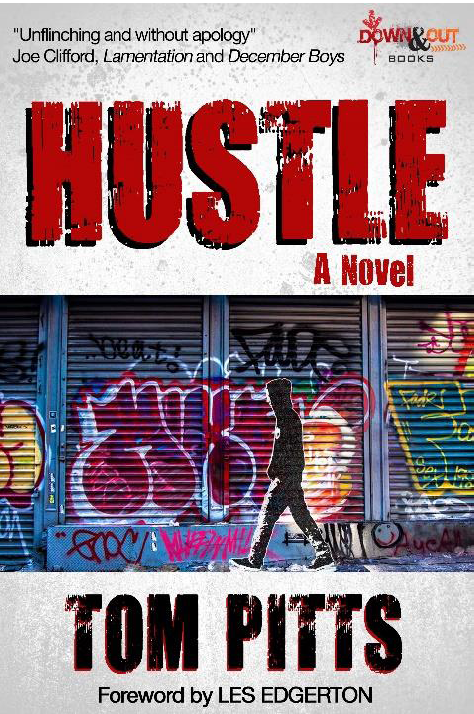
Hustle, Tom Pitts. Two young street hustler drug addicts come up with a plan to get off the streets by blackmailing one of their more affluent johns. Pitts has a gift for describing a degrading and hopeless life without turning it into misery porn. Big Rich and Donny have hopes—likely false—but they’re all the boys have. Of course, there’s more to life than watching their scheme come together and things go terribly wrong. Pitts manages to create empathy for two characters who, frankly, won’t have a lot of people who relate to them. The story had just enough twists and everything is well prepared and executed, showing Pitts’s unique ability to create distinctive characters and setting while working out a complex plot. Hell of a book.


Flash Boys, Michael Lewis. An expose of how high frequency traders use microseconds in computer transmission delays to essentially skim money from the stock market without contributing anything to the process. Read this and you’ll have to fight off an urge to stuff your 401(k) in a mattress. Lewis has a gift for writing technically challenging subjects in terms an intelligent layman can understand and do it with wit. I’m going to have to work my back though more of his stuff.

Thursday, May 5, 2016

Twenty Questions With Tom Pitts

Tom Pitts received his education firsthand on the streets of San Francisco. He remains there, writing, working, and trying to survive. He is the author of two novellas, Piggyback and Knuckleball. His shorts have been published in the usual spots by the usual suspects.

He lingered on the periphery of my reading attention for a while until Knuckleball’s baseball tie-in gave me a nudge his direction. I read it on the train coming back from moving The Sole Heir™ to Connecticut and I was sorry I didn’t take more time to read it. (Careful phrasing there. I wasn’t sorry the book wasn’t longer—its length is perfect for the story Tom had to tell—just that I finished before I was ready to let it go.)

Tom is also an acquisitions editor at Gutter Books and Out of the Gutter Online. Author's website: TomPittsAuthor.com. He and I find ourselves on the same team as authors, as Down and Out Books has re-released Hustle, which dropped April 21. Tom was nice enough to stop by and submit himself to a grilling in the midst of everything else he has going on.

One Bite at a Time: Tell us about Hustle.


Tom Pitts: Hustle is the tale of two young drug addicts who want to get off the corner. They think their best plan to escape their miserable existence is to extort an elderly client of theirs. That’s the simple overview, but it gets a lot more complex. Their victim is a criminal defense attorney with an evil ex-con living in his house who’s holding a dark secret over the attorney’s head. The attorney seeks out another old client—a likeable old biker—to rid him of his problem. The biker, the ex-con, and the two hustlers all cross paths and the adventure to simultaneously suppress and uncover that secret begins.

OBAAT: Readers love to ask where authors get their ideas and most authors reply with something along the lines of “we’re tripping over them. The trick is to find the idea that works best for me.” What made this idea worth developing, and how much development from the original germ was required?
TP:  I wanted to write a short story in third person but had the voice of first person. It was that simple. I started writing, and by the third page I realized the basic premise was good enough for a longer work. I’d just finished “Piggyback”—which was the longest thing I’d written at the time—and thought the “prostitutes ripping off their johns” idea was enough for a novella, so I pressed on. It wasn’t till halfway though I realized it was going to go the distance. As for the content, it came from the taxi business. There were several times I’d heard hookers talking about ripping off their johns while they chatted in the backseat of the cab. One memorable ride, I listened to this black hooker tell a recently immigrated Russian girl how to rob her customers. There were ones she could rob and let their pimp know, and there were ones she could rob but couldn’t tell their pimp. Not robbing the customer wasn’t even on the table. The choice to go with the homosexual prostitutes was solely to push the envelope. I hadn’t seen it done before, so I thought I’d break new ground.

OBAAT: How long did it take to write Hustle, start to finish?
TP: Between four to six months. My process has slowed since then. I think the excitement of writing my first novel, my ignorance of plot holes, and not knowing how long the book was going to be may have spurred me on.

OBAAT: Where did Donny and Big Rich come from?
TP: It’s funny, I get asked a lot if those two characters are based on me and Joe Clifford. For the record, no. We weren’t part of that world. A lot of the junkie business—the terrible details of addiction—were things I experienced firsthand though: The shitty hotel rooms, the endless waiting, the awful desperation, the blackened spoons, the blood on the walls, and the constant reminder of withdrawals. Donny and Big Rich, however, were just two fictional characters. Donny was the green kid lost in the big city, and Big Rich was his mentor. I guess it was a bit stereotypical in that sense, which was one of the reasons I used the setting of the world of gay hustlers. I was never involved in the trade, and the few people I knew who were involved ended up committing suicide. We’re only talking about a handful of guys that I knew, more from bicycle messengering than drugs, but, yeah, all but one ended up taking their own lives. And that poor bastard is dying of AIDS as we speak. Which should tell you something about the fallout from the sex trade. It has the worst occupational hazards there is. Death.

OBAAT: In what time and place is Hustle set and why was this time and place chosen?
TP: The early 20-teens. The kids think they can use YouTube to extort their client. They’re still naïve about the internet. Smart phones and Craigslist are changing the landscape of the sex trade. I wanted something current because I was worried it wouldn’t be seen for many years.

OBAAT: How did Hustle come to be published?
TP: I scored an agent after “Piggyback” and she shopped Hustle for a short while. It didn’t take long for her to come back to me and say, “none of the big houses are ever going to take this. It’s way too dark and sleazy.” I still disagree with that assessment. I see a lot more disturbing stuff from major publishers. Cannibalism, incest, the whole nine yards. Anyway, Brian at Snubnose (who were a key small press doing crime fiction at that time) said he’d do a beta read. When he was done, he said he’d put it out whenever I liked, as is. I was impatient and discouraged by the bigs, so I went for it. Eric Campbell at Down & Out loved the book and wanted to give it a second life, and I’m grateful he did. I hope it sells as well as it did during the first pressing.

OBAAT: How do you think your life experiences have prepared you for writing crime fiction?
TP: Drug addiction and my foray into the criminal underworld prepared me well for writing crime fiction. It taught me that most of the books and movies are bullshit. In reality, nothing ever goes right, nothing ever goes smoothly. Criminals are assholes, not heroes. They’re unlikable people with terrible traits. There’s an ugliness that gets missed in crime’s portrayal in popular culture. Desperate people don’t often have guns, because, if they do, they sell ‘em for drugs. There’s a reason they live on the fringes of society. It’s not because of their libertarian spirit, it’s because society wouldn’t have ‘em.

OBAAT: What do you like best about being a writer?
TP: That magical time when you’re locked inside your own narrative. When you’re having as much fun writing your story as you would reading a good book or watching a great movie—except the story is yours. You’re the writer, director and star, and you don’t know what’s going to happen next.

OBAAT: What do you like least about being a writer? Is there any aspect you actively dislike?
TP: Crippling self-doubt is what I dislike. I think all writers face it. Some shoulder it better than others. When you hit the 50k mark in a novel and you question whether you’re even a writer or not. You wonder how the hell you’re going to write your characters out of the mess you’ve put them in. You feel like a fraud. But then, sentence by sentence, page by page, you work it out and you’re back to patting yourself on the back again. As far as specific activities? No, none of the extracurricular things that go along with writing bother me. It’s nice to have ‘em when you have to rationalize your procrastination. For example, I didn’t write today, but a least I did this interview!

OBAAT: Who are your greatest influences? (Not necessarily writers. Filmmakers, other artists, whoever you think has had a major impact on your writing.)
TP: I’m that guy in the theater shouting, “That could never happen!” Whatever I see or read, I’m always thinking how’d it’d work in real life. Years ago, I was obsessed with true crime. Mostly Mafia stuff, books written by snitches bending the truth a little for their own benefit or absolution. Many of those stories still shape me today. There’s a book by T.J. English called The Westies that changed the way I viewed crime. It was the first time I saw how organized crime really worked. The book is about the history of the Irish mob in Hell’s Kitchen, but more than that, it was about a group of hard-drinking fuck-ups who had more balls than brains. It was also about back-biting and betrayal. I think that book should be required reading for anyone writing about organized crime.

OBAAT: You touched a couple of times now on a favorite subject of mine: verisimilitude. I interviewed some PIs before I wrote my first Nick Forte book and asked them for pet peeves with PI stories. They all agreed it was that the detectives in books and movies never get paid. They work cases on the cuff and a real PI never does that. Now, granted, in a fictional world there are no “nevers,” but still. What kinds of things do you see that are routinely done wrong and don’t have to be that sets your teeth to grinding?
TP: There’re plenty of ‘em. With drug use especially. Many writers will set up their characters with a drug problem and then forget about it after it’s been introduced. With Hustle, I wanted to put my own stamp on that. If you’re an addict, the drug use—or obsession—never stops. With junk, it’s every four or five hours, baby, you gotta have that shit. Another one is characters who’re always drinking hard liquor, Mad Men style, but never seem to get drunk. If I’m throwing back bourbon in the middle of the day, I’m going to have a sloppy night. It’s just the way it is. It reminds me of TV shows when a character takes a beating, and in the next scene doesn’t even have a black eye. You take a few shots to the face, it hurts. There’s bruising, swelling. It affects how you act for weeks.


OBAAT: Do you outline or fly by the seat of you pants?       
TP: Seat of the pants. When I get to the middle of a novel and I have the ol’ crisis of faith, I often question that method, but it’s the only way I know how to do it. I try to plan a little, but every time I do, I veer off the path. It’s almost like I’m a doing automatic writing. That drunken old whore I call the Muse just won’t listen to what I say.

OBAAT: Give us an idea of your process. Do you edit as you go? Throw anything into a first draft knowing the hard work is in the revisions? Something in between?
TP: I jump in and write. Somewhere along the line I lose track, lose focus, and I go back to the start and read, planting flowers and pulling weeds as I go. Sometimes I notice holes in the plot that need to be filled, or just little errors that need correcting. This happens every time I lose my daily rhythm, I need to go back and reacquaint myself with the story. Sometimes I can do this just by going back a few pages, but I often have to go back to page one.

OBAAT: Endings are hard and can make or break a book. Americans as a whole tend to like happy endings, and those are the books that tend to sell best. What do you look for in an ending?
TP: I look for the opposite of what America wants. It may be the punk ethos I grew up with, but if it’s white hats the general public wants, then it’s black hats for me, baby. You want a happy ending? I’ll finish in the funeral parlor.

OBAAT: You said you “look for the opposite of what America wants” when writing endings. What do you look for in the books you choose to read, and how do you think that varies from what “America wants?”
TP: I don’t think my choices vary from the mainstream too much, but it’s how they affect me and how they frustrate me, I guess. I just know that criminal life if full of mistakes, that criminals are fuck-ups and I don’t always see that reflected. When you’re living as an outlaw, there’s still no escaping Murphy’s Law. So it’s doesn’t matter if I draw my entertainment choices from the mainstream, I still end up saying, nobody’s that cool, or things never go that smoothly. Jewel thieves and cat burglars and international spies, all of them square-jawed and hairless—what a crock! People—the book-buying, television-watching, movie-going masses—want what they want. Doesn’t make ‘em right.  

OBAAT: Who is your intended audience?
TP: Honestly, anyone who’s willing to read a book. The percentage of the population that still reads gets smaller every day. I’d just like to sell enough of ‘em to stop working the goddamn graveyard shift.

OBAAT: If you could give a novice writer a single piece of advice, what would it be?
TP: Patience. There is no immediate gratification in the writing business. The longer you wait, the better off you are. Don’t jump at the first offer that comes your way. This is something I’m still learning, so the novice writer I’m giving this advice to is myself.

OBAAT: Generally speaking the components of a novel are story/plot, character, setting, narrative, and tone. How would you rank these in order of their importance in your own writing, and can you add a few sentences to tell us more about how you approach each and why you rank them as you do?
TP: I really think this is something instinctual. It can’t be learned. Each component affects another. You start with characters, throw them in a situation/setting, and let the plot unfold. But, beyond that, you need to let the story drive the car. You can go back and shape the tone to a certain degree, but really the basics have to be there in the first draft. There’s one thing I learned making records: if you don’t get the basic tracks down, no amount of trickery in the mixing booth is going to help.

OBAAT: If you could have written any book of the past hundred years, what would it be, and what is it about that book you admire most?
TP: Wow, tough question. That sounds like a deal with the devil. There’s a lot of stuff out there I wish I had the talent to write, but ultimately it’s not me. I mean, Benjamin Whitmer is a hero of mine, literature-wise, but his voice is his. And that’s what I admire most about his books—his voice. Same with Denis Johnson, he’s got a voice that shifts with each book he writes and it’s always great, but it’s still not mine. I know it sounds like a cop-out, but at this moment, that book is my own, American Static. Would I like the accolades, fame, and juice some of the books that have influenced me? Of course. But as for the content, it wouldn’t be mine. I feel odd saying it because I whine so much about my personal struggles, but I wouldn’t swap with anyone if it meant losing part of being me.

OBAAT: What are you working on now?

TP: After Hustle, I promised myself I’d write a novel a year till I was dead. I didn’t factor in the wait to get ‘em published though. I have two completed novels. I have a new agent and she’s shopping the one I wrote immediately after Hustle. It’s called American Static and I think it’s better than Hustle. It’s more complex and moves faster. When that sells, she’ll be pushing Coldwater, my take on a suburban horror story. You know, a young couple moves to the burbs and a group of terrifying drug addicts breaks into the house across the street an sets up camp. It’s the kind of real-life horror story that could actually happen and that’s what makes it scary. The novel I’m halfway through right now is called 101. It’s a crime thriller rooted in the marijuana industry up in Humboldt County in Northern California. It’s fun to write because I know a lot of people in that game. It’ll be interesting to see what they think.
Thursday, July 30, 2015

Abbreviated Thoughts


Tom Pitts raised an interesting point on his blog the other day. (Go ahead. Read it now. What I have to say will make more sense if you have, and it’s probably better than whatever I’ll come up with.) The gist of Tom’s piece is that writing an alternate history may not be as daunting as he’d thought. Just take actual history and tell it however you want.

(A brief digression. I read Tom's novella Knuckleball over the weekend. I'll have more to say about it when i have some time, but, if you haven't read it, you really ought to.)

This grabbed my attention, as I’m playing with the idea of a Western that will, in essence, be an alternative history. Deadwood is the obvious inspiration, as I plan to set the story where the stagecoaches used to change horses on the run from Cheyenne. There’s a town there—Lusk—named after the rancher who donated the land and laid out the streets.

That was to have been the point of this blog, to show how Tom got me thinking about blending reality and fiction into a Western that would capture some of the spirit of Deadwood without either becoming ensnared by its scope, or ripping it off. (Unsuccessfully, of course. Deadwood will always stand as a unique artistic accomplishment.) I’ve been pushing these ideas around in my mind for weeks now as The Beloved Spouse and I watch all three seasons back-to-back, twice through. I thought a blog post would be a good way to work some things out, and Tom had me inspired.

What happened was less serendipitous. The blog post rambled, taking in more unsettled ground with each paragraph. I’ve had a long couple of weeks and a trying weekend lies ahead. So it goes. In life you have to do a lot of things you don’t fucking want to do. Many times, that’s what the fuck life is: one vile fucking task after another. So this is all I got. Read Tom’s post. It’s better than anything I have in me right now. I’ll be ready to go after scratching a couple of things off my list. Pain or damage don’t end the world, you know. Or despair, or fuckin’ beatings. The world ends when you’re dead. Until then, you got more punishment in store. Stand it like a man — and give some back.

I’ll do better next week.