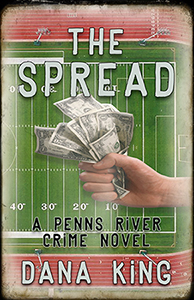
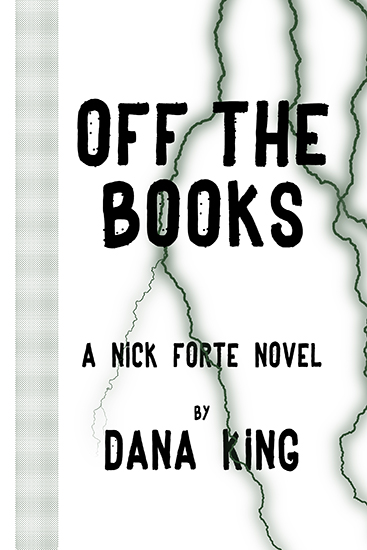
Patti Abbott has another flash fiction challenge on her blog. This is the original challenge:
On Saturday night, we passed a young woman on the street who was talking to her male companion and said, "I really don't mind the scars." A good start-up line for a little challenge perhaps.
So how about a 800 or so word story that contains that line in it with an end date of February 28th?
My selection is below. The others can be found through Patti’s blog.
Slump Buster
"I really don't mind the scars."
The third time Ashley had said that, so Mark thought maybe they bothered her more than she let on. Two white horizontal slashes across her forehead, a painful-looking red line along the base of her right jaw, and what could only be described as a furrow that ran from the corner of her right eye to the edge of her lip. Whoever gave those to her deserved whatever happened to him.
Ashley was still talking. Mark forced himself to pay attention, like he should have earlier.
“At first I did. I was like, ‘Ohmygod! No one is ever going to want me looking like this,’ so they sent me for counseling. I thought it was stupid. I was all, ‘It’s my face that’s cut up. My head’s fine.’ But you know, it’s amazing what they can do. They have support groups for everything. I always thought they’d be like all AA about it, a bunch of losers blaming their mothers for how crummy they turned out, but it wasn’t like that at all. Actually made me feel kind of guilty, crying over some scars, talking to people who were missing arms and legs. This one poor guy lost an ear and a nose in a fire. I thought, ‘If I can keep from staring at him, then I shouldn’t always feel like people are staring at me like some freak show.”
Mark shifted in his chair. He didn’t really want to hear any more, but he wasn’t sure where he’d go or what he’d do if he left.
Ashley said, “I met Margo there. We’d get together after meetings for a few drinks, started hanging out together. She’s the one who said I wasn’t a loser for living with someone who’d give me a face like this. I was just a bad picker. That the scars could be a good thing, make it easier to see which men were sincere and which ones weren’t.”
Mark definitely uncomfortable now. He’d thought of Ashley as what his friend Graham called a “slump buster,” a girl you normally wouldn’t look twice at, but would settle for if it had been too long. Parts of her were attractive: better than average body, how she walked, the way she wore her hair. Except for the face, serious deal breaker. Look at the bright side, he’d thought. Less competition, keep the lights out at her place, leave before the sun comes up.
“See, a guy who’s only into a girl for how it makes him look won’t bother with me. So anyone who spends some time with me is either serious, or just looking for a quick screw and figures I’ll be desperate.”
Mark made a sound he couldn’t remember making before. Ashley smiled. “It’s okay. Margo was more than just someone who hung out at that group. She has some—talents, said she saw some of those qualities in me. I didn’t believe her—I mean, there aren’t really witches, right?—but she showed me a few things and I’m all like “Ohmygod, you really did that, can you teach me?’ and she did. Some stuff, anyway. It’s not like I’m that girl in Harry Potter or anything, waving a wand and saying weird stuff and flying or going back in time.”
Ashley dried her hands, hung the dishtowel on a rack. “It’s not like I always can tell about a guy in advance. I mean, there’s witchy and then there’s full-out creepy, you know? And I have to admit, sometimes I do like to get laid for no other reason than it feels good. So I guess I’m kind of dishonest about that, letting the guy take me home so I get what I want, then, you know, doing what I do, but there’s justice in it, you know?”
Ashley walked to the kitchen door. It opened to the back of the house. A beautiful spring day, new leaves and blossoms on trees, the pond in the common area bluer than water had a right to be that time of year.
She said, “I mean, there’s like all those stories of the girl kissing the right frog and he turns into a prince. I just thought, how cool would it be it you could turn the wrong guy into a frog and mentioned it to Margo, you know, like no big deal. She taught me in just a couple of days. I mean, I feel kind of sorry for the homeless
guys we practiced on, but they’re doing better as frogs than they were as people, I bet.”
Ashley made a shooing motion. Mark jumped off the stool. “Go on, now. Scoot! If you hurry you can make it to the pond before the Simpsons’ dog comes around.”
Sunday, February 27, 2011


Sunday, February 13, 2011
I’m Stumped
The Beloved Spouse and I watched the original 1962 version of The Manchurian candidate last night. Can someone please explain to me why this is such a revered film? I understand how it captured the zeitgeist of the time, but the dialog is stilted, the acting is hammy, the plot has more holes than a junkie streetwalker’s stockings, and what the hell was the deal with Janet Leigh's character?
Monday, February 7, 2011
Prologues
It has been said of late that publishers don’t like to buy books with prologues. I can’t remember why; like so many pronouncements from the publishing industry, it carries the aura of someone speaking authoritatively when, in fact, he can barely distinguish shit from shinola. Given the current health of the publishing industry, this is not a great leap of faith.
I’ve finally gotten around to reading Adrian McKinty’s much acclaimed Dead I Well May Be. (Yes, I know about the speed with which my wheels grind, but they grind exceeding fine.) The book starts with a prologue that not only sets up the character of Michael Forsythe but explains how this Irish lad came to be in the United States in the first place. Concise, an exceptional example of showing and not telling, and establishes the mood for what is to come.
Apparently the prologue police weren’t able to get to McKinty in his current digs Down Under, as 2009’s Fifty Grand begins with not just a prologue, but a teaser prologue that jumps to well into the book, leaving the reader with anticipation of what is to come, but never hinting at how he’ll get there.
A poorly-written prologue can be a useless appendage, a tail that doesn’t wag the dog, but precedes it. That’s no reason to look disfavorably upon them. Prologues can also serve valuable table-setting functions, introduce characters and conflicts, and give the reader a taste of the writing before the story starts to roll in earnest.
Who shouldn’t write prologues? People who don’t write well should avoid them like the plague, although those folks probably should not write the rest of the book, either. Prologues should also be avoided by those who wish to adhere to conventional wisdom in the hope of improving their chances of publishing success, though conventional wisdom’s track record of late doesn’t have much to recommend it.
The avoidance of prologues is no more legitimate than the constant and sometimes unreasonable demands to “raise the stakes” to such levels the writer has no believable way of resolving the story. Does it serve a purpose, and not feel like a useless appendage? Leave it in. What the hell.
Thursday, February 3, 2011
Rut
I don’t do reviews anymore. They came to drain too much of the fun from my reading, having to justify every opinion. I’m not into a lot of mindless entertainment, but it’s nice to sit back and let a book take me to where it wants to go. I enjoy regaining the ability to do that, and I plan to keep it that wat.
Not reviewing doesn’t mean I won’t recommend good books when I find them, whether they’re new or not. I finished Scott Phillips’s newest, Rut, the other night, and that’s as good a place as any to start.
Rut has the best post-apocalyptic premise I’ve seen yet: just keep doing what you’re doing, and this is where you’ll end up. The town of Gower CO has dropped off the Big Grid; everything is solar. People ride bicycles. The Tar-Mart truck delivers when the weather allows, which is only a few months a year. Summer is routinely over one hundred degrees, and snowfalls measured in feet begin as early as September. Fundamentalists rule many states. This is America after the Tea Party gets through with it. (That’s my observation. The book is as apolitical on these points as it can be.)
The strength of any Phillips book (The Ice Harvest, Cottonwood) is the characters, who are always believable, never ordinary. Rut is no exception. From Bridget the biologist to Darla the geriatric skank to Dr. Glaspie, the physician/veterinarian/self-ordained minister to half a dozen others, it’s the people and always spot on dialog that keeps the story moving. Their actions make sense in context, though that context is their own.
Writers who can envelope readers in their world as well as can Phillips are few and far between, Rut is an excellent example of why I always keep an eye open for his books.
The business of Rut’s printing is also ahead of the curve. Concord Free Press gives the book away, on three conditions: you promise to pass it along when finished, you promise to make a contribution to a local charity, and you promise to tell them who got the money. Kudos to Concord and Phillips for making Rut available in this manner. For readers, it’s a golden opportunity to read well while doing good.
Wednesday, January 26, 2011
Another Step Down the Road
Publisher HarperCollins is inserting a morals clause into its contracts with novelists.
From the article in eReads:
New language in the termination provision of the Harper’s boilerplate gives them the right to cancel a contract if “Author’s conduct evidences a lack of due regard for public conventions and morals, or if Author commits a crime or any other act that will tend to bring Author into serious contempt, and such behavior would materially damage the Work’s reputation or sales.” The consequences? Harper can terminate your book deal. Not only that, you’ll have to repay your advance. Harper may also avail itself of “other legal remedies” against you.
I can only think of one thing to say to HarperCollins and its owner, Rupert Murdoch:
Fuck you. The horse you rode in on shouldn't turn its back on me, either.
Thursday, January 20, 2011
The Sopranos
The Beloved Spouse and I recently finished a trip through all 86 episodes of The Sopranos. This is our third trip through most of them, the first since the series went off the air, and it's interesting to see how our perceptions have changed.
First, I remembered Seasons Five and Part One of Season Six as not being as good as the rest. I didn't see that at all this time. The stories were consistently tight, and the pacing was solid throughout each season. Yes, Tony's coma dreams after Uncle Junior shot him went on a bit long, but my memory of things dragging when Vito's homosexuality drove him out of Jersey didn't hold up. True, that wasn't their best sub-plot, but it wasn't dead weight, either.
The greatest accomplishment of David Chase and his writers has to be making us care for seven years about people who are, frankly, bad people. Not evil; that implies two dimensions. Everyone in the show had their virtues, but they didn't make up for being duplicitous, whining, conniving bastards the rest of the time. James Gandolfini is brilliant week in and week out, but Tony is, as he describes himself more than once, a malevolent prick. Yes, he loves his kids and animals, and does occasionally go out of his way to be nice. Not to get all Biblical, but were he to be weighed in the balance, he'd be found wanting.
Carmela is worse than a whore in her way. At least with a whore you know it's a cash transaction. AJ sets new standards for being a whiny little pussy. Meadow had her snotty bitch period as a teen, but in the end is probably the most likable character. She grows and matures while everyone else revels in their dysfunction. Of the hoods, Bobby Baccalieri is the most sympathetic. He's a violent criminal, too, but his loyalty--to his dead wife, his children, to Janice, and to Tony--is touching.
I've had almost four years to think about the famous last episode and its ending. Time to place it in context, use what I've learned about story in the interim to better appreciate it, so i was looking forward to it again. It's still a chickenshit cop-out. Chase didn't know what to do, so he did nothing. Granted, after seven years of being relentlessly non-judgmental about his characters, he didn't want to turn the ending into a morality play. Fine. He owed his audience better. Even Deadwood had a more satisfying ending, and David Milch didn't know that show was going to end when it did. (Though it was Milch's fault it did end, the selfish bastard.)
Now Tony and Paulie and Sil go back on the shelf until we've worked our way through Lonesome Dove, Generation Kill, Deadwood, and The Wire again. (Plus whatever else strikes our fancy in the interim. Justified? Terriers, even though it was canceled?) We'll be back to visit with The Sopranos in a couple of years. I'm sure we'll see different things again when we do. It's that good a show.
First, I remembered Seasons Five and Part One of Season Six as not being as good as the rest. I didn't see that at all this time. The stories were consistently tight, and the pacing was solid throughout each season. Yes, Tony's coma dreams after Uncle Junior shot him went on a bit long, but my memory of things dragging when Vito's homosexuality drove him out of Jersey didn't hold up. True, that wasn't their best sub-plot, but it wasn't dead weight, either.
The greatest accomplishment of David Chase and his writers has to be making us care for seven years about people who are, frankly, bad people. Not evil; that implies two dimensions. Everyone in the show had their virtues, but they didn't make up for being duplicitous, whining, conniving bastards the rest of the time. James Gandolfini is brilliant week in and week out, but Tony is, as he describes himself more than once, a malevolent prick. Yes, he loves his kids and animals, and does occasionally go out of his way to be nice. Not to get all Biblical, but were he to be weighed in the balance, he'd be found wanting.
Carmela is worse than a whore in her way. At least with a whore you know it's a cash transaction. AJ sets new standards for being a whiny little pussy. Meadow had her snotty bitch period as a teen, but in the end is probably the most likable character. She grows and matures while everyone else revels in their dysfunction. Of the hoods, Bobby Baccalieri is the most sympathetic. He's a violent criminal, too, but his loyalty--to his dead wife, his children, to Janice, and to Tony--is touching.
I've had almost four years to think about the famous last episode and its ending. Time to place it in context, use what I've learned about story in the interim to better appreciate it, so i was looking forward to it again. It's still a chickenshit cop-out. Chase didn't know what to do, so he did nothing. Granted, after seven years of being relentlessly non-judgmental about his characters, he didn't want to turn the ending into a morality play. Fine. He owed his audience better. Even Deadwood had a more satisfying ending, and David Milch didn't know that show was going to end when it did. (Though it was Milch's fault it did end, the selfish bastard.)
Now Tony and Paulie and Sil go back on the shelf until we've worked our way through Lonesome Dove, Generation Kill, Deadwood, and The Wire again. (Plus whatever else strikes our fancy in the interim. Justified? Terriers, even though it was canceled?) We'll be back to visit with The Sopranos in a couple of years. I'm sure we'll see different things again when we do. It's that good a show.
If the Shoö Fits
In IKEA the other day with The Beloved Spouse, I noticed their faux Swedish name for wastebasket is "Dokument."
Insert your own pithy comments at will.
Insert your own pithy comments at will.
Subscribe to:
Posts (Atom)