Monday, June 30, 2014

An Overwhelming Success

Well, that was fun.

Last week’s free e-book promotion resulted in 12,824 downloads, about half of which were for A Small Sacrifice. This is way more than the 300 – 500 I’d been hoping for. For a brief moment Grind Joint was the #1 hard-boiled free download, #3 in Police Procedurals. A Small Sacrifice cracked the Top 100 overall at #75, and was the #2 Mystery.

The lion’s share of the credit goes to those friends and friends once (or more) removed, who accepted my request to help with the promotion and ran with it beyond my wildest expectations. My reaction moved from happy through flattered to humbled as more people tagged me in Facebook posts and folks I’d never heard of posted comments and Likes and indicated they’d downloaded at least one book. The only occurrence on my writing career that exceeds it is the launch of Grind Joint last November, and that had cake, so the comparison isn’t really fair. I mean, you know, there was cake.

Several stepped up to offer guest posts on their blogs, even though they may already have given me a push there: Paul Brazill, Ben Sobieck—who also alerted me to the rankings on his own initiative—Laura Roberts, Gerard Brennan, and Patti Abbott; my visits to Holly West’s and Jay Stringer’s spaces are upcoming, as is an interview and blog post for Lance Wright on OmniMystery Magazine. Laura is also providing an interview opportunity.

I know I didn’t catch everyone who extended themselves on my behalf, as random comments came in that made me wonder, “How the hell did this person find out?” No matter how; I’m grateful.

It’s no news to anyone that writing is a solitary endeavor, but no one, with the possible exception of J.D. Salinger, wants to write in a vacuum. Some level of public presence has to be obtained, and maintained, not the easiest of tasks for a profession tailor-made for introverts. I began writing crime because that’s what I read, having no idea what kinds of people I would eventually come into contact with. This is no news to anyone who’s been around, but crime fiction writers are, by an overwhelming majority, the most benevolent and generous group of people I have ever come in contact with. To all of you, I am profoundly grateful. Don’t be bashful about making sure I know of anything you’re promoting; I’ll be disappointed if I don’t get to return the favor.

Breaking News: Patti Abbott has had a story chosen for the 2014 Bouchercon anthology. Congratulations to Patti, and to everyone who had stories selected. Hopefully, she’ll be at the conference so The Beloved Spouse and I can congratulate her in person.


Friday, June 27, 2014

A Sneak Peek at Bad Samaritan

The free books offer runs through the weekend. Thanks to everyone who has helped to make this such a success; more on that next week.

Next year’s book will be a return to Nick Forte’s world, tentatively titled, Bad Samaritan. Here’s a peek at the opening scene, in its entirety:

Trouble is the residue of my design.
I could have left him alone. Should have, depending on who you ask. Found myself handy to Rush Street after a long day, stopped for a beer and the beginning of the Sox game. Saw him slap the woman, locked and loaded for the second when I slid a forearm under his armpit, grabbed his wrist, and pulled until the shoulder separated.
It took time for him to collect himself. “What the hell did you do that for?”
“You know why.” Slid back onto my bar stool.
Hard to make it sound threatening with tears in his eyes, arm pinned to his torso. He did his best. “You have no idea who I am.”

That was okay. He had no idea who I was, either. So I gave him my card.

Thursday, June 26, 2014

A Small Sacrifice, Chapter One

All of my e-books are available for free through next Sunday, June 29. While they are all free, the point here is to drum up some interest—reviews, buzz, future sales, whatever—the agent can use to try to find a home for my series of Nick Forte novels, which begins with A Small Sacrifice. (Which, I may have mentioned, has been nominated for a Shamus Award.)

So, why should you plunk down no dollars, but several hours of your time, to read about a detective you never heard of before? I could go through a bunch of elevator pitch marketing “sell the sizzle not the steak” bullshit, or I could just step back and introduce him to you.

Here’s Chapter One of A Small Sacrifice.

CHAPTER ONE

I wore my good suit, the one that fit when I didn’t carry a gun. Visiting an old woman with money didn’t require a weapon, even for me.
Shirley Mitchell hadn’t said much over the phone. It didn’t take Mycroft Holmes to know what she wanted. Her son ran Mitchell Construction, the best-known general contractor in the Chicagoland area. Doug’s notoriety didn’t come from the business, not that Chicago’s construction industry lacked for disrepute. Our conversation would likely focus on what made him unique.
I spent most of the drive north on the Edens and US-41 to Lake City thinking of reasons not to take the job. Shirley Mitchell would want me to right what she was sure was a wrong. I had a more mundane perception of a professional investigator’s job. The Thin Man can go on crusades. I had child support payments to make.
A single cloud marred the brilliant sunshine of the first truly warm day of spring. The cloud held steady on a line between the sun and the gray stone house, kept there by cross winds off Lake Michigan. Its shadow dripped like crepe from the corners of the roof. The gloom seemed to breathe as my car’s approach altered my angle of vision.
I had plenty of time to watch the cloud not move. What appeared as a pipe stem from the street became a driveway meandering two hundred yards before curling back onto itself. A fountain surrounded by an English garden filled the loop, its profusion of emerging colors failing to offset the house’s doldrums. No cars in the driveway. The garage to my left could handle at least four, keeping them from cluttering up the front of the house and annoying the homeowners’ association.
The place was flawless as a dollhouse under glass. Every grain of sand in its place between the flagstones on the path to the steps. Not a wilted leaf or limp petal on a flower. I wondered how they kept snow from landing where it wasn’t wanted. Even the birdsongs sounded well-rehearsed, except for the random cawing of a perverse crow.
I rang the bell and turned to let the spring air splash across my face. Trees dotted the landscape in front of the house, oaks and maples that had been there awhile and showed no inclination to leave. Two squirrels with perfect coats chased each other up and down one of the maples. The only thing missing was Snow White walking by with a woodland creature on her shoulder.
The door opened and I faced a slender middle-aged woman with facial features sharp enough to cut a roast. She wore a simple white blouse and a conservative skirt ending at the bottom of her knee. Her bearing said “servant” better than a nametag. She spoke formally without being friendly or unfriendly. “Yes, sir? May I help you?”
“You can let Mrs. Mitchell know Nick Forte’s here.”
“Yes, sir. Would you care to step inside?”
The house was well ventilated, too early in the year for air conditioning. The breeze eased its way through a window like a considerate guest wiping his feet before entering, bringing in the transitional smell that comes when windows are opened for the first time in the spring. Patterns sewn into the curtains created shadowy kaleidoscopes on the floor and opposite wall.
Shirley Mitchell didn’t keep me waiting. Average height for a woman, probably a little heavier than her doctor preferred. White hair piled into grandmother’s curls, matching pearls on each earlobe. The hand I shook had the fragile smoothness of age. Her pallor ran deeper than anything sun and fresh air could fix.
 “Hello, Mister Forte. Thank you for coming on such short notice. I know you must be very busy.”
“Not a problem, Mrs. Mitchell. People who call me don’t usually care to be kept waiting.”
“I imagine not. I still appreciate the effort. George Lavelle spoke very highly of you.”
George Lavelle’s daughter once showed the bad judgment to allow a boyfriend to videotape them engaged in activities more Greek than French. She tried to break off the relationship and the boyfriend proved himself more enamored of Ms. Lavelle’s inheritance than of her enthusiastic sexual preferences. He threatened to give copies of the tapes to her father’s acquaintances and business associates unless they came to an understanding. Lavelle asked me to reason with the youth. The understanding we reached bore no resemblance to the young entrepreneur’s original design.
“George is a good guy. I was glad to be able to help.”
“He was pleased with your results, and with your discretion. Would you like coffee or tea? Something cold?”
“No, ma’am, I’m all set, thank you.”
“If you change your mind, let me know.” She dismissed the servant and I followed Shirley into the room from which she had entered.
An old-fashioned sitting room, more comfortable than stodgy. A sofa and love seat near the corner opposite the door with two wing chairs flanking what might be a Chippendale coffee table. The scent of furniture polish strong enough to be noticed without beating you over the head about it. Another smell, too, something familiar I couldn’t place. The sofa had the look of something you could sprawl on for several hours before finding a reason to move. Shirley sat in one of the wing chairs; I took the other.
She wore the expression of a person with something nasty in her mouth, too polite to spit it out. I played with the crease of my slacks to give her time to work up the gumption to tell me what she wanted.
“I don’t suppose it’s much of a mystery why I called you, is it?” she said.
“I could make an educated guess. I haven’t thought much about specifics.”
“Really?” She arched an eyebrow. “I assumed your imagination would have explored every angle by now.”
“It’s not usually a good idea to give your imagination too much freedom in my line of work,” I said. “Not without facts. Imagination wants to get cute. Answers are usually simple. I only let my imagination out to play when I’m stuck.” Passing on the sofa had been a mistake. The chair wasn’t as comfortable as it looked.
“It seems obvious, now that you say so. I suppose logic rules in your investigations.”
“Flexibility rules in my investigations. There’s a place for logic and a place for imagination, just like there’s a place for intuition and a place for hard work. Whatever it takes.” I smiled to take the sting out of what I said next. “You’re stalling me, Mrs. Mitchell.”
“Yes, I am,” she said, the words falling over each other like people fleeing a fire. She picked at the hem of her dress, straightened it, folded it over, put it back the way it was. “You know about my grandson.” She couldn’t quite bring herself to make eye contact.
“Just what I’ve read in the papers.”
“Please tell me what you know.”
“It’s usually better if you tell me what you want, then tell me what you know. It gives me a place to start.”
She stopped fooling with the dress and looked at her hands as if her attention alone could keep them still. “I want you to tell me what you’ve heard, Mr. Forte. I don’t have the heart for it. I’ll tell you if I disagree.”
I shifted in my chair and got almost comfortable. “A year or so ago your six year-old grandson Justin was strangled in his home. His father found the body and a ransom note in the basement. There were some signs of forced entry, but no evidence of anyone trying to take Justin out of the house.” What little color she had slipped away as I spoke. She could never have told it herself.
I hurried on to spare her as much as possible. “The local police botched the investigation. No good leads were ever developed. Your son and daughter-in-law deny everything, and haven’t been as cooperative as the police would like. That makes them the prime suspects.”
“My son is innocent.” It was a statement of fact. “He told the police all he knows.”
“Yes, ma’am.” Nothing to be gained by disagreeing with her. I’d covered the highlights of the case. She’d fill in the rest how she wanted.
Her voice was hollow, without overtones. “Justin didn’t come down to breakfast with the other kids. Michelle called up to him and he didn’t answer. She got the food on the table and went to look.
“She didn’t find him in his room, just the ransom note. Everyone thinks Doug found the note, but it was Michelle. She ran downstairs screaming for Doug. He tore the house apart and found Justin in the basement. Right away the police thought he did it.”
“It’s a logical place to start. The person who finds the body is often the killer.”
Shirley didn’t hear me. “Justin had Attention Deficit Disorder. He wasn’t a bad boy, but he seemed to lose interest in things right in the middle of them.” Each sentence required a breath, another act of will for her to continue. “It drove Doug crazy. The police want to think Justin did something and Doug lost his temper and killed him.”
“What do you think happened?”
“I don’t know. All I know is my son couldn’t have killed that little boy.”
“Could Michelle?”
“No,” Shirley said without hesitation. “Michelle is a good mother. I couldn’t love her more if she were my own.”
“What do you want me to do, Mrs. Mitchell?” Guessing what she wanted wouldn’t qualify anyone as a psychic. I still needed to hear it from her. She was letting herself in for an open-ended commitment and a bill the Pentagon would think twice about if she thought I could do something the local and state police couldn’t. Some PIs live for gigs like that. I manage to scrape by without bleeding old ladies.
“Doug and Michelle have suffered horribly. It’s not enough they had to bury a child. They haven’t even been allowed to mourn decently, for God’s sake. The reporters—” she cleared her throat, swallowed hard—“the reporters wait for them day and night. They’re gone now, but they’ll be back if something reminds them. Last Thursday was a year since it happened. I saw Michelle taking out the trash on the ten o’clock news.” She paused to be sure she had my attention. “It’s not right.”
“You have to understand I’m not likely to find the killer. The physical evidence is gone and the police have already been through the little bit they had. I’m one man. I’m not going to find anything new.”
“The police didn’t look for a killer. All they wanted was proof Doug did it, or Michelle. When they couldn’t prove anything, they said there was no evidence. I think they called it ‘a compromised crime scene.’”
I nodded. “That’s the phrase.” 
“No one will find the killer now, I’m sure of it.”
“Then I’m not sure what you want me to do.”
Nothing came out when she tried to speak. She pressed one hand to her breast and took a deep breath, her color almost gone. “I want my son’s good name back. I want him and Michelle to be able to show their faces in town again and have the sympathy they deserve. God can have the real killer.”
Not quite the crusade I worried about on my way here; close enough. “About the only way to prove someone didn’t do something is to prove it was physically impossible, or someone else did it. That’s why the burden of proof is always on the prosecutor.”
I leaned forward, elbows on my knees, focused my attention on her eyes.  “The police look for three things: means, opportunity, and motive.” I held up a finger for each one as I ticked it off. “Doug had the means. He’s a big man, more than strong enough to strangle a small child. Opportunity’s easy. He was in the house, no one disputes that. Motive? They’re saying Justin’s attention wandered once too often. They have no credible evidence to suspect anyone else.”
“They didn’t look for any. Doug didn’t kill Justin.” She wiped away two tears slaloming down her left cheek. “My husband left me more money than I’ll ever need. I’d spend it all to give my son some peace.”
“I appreciate your feelings. Throwing your money away isn’t going to help.”
“Are you saying you won’t help me?”
“No, ma’am. I’m saying I don’t think I can. I don’t know that anyone can, but I’m sure someone will tell you different if they smell a big enough fee. I don’t want to get your hopes up.”
Young women cry and get anything they want. Shirley Mitchell had been around. She knew better ways.
“Do you have any children, Mr. Forte?”
“A little girl.”
“How old is she?”
“Seven.”
“Justin would be seven next month. Think of that.” The tears she’d wiped from her cheeks lingered in her voice. “Now think of your daughter all grown up, with children of her own. Can you tell me you’d allow her to endure what my son has lived through and not do everything in your power to help her?”
“No. I’d do whatever I could. I think all you can do now is support your son and his family as well as you can.” She took a speaking breath and I pre-empted the interruption. “Clearing your son’s name is out of my control. I can provide evidence. I can’t force anyone to pay attention to it.”
“I understand. Do what you can and I’ll hope for the best.”
“But I can’t do that. I don’t want to sound mercenary, but I earn my living doing this. I need something concrete to accomplish, or I can’t come back here and ask you to pay me.” My hands got involved in the conversation as I felt my argument getting slippery. “When is his name clear enough? The public doesn’t like to change its mind once it decides someone’s guilty. We’re never going to get a Tribune headline that says ‘Doug Mitchell is innocent. We were wrong and we’re sorry.’”
Her face told me I’d gone too far. Shirley Mitchell was a good woman only trying to do the right thing for her family. I placed the unidentified smell while she made up her mind what to say. It was her. She smelled like my grandmother.
She spoke with an underlying firmness I hadn’t heard before. “You’re right. What I asked for was too vague.” I started to relax. Another mistake. “Here’s what I want. I’ll pay for your time and expenses while you look for evidence showing my son’s innocence. I don’t care what form it’s in, or even if you find any. Would you like that in writing?”
I looked away from her and around the room, collecting my thoughts. Pictures of the family covered the walls and most level surfaces. Two stuck out. Doug and Michelle with the two surviving children, the parents wearing the smiles of people trying to remember what happy meant. The other looked like Justin’s school picture. It sat on a mantel with a small band of black wrapped diagonally on its upper left corner. Shirley had me outnumbered.
“Yes, ma’am. I’ll need it in writing. I have paperwork we can use. I’ll fill in the blanks and you can sign it tomorrow.”
“What are your rates?” I told her. “Draw up the papers to show I guarantee two weeks at your standard rate, plus any expenses you have. I’ll make sure you’re paid.”
“It’s not a matter of money. You understand what it means if I don’t find the evidence you want, don’t you?”
“Yes. It means there’s no evidence. Doug is innocent. Whether you can prove it or not doesn’t change anything. I’ll write you a check for what I’ve agreed to pay you.” She took a checkbook and pen from a pocket of her skirt. I didn’t think she ever doubted she’d need them. “I appreciate what you’re doing, trying to prepare me for the worst while protecting your interests. Do the best you can. I’ll live with the results.”
She held up her hand to stop me from answering. “I need you to help my son. I can’t do it myself.” She tore off the check and handed it to me. “I did more than just ask George Lavelle for a name, you know. He assured me you were a man of conscience and integrity. If you won’t help me I’ll have to go somewhere else, maybe to one of those other men you warned me about. Is that what you’d want for your daughter?”

The check rode in my pocket like a brick.

Wednesday, June 25, 2014

Free E-Books

Starting today, all of my Kindle e-books will be free on Amazon through Sunday, June 29. Included are:
 
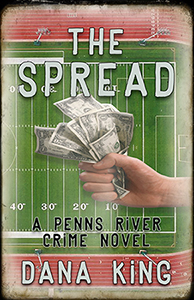
A Small Sacrifice. Nominated for a Shamus Award for Best Indie PI Novel, it’s the story of Chicago investigator Nick Forte, who is asked to clear the name of a man who has been publicly vilified as the murderer of his young son. Forte learns, while Doug Mitchell might not be guilty, he’s no innocent, and the circumstances place Forte and his family in jeopardy.

Grind Joint. Named by The LA Review of Books as one of the fifteen best noir reads of 2013, Grind Joint is the story of what happens in a small, economically depressed Pennsylvania town when someone gets the bright idea of solving their financial woes by building a low-roller casino. The local cops find themselves up against more than they bargained for when the Russian mob takes an interest. A Small Sacrifice’s Nick Forte plays a supporting but pivotal role.

Worst Enemies. The first of the Penns River books, the story of what can happen when someone takes the scenario of Strangers on a Train way too seriously. Detectives Ben Dougherty and Willie Grabek have to solve two murders organized by a person who is close to both victims, yet operates at some distance.

Wild Bill. A standalone tale of FBI Special Agent Willard “Wild Bill” Hickox, who’s ready to retire but wants to put the cherry on his career by bringing down Chicago’s Number One crime boss. When a gang war re-arranges all the players, Will must choose between duty, experience, and a combination of the two if he is to ride off into the sunset as planned.


I’ve been shoving the reviews of these books down your throats here for months, so that’s all I’ll say about them for the time being. Take full advantage of the free stuff while it lasts. It’s golden opportunity for anyone who might be curious about any of the books, but has been thinking, “That asshole’s not getting any of my money,” so go for it.

Monday, June 23, 2014

Bestseller Style

Advertising an author as “bestselling” doesn’t do anything in the way of getting me to buy his or her books. I’m not a snob about it (“if it’s a bestseller the hoi polloi must read it”); there are things about best sellers I generally don’t like. Now that I’ve teed it up, I might as well tell you what they are.

Most bestsellers are not renowned for their inventive use of language. Masses of people must read for the story alone and don’t care about the author’s wordsmithing talents. I can’t remember the last time I stopped while reading a bestseller to say to myself, “Damn. I wish I’d written that.” I may, and often do, admire how the story was crafted, but the craft of the writing isn’t memorable.

Genre fiction is sometimes condemned for adhering to convention; it’s the bestsellers that tar us all with that brush. Doesn’t matter if it’s a mystery or a thriller, there’s a romantic angle somewhere. Or at least a sexual one. That’s fine, as far as it goes, but too often they’re shoehorned in there like forcing the fiftieth egg down Luke Jackson’s gullet. A favorite is the couple, thrust together early in the book, who can’t resist a frantic coupling when they know their pursuers could kick down the door at any minute.

I prefer fiction of the “keep up or catch up” school. I don’t want to have potentially important events telegraphed to me. Spare me the needless exposition, and I can live without too many definitions. The Wire never did tell us what a PEN register was, but the term’s use in context allowed anyone who was paying attention to figure out it had to do with phones, and could tell who you were talking to. That was all you needed to know to follow the story. I don’t need to know how a my television picks up signals from a cable and forms them into pixels and sound waves I can see and hear in order to enjoy a television program. I’m not saying the author should confuse the reader, but give him some credit.

Last, but maybe most frustrating, there’s explaining things. Not like the previous paragraph, where the author is making sure I don’t miss anything that might confuse me or make me lose the thread and put down the book. I mean explaining things that, for me not to get, I might be too dumb to read the book in the first place. I’ll cite two examples, both from bestselling authors whose books I enjoy and read regularly.

From The Drop, by Michael Connolly. Harry Bosch has just arrived at the scene of an apparent suicide, a man jumping from a seventh-floor balcony:
“We have two scenes,” [Rampone} said. “We’ve got the splat around back here on the side. And then the room the guy was using. That’s the top floor, Room 79.”

It was the routine way of police officers to dehumanize the daily horrors that came with the job. Jumpers were called splats.

Thanks, Mike. You’re in the pantheon, and deservedly so, but I worry about anyone who couldn’t figure what a “splat” was in this context.

There’s this, from one of my heroes (and The Beloved Spouse’s secret lust object) Robert Crais. Early in The Sentry, Joe Pike is seated with a woman at a sidewalk café and notices something across the street:
The man sauntered out from behind the statue and fell in with a group of passing tourists. He wore an unbuttoned pale orange short-sleeved shirt over a white T-shirt, dark jeans, and sunglasses. The shirt and the bald head keyed a memory, and Pike realized the man had passed them before. Pike had not seen him double back, which made Pike suspicious because Pike had outstanding situational awareness, which meant he noticed everything in his environment.

“Meant” and “because” may be the two words I fear most in any fiction narrative. (Dialog is okay. People explain things to each other all the time.) Those two words are the shot across the reader’s bow: “We’re afraid you might be too stupid to understand this advanced concept, so we’re going to explain it to your dumb ass.” Me, personally? I’m insulted.

(“Blepharospasm” is another word that will set me off, for different reasons. I came across it in a Robin Cook bestseller, where he did the opposite of what I deride above, dropping excessive medical terminology on the reader to impress them. In Cook’s books, people don’t bleed to death; they exsanguinate. What’s a blepharospasm, you ask? I had to look it up, too. It’s an eye tic. Swear to God. Here’s a new rule for Bill Maher if he really wants to be helpful: No verb can take longer to say than the action it describes.)

I should make one thing clear: I am not criticizing bestseller authors or their readers, and there’s no sour graping here. God bless them all. First the writers, who deserve every cent they make for having found a way to get and keep people reading. And the readers for their critical role in this symbiotic relationship. If no one wanted to read, there would be no need for writers. Readers always come first. All I’m saying here is why I don’t scour the bestseller lists for my next read. Me, personally.

Epilogue:

“But wait!” I hear some cry out. (Don’t worry. I hear people cry out in my head all the time.) “How can you hope to write a bestseller if you don’t read them to learn how they’re put together?” I don’t. Writing a bestseller is the last thing on my mind. (Okay, the next to last. Listening to Ben Stein read The da Vinci Code on an endless loop is the last thing.) The most practical reason why authors should write “the book you want to read” is because you’re going to have to read your book so damn often. I write because I like to tell the stories I tell. If other people like to read them, that’s great. If people are willing to pay to read them, even better. If enough people are willing to pay to read them that I can make an appreciable sum of money from them, that’s like stealing. I don’t begrudge any bestseller or its author, but just because I respect their primacy in the field doesn’t mean I can’t be successful if I never write one.

Thursday, June 19, 2014

Rogue Island, by Bruce DeSilva

Bruce Desilva has been on my To Be Read list for a while, patiently working his way to the top. He’d just about made it when his third Liam Mulligan novel, Providence Rag, received so much attention I thought I might do well to start from the beginning, and chose to read Rogue Island instead. Yay, me.

Mulligan is an old-time investigative reporter in a 21st Century environment. His editors are more interested in feel-good fluff than exposes. Mulligan—don’t call him “Liam”—wants to look into who is burning down his old neighborhood, one house at a time, until the night they take down five. The cops don’t want anything to do with him, especially after an article he wrote on the two chief fire investigators is run under the headline “Dumb and Dumber.” The local fire battalion commander is a six-foot-five woman with the hots for Manny Ramirez; a bookie friend supplies Cuban cigars and inside Mafia dish. Mulligan’s ex-wife is a jealous mental case, and his current love interest is a fellow reporter who won’t tell him how she gets supposedly sealed grand jury testimony and won’t sleep with him until he has an HIV test.

There are more people in Mulligan’s world, each with their own memorable story, and each with their own layer to add. DeSilva handles them all with a journalist’s confidence of knowing what’s important and what is merely supportive. Unlike many journalists turned novelists, DeSilva has a light touch with the writing. There is no oppressively delivered message, and the humor runs throughout the book in appropriate ways, and is genuinely funny. His grasp of the corruption that passes as doing business is Providence is delivered with a combination of disdain and eye-rolling satire. (I hate spoilers, so skip ahead if you like, but this story is too much fun not to tell. It’s election season, and the leading contender to unseat the sitting mayor has legally changed her name to Angelina V. aRico, so it can appear first on the ballot. The mayor responds by changing his name to Rocco D. aaaaCarozza. When asked by a reporter how to pronounce that, the mayor replies with a straight face, “It’s Carozza. The four As are silent.”)

DeSilva is that rare author able to subsume his authorial voice into the material without letting it become styleless. All the writing flows and you’ll find yourself reading the book faster than you want to, in part because it reads so easily, in part because it’s so much fun, and—most important—because it’s so damn good. The ending is perfect, the kind of thing a reporter could pull off with sufficient contacts and balls.


He’s in the rotation now. There are a lot of books lined up to be read, but Cliff Walk (the second Mulligan book) can’t rise to the top soon enough.

Monday, June 16, 2014

It's Not Just Kids Who Take a Village

A Small Sacrifice had sold 22 copies when I heard it was nominated for a Shamus. Maybe I should make a better effort.

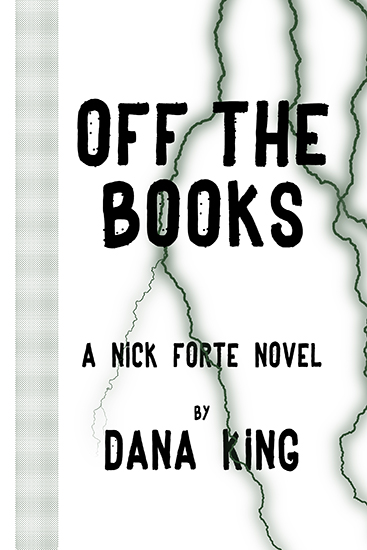
This new cover can’t hurt. The original wasn’t just not indicative of the story; it may have been actively misleading.

I’ll post some samples, tell some stories about how it came to be written, try to put together a blog tour and set up some interviews;  the agent may have a few things up his sleeve. A promotion. Hell, maybe I’ll even spend some money, get the word out.

What I need to do first is to thank some people. It’s customary to do this after an award has been won; my ego is not that large. (Lest my inner Donald Trump try to wrest control from my better judgment, the Montgomery County (MD) library system informed me that Grind Joint did not “meet [their] needs” on the same day the Shamus nomination was announced) I’m thanking them now because I don’t want the opportunity to pass. Award losers thank people for—what? Helping to write a book that didn’t win?

So, in no particular order:

The Writers of Chantilly, who were subjected to the entire book, a chapter or two at a time, while it was still in the sausage-making phase.

John McNally and the writers of Jenny McKean Moore writers’ workshop, Spring Semester of 2002. My submitted writing samples were from early drafts of this book. (Yes, it’s that old.) They helped me to decide what was important enough to tell, and how best to tell it. I stumbled across John’s notes to me yesterday, including a handwritten comment that mentioned the ending may be anticlimactic, wasting a good setup scene. The ending now is nothing like what he was given.

Charlie Schlueter, my trumpet teacher at New England Conservatory. There’s a blog post half-written about how the things Charlie taught me about trumpet playing transferred into other aspects of life, notably writing. I’m get it out over the next few weeks.

Pam Strickler, my first agent. Pam took the time to teach me what I might work on most in my craft: how to find the places where five words can do the work of seven.

Barbara Braun, my second agent, who almost sold A Small Sacrifice several years ago. There’s a decided change in the current version from what she first saw, as she taught me how to look for god in the machine while it was still under construction.

My daughter Rachel, aka The Sole Heir™. There are few things that happen with Nick and his daughter she and I didn’t do first. And more entertainingly.

Charlie Stella, the Godfather of Mob Fiction, without whom Grind Joint would not have been published. Without that validation, I doubt I would have submitted A Small Sacrifice for consideration.

Declan Burke, who talked me out of quitting several years ago—when no books would have been published—and gave me a nudge to look into what other things might fall my way after Grind Joint was well received.

Last, but not least, The Beloved Spouse. She wasn’t around when A Small Sacrifice was written—well, she was alive, just not around me, and, since I’m a guy, that’s all that matters—because she does things every day I should thank her for and don’t always remember to, she does them so often and effortlessly.