So I'm sleeping late. Leave me alone. I'll have something for you next week.
Thursday, December 31, 2020


Wednesday, December 23, 2020
Happy Holidays
While 2020 has been a large, runny turd in the punchbowl of life, it has not been uneventful here at Castle Schadenfreude. Alas, not all the goings on have been good.
I was diagnosed late last year with a form of macular degeneration in my right eye. Monthly treatments have kept my vision relatively stable. About the only thing I don’t do is drive on unfamiliar roads at night, though most everything else takes a little longer. It could be a lot worse, but we’re staying on top of it and I have a great doctor, so the outlook is as good as can be expected.
·
In February, Dr. Sole Heir’s mother gifted her a
car with one catch: The Good Doctor had to pick it up in Maryland and get it to
New Orleans. I volunteered to co-pilot, and it was a weekend well spent.
·
In the spring John A. Hoda was kind enough to
have me as a guest on his fine podcast. Even better, I had the slot between two
major forces in the business, Michael Koryta and Joseph Wambaugh.
·
The newest Penns River novel, Pushing Water,
came out in May. Leaving the Scene comes out in the spring of 2021.
·
I read at a virtual Noir at the Bar in May. Kudos
to Ed Aymar for keeping the flam going for these events in the DC area.
·
My mother died from the virus on August 13. If
anyone wonders why I’ve been such a hard case about social distancing and
staying safe, this is a large reason. Everyone has to die, and Mom had a
93-year run, but no one should have to die like that.
·
Public Service Announcement: When sump pump
backup batteries die, they smell like a gas leak. So much so the fire company doesn’t
even fuss about what amounts to a false alarm when they scramble to see what’s
what. We’re more than grateful for their speedy and friendly response, though
it will not prevent the cops in my books making fun of firefighters.
·
In a matter unrelated to the battery failure,
the sump pump failed in October. The damage was minor, but it was a week spent
moving things and drying to dry out The Beloved Spouse’s craft room, made even
tougher due to the rising street value of Lysol and other disinfectants
·
One bit of unadulterated good news: I am
retiring at the end of the year. I’ll likely keep my hand in part-time, but I’m
using my brother as role model, appreciating that I now have the hammer and can
choose when, how much, and on what to work.
·
She’s an active quilter. Each project gets a
little more elaborate and challenging.
·
She still makes cards, though not as much as she
used to, given the time taken up by quilting.
·
She spent a lot of time back in the early days
of the virus making masks. We have a variety of colors and styles, as do some
friend, relatives, and Zack’s entire class at flight school. (More on him later.)
·
We broke down and bought an air fryer, which
keeps her busy keeping up with its features, as it also grills and does so many
other things I can’t keep track. Last week it woke me up, made coffee, and
emptied the dishwasher.
Happy Holidays.
Thursday, December 17, 2020
Go West, Old Man
The Western novel lingers. I set it aside when I got stuck, then the current Penns River story took precedence. I thought to look west between Penns River drafts but was asked to contribute to an anthology, which was well worth the diversion. I have high hopes for the project.
1.
Know your scope. The original plan was to write
a book about a town cobbled out of four ranches, and the frictions that ensued.
This was too broad. The real story concerns the interactions of a town marshal,
his protégé, and a federal who comes to town in pursuit of a fugitive.
2.
Do less, better. I’m narrowing the scope to
sharpen the focus.
3.
Lead with your characters. Whatever goes on in
town must support the three main characters in some way, which means I need to
create fully realized settings and subordinate characters who help add depth to
the big three.
4.
Dialog is where you learn most about your
characters. This I already had pretty well under control.
5.
Create peaks and valleys. I had them, but they
were random. Pushing the emphasis more toward the three major characters will
help with this.
6.
Have a point. I had one when I started but it
became diffused. Writing about a town can show certain qualities of the people,
but focusing on the people allows a point to be made more relatable.
Thursday, December 10, 2020
Post-Retirement Writing
Last week I talked about my retirement plans. Writing was mentioned only in passing. That doesn’t mean I don’t have plans along those lines.
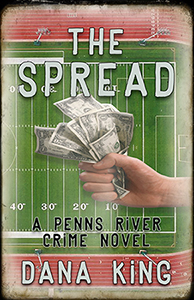
- Another Penns River story
about illegal high school football betting. Tentative title: “The Spread.”
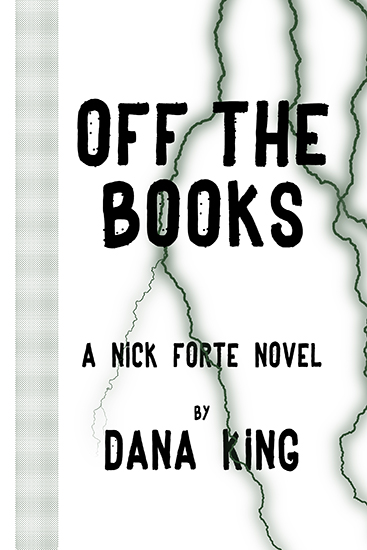
- A return to Nick Forte.
Forte leaves Chicago to help Goose, who has gone to the hills to help his
family. Tentative title: “The Bottom.”
- A Penns River short story,
“The Box,” that has been awaiting edits since the 35-day government
shutdown a couple of years ago.
Jake Gittes: Working for the District Attorney.
Evelyn Mulwray: Doing what?
Jake Gittes: As little as possible.)
Thursday, December 3, 2020
Into the Stretch Run
I gave my notice at work this week.
December 31 is my last day before retirement.
It’s an odd feeling. I’m still working, and there are things
I need to accomplish, but the sense of urgency is both less and greater.
Greater because there’s a true hard stop; less because, much as I don’t want to
leave my co-workers holding bags of shit with my name on them, none of that is
my problem as of New Year’s Day.
How will I spend newly free time? I’ll do more writing, for
sure. And more reading. My eyes won’t be as much of a concern because I’ll be
able to spread things out through the day to rest them as needed. I have
projects lined up and I’m looking forward to getting at them.
Road trips. Obviously we didn’t get one this year, but we’re
looking at two long ones next year, maybe three:
1. Yellowstone, by way of the Badlands, then through
Colorado to see the family before coming home
2. New Orleans for Bouchercon, going down early to spend
time with Dr. Sole Heir (and hopefully Sole Son-in-Law) before the conference.
3. Albuquerque for Left Coast Crime, though this trip
depends on the vaccine and virus situation far more than the others.
In coming years I see trips to New England, Florida (I’ve
never been to spring training), Chicago, and random places that catch our fancy.
We’ve been saving up for when we have the time, and in 28 more days I’ll have
plenty of it.
I’ll try to keep my hand in with the old job doing piecework
to hold off when I claim Social Security. More book promotion, even if only virtual.
I’m also toying with the idea of a live interview series.
There will be day trips. (We live fourteen miles from
Washington DC, home of more free museums and historical attractions than you
can shake a dead cat at.) There will be mini-road trips (Harper’s Ferry,
Gettysburg, Colonial Williamsburg, Yonder) and “home” trips back to Pittsburgh
(friends, family, Primanti’s, Glen’s). There are home improvement projects,
games, walks, movies, and TV series to keep me occupied. Naps.
The Beloved Spouse™ likes to tease me how I already have 27
hours a day booked. That’s fine. I’m not going to do all of the above every
day.
I’m going to do them all, though.
Thursday, November 19, 2020
John A. Hoda, Private Investigator and Author of Odessa on the Delaware
I first met John Hoda at the Dallas Bouchercon. We sat near to each other at a panel on cops and procedurals. John and I came to quick agreement that selecting between realism and entertainment was a false choice. The best were able to make realism entertaining, mainly by knowing how to describe it, and in what detail.
We’ve since kept in touch, and John was kind enough to give
me a slot on his podcast, between (wait for it) Michael Koryta and Joseph
Wambaugh, which are pretty lofty surroundings for one such as me. I have been
too slow to reciprocate in my invitation but will correct that today. John’s a
great guy, fine writer, and I’m sure you’ll get a lot out of his visit here
today.
(Personal note: In the “small world” category, John and I
went to the same undergraduate school, Indiana University of Pennsylvania.
Alas, our years there were adjacent, not concurrent, so our paths never
crossed.)
One Bite at a Time: John, welcome to One Bite at a Time.
You’ve been a cop, an insurance fraud investigator, and spent the past twenty-plus
years not only running a successful private investigator agency but coaching
other PIs on how to make their practices more successful. What attracted you to
investigations in the first place?
John Hoda: When I was a teenager, I worked at a gas station
pumping gas. The local police department got their fill-ups there and I was
enthralled by the stories they told me. A couple of times, they got hot calls
and had to race off with lights and sirens. I was hooked. I went to IUP for
Criminology and upon graduating become the first college graduate to work for
that same PD. A short time later, I had the opportunity to become an insurance
fraud investigator and I jumped at it.
OBAAT: You’ve been involved with law enforcement and
investigations since the mid-1970s. What do you find most different how
compared to when you started?
JH: The data is now at your fingertips. Doing a simple
locate that costs me 75 cents today would take hours of shoe leather back then.
Some things have not changed. You had guys coming home from Vietnam and just
trading uniforms. You still have vets of Iraq or Afghanistan doing the same
things. With tons of Homeland Security grant money, there is an unhealthy
militarization of police departments now. They have to walk that back and put a
greater emphasis on community policing and not acting like an occupying force.
OBAAT: Where do you feel the greatest improvements have come,
so far as results are concerned? Are there any aspects you don’t feel are as good
as they used to be?
JH: Actually, the hardening of job classifications and union
rules have caused the
solve rates to plummet. I am hopeful that big data put in
the hands of the first cops on the scene will allow them to work more
effectively at solving crimes within the first 24 hours. Patrol functions as we
knew them are archaic. Better use of time can be spent on crime interdiction
and crime prevention. Don’t get me started on interrogation techniques meant to
skirt around the Miranda warning. Cognitive interview methods such as PEACE
which originated in the UK is much more effective and totally ethical. False statements
and false confessions are still a bane of good policing.
OBAAT: On to writing. Your first book was a memoir of sorts,
Mugshots:
My Favorite Detective Stories. What put the bug in you to write them
down and publish? (Note: I have a copy. John should expect to see several
“homages” to his work in the next Nick Forte novel.)
JH: For years, I had been a storyteller with my family and
friends, who always said that I should write them down, so I did. I didn’t
realize at the time, it allowed me to create a voice that seemed natural for
fiction.
OBAAT: What made you turn your attention to fiction?
JH: I wrote a story that had been kicking around in my head
for twenty years of a little league coach who threw a magical pitch in batting
practice. He was discovered by the Philadelphia Phillies, later in life. The
book is titled Phantasy
Baseball: It’s About a Second Chance. In that book, the protagonist
meets a sorority sister at a mixer. She is an accounting major that wanted to
become an FBI agent. Fast forward twenty years and they meet again. She married
and divorced but kept her married name, O’Shea.
OBAAT: You’re four books into the Marsha O’Shea series. Tell
us a little about her, and the books.
JH: Post 9/11, the FBI became the lead domestic intelligence
gathering three-letter agency and stopped being the federal crime-fighting
alpha-dog. Marsha was a gunslinger in the Miami Cartel days and when her squad
was disbanded, she returned to her hometown in Philadelphia to quietly count
the years to retirement on the nontraditional organized crime squad when a
Russian gang enforcer decides to take over the entire Philly mob scene. That is
how Odessa
on the Delaware starts. At the
end, Marsha is beginning to get her mojo back, but has a setback that sends her
into the bottle and slumming on administrative leave in the Sunshine State,
where Clearwater Blues is set. I take
a real hard swing at the loopholes in gun laws, domestic violence, and
non-existent mental health treatment in this country. Can she stop the next
mass shooter headline?
She is then given a mission impossible-like assignment in
Detroit and Detroit Wheels takes you
on a thrill ride while the clock is ticking. A serial killer strikes only once
a year on 9/11, his target Muslim women. Marsha puts together a sandlot team of
investigators outside of normal channels in the race to prevent the next
killing. Injured and exhausted, she accepts an assignment too soon after
Detroit that deals with sex trafficking in Reading, PA. West Reading Traffic is the fourth book in the series and brings us
back full circle with her co-protagonist in Odessa.
OBAAT: Any particular reason you chose a female protagonist?
JH: Marsha and a sportswriter turned crime beat writer
appeared in Phantasy Baseball and
carried over into Odessa. I found
that I liked Marsha and her backstory made for a compelling, complex, and
totally believable female investigator trying to make on her own it without a
squad backing her up or in the shadow of a still male-dominated law enforcement
culture.
OBAAT: What’s next on the agenda?
JH: Stew Menke, the sportswriter turned crime beat writer
got his start in Vietnam as an Associated Press stringer. He and Tom “Doc”
Barnes, a Navy corpsman, who later became the Philadelphia Phillies manager
cemented a life-long friendship in the red clay of the first Marine platoon
trench line on Hill 861 at Khe Sanh in January 1968. Dispatches from Hill 861
is slated for a May 2021 release. I will take you back to Marsha’s gunslinger
days in Miami with a novella to become the prequel novella for her series.
Dana, your readers can get Odessa on the Delaware FREE with
this link:
https://www.subscribepage.com/j4o8g6
They can check out my website at www.johnhoda.com
or email me at John@JohnHoda.com
Thursday, November 12, 2020
From the Vault: Are You Going to Believe Me, or Your Private Eyes?
As with many, the election and post-election trauma has taken much of my attention of late, so I haven’t spent as much time thinking of a blog post as I like to. That’s okay, because I spent a lot of that time re-acquainting myself with PI fiction through several outstanding books (Behind the Wall of Sleep, Red Harvest, Jackrabbit Smile) and preparing to dip my toe back into Nick Forte country when I get a little time.
With that in mind, I’m going to open the vault for a post I
wrote back in 2009 about how I feel about the PI genre when properly done. While dated (there are others that have earned mention should I ever update the post, and no one thinks of Reed Farrel Coleman as even a "relative" newcomer anymore), this still sums up my philosophy about PI stories and why, when well done, they are the highest form of crime fiction.
Are You Going to Believe Me, or Your Private Eyes?
I’ve been lucky over the past few weeks to have read three
books that reminded me why I got interested in crime fiction and writing in the
first place: first person private investigator stories.
Libby Fischer Hellmann’s Easy Innocence takes the attitudes of
an affluent suburb and shows consequences not often considered. Her detective,
Georgia Davis, avoids the pitfalls of many female protagonists. She is not a
man in a skirt, ready and willing to kick ass as necessary; neither is she
dependent on either a big, strong man or divine intervention to get her out of
tough spots. Best of all, she’s smart enough to know the difference and act
accordingly.
The Silent Hour, by Michael Koryta, is a cold-case story. Lincoln Perry
has many of the characteristics of a stereotypical PI—former cop who left under
a cloud, bends and breaks his own rules, trouble maintaining
relationships—though Koryta never lets him fall off that edge. His problems are
the problems anyone in his situation could have, and he’s anything but
omnipotent. Perry takes a beating and keeps on ticking, learning about himself
as the books progress.
Declan Hughes’s detective, Ed Loy, takes beatings that make what Perry endures
seem like air kisses from a friendly but distant aunt. In All the Dead
Voices, Ed inadvertently finds himself cleaning up leftovers from the Irish
Troubles, caught between republican terror groups, drug gangs, and government
agencies whose interests do not include what most would call a classic sense of
justice.
What all three have in common—aside from tight plots and uniformly exceptional
writing—is what makes the PI series the highest form of crime fiction; they’re
primarily character studies of the hero. (Or heroine, in Georgia’s case.) A
good series—as all of these are—works even better, allowing the character to
evolve. Attitudes change, as do relationships. Physical and emotional trauma
accumulates. The character may grow emotionally, or become embittered. What he
deems worthy of description, and how it is described, matures.
For all the talk of the decline of PI fiction, the quantity of expert
practitioners isn’t hurting. James Lee Burke and Robert Crais still have hop on
their fastballs after twenty years. (Burke’s Dave Robicheaux is actually a cop,
but the length of leash he is provided in New Iberia and his personal journey
through the series make his stories read more like PI fiction than police
procedurals.) Relative newcomers like Sean Chercover and Reed Farrell Coleman
prove the talent pool is deep as ever. Dennis Lehane’s upcoming Kenzie-Gennaro
novel is much anticipated.
The fictional PI can look into things the average cop never touches. Could Ross
Macdonald have explored the rotting foundations of crumbling families with a
cop, or did Lew Archer have to be a PI? A cop concerns himself with who and
what; why is nice, but is primarily important as a way to get to what, or to
help to convince a jury as to who. His caseload is too great to do otherwise.
Private eyes are paid to find out why, which often compels some worthy
introspection. Cops are about closing cases; PIs are about closure.
PI stories are also better suited for ambivalent endings. A cop’s job is to
catch the bad guy. The PI can appreciate the bittersweet nature of all cases,
balancing the satisfaction of solving the mystery with the knowledge of his
pre-ordained failure: no matter what he discovers, things can never be put
right. The dead are still gone. The cop can catch the killer and exact a measure
of justice; the PI may be brought in to clean up the mess that doesn’t quite
meet the necessary standard of illegality.
It’s no surprise so many of the “genre” writers who receive acclaim from the
“literary” community come from detective fiction. Chandler, Hammett, Macdonald,
and Burke are all accepted as great writers, not subject to the backhanded
acclaim of “great genre writer.” No one thought Lehane presumptuous when The
Given Day looked into issues well beyond crime; he’d been doing it for
years. Gone, Baby, Gone is as thought-provoking a book as one
is likely to read.
Declan Hughes may be the foremost advocate of the virtues of detective fiction,
not just in his novels, but in his public statements. If I had a transcript of
his comments from Bouchercon 2008, I would have printed them here and saved you
the trouble of reading my interpretation; his is clearer and more impassioned.
Few books—of any genre, or of no genre—are more likely to make you wonder,
“What would I do here?” or, more hauntingly, “What would I have done
differently?” When done well, what more can anyone ask from a book?
Subscribe to:
Posts (Atom)