Thursday, October 26, 2023

Readers of the Lost ARCs

 I routinely post quarterly lists of my “favorite” reads of the season that just ended. I am careful not to say these are the “best” books I read, as I’m not into passing that kind of judgment. I use “favorite” as shorthand for “books I enjoyed the most.” While not an endorsement of what’s good and what isn’t, my hope is to make those who share my tastes aware of books they might otherwise miss. Responses to these posts are routinely encouraging and I’m happy to mention books some might not be aware of, regardless of topic or age of the book.


I occasionally receive an advance reader’s copy (ARC) of a book when the author is asking for a blurb or an interview. While some of these books would make the favorite reads list, I have typically refrained from writing about them in the quarterly recaps because I always post links to a book’s purchase page so anyone with an impulse can grab a copy. ARCs are, by definition, not available yet, and I know a lot of people don’t like to be teased with things that are out of reach, so I have always left such books out of the quarterly recap.


Talking to a friend about this the other day got me to thinking this is a misguided policy. Pre-orders have become so important to making a book’s success that I am doing the author a disservice if the book deserves mention and I fail to do so. My reasoning before was that there was no link to give potential readers, but pre-order links are now available weeks, sometimes months, in advance. It’s time I got with the program.


In my defense, I never heard of pre-orders when I started the blog, so they were never a concern. Times changed and I have been slow to adapt. That said, future “Spring/Summer/Fall/Winter’s Favorite Reads” posts will include any ARCs that caught my eye. I will note that they are available for pre-order so that no one gets disappointed if they try to buy one.


That’s the future. Let’s take the remainder of this post to catch up on ARCs from earlier this year that escaped notice due to my misguided policies, with apologies to the authors for my delay.


Double Exposure, Colin Campbell. Grant and McNulty are back, fighting a drug cartel that has a grudge against each of them. You already know I liked this one, as I blurbed it: “Double Exposure shows Grant and McNulty in peak form. No one writes better action sequences than Campbell.” I stand by that.


Sleepless City, Reed Farrel Coleman. Renowned private eye writer Coleman (Moe Prager, Gus Murphy) moves into the realm of more high-octane action thrillers with this, the first in what promises to be a new series. While the type of story told is different, Coleman’s artful writing and careful plotting remain solid. A lot of writers try to shift gears like this. Few do it as well.


The Get, Dietrich Kalteis. This is a typical Dietrich Kalteis book, which is to say outstanding. If you’re already a fan, get this bad boy. If you’re not a fan but like the Elmore Leonard school of writing, there is no better practitioner than Kalteis, who is able to capture the aura of Dutch’s work without sounding like a copy.


Thursday, October 19, 2023

Defending the Leonard Ten

 Of all the writing “rules” I have seen, Elmore Leonard’s are probably the best known and most often vilified, generally because they are misunderstood. The late Mr. Leonard (I want so bad to call him “Dutch” but, even ten years after his death, I can’t bring myself to even imply that level of familiarity) does not need me to defend him, but what else are blog posts for but to say things that could be left unsaid except that the blogger wants to say them. So there.


As Leonard himself said in the original New York Times piece in which the rules appeared, they are not rules at all, but suggestions. That said, I have seen few suggestions that make more sense, or that apply to more cases, than his. I don’t consciously think of them very often, largely because they are now so well ingrained into my writing process I don’t have to, but they are always at the back of my mind when I write.


Here they are, with my interpretations. I use none – well, maybe one -  of his explanations, even though ignoring those is what gets most of his detractors to look foolish.


Never open a book with weather.

“But Get Shorty opens with the weather” is a favorite refrain of those who take issue these rules.


Let’s look at the offending passage:


When Chili first came to Miami Beach twelve years ago they were having one of their off-and-on cold winters: thirty-four degrees the day he met Tommy Carlo for lunch at Vesuvio’s on South College and had his leather jacket ripped off.


It’s a single sentence and less than half of it directly addresses the weather. The inciting incident for the book is the loss of Chili’s coat. This being Miami Beach, the reader would have to wonder why Chili even had a coat with him unless we know it’s unseasonably cold.


Plus, it’s one sentence. Not a page or more describing clouds or rain or how being uncomfortably cold/hot/wet made Susan feel about the weather/her life/ John’s failure to call. It’s a sentence to kick off the story.


Experience has taught me that anyone so willing to ignore context to criticize something isn’t writing anything I’d care to read.


Avoid prologues.

If possible. Sometimes it can’t be helped. My current work in progress is presented as the memoir of a man who lived on the Western frontier, taken from notes that were lost and only recently discovered. I present the prologue as an editor’s note to describe how the book supposedly came to be. (Or a foreword. I haven’t decided yet.)


It's also true, as Leonard himself acknowledges, that you can ignore any of these rules if you’re good enough to get away with it. I’ve read novellas shorter than the prologue to Empire Falls, yet Richard Russo makes his so fascinating I would have been satisfied is that had been the whole story, except that he so masterfully sets up what is to come.


Never use a verb other than "said" to carry dialogue.

Never use an adverb to modify the verb "said"…he admonished gravely.

These two go together. “Said” is an invisible word in dialog, used to avoid confusion about who is speaking. If you feel the need to use a different verb, or to modify “said,” then the dialog itself isn’t strong enough to convey what you feel is missing. Change it, and maybe throw in something to describe how the line is spoken.


Shane said, “I hear you’re a low-down Yankee liar.”

Wilson’s voice barely crossed the room: “Prove it.”


(Note: “He admonished gravely” is Leonard’s tongue-in-cheek way of telling those who are paying attention that not even he is taking this too seriously.)


Keep your exclamation points under control. You are allowed no more than two or three per 100,000 words of prose.

This goes with the “said” comment above. Exclamation points too often are used instead of well-chosen dialog to make sure the reader gets it. They’re explanations, and explanations mean what came before wasn’t clear enough. As Renni Browne and Dave King say in Self-Editing for Writers, “resist the urge to explain.”


Never use the words "suddenly" or "all hell broke loose."

This is a fundamental “show, don’t tell” thing. Don’t tell us something happened suddenly, show us. And “all hell broke loose” is lazy writing, plain and simple. Unless used as dialog from the mouth of a conversationally bland character.


Use regional dialect, patois, sparingly.

Notice he doesn’t say not to use it. Such language can help to define a character. (Think of Dave Robicheaux and Clete Purcell in James Lee Burke’s novels.) To use too much, or to work too hard to spell the spoken words phonetically, forces the reader to translate what this character is saying when they should be immersed in the story.


I typically don’t care for writers who take examples from their own work unless the are superstars, but this example from my novel The Man in the Window comes to mind.


“Mr. Forte, I want to start by telling you what a fine job you’re doing of fucking up my investigation.” At least that’s what I thought he said. He wasn’t from around here. Farther south, Alabama or Mississippi maybe. … What came out sounded like, “Mistuh Foe-tay, ah wunna staht by tellin yew whut uh fine job y’all’re dewin uh fuckin up mah vestigashun.”


And that’s the last I mentioned it, except for the occasional uniquely Southern idiom, such as how he might be “fixing to do” something.


Avoid detailed descriptions of characters.

Don't go into great detail describing places and things.

You want readers to be absorbed in your story, which means you don’t want them to have to stop so they can assemble these people and places in their heads. Give only as much description as the reader needs to create the movie in their imaginations. If a detail is important to the story later on – say a unique tattoo or strikingly-colored eyes – then by all means mention it, but don’t bury it in a shopping list of other stuff.


Try to leave out the part that readers tend to skip.

Yeah, well, duh. How many times have you had to go back in a book because a detail provided on Page 123 allows what you just read on Page 136 to make sense, but you skimmed past it because your eyes glazed over from the minutiae that enveloped said key detail? Well, leave that shit out.


And finally, Rule 11, which he described as “My most important rule is one that sums up the 10.”


If it sounds like writing, I rewrite it.

Remember, you’re telling a story, not gratifying your ego by impressing anyone with all the cool words you know or constructions you can pull off. Cool words and literary constructions are not bad things unless they get in the way of the story, and, as much as possible, you want your audience to forget they are reading. They should have the feeling they’re sitting back with their eyes closed while a movie plays out in their heads.


That’s what his rules mean to me.

Thursday, October 12, 2023

Summer's Favorite Reads

 Old Bill Miner, Frank Anderson. Brief biography of one of the last of the Western train robbers. Miner was known as a gentleman bandit, always polite and deferential. Also not always the sharpest knife in the drawer. The film The Grey Fox is a depiction of Miner’s life.


We Pointed Them North, E.C. "Teddy Blue" Abbott and Helena Huntington Smith. Delightful memoir of a man who worked cattle his entire adult life. Helena Smith did a wonderful job keeping Teddy’s voice as much like his spoken dialog as possible. (At least I’m told she did.) It’s funny, it’s sad, and it’s a master class in what it was like to be a cowboy, both on the frontier and after.


Hombre, Elmore Leonard. This was the third or fourth time I’ve read this book and I still think it may be Leonard’s best. When people say Out of Sight and Get Shorty were the first movies to do Leonard justice, they mean the crime novels; the movie version of Hombre is pitch perfect. The character changes made by Irving Ravetch and Harriet Frank, Jr. are true to the tone of the book, and they did well to keep as much of Leonard’s dialog as possible.


Last Stand at Saber River, Elmore Leonard. The least of the three Leonard Westerns I read over the summer, but still good enough for inclusion. Written in the mid-1950s, his style was still forming, and there’s too much internal monologue, but the story and characters are top-notch. (The TV movie with Tom Selleck and the Carradine brothers is eminently missable. Just to give an idea, you get to see a dead man start to stand just before a commercial break. Apparently he didn’t wait for “Cut!” and the error was missed in editing.)


Law at Randado, Elmore Leonard. Much better than Saber River, and much more like an Elmore Leonard novel. The dialog is better and the action flows more naturally. Kirby Frye is a character who could have carried a couple of books.


The Bandit & Others - The Best Western Stories of Loren D. Estleman, Loren Estleman. Collections of stories by a single writer are typically more consistent in quality than anthologies by multiple authors. Even so, it’s rare to find a collection where every story is as good as in this one. (Stop me if you’ve heard this before.) People have been after me for years to read Estleman, either for PI or Westerns. I finally listened. Now I must read as much of him as possible.


Her Perfect Life¸ Hank Phillippi Ryan. I don’t typically read psychological thrillers; I like more overt criminal activity. This was in a swag bag from a conference and HPR is a big deal, so I figured what the hell. I’m glad I did. In the interest of full disclosure, I thought there was a little too much time spent in characters’ heads, but that’s a personal preference. The characters are well-drawn and believable, and the story is complicated enough to hold one’s interest without becoming so convoluted you don’t care anymore. The twist at the end is killer.


California Fire and Life, Don Winslow. This book was primed to be a disappointment after the high expectations created by my first trip into Winslow’s oeuvre, The Dawn Patrol. Nope. I enjoyed CF&L at least as much. All the things I liked about The Dawn Patrol were there, with the depth made possible through the use of multiple points of view. Winslow has a unique gift for providing detail in an entertaining manner that would come across as information dumps at the hands of most authors. Highest recommendation.


And Silent Left the Place, Elizabeth Bruce. I will confess, this one is personal. Elizabeth Bruce and I have been friends since we met at a writing workshop twenty years ago. This was her first novel, a literary effort with fascinating characters and a well-crafted story. No navel-gazing here, and no use of language just to show the author has command of it. She displays her talents in an understated yet lyrical manner that made it a pleasure to re-read after all these years.


Thursday, October 5, 2023

Beau Johnson, Author of The Abrum Files

Beau Johnson is an annual visitor here with good reason. There are few more personable and forthright people available in any profession. I just happened to be lucky he’s a writer. Beau’s new book, The Abrum Files, is a continuation of sorts of his Bishop Rider series. What’s a continuation “of sorts?” Beau explains.


One Bite at a Time: Welcome back to the blog, Beau. Your new book, The Abrum Files, picks up where the Bishop Rider saga ends. What’s the skinny on Jeramiah Abrum?

Beau Johnson: First off, thanks for having me back, Dana.  Always awesome to be here. You’re doing good things. As for the skinny on Jeramiah Abrum, well, there’s a story there. One that began some time ago and includes a throwaway line in a story titled “Right Time, Right Place” that sits within the pages of my first collection, A Better Kind of Hate. Jeramiah didn’t even have a name back then either, him only being referred to as someone’s child.  That someone? Marcel Abrum—the very dirtbag who set the deaths of Bishop Rider’s mother and sister into motion. Dun-dun-dun. 


OBAAT: The Hebrew prophet Jeremiah pronounced God's judgment upon the people of his time for their wickedness. May I assume your protagonist’s name is not a coincidence?

BJ: Well, I did not know that. It’s apt, however. And I’d like to say that's how it went down, but no, I just liked the way the name flowed.


OBAAT: Without giving away too much, what are the key differences between Jeremiah Abrum and Bishop Rider? How are they the same? 

BJ: The two are very much the same in a lot of ways. Both sharing the same goals and methods. It’s the scope of things that would sometimes cause them to clash. Before Jeramiah, Rider worked from the shadows, or tried his best to remain there, but Jeramiah has always been more of a big picture guy. Which isn’t necessarily a bad thing, but in Rider’s world, it becomes somewhat deadly. A give and take took place over the years, but in the end, they mostly went with Rider’s way of things. With Rider now gone, well..


OBAAT: Is it easier or harder to write for Abrum than it was to write for Rider? Or are they about the same?

BJ: There’s more angst to Rider, always has been, as he struggled with what he set out to do even though he was bent set on doing it, where Jeramiah, well, he seems more freer when I write him. Means I have to go with Jeramiah for the win. Don’t tell Rider. Please.


OBAAT: Abrum faces an existential decision in the book. What causes it, and how does he come to make the decision he makes?

BJ: It comes back to his father and what his uncle and father did. How years after the fact, when Jeramiah actually finds out what they were and what they did to Rider’s life, he makes a choice not many men would make: to make up for the sins of his father. This is all old hat by the way, happening earlier throughout my other books, but I revisit it again in this book, though granted, through another set of eyes.


OBAAT: Is there more of Abrum on the horizon?

BJ: Undetermined. It could be yes, it could be no. I have left some threads that do dangle in The Abrum Files, and I have been writing, but I cannot say with any kind of certainty. I have stopped saying I’m done with publishing, though. That much I can say for sure. If I have something I think works, that I have a throughline, yes, there will be more.


OBAAT: Please tell me the fact that you’ve moved on from a series character is not coincident with losing your taste for cheese. Assuming that is not the case, has your taste in cheese changed since you started writing the new protag?

BJ: Funny you should say that. And no, my penchant for cheese has not abated. However, my middle son has become quite the connoisseur. Lots and lots of new cheeses have entered my house this last year. Stinky feet I can do without, but Havarti will always have my heart.

Thanks again, Dana! Great questions. Fun was had!

Always a pleasure, Beau. Come back any time.


Thursday, September 28, 2023

An Interview with Author, Graphic Artist, Podcaster, and General Entrepreneur Sarah Burr

 One Bite at a Time: Welcome to One Bite at a Time, Sarah. We don’t get a lot of cozy writers here. No offense to cozy writers, but my books were once described as “a cross between Justified and The Wire,” so that’s where the posts tend to fall. We’ll talk about your books specifically in a minute, but first tell us what attracts you to the cozies.


Sarah Burr: There’s so much to love about cozy mysteries. Not only are the settings warm and welcoming, but the people are, too. Readers can always be assured that the good guys will win in a cozy. Yet, there’s something much deeper that drew me to reading and then eventually writing cozy mysteries. Their sense of justice is really quite remarkable. You have an everyday civilian (an amateur detective) willing to put everything on the line to pursue the truth. My heroines could leave things to the authorities, but their desire to do good in the world outweighs hesitation or fear.


OBAAT: The Court of Mystery is a nine-book series, which is a significant undertaking. I’ve written eight Penns River procedurals, so I have an idea of what’s involved in keeping a series going that long. What is it about this universe that keeps you coming back?


SB: My characters are really the driving force for me to return. I love hanging out with Duchess Jacqueline and her friends as they solve mysteries. I love how her mind works and how she must approach a crime scene, given that the Court of Mystery series is set in a medieval-like fantasy world called the Realm of Virtues. I’ve created my own set of rules in this setting, and it’s been so fun to explore everything it has to offer Jax. While I plan for Book Ten to be the final story in the series arch, I do have a spinoff in the works so that Jax’s adventures can continue.


OBAAT: You also write the Trending Topics series of mysteries, which includes #Tag Me for Murder and #Follow Me for Murder. Please give us a feel for these stories and where you came up with Coco Cline, the protagonist.


SB: A podcaster once described the Trending Topic Mysteries as “Nancy Drew Meets Instagram,” and I can’t think of a more perfect summation. Influencer and blogger Coco Cline introduced herself to me several years ago, back when the cozy mystery genre was still hesitant to get involved with social media and technology. It’s hard to make the Internet as warm and welcoming as a small, storybook town. However, as a millennial, I yearned to see more of myself in the characters I was reading about, someone who viewed their phone as a resource, not a hindrance. Not long after, Coco knocked on the door of my imagination, and we’ve been fast friends ever since.


Coco lives in the small coastal town of Central Shores, Delaware. Beyond her popular lifestyle blog, she runs a small online marketing business. When she stumbles across a dead body in her client’s breakroom, Coco realizes she has a major PR nightmare on her hands. Can she catch a killer, or will Coco end up trending for all the wrong reasons?


OBAAT: You also also write the Glenmyre Whim Mysteries, Too Much to Candle and You Can’t Candle the Truth, featuring candlemaker Hazel Wickbury. Catch us up on those, please.


SB: This series allows me to explore my love of the paranormal. Hazel Wickbury isn’t just any old candlemaker. She can see when someone is going to die. So, when a wealthy business developer dies before he was meant to, Hazel knows there’s foul play involved. Since she can’t alert the police to her power—what her family calls a ‘whim’—Hazel teams up with her best friend/aunt, Poppy, to shine a light on a killer.


The Glenmyre Whim Mysteries helped me get through the isolation and uncertainty of the COVID-19 pandemic. I wanted to create a charming, happy place where I could escape, and with the help of Hazel, her friends, and the fictional town of Crucible, New York, I did. This cozy has a sparkle of magic sprinkled over it, and I have so much fun with its diverse cast of characters.


OBAAT: You Can’t Candle the Truth is now available as an audio book. How did that come about? Was there anything unexpected about the process of creating the spoken version?


SB: I first began working with the incredibly talented Melissa Green several years ago to bring the Court of Mystery series to life on audiobook. Since then, we worked together on countless projects, and the partnership we’ve developed has become truly special. I often hear Melissa’s performances in my head as I write; she really has become Jax and Hazel's voice. Also, her performances are so emotive that readers have become too attached to certain characters (me included). I’ve actually changed my decision to kill characters based on her narration.


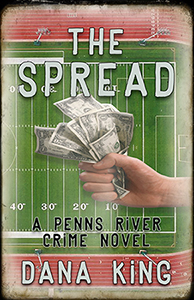
OBAAT: Apparently writing doesn’t keep you busy enough; you’re also a graphic artist with a niche in helping to create images specifically tailored to book promotion. I’m delighted with the work you did for The Spread. Please talk a little about that business and don’t be shy about telling folks how to get a hold of you.


SB: I’ve always been a creative techie – I love new technology and exploring ways to make myself more productive. This has come in handy as an indie author because you’re required to create your own promotional materials. I discovered so many great applications to help me do this, and eventually, other authors took notice of my social media posts, asking me where they came from. Once I told them I had made the designs myself… well, BookstaBundles was born. Authors began asking me to create graphics for them, and soon, I realized I could help others with my passion for graphic design. I now offer various digital services, as well as bookmarks, posters, and bookplates. If you’re an author looking to post more engaging content featuring your novel, stop by www.bookstabundles.com to check out my portfolio and my offerings. (Editor’s Note: I ordered five graphics for The Spreads and wa delighted with Sarah’s work and creativity.)


OBAAT: You fill some of what must be copious free time with The Bookish Hour, a live-stream web series you co-host with J.C. Kenney Thursdays from 8:00 to 9:00 PM ET. The chats revolve primarily around craft, which is a topic I don’t think writers talk about enough, as too many discussions get sidetracked into the business aspects of writing. What led to this, and what are the joys and challenges of keeping it going?


SB: This was another venture that came about unexpectedly. J.C. Kenney is a dear friend of mine in the writing industry, and in May 2022, we both had books releasing at the same time. We wanted to host an online party where our readers could see and interact with us. So, I sat down at my computer, figured out how to livestream a Google Meet call onto YouTube, and voila! J.C. and I had a fabulous time chatting about our books and writing process, and our viewers joined in the fun, too.


After the livestream wrapped, we received several emails from our author pals, asking if they could come on “our show” and chat about their books. With that, The Bookish Hour became a twice-a-month web series, and we’re now booking into 2025. Our biggest challenge is accommodating all the requests we have! To do so, we’ve started a companion show, A Bookish Moment, that allows for much more flexible scheduling. If you have an upcoming release and would like to swing by and talk with us, you can read what we’re about at www.itsbookishtime.com.


OBAAT: Based on what we talked about already, I know you’re working on something now. What’s next for the readers to look forward to?


SB: I have yet another cozy mystery series in the works! I am busy with revisions for Book One in the Book Blogger Mysteries, which features…you guessed it, a book blogger.


Over My Dead Blog releases later this year, and I cannot wait for readers to meet Arwen “Winnie” Lark, her brother Strider, and the folks of Copper Bay, Massachusetts. Interested readers can always learn more about me and what’s happening in my writing world at www.saraheburr.com or by signing up for my newsletter, https://bit.ly/saraheburrsignup.


Thursday, September 21, 2023

Re-branding Nick Forte

 It’s been a while since I released a new Nick Forte novel. January of 2018 to be exact. While he has appeared in a couple of Penns River books (Grind Joint and The Spread) he has not been the star of his own book since Bad Samaritan.


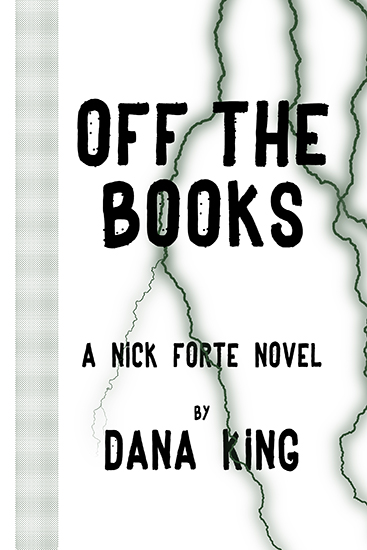
That doesn’t mean he hasn’t asked for more attention. Ideas have been percolating from my subconscious all the while. Since the next Penns River book is going to require more research and thought than usual, I took a break from that series to write a new Forte novel. Off the Books will drop in the spring of 2024.


Since it’s been a while since Forte made an appearance, I thought it would be a good idea to relaunch the entire series as a lead up to Off the Books. I had hoped to get the first book (A Small Sacrifice) out by now, but a little research quickly showed me it would be in my best interest to dig deeper into how Amazon handles the metadata, so the first re-branding effort may slip a little.


Since I mentioned Amazon, I might as well go all the way: these books will be available only through Amazon. It’s a better deal for me to do it that way, and bookstores won’t carry my books, anyway. So to all those independent bookstores out there, I love you, but please understand this is strictly business. Just as I understand that’s the reason you won’t stock my books.


The tentative schedule is below, but please note: Except for Off the Books, all of these are re-releases of books that have been out there for five years or more. If you already own one, there is no need to buy another. All that will change are the covers and the metadata. Save your money for Off the Books. Or gift purchases. Those of you who have yet to read any Forte novels, here’s your chance.


The dates are tentative, and promotional pricing is still to be decided. I’ll give full notice when the time comes.


September 2023: A Small Sacrifice, the first Forte novel, in which Nick investigates a cold case loosely adapted from the JonBenet Ramsey killing. Nominated for a Shamus Award as best Independently Published PI Novel.


October 2023: The Stuff That Dreams Are Made Of. My tribute to The Maltese Falcon, of which Peter Rozovsky wrote in his sadly discontinued blog “Detectives Beyond Borders, “I can imagine this book finding its way into a class on writing crime fiction as an example of how to pay tribute to one’s predecessors while at the same time writing a story that can stand on its own. It’s an impressive accomplishment.”


November 2023: The Man in the Window. What begins as an adultery case ends up involving terrorists. Nominated for a Shamus as Best Paperback Original.


December 2023: A three-book set, yet to be titled, to include the three novels noted above.


January 2024: A Dangerous Lesson, my only serial killer story.


February 2024: Bad Samaritan, in which Forte takes on men’s rights activists.


March 2024: Off the Books. This is the new one, showing Forte in his post-agency life as he treads the line between Spenser and Ray Donovan.


Late 2024: A second three-book boxed set.


I’ll be busy otherwise, as well. My first Western will drop sometime next year and another Forte, as yet untitled, will come out in either late 2024 or early 2025. If the next Penns River novel has come together by then, I’ll return there for a three- or four-book run to complete the series. And another Western. Probably more Forte. And other projects I have in mind.


Ain’t no flies on me. Not yet anyway.

Thursday, September 14, 2023

Creatures, Crimes, and Creativity X

 The tenth Creatures, Crimes, and Creativity conference took place last weekend in Columbia, MD. I’ve been to nine (missed the first for reasons I do not remember) and, while I can’t say this was the “best,” there have been none better.


Austin and Denise Camacho never fail to create a welcoming, familial atmosphere that not only inspires repeat visits, but embraces newcomers. A friend attending her first C3 told me she hadn’t been sure what to expect, but was made to feel at home as soon as she entered the registration area. She was not alone in that sentiment.


C3 always gets high-level keynotes. This year Jeffrey Deaver reprised his role as the original crime speaker, with Nancy Holder covering the sci-fi/fantasy side of things. Both were excellent speakers, outstanding panelists, and were more than accessible to the other 140 writers and readers who wanted bits of their time.


I’ve been going to conferences since 2008, so there isn’t as much new to me as there once was. I used to break out comments by individual sessions, but now my notes are thinner. Do not infer I didn’t learn anything. My personal highlights are below.


·       Taglines have vexed me since my first book came out. The panel that focused on them had several takeaways I can use as I begin a new project we’ll discuss more in next week’s blog:

o   John DeDakis: the tag should only be a sentence or two to hook a potential reader. Tags should be short enough to be read comfortably in one breath.

o   Susan Tullio: a tag is similar to a newspaper headline and should set the genre.

o   Sharon Buchbinder: tags should give a sense of the book so readers aren’t misled.

·       Jeffrey Deaver: The part of the brain that forms attachments with real humans is the same part that forms attachments with fictional characters.

·       About writing fight scenes:

o   Bryan England: the stakes in a fight can change as the fight progresses. A cop must write a use of force report every time he draws his gun, sprays a chemical, uses a Taser, or throws a punch; cops are writing the report in their head as they fight.

o   Teel James Glenn: Bruce Lee said people will fight the way they think; Those who are afraid will fight most desperately. The mindset of the individual may be key, as he or she must decide how dirty they are willing to get; running may be the solution.

o   Mark Bergin: the fight description should not be too detailed. Clarity and brevity are the keys.

o   P.A. Duncan: No one escapes a fight without consequences.

§  All: If you’re going to show the fight, you must show the consequences, including both mental and psychological.

o   There are differences of opinion about who to take out first when outnumbered.

·       On discussing the importance of realism:

o   Bryan England: Taser victims are only incapacitated while the current is running; it does not knock them out. Everything a cop does must go into a report before they can go back on the street, even if all they did was give someone a ride to the station.

o   Glenn Parris (an MD) sees too much “magical healing” and not enough medical complications. Tasers will not trigger cardiac arrest, even in those with pacemakers or defibrillators.

o   Mark Bergin never sees enough of how much cops rely on the radio or how calls can get garbled when passing them to jurisdictions with different 10 codes.

I can’t take notes on my own panels, for obvious reasons. Both “Rejections” and “Noir” had worthy takeaways. The one that sticks in my head is Terrence McCauley’s comment that Glengarry, Glen Ross, is a woefully underrated noir with nary a corpse shown nor punch thrown, to which I immediately thought, “Of course it is!” though it had never occurred to me before.


That’s the joy of a conference such as this: you learn things and have an opportunity to follow up on them. You also get to see old friends and invariably make new ones.


I would be remiss if I did not thank the panelists I worked with last weekend: Arlene Kay, Jeff Markowitz, Rick Pullen, and Ilene Schneider (Rejections); Christopher Chambers, Lanny Larcinese, Terrence McCauley (Noir).


Last, but by no means least, a shout out to those who read at Friday’s Noir at the Bar event. C3’s N@Bs are different from others, as horror, sci-fi, fantasy, and even steampunk may be included. This year’s readers were exceptional from start to finish, even though several had never read at such an event before. Some of the credit goes to the atmosphere Austin, Denise, and everyone involved in putting on the conference creates, but I cannot compliment highly enough the effort put forth by the readers: LC Allingham, Rob Creekmore, Ef Deal, William J. Donohue, Jeff Markowitz, Joanne McLaughlin, Josh Pachter, and Tom Sterling. You all conducted yourselves above and beyond what were high expectations. Well done.


Next Year’s event is September 13 – 15, again in Columbia. Early registrations get a discount, so head on over to https://creaturescrimesandcreativity.com/2024-registration/ to beat the rush.


See you in Columbia.