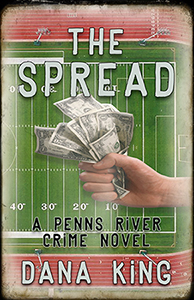
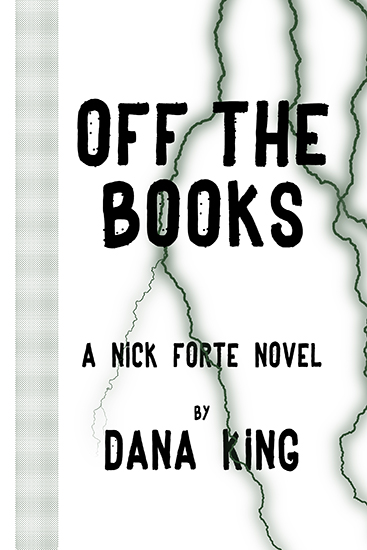
I read the first chapter of the book I’m revising last night. (I have a strict and probably over-complicated regimen for edits such as this that I might describe some day, if I think it won’t make me look too geeky.) Tonight I’ll edit what I read last night.
My writing style has changed a lot. The previous book and the WIP are multi-POV stories that needed a much different voice from this first-person PI tale. I found myself wondering if it read too leisurely, though that hasn’t been a complaint before. I’m also reading James Ellroy’s Blood’s a Rover for a review right now, and falling out of an airplane seems leisurely compared to that. I’m keeping an open mind.
The real challenge I see is in revisiting a work that has been “finished” for so long. I like these characters, and this story. I’m pleased the writing itself holds up as well as it does in my eyes, considering how much my writing has changed since it was written. On the other hand, I’ve read this book more often, and more closely, than the pope has read the Bible. I was mentally and emotionally finished with it, and I can’t afford to let that make me sloppy.
This project is either going to be a lot of fun, or a real pain in the ass. Probably both.
Friday, October 30, 2009


Wednesday, October 28, 2009
A Milestone, of Sorts
I finished the first draft of the work-in-progress last night. Took me almost three times as long as usual. I’m not sure if that’s good or bad. There were a lot of plotting issues, including a misguided attempt to write this one by the seat of my pants. I won’t soon try that again. I have great regard for writers who can do that well, which includes most of my favorites, but I’m just not wired that way. I need to know what happens when I sit down to write it. My outlines are flexible, but I need some kind of map.
Enough of that. Events made this one take forever; so be it. That’s not the only unusual thing about this project. I usually get right back into the second draft, while some ideas are still fresh in my mind, but that’s not going to happen, either. Instead, this book will lie unattended for two or three months while I do a re-write on an older project that has come close a few times. I have an idea I hope will make the protagonist more compelling, and I’m changing the relationships he has with a couple of the primary supporting characters. I’m looking forward to doing it, and I’ve found an agent who said she’ll look at it when it’s done, so there’s no time like the present.
The book that’s being left on the hard drive will worry me a little. I’m not sure how much I like it, or how well it holds together. Friendly advice and personal experience tell me that’s as it should be; few books worth reading were written without any doubts during their creation. Still, I can usually get right back to work to address these doubts. Not this time.
What I am looking forward to is becoming re-acquainted with my PI. We haven’t had much to do with each other in over two years now, as I worked on other projects while the first book of his potential series circulated. As I’ve noted on the blog before, I think PI stories are potentially the highest form of crime fiction, and Nick Forte and his supporting cast are my favorites of all the characters I’ve come up with. It will be nice to see them again.
Enough of that. Events made this one take forever; so be it. That’s not the only unusual thing about this project. I usually get right back into the second draft, while some ideas are still fresh in my mind, but that’s not going to happen, either. Instead, this book will lie unattended for two or three months while I do a re-write on an older project that has come close a few times. I have an idea I hope will make the protagonist more compelling, and I’m changing the relationships he has with a couple of the primary supporting characters. I’m looking forward to doing it, and I’ve found an agent who said she’ll look at it when it’s done, so there’s no time like the present.
The book that’s being left on the hard drive will worry me a little. I’m not sure how much I like it, or how well it holds together. Friendly advice and personal experience tell me that’s as it should be; few books worth reading were written without any doubts during their creation. Still, I can usually get right back to work to address these doubts. Not this time.
What I am looking forward to is becoming re-acquainted with my PI. We haven’t had much to do with each other in over two years now, as I worked on other projects while the first book of his potential series circulated. As I’ve noted on the blog before, I think PI stories are potentially the highest form of crime fiction, and Nick Forte and his supporting cast are my favorites of all the characters I’ve come up with. It will be nice to see them again.
Friday, October 23, 2009
Notes from Bouchercon 2009
I finally got my Bouchercon notes together. While debriefing myself, deciphering my handwriting, adding books to my Amazon wish list and movies to my NetFlix queue, several thoughts and questions came to mind. Please comment at will.
Do readers—other than those with a local connection—really care about where a story takes place as long as it’s appropriate and done well?
Interesting point from Peter Rozovsky’s Translation panel: it’s not just the language. Legal terminology and responsibilities also differ and have to be accounted for. Footnotes are frowned upon as taking the reader out of the story, but Tiina Nunnally and Steven T. Murray said later that a glossary can sometimes be used, which will accommodate those who need to know without hanging up those who already do.
Curious about the demographics of mystery readers. There are a few persons of color, but Bouchercon is basically as white as a Manitoba hockey tournament.
Why is it, the more irritating the ring of a cell phone, the longer it takes its owner to stifle it in a public place?
Among the coolest things about Bouchercon is spending time and listening to people who consider reading to be an important part of their lives.
I really have to read some Richard Stark/Parker novels. I’m tired of people telling me how good they are and not knowing first hand.
The overwhelming majority of crime fiction writers, regardless of status, are as refreshing and unpretentious as anyone you’ll ever meet. The bonhomie on almost every panel I went to was infectious.
Victor Gischler’s idea of noir is, not only are you screwed, but people are laughing at you.
Charlie Newton summed up the essence of noir as the protagonist is always hopeful things will turn out all right, even though you know they won’t.
Christa Faust said the difference between noir and hard-boiled is, in noir, you’re fucked. In hard-boiled, the situation may be fucked, but you have a chance to get through it.
Christa Faust’s sperm and egg theory of getting published. Some writers nurture a single project for years, editing, perfecting, accepting suggestions, hoping it will someday be good enough. This is the egg school. The sperm school believes in submitting a lot of stuff and hoping at least one gets lucky.
When asked about the reports of the death of the PI novel, Michael Koryta drew attention to the size of the room. The panel was given a small room, and the audience overflowed it out into the hall. PI fiction is in better shape than people want to give it credit for.
The Cozy Ladies with their extravagant hats remind me of Code Pink protestors. I’m never really sure how to take them.
The Telling Women’s Stories panel evoked a comment that serial killer stories are popular with women because justice always triumphs, so they feel safer. What about all the women the killer got to before justice prevailed? How safe were they? (This was one of several comments my genitalia prevented me from interpreting properly. It didn’t occur to me until the next day that choosing Hooters for dinner may have been an unconscious reaction to this panel.)
The Continuous Conversation was a great idea. The Book Bazaar was, too, though they could have used more room. It was like Filene’s Basement on the day after Thanksgiving.
As always, the best takeaways are the time spent with the other attendees. In my case the experience was enhanced by meeting, or re-acquainting myself with, Cara Black, Jack Bludis, Austin and Denise Camacho, Sean Chercover, Stacia Decker, John Desjarlais, Michael Dymmoch, J.T. Ellison, Libby Fischer Hellmann, Naomi Hirahara, Steve Hockensmith, Rick and Nancy Joyce, Con Lehane, Ed Lin, Jon Loomis, Barry Maitland, Stuart Neville, Scott Phillips, Peter Rozovsky, Mary Saums, Leon Shure, and a few others whose names were, unfortunately, lost in the commotion and lateness of the hour. I’m also grateful to Max Allan Collins, Steven T. Murray, Tiina Nunnally, and Tom Schreck for their graciousness and generosity when accosted by a large stranger with many questions.
Do readers—other than those with a local connection—really care about where a story takes place as long as it’s appropriate and done well?
Interesting point from Peter Rozovsky’s Translation panel: it’s not just the language. Legal terminology and responsibilities also differ and have to be accounted for. Footnotes are frowned upon as taking the reader out of the story, but Tiina Nunnally and Steven T. Murray said later that a glossary can sometimes be used, which will accommodate those who need to know without hanging up those who already do.
Curious about the demographics of mystery readers. There are a few persons of color, but Bouchercon is basically as white as a Manitoba hockey tournament.
Why is it, the more irritating the ring of a cell phone, the longer it takes its owner to stifle it in a public place?
Among the coolest things about Bouchercon is spending time and listening to people who consider reading to be an important part of their lives.
I really have to read some Richard Stark/Parker novels. I’m tired of people telling me how good they are and not knowing first hand.
The overwhelming majority of crime fiction writers, regardless of status, are as refreshing and unpretentious as anyone you’ll ever meet. The bonhomie on almost every panel I went to was infectious.
Victor Gischler’s idea of noir is, not only are you screwed, but people are laughing at you.
Charlie Newton summed up the essence of noir as the protagonist is always hopeful things will turn out all right, even though you know they won’t.
Christa Faust said the difference between noir and hard-boiled is, in noir, you’re fucked. In hard-boiled, the situation may be fucked, but you have a chance to get through it.
Christa Faust’s sperm and egg theory of getting published. Some writers nurture a single project for years, editing, perfecting, accepting suggestions, hoping it will someday be good enough. This is the egg school. The sperm school believes in submitting a lot of stuff and hoping at least one gets lucky.
When asked about the reports of the death of the PI novel, Michael Koryta drew attention to the size of the room. The panel was given a small room, and the audience overflowed it out into the hall. PI fiction is in better shape than people want to give it credit for.
The Cozy Ladies with their extravagant hats remind me of Code Pink protestors. I’m never really sure how to take them.
The Telling Women’s Stories panel evoked a comment that serial killer stories are popular with women because justice always triumphs, so they feel safer. What about all the women the killer got to before justice prevailed? How safe were they? (This was one of several comments my genitalia prevented me from interpreting properly. It didn’t occur to me until the next day that choosing Hooters for dinner may have been an unconscious reaction to this panel.)
The Continuous Conversation was a great idea. The Book Bazaar was, too, though they could have used more room. It was like Filene’s Basement on the day after Thanksgiving.
As always, the best takeaways are the time spent with the other attendees. In my case the experience was enhanced by meeting, or re-acquainting myself with, Cara Black, Jack Bludis, Austin and Denise Camacho, Sean Chercover, Stacia Decker, John Desjarlais, Michael Dymmoch, J.T. Ellison, Libby Fischer Hellmann, Naomi Hirahara, Steve Hockensmith, Rick and Nancy Joyce, Con Lehane, Ed Lin, Jon Loomis, Barry Maitland, Stuart Neville, Scott Phillips, Peter Rozovsky, Mary Saums, Leon Shure, and a few others whose names were, unfortunately, lost in the commotion and lateness of the hour. I’m also grateful to Max Allan Collins, Steven T. Murray, Tiina Nunnally, and Tom Schreck for their graciousness and generosity when accosted by a large stranger with many questions.
Tuesday, October 6, 2009
Worth a Read
Over at Editorial Ass, Moonrat has posted a compilation of her blogs about publishing, editing, agents, and other items of interest. Well worth reading.
Thursday, October 1, 2009
September's Best Reads
My best reads from September, in the order in which they were read:
Silent Edge, by Michael Koryta. A cold case heats up in a hurry for Cleveland PI Lincoln Perry after he’s hired by an ex-con to find the woman who rehabilitated him. Koryta is a master at treading the line between just enough and too much in plot, characterization, dialog, and whatever other aspects of novels appeal to you. One of the top five I’ve read this year.
All the Dead Voices, by Declan Hughes. Ed Loy’s fourth adventure may be the best yet, as he grapples with a case that has roots in the Irish Troubles that no one really wants him to deal with. Hughes is the Irish mix of Chandler and Macdonald, a beautiful wordsmith with a knack for writing stories about how previously unknown histories can destroy the present. I would loved to have seen a little more of sidekick Tommy Owens, but that’s a personal problem. Another Top Five for the year to date.
Cottonwood, by Scott Phillips. About as different from Phillips’s better-known The Ice Harvest as you can get stylistically, but just as good, maybe better. Bill Ogden marches to his own drummer, and the beat takes him from the fictional town of Cottonwood, Kansas to Colorado and back, An epic story told on a small scale, Phillips’s writing keeps the reader so well in the scene you can just about smell the horseshit in the streets. The Top Five swells and may have to be adjusted to the Top Ten. It’s late enough in the year.
No More Heroes, by Ray Banks. My first Banks novel, and once again I wonder what took me so long. Callum Innes the ex-con PI is in his fourth adventure, and he gets beat up even worse than Ed Loy, which takes some doing. Banks is the master of the flawed protagonist, showing both sides of Inness’s character without sympathy or exaltation; he’s just getting through the day. Immigrants, neo-Nazis, students, and the media combine in a story calculated to make the reader question the truth of anything he hears or reads.
Silent Edge, by Michael Koryta. A cold case heats up in a hurry for Cleveland PI Lincoln Perry after he’s hired by an ex-con to find the woman who rehabilitated him. Koryta is a master at treading the line between just enough and too much in plot, characterization, dialog, and whatever other aspects of novels appeal to you. One of the top five I’ve read this year.
All the Dead Voices, by Declan Hughes. Ed Loy’s fourth adventure may be the best yet, as he grapples with a case that has roots in the Irish Troubles that no one really wants him to deal with. Hughes is the Irish mix of Chandler and Macdonald, a beautiful wordsmith with a knack for writing stories about how previously unknown histories can destroy the present. I would loved to have seen a little more of sidekick Tommy Owens, but that’s a personal problem. Another Top Five for the year to date.
Cottonwood, by Scott Phillips. About as different from Phillips’s better-known The Ice Harvest as you can get stylistically, but just as good, maybe better. Bill Ogden marches to his own drummer, and the beat takes him from the fictional town of Cottonwood, Kansas to Colorado and back, An epic story told on a small scale, Phillips’s writing keeps the reader so well in the scene you can just about smell the horseshit in the streets. The Top Five swells and may have to be adjusted to the Top Ten. It’s late enough in the year.
No More Heroes, by Ray Banks. My first Banks novel, and once again I wonder what took me so long. Callum Innes the ex-con PI is in his fourth adventure, and he gets beat up even worse than Ed Loy, which takes some doing. Banks is the master of the flawed protagonist, showing both sides of Inness’s character without sympathy or exaltation; he’s just getting through the day. Immigrants, neo-Nazis, students, and the media combine in a story calculated to make the reader question the truth of anything he hears or reads.
Wednesday, September 23, 2009
Beware the Back Cover
I’m about halfway through Scott Phillips’s excellent novel, Cottonwood. I’ve liked everything about the book from Page 1, but for one thing: the back cover.
I rarely look at the back covers or jacket notes on books I’ve already decided I want to read. I don’t need any teasers or endorsements; I already know I want to read the book, either because of author recognition or through a trusted recommendation. All the back cover can do is give something away, like it does for Cottonwood.
To wit:
In 1872, Cottonwood, Kansas, is a one-horse speck on the map. Self-educated saloon owner Bill Ogden is looking to make a profit or get out. His ambition brings him to the attention of Marc Leval, a wealthy Chicago developer who plans to turn Cottonwood into a boom town. But as Ogden becomes dangerously obsessed with Leval’s wife, an apparently ordinary local family plies its sinister trade unnoticed, quietly butchering traveling salesmen and other weary wanderers.
Maliciously fun and full of surprises, Cottonwood brings to life actual crimes, carried out by a strange clan known as the Bloody Benders, that befell Kansas in the late 1800s…
The book is maliciously fun, but not quite as full of surprises as it was before I read the damn back cover. I didn’t read it until after Bill showed his attraction to Leval’s wife, so Phillips’s deft easing me into it wasn’t ruined.
The Bender reveal was seriously compromised. Phillips foreshadowed it well; I knew something was wrong, but not exactly what. It would have been nice to feel the scales fall from my eyes along with the townspeople’s when they realize what’s been going on.
I understand marketing people want to sell the book. They should be aware that’s only half the transaction. We read them to see what happens. There’s no need to tell us, except in the most vague terms. Maybe the marketing types could devote more of their time to determining which marketing techniques they increasingly leave to their authors actually work, and less to giving away large chunks of the story.
I rarely look at the back covers or jacket notes on books I’ve already decided I want to read. I don’t need any teasers or endorsements; I already know I want to read the book, either because of author recognition or through a trusted recommendation. All the back cover can do is give something away, like it does for Cottonwood.
To wit:
In 1872, Cottonwood, Kansas, is a one-horse speck on the map. Self-educated saloon owner Bill Ogden is looking to make a profit or get out. His ambition brings him to the attention of Marc Leval, a wealthy Chicago developer who plans to turn Cottonwood into a boom town. But as Ogden becomes dangerously obsessed with Leval’s wife, an apparently ordinary local family plies its sinister trade unnoticed, quietly butchering traveling salesmen and other weary wanderers.
Maliciously fun and full of surprises, Cottonwood brings to life actual crimes, carried out by a strange clan known as the Bloody Benders, that befell Kansas in the late 1800s…
The book is maliciously fun, but not quite as full of surprises as it was before I read the damn back cover. I didn’t read it until after Bill showed his attraction to Leval’s wife, so Phillips’s deft easing me into it wasn’t ruined.
The Bender reveal was seriously compromised. Phillips foreshadowed it well; I knew something was wrong, but not exactly what. It would have been nice to feel the scales fall from my eyes along with the townspeople’s when they realize what’s been going on.
I understand marketing people want to sell the book. They should be aware that’s only half the transaction. We read them to see what happens. There’s no need to tell us, except in the most vague terms. Maybe the marketing types could devote more of their time to determining which marketing techniques they increasingly leave to their authors actually work, and less to giving away large chunks of the story.
Friday, September 18, 2009
Are You Going to Believe Me, or Your Private Eyes?
I’ve been lucky over the past few weeks to have read three books that reminded me why I got interested in crime fiction and writing in the first place: first person private investigator stories.
Libby Fischer Hellmann’s Easy Innocence takes the attitudes of an affluent suburb and shows consequences not often considered. Her detective, Georgia Davis, avoids the pitfalls of many female protagonists. She is not a man in a skirt, ready and willing to kick ass as necessary; neither is she dependent on either a big, strong man or divine intervention to get her out of tough spots. Best of all, she’s smart enough to know the difference and act accordingly.
The Silent Hour, by Michael Koryta, is a cold-case story. Lincoln Perry has many of the characteristics of a stereotypical PI—former cop who left under a cloud, bends and breaks his own rules, trouble maintaining relationships—though Koryta never lets him fall off that edge. His problems are the problems anyone in his situation could have, and he’s anything but omnipotent. Perry takes a beating and keeps on ticking, learning about himself as the books progress.
Declan Hughes’s detective, Ed Loy, takes beatings that make what Perry endures seem like air kisses from a friendly but distant aunt. In All the Dead Voices, Ed inadvertently finds himself cleaning up leftovers from the Irish Troubles, caught between republican terror groups, drug gangs, and government agencies whose interests do not include what most would call a classic sense of justice.
What all three have in common—aside from tight plots and uniformly exceptional writing—is what makes the PI series the highest form of crime fiction; they’re primarily character studies of the hero. (Or heroine, in Georgia’s case.) A good series—as all of these are—works even better, allowing the character to evolve. Attitudes change, as do relationships. Physical and emotional trauma accumulates. The character may grow emotionally, or become embittered. What he deems worthy of description, and how it is described, matures.
For all the talk of the decline of PI fiction, the quantity of expert practitioners isn’t hurting. James Lee Burke and Robert Crais still have hop on their fastballs after twenty years. (Burke’s Dave Robicheaux is actually a cop, but the length of leash he is provided in New Iberia and his personal journey through the series make his stories read more like PI fiction than police procedurals.) Relative newcomers like Sean Chercover and Reed Farrell Coleman prove the talent pool is deep as ever. Dennis Lehane’s upcoming Kenzie-Gennaro novel is much anticipated.
The fictional PI can look into things the average cop never touches. Could Ross Macdonald have explored the rotting foundations of crumbling families with a cop, or did Lew Archer have to be a PI? A cop concerns himself with who and what; why is nice, but is primarily important as a way to get to what, or to help to convince a jury as to who. His caseload is too great to do otherwise. Private eyes are paid to find out why, which often compels some worthy introspection. Cops are about closing cases; PIs are about closure.
PI stories are also better suited for ambivalent endings. A cop’s job is to catch the bad guy. The PI can appreciate the bittersweet nature of all cases, balancing the satisfaction of solving the mystery with the knowledge of his pre-ordained failure: no matter what he discovers, things can never be put right. The dead are still gone. The cop can catch the killer and exact a measure of justice; the PI may be brought in to clean up the mess that doesn’t quite meet the necessary standard of illegality.
It’s no surprise so many of the “genre” writers who receive acclaim from the “literary” community come from detective fiction. Chandler, Hammett, Macdonald, and Burke are all accepted as great writers, not subject to the backhanded acclaim of “great genre writer.” No one thought Lehane presumptuous when The Given Day looked into issues well beyond crime; he’d been doing it for years. Gone, Baby, Gone is as thought-provoking a book as one is likely to read.
Declan Hughes may be the foremost advocate of the virtues of detective fiction, not just in his novels, but in his public statements. If I had a transcript of his comments from Bouchercon 2008, I would have printed them here and saved you the trouble of reading my interpretation; his is clearer and more impassioned. Few books—of any genre, or of no genre—are more likely to make you wonder, “What would I do here?” or, more hauntingly, “What would I have done differently?” When done well, what more can anyone ask from a book?
Libby Fischer Hellmann’s Easy Innocence takes the attitudes of an affluent suburb and shows consequences not often considered. Her detective, Georgia Davis, avoids the pitfalls of many female protagonists. She is not a man in a skirt, ready and willing to kick ass as necessary; neither is she dependent on either a big, strong man or divine intervention to get her out of tough spots. Best of all, she’s smart enough to know the difference and act accordingly.
The Silent Hour, by Michael Koryta, is a cold-case story. Lincoln Perry has many of the characteristics of a stereotypical PI—former cop who left under a cloud, bends and breaks his own rules, trouble maintaining relationships—though Koryta never lets him fall off that edge. His problems are the problems anyone in his situation could have, and he’s anything but omnipotent. Perry takes a beating and keeps on ticking, learning about himself as the books progress.
Declan Hughes’s detective, Ed Loy, takes beatings that make what Perry endures seem like air kisses from a friendly but distant aunt. In All the Dead Voices, Ed inadvertently finds himself cleaning up leftovers from the Irish Troubles, caught between republican terror groups, drug gangs, and government agencies whose interests do not include what most would call a classic sense of justice.
What all three have in common—aside from tight plots and uniformly exceptional writing—is what makes the PI series the highest form of crime fiction; they’re primarily character studies of the hero. (Or heroine, in Georgia’s case.) A good series—as all of these are—works even better, allowing the character to evolve. Attitudes change, as do relationships. Physical and emotional trauma accumulates. The character may grow emotionally, or become embittered. What he deems worthy of description, and how it is described, matures.
For all the talk of the decline of PI fiction, the quantity of expert practitioners isn’t hurting. James Lee Burke and Robert Crais still have hop on their fastballs after twenty years. (Burke’s Dave Robicheaux is actually a cop, but the length of leash he is provided in New Iberia and his personal journey through the series make his stories read more like PI fiction than police procedurals.) Relative newcomers like Sean Chercover and Reed Farrell Coleman prove the talent pool is deep as ever. Dennis Lehane’s upcoming Kenzie-Gennaro novel is much anticipated.
The fictional PI can look into things the average cop never touches. Could Ross Macdonald have explored the rotting foundations of crumbling families with a cop, or did Lew Archer have to be a PI? A cop concerns himself with who and what; why is nice, but is primarily important as a way to get to what, or to help to convince a jury as to who. His caseload is too great to do otherwise. Private eyes are paid to find out why, which often compels some worthy introspection. Cops are about closing cases; PIs are about closure.
PI stories are also better suited for ambivalent endings. A cop’s job is to catch the bad guy. The PI can appreciate the bittersweet nature of all cases, balancing the satisfaction of solving the mystery with the knowledge of his pre-ordained failure: no matter what he discovers, things can never be put right. The dead are still gone. The cop can catch the killer and exact a measure of justice; the PI may be brought in to clean up the mess that doesn’t quite meet the necessary standard of illegality.
It’s no surprise so many of the “genre” writers who receive acclaim from the “literary” community come from detective fiction. Chandler, Hammett, Macdonald, and Burke are all accepted as great writers, not subject to the backhanded acclaim of “great genre writer.” No one thought Lehane presumptuous when The Given Day looked into issues well beyond crime; he’d been doing it for years. Gone, Baby, Gone is as thought-provoking a book as one is likely to read.
Declan Hughes may be the foremost advocate of the virtues of detective fiction, not just in his novels, but in his public statements. If I had a transcript of his comments from Bouchercon 2008, I would have printed them here and saved you the trouble of reading my interpretation; his is clearer and more impassioned. Few books—of any genre, or of no genre—are more likely to make you wonder, “What would I do here?” or, more hauntingly, “What would I have done differently?” When done well, what more can anyone ask from a book?
Subscribe to:
Posts (Atom)