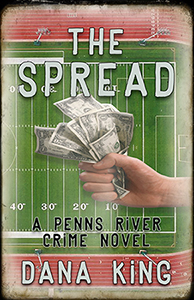
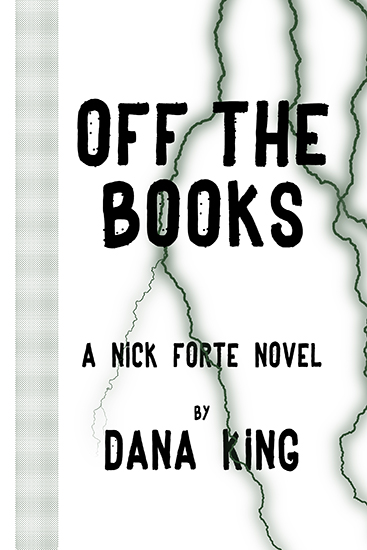
Friday, October 9, 2026

An Interview With Joe Ricker, New Owner and Publisher of Down and Out Books

 Joe Ricker has appeared three times on the blog; until today, all have been as an author. (In case you’re interested, Joe’s prior appearances were in 2015, 2020, and 2021.) Today he takes his first questions since he resurrected the ashes of Down and Out Books and became its owner and publisher.

I got out before Down and Out became Way Down and All-the-way Out, but I had many friends with contracts there and am delighted to see they may be finding homes; Joe’s history as an author gave me hope for a more generous atmosphere. With that in mind, I wanted to give Joe a platform, as well as give authors some much needed information about what’s going on at the new Down and Out. So, without further ado, here’s Joe Ricker.

OBAAT: Welcome back to the blog, Joe. It’s always good to have you here. No book to promo this time. Today we’re getting together to talk about your new role as owner/operator of the resurrected Down & Out Books, so these questions may be a little more pointed than usual. With that in mind, tell us a little about your writing journey. Not the writing resume — that’s in the intro — but what inspired you to write in the first place, how you came to be published, and how smooth or bumpy the road was up to the time you signed with Down & Out.

JR: My father is a poet, so writing was in the house before I had any say about it. I grew up emulating him, and for most of my adolescence I wrote almost nothing but poetry. What prose I did write was fan fiction before I knew there was a word for it — Westerns, mostly. I once wrote a story that put Josey Wales and Billy the Kid in the same world. I’d hand those pages to my dad, looking for some kind of bonding, or validation, or both.

After military school I hit a bleak stretch. It got bad enough that I needed help finding my way out of a lifestyle that didn’t have any brakes on it. Reading fiction again was part of how I climbed out of that. So was journaling, and then poetry again. That poetry did more to shape my style than anything I was taught later.

In undergrad I drifted from poetry into fiction without knowing what kind of fiction I wanted to write, and I tried a lot of things that didn’t fit. I didn’t land on crime until graduate school. My thesis wasn’t considered crime fiction, but somewhere in there I wrote a story called “Ice Shack,” the first thing I’d ever written that I was genuinely happy with, and it lit the way toward the genre I’ve stayed in since. It came out of a hard-scrabble upbringing and the kind of details you don’t get from research. “Ice Shack” also became my first published story, in a Level Best Books anthology, and after that I mostly wrote crime short stories. I’d written a crime novel during undergrad, too, but I couldn’t figure out how to clean it up. That book took me years. It eventually became All the Good in Evil.

The road was bumpy. Short story publications kept me moving — there’s a charge that comes with placing something when you’re young and trying to emerge, and it makes you want to write the next one. I had my first novel under contract at one point and watched that deal dissolve. It wasn’t hostile. The editor was taking the book somewhere that wasn’t wrong, exactly; it just wasn’t mine, and too much of what I wanted on the page was disappearing. So, I walked and went back to submitting. Dozens and dozens of agents and publishers, back when the rejections still came on paper. I wish I’d kept them.

Then, after grad school, when I was living in New York, I submitted a novel that got rejected — but the publisher had read some of my short stories and asked if I had anything else. I asked if they’d take a collection. They said yes. I did not have a collection. I was teaching, I wasn’t making any money, and there wasn’t much to do besides hike with Kamani and sit in front of a blank screen, so that’s what I did until I had enough stories. That became Walkin’ After Midnight. The title was the publisher’s idea, off the Patsy Cline song. I’d recently been divorced and it had been my ex-wife’s favorite song. It seemed fitting, and a little ironic, which is usually how these things go.

OBAAT: How did you first connect with Down & Out?

JR: By way of another publisher going under. Walkin’ After Midnight came out from 280 Steps, and for a while that looked like a promising, long-term home. I took a semester off from teaching, spent my savings, and put together a tour with some help from the publisher and from people I knew — Square Books in Oxford, Mississippi, A Capella Books in Atlanta, Dan’s Silver Leaf in Denton, Texas, and a few others. The turnouts in the places where I’d lived and tended bar were the good part. Then I went back to New York and things went to hell: disagreements about royalties, no paperwork to support what the sales supposedly were, and no way for me out of the contract. The publisher folded within about a year. The rights came back to me and I was at square one, disillusioned enough that I didn’t make much effort to place the book anywhere else.

What changed it was Jonathan Ashley, another 280 Steps author, who had moved his books to a publisher I’d never heard of. He told me I needed to submit Walkin’ After Midnight to Down & Out. I sent it in, Eric [Campbell] and I talked, and the book was accepted — though the plan was to let some time pass, since 280 had just closed and there was bad blood in the water.

Then it went quiet. In that stretch I quit teaching, worked remotely doing freelance writing and voiceover, and lived out of my SUV, driving around the country trying to figure out where home was going to be. I worked on a goat ranch in New Mexico, kept working on Some Awful Cunning, and kept striking out with agents. It had been a year or so when I finally followed up with Down & Out while I was in the Michigan U.P., and the conversation picked back up where it left off. I asked about some other books, and those were taken on as well. By the time Walkin’ After Midnight was re-released, I’d settled in Reno, where I was bartending and teaching at the University of Nevada. Down & Out went on to publish four of my books, two of them during COVID, which made getting any traction that much harder.

OBAAT: How did you learn of Down & Out’s demise? What was its effect on you personally and professionally?

JR: I was back in Maine visiting family. I hadn’t been home in seven years, not since I’d moved to Reno, and I went because my father was sick and I needed to make up some lost time. I was staying at my brother’s — he’d just bought a house — and one day I checked my email and there it was. The notice Down & Out had closed their doors out about a week earlier.

Professionally it meant four books in limbo and no publisher, which is a daunting place to be at any age. Personally, it was 280 Steps all over again, except this time there was more of my work and a longer relationship tied up in it. What it really took out of me was motivation. I knew exactly what the road back looked like — the submissions, the waiting, the starting over — and I didn’t have much appetite for walking it a third time.

OBAAT: What made you decide to bring Down & Out back to life?

JR: Partly it was that I was already thinking hard about what kind of life I wanted, apart from the work I was doing at the time. The idea started as a maybe. I tossed it around for a while and talked it over with my wife.

My first email wasn’t about buying anything. I asked if there was any way I could help — managing it, running some part of it, whatever would keep the doors open. From there the conversation turned into buying the brand outright. A few conversations later the transfer was agreed to, and here I am.

The reasoning was simple enough. I didn’t think I had the platform to build a press from scratch and make it work, by whatever measure you want to use for that. Taking over a name with a real history in crime fiction gave me better odds. And it wasn’t only about my four books. There were a lot of other authors in exactly the position I’d been in twice already. I could see online how much frustration was out there, and I knew it was going to be a very difficult challenge — that created plenty of doubt — but the alternative was watching a good house and a strong list disappear. I decided it wasn’t going to.

OBAAT: No offense intended, but what qualifies you to run a publishing company?

JR: None taken. If you’re looking for a résumé of publishing-house management, I don’t have one, and I’m not going to pretend otherwise. When I stepped into this, my knowledge of how a press actually runs was limited.

What I do have — and I’d argue it’s the most important qualification on the list — is the motivation to make it work and keep it going. Beyond that, years of freelance writing, the organizational demands of academia, and teaching at the college level taught me how to network, keep complicated projects moving, and get other people invested enough to contribute. Just as important for a genre house is that I know the material. I’ve lived in crime and noir a long time, as a reader and a writer, and I understand what these books are supposed to do.

The rest I’m learning as I go, and I’m doing most of it myself right now: marketing, interior layout, contracts, cover design — things I never expected to have to learn. It’s been an interesting education, and honestly an enjoyable one. Some of it has been harder than the paperwork. Taking over a company that closed and upset a lot of people meant taking some of the brunt of that, and figuring out how to talk to writers who are disappointed and have every right to be. I’ll develop the rest of these qualifications by running the company, and I expect a fair amount of that education to come through failure.

OBAAT: What changes do you intend to make to the business model?

JR: The biggest one is scale, and I’d rather talk about where we’re going than where anything has been. Our target right now is ten books a year. That number is deliberate. It’s a pace that lets us put real time, money, and attention into every single title instead of pushing books out the door and hoping they find readers on their own.

Keeping the list that size is what makes everything else possible. It means more time and money on marketing and promotion — I’m already talking with marketers and other firms about that, and looking at avenues we haven’t used before. It also means more development per book: audio editions, and where a project lends itself to it, screenplays and treatments, graphic adaptations, serialized versions. Those conversations are underway now.

The other priority is author exposure. We’re reaching out to magazines and podcasts to get our writers interviews and coverage, and pushing to get physical copies onto bookstore shelves rather than living entirely online. In the immediate term, the work is getting re-contracted authors’ books back up, restarting promotion on those titles, and rebuilding the website and the public face of the company.

Some of that is already in place. We’ve re-signed twelve former Down & Out authors and kept more than fifty books in print. We’ve signed four new authors with books coming out next year. Royalties have been paid to the authors who decided to take a chance on me as an inexperienced publisher with a press most of their peers have done nothing but cast shade toward. We’re rolling into a rhythm now, and I think that rhythm is what will carry Down & Out to the place I see for it.

In a nutshell: We won’t take on more than we can carry. I’d rather give a smaller list the attention it deserves and help those authors actually sell books than spread us thin across a catalog nobody has time to support.

OBAAT: A lot of newly-orphaned writers are looking hopefully in your direction. What can you tell them to set their minds at ease that things won’t turn out the same as they did under your predecessor?

JR: Honestly, I don’t think there’s anything I can say right now that will put anybody’s mind at ease, and I’m not going to insult anyone by trying. Writers who had a bad experience are upset and frustrated, and that’s earned. I’ve been orphaned by two publishers myself. I know what promises are worth at this stage.

What I can do is point at what’s already been done rather than at what I intend to do. Twelve former authors have re-signed. More than fifty books are still in print. Four new authors are signed with books coming out next year. Royalties have been paid. That’s the whole argument, and it will keep being the argument: sticking to the model, keeping the list small enough that we can actually support it, communicating clearly, and prioritizing each author’s success rather than just the company’s. Some writers are going to want a clean start somewhere else, and I understand that completely — a number already have. For the ones who stay, or who come aboard, the plan is to put our heads down, do the work, and get people talking about Down & Out in a positive way again. That’s not something I can say into place. It has to be shown, one book at a time.

Tuesday, September 22, 2026

Author's Note From Sideshow


The new Nick Forte novel, Sideshow, may be the most personally important book I’ve ever written. Enough so that I decided to include an author’s note, something I’ve never done before.


 Here it is:


No straight, cisgender person can fully understand what it’s like to be a member of the LGBTQIA+ community; the best we can do is empathize and treat them with the same respect and courtesy as we do everyone else.

The years have brought me closer to this too-often marginalized community. Among the handful of best friends I’ve ever had is a gay man. My only child’s godmother is a lesbian. I have a transgender step-daughter; my brother has a transgender sister-in-law. I once dated an intersex woman. If I can safely say one thing that encompasses them, it is that they all want the same things everyone else wants: to be left alone to lead the happiest lives they can find for themselves.

I’ve rewritten this author’s note several times, trying to describe exactly how I feel. I finally found a couple of quotes from people far more qualified to express them.

The actress Jodie Foster said: “Being gay is like being left-handed—some people are, most people aren’t, and nobody really knows exactly why. It’s not right or wrong; it’s just one of the many natural ways to be. The world works best when everyone gets to live as they truly are. So if you ever feel out of place, remember: you're not broken, you're just beautifully different—and that’s something the world needs."

That’s how I see it. I am six feet, one inch tall and a little overweight. My hair is gray and my eyes are brown. Jodie’s quote applies to me as well: It’s not right or wrong; it’s just one of the many natural ways to be.

Transgender care therapist Dr. Collette Lord is credited with the phrase, “The existence of intersex people is proof that nature doesn’t see gender as a binary.” As Hamlet said, “There are more things in Heaven and Earth, Horatio, than are dreamt of in your philosophy.” Indigenous Americans have long understood gender is not binary. The idea has arisen from Christianity’s efforts to make the world a neater, safer, and more understandable place than it has ever been, or can me.

This book is as important to me as anything I’ve ever written, and it vexes me to know I didn’t get it as right as I wanted. I hope I got it as close as a straight cisgender man can and that readers will understand anything I got wrong was not done out of malice.

I’ll close with a quote often incorrectly attributed to Morgan Freeman: “I hate the word homophobia. It’s not a phobia. You’re not scared. You’re an asshole.”

If you take issue with anything in this book, please feel free to contact me through my web site, danakingauthor.com. I learned a lot writing this book. Most of what I learned is how much I still don’t know.

My eternal thanks to Christa Faust for pointing out a flaw in how I approached gay characters, John Copenhaver for encouraging me to take this step forward, and especially to Robyn Gigl for taking the time to read critical sections and provide invaluable feedback even though she knew me for all of five minutes before agreeing. To all of you, I did the best I could. I hope it was close to enough.


Sideshow is available through Amazon in both print ($9.99) and e-book ($2.99) versions.

An Excerpt From the New Nick Forte Novel, Sideshow

Here’s an excerpt from the new Nick Forte novel, Sideshow, available on Amazon in print for $9.99 and as an e-book for $2.99.


Beth Bryant got right to business. “How many men have you killed?”

I saw no reason to sugar coat it. I was the guy paying for the hour. “Seven. That I know of.”

She paused her pen above the notebook. Added what I could tell from the motion of her hand was a question mark. “You’re not sure?”

“A year or so back I was trapped into a situation where I had to shoot at cars. It’s possible I hit a person. I know at least one man got hurt when I blew up a propane tank. Nothing in the papers about anyone dying and the cops never bothered me about it, but I suppose it’s possible someone could’ve been mortally wounded. It’s not like I visited people in the hospital or kept in touch with their families.”

“You think this is funny?”

I took a deep breath. “No, and I don’t mean to give that impression. You work with many cops?”

“Mostly retired. Those on duty tend to stay with in-house shrinks for their counseling.”

I liked her saying shrink. Last thing I needed was one with a stick up her ass. “Then I’m sure I’m not the first one to say something inappropriate. Cops see so much they’ll never unsee they have to make fun of it or go crazy. I wouldn’t be here if I thought killing all those men was funny. Come to think about it, that would’ve been an even better reason to come.”

“How do you feel about it?”

Someone once told me the difference between a good question and a great question was he knew the answer to a great question. This was a damn good question. I’d been thinking about it for years and the best I had for her was, “I honest to God don’t know.”

One of Beth’s eyebrows called bullshit.

“Honest to God. They’re all different. It’s safe to say the world’s a better place without them. Except maybe one, and he was an accident. The rest, they had to go. It was them or me.” Pretty much.

“Heat of the moment kinds of things?”

Deep breath. “Confidentially, right?”

“Unless you’re about to tell me you’re going to kill someone. Your past is safe with me.”

I took time to settle myself. Beth gave me all I wanted. “One guy. Russian gangster. His was a case of what I call prophylactic self-defense.”

“You killed him to remove a future threat?”

“You’ve heard it before?”

“The legal term is ‘preventive self-defense.’ It describes the use of force against a non-imminent threat.”

“This guy brought a whole crew to my uncle’s house to kill me, my cousin, and my uncle. Probably my aunt if he had the chance. I get the drop on him and he gives himself up. ‘Go ahead. Arrest me,’ he says because he knows he’ll be out the next morning. A week or a month or a year later he, or one of his buddies, would come up behind me and put two behind my ear. He had to go as sure as the ones who were actively shooting at me.”

“You said they’re all different. How does he compare to the others?”

I generally avoided thinking about ranking my kills as if they were college football teams. It wouldn’t be fair to Caroline for me to dance around it. I needed to either answer this question honestly or go home and face her.

I decided I’d rather tell Beth. “Between the two of us.” Not a question.

Beth nodded.

“Pulling that trigger is one of the five most satisfying things I’ve ever done.”


Sideshow is available through Amazon in both print ($9.99) and e-book ($2.99) versions. 

Sideshow is (Finally) Available on Amazon

It took longer than expected due to reasons I won’t go into – mainly because they’re my fault – but the eighth Nick Forte PI novel, SIDESHOW, is now available in print and e-book formats on Amazon; Kindle Unlimited readers also have access. This is the hardest book I’ve ever tried to write, as I had to think about things I never had when writing any other book and I wanted to get them as close to right as possible.


The story opens with Forte’s return to Lake City to meet with Johnny Osgood, a televangelist who preaches what he calls “prosperity gospel,’ assuaging the consciences of those who want more than they need. A young woman employee of Osgood’s Lakeview Church, Elena Morales, stopped coming to work a few days ago. No one can contact her and people are worried.


Why this job needs to be under the table pricks Forte’s radar, not enough to turn down the work. Finding Elena is not difficult, but what he learns, and some of what he doesn’t, bothers him enough to leave her with his card and an invitation to call him if she ever needs anything.


Of course, she does. (Wouldn’t be much of a book if she didn’t, right?) What she calls him about, and what happens because of it, are what you’ll have to read the book to find out. I can tell you that along the way Forte spends time with

·         His daughter Caroline.

·         His friend and “debt collector” Goose Satterwhite.

·         His cop friend Jan Rusiewicz, now a lieutenant in charge of Area Five Violent Crimes.

·         Bobby Catlett, a detective under Jan’s command.

·         Steve Miller, Osgood’s right-hand man.

·         A therapist.

·         An intersex woman.

·         A gay detective.

·         A transgender woman detective.

·         A bartender who may end up being more than someone who serves draft beer and chicken wings.

SIDESHOW took me longer to write than any other book if we don’t count the time spent researching the Western. I think it was worth the effort. You’ll have to be the judge of whether I’m right. It’s available in both print ($9.99) and e-book ($2.99) formats on Amazon. 

Tuesday, August 25, 2026

I'm Old and I Read What I Want

This is probably going to irritate some people, but I’m old, which means I don’t give a fuck.

 Last week Rob Hart posted in Substack a piece titled, “DUNGEON CRAWLER CARL, why TWILIGHT is good actually, and the importance of reading bestsellers.” Rob is a helluva writer and a friend of mine. It’s always a good idea to listen to what he has to say. One of the best and most useful bits of writing advice I ever received came from him at Left Coast Crime in 2025 when he suggested an edit from back to front of a novel. I’ve done that for a couple of books now and it works great. Rob’s rationale was that it avoids the fatigue that comes as the end approaches in any edit; I also found it helps me to fix things that were not adequately prepared, as I don’t have to go back looking for them. They’re still ahead of me.

 I have enormous respect for Rob as a writer and as a person. With that in mind, I can still say three things with certainty:

1.      I’m not going to read Dungeon Crawler Carl.

2.      What I know about Twilight means I’m not going to read any of those.

3.      I’m not slavering at the mouth to grab hold of the next bestseller.

 As Percy Garris (Strother Martin) said to Butch and Sundance, do you want to know why?

1.      I’m as close to 100 as I am to 40 and therefore officially old.

2.      I appreciate I have a finite amount of time remaining to read anything.

3.      I’ve been reading for over sixty years, and I know what I like.

4.      I’m not trying to build a career as a writer. That ship has not only sailed, it is beyond the horizon.

The first three are all that matter to me. I don’t want to hear what anyone thinks I should read or need to read; I already can’t keep up with what I want to read. I know I don’t want to read

1.      Books that mix sci-fi and fantasy with video game rules.

2.      Forbidden love (with monsters), eternal commitment (to monsters), a love triangle (with monsters), et cetera, et cetera (probably also involving monsters.) If I want to read about monsters, I have the Trump Administration.

3.      Bestsellers, with rare exceptions. I understand there is a skill, even a talent, in writing a bestseller, and that I lack it. I’m okay with that. The greatest musician this country has produced, Leonard Bernstein, once lamented his inability to write a hit popular song and admired those who could do so routinely. I find most bestsellers to be facile, strain credulity, and spend too much time on description and things I tend to skip. (Hat tip to Elmore Leonard.)

Which brings us to Number 4 on the second list above. I’m not saying you shouldn’t do what Rob suggests. If you’re trying to build a career, or even gain a foothold in the industry, these are things you should at least be aware of.

 I, on the other hand, have made a conscious decision to stop thinking about a career in any form. I have not changed the kinds of books I write and I’m not going to. I haven’t adapted how the books are written to maybe make them more popular, and I’m not going to. I write what I write because those are the kinds of books I like to read. Period.

 I’m also retired and well into the back nine of life. I can afford this attitude, which allows me to create lists of entities who, in the timeless words of Senator John Blutarsky, can kiss my ass from now on (I promise this is the final list of this post):

1.      The publishing industry.

2.      Agents.

3.      The Trump Administration.

4.      Booksellers who make it almost impossible for indie writers to get shelf space.

5.      Grammar Nazis

6.      The Trump Administration.

7.      Pedants of any stripe.

8.      People who don’t read.

9.      The Trump Administration, Natalie Harp in particular.

10.  The Trump Administration in general.

(You may detect a pattern there.)


Do not comment that I’m old and cranky. I know I’m old and cranky. My lifetime allotment of fucks to give ran out about the time I learned my publisher would not provide sales figures except in the annual “quarterly” reports I received, and I found errors in those. So take everything here with a grain of salt.


And get off my lawn.


Friday, August 14, 2026

Going to See the Elephant

 My brother and I have a tradition of taking a ‘bro-trip” when either of us celebrates a birthday ending in zero. For his 50th we spent a weekend in Chicago; I used to live there and he’d never been. When he turned 60 we went to upstate New York to see the baseball Hall of Fame, then to the largest motocross race in the country, at Unadilla in New Berlin.

This year I turned 70 and had never been to Las Vegas. We took care of that earlier this month, the excuse being the country’s largest pool tournament running from August 4 – 9.

We stayed at the Flamingo, where my brother’s wife got us a stupid cheap rate. (I think it was $218 for the three nights combined.) As neither of us are gamblers, the hotel took a bath.

I’d like to tell you all the cool things we did, but, you know, what happens in Vegas and all that. I can share some thoughts.

• You may not be aware of this, but Las Vegas is hotter than a dog’s balls on a griddle. No one was frying eggs on the sidewalk; they were roasting whole chickens. Highs were in the 110s every day we were there. The low each morning was 91.

• The food was outrageously expensive, but excellent. A Gordon Ramsey hamburger cost $26.95; it was also the best hamburger I ever ate. Bottled water at the hotel was six dollars. (In what was clearly an oversight, vending machines in the hotel sold the same water for only $3.10.) Beers were routinely $13 – $15. We did find a place that sold dollar wings and three-dollar drafts during happy hour. The wings were huge and excellent. If you’re in Vegas and want that combo, check out Bottled Blonde, across the street from Bellagio.

• The sports book at the Westgate is large, quiet, and comfortable. No one hassles you to spend money, and no bright lights are in your face. We came to view it as a sanctuary. Of course, we weren’t there during a football weekend.

• Speaking of sports books, you can get a bet down right now – today – on NFL games to be played in January. It’s safe to say anyone placing such a bet – not knowing how the season will play out or who might be hurt – is a degenerate gambler who should seek immediate assistance.

• As might be expected in a town where the sole industry is tourism, everyone we dealt with could not have been nicer, and it never seemed forced. The sole exception was a pissy blackjack dealer who was taciturn at best when I didn’t see the “$50 minimum” sign at her table and tried to get a twenty down. 

• Among these friendly people was an attractive young woman we met on The Linq Promenade, dressed in a cowboy hat, boots, chaps, and nothing else except for little spangly things over her nipples. She asked me if I wanted a picture with her. I replied, “Do I and will I are two different things.” She laughed and we went our separate ways.

• The monorail passes we bought the first day saved our lives, possibly literally, given the heat. We were able to tour the length of The Strip while never spending more than a few minutes at a time away from air conditioning. The two-day pass was the best $26 I spent all week.

The end result was about as I expected. I always enjoy time with my brother. We’re not just close; we genuinely enjoy each other’s company, even if we’re doing nothing more entertaining than riding the monorail or cooling off in the Westgate sports book. 

While I had more fun than anticipated – the tournament exceeded all expectations – now that I’ve been I see no reason to go back. I won’t go out of my way to avoid Vegas now that I know the niches where I’m comfortable, but it is the most ostentatious, extravagant example of profligate spending to be found outside of Saudi Arabia or Donald Trump’s bathroom. Several times each day I couldn’t help thinking any nation that can afford this kind of spectacle can afford to feed hungry children and make sure they and their grandparents have adequate health care.

Stu turns 70 in 2030. Embryonic plans are already under development.


Friday, July 24, 2026

Favorite Reads, Spring 2026

 I’m a little late with my Q2 list. That doesn’t mean I had trouble finding books to recommend. On the contrary, it was a good quarter.

 The Big Empty, Robert Crais. I’ve been a fan of Crais’s work for over twenty years. His consistency is such I’m hard pressed to say which of his Elvis Cole books is my favorite. Until now. The Big Empty is the work of a master of the craft at the peak of his powers. Not only is this a compelling story with characters as well drawn as any in the literature, Crais handles with aplomb things that cause even the best of writers to stumble, such shifting points of view and timelines. Even if you’re not typically a fan of PI fiction, do yourself a favor and read this one.

 Mirage City, Lev AC Rosen. A new voice to be reckoned with in the PI genre. Rosen sets his novel in the gay community of Los Angeles in the 1950s, when homosexuality was still a crime. The story is complex and well told, and Rosen never stoops to preaching. The issues of the time – more than a few of which still linger, though not officially – are described matter of factly to allow the reader to draw his or her own conclusions. Outstanding book. I’ll look for his earlier novel.

 Gray Dawn, Walter Mosley. There aren’t any compliments for Mosley’s Easy Rawlins novels that haven’t already been said, so I’ll leave it at this: Gray Dawn has everything one would expect from a Rawlins novel without seeming repetitious in any way. Easy’s family life evolves, but he still reaches back to former acquaintances for help when needed. His name may be misleading – things are never easy for Mr. Rawlins – but reading Mosley’s books is never a chore. The writing flows like water over a cliff. No oner does a better job of putting readers firmly in a place they’ve never been.

 Hatchet Girls, Joe Lansdale. Hap and Leonard ride again. I don’t know if there’s anything exceptional about this book when compared to the rest of the Hap and Leonard oeuvre – except maybe the premise – but the voice is so comforting and familiar to readers of the series that you feel like you’ve settled in with an old friend you haven’t seen for a while by the time you finish the first page.

 Crooks, Lou Berney. This book is currently on all kinds of award lists, and deservedly so. The story of a family of, well, crooks, who are proud of their heritage and happy to work together to enhance it. Berney’s writing is easy on the eyes and the story – stories, actually – each could stand alone as novellas. In Berney’s deft hands a framing story ties everything together as the children make their own ways after Mom and Dad had set their courses. Crooks proves a book can be great fun and still thought-provoking.

 At Their Own Game, Frank Zafiro. Why isn’t this guy better known? He’s worked on multiple crime series himself and collaborated on two others (that I know of) and I’m hard pressed to say one is better than the other. Usually a police procedural writer, At Their Own Game takes the POV of a cop turned criminal to examine both sides. The story is complex, with several twists I didn’t see coming until I found myself mumbling, “Of course,” though I never felt adrift. If you’re not familiar with Zafiro’s work, you’d be wise to take a look. Everything he writes is good.

 The Killing of the Tinkers, Ken Bruen. I picked this up at a used bookstore shortly after I heard of Bruen’s death. Two chapters in I realized I’d read it before but never thought of stopping. Jack Taylor is Jack Taylor, and sometimes Bruen makes him suffer more than he should, but Bruen’s ability to tell a tragic story with a little whimsy, and his unsurpassed control of the language, make everything he wrote a treat. His passing is a great loss.

Friday, July 10, 2026

Who You Calling 'Woke,' Motherfucker?

 On October 31, 2024 I posted a blog titled, “Chandler's Misogyny and The Little Sister.” On June 27, 2026, the heroically named Anonymous posted the following comment (I guess he’s a slow reader, as he is clearly not a deep thinker):                                    

 "Full disclosure: I am not what anyone would consider woke." Yeah, I could tell you were totally not woke when you wrote and published a long essay about Raymond Chandler's enduring and beloved detective mysteries and how appalled you are by their misogyny. Nothing screams "Not woke" to me than a long digressive essay judging an author from the 1940s through a contemporary feminist lens. Maybe you could further establish your "not woke" bona fides by examining Hammett's shocking inability to platform black voices in his work.

 My reply:

 Your courage is admirable. Anyone with an opinion I'd be inclined to consider would have left his name. And, yeah, I can tell you’re a guy, which only embarrasses me; you're beyond such self-examination.

 Thanks for giving me the idea for another blog post, dickhead.

This is the promised blog post.

 People who know me well will attest to the fact that, while I try to treat all people the way I’d like to be treated, I am not by any means ‘woke.’ The Beloved Spouse™ has an abstract object she calls ‘The Box,’ into which she insists I place some of my comments in the hope no one but her will ever hear them. As was Chandler, I am a product of my age, so many things The Sole Heir™ would never dream of saying strike me as innocuous.

 And sometimes I say shit just for effect. Sue me.

 I’m making a few points here:

  1. There is a goodly distance between being woke and being an asshole. Context matters. Standing up for women/racial minority/LGBTQIA+/etc. rights is not woke; it’s doing the right thing. I’m proud to stand up for them, which doesn’t mean I accept their agendas without modification. I’ve had many disagreements with members of all these communities over the years. Sometimes it’s because I’m behind the times; I am, after all, seventy years old. Sometimes I’m an insensitive prick. There are occasions when I genuinely disagree with something they want, or how they want to accomplish it. There are also times my agreement is insufficient (to them), or not in the manner they want me to express it. To someone who is truly woke, that disqualifies me.
  2. The fact that Chandler is a product of his times doesn’t mean he’s not a misogynist. He lived in misogynistic times. The laws, as well as social mores, were discriminatory toward women. (And just about everyone else who wasn’t a straight, white male.)
  3. Papering over past inequities does not make this a better world. While The Little Sister exposes the misogyny of the times, I would never advocate for changing a word. No one is more strongly opposed to sanitizing the works of Mark Twain by removing the word nigger from his writing. We need literature that accurately describes the vernacular of its time so we can see what progress has been made. Or not.

I feel safe in assuming Anonymous is a white male, almost certainly straight (at best a self-loathing homosexual), as my peers, alas, are the only demographic that says things like this. So, and I’m speaking directly to Anonymous, you ofay, cracker, GED-aspiring-to, latent pedophile: You don’t have to ask if someone is woke any more than you have to ask if a person is vegan; you couldn’t stop them from telling you if you tried.

 Feel free to comment, especially to clarify what the fuck you mean by Hammett's shocking inability to platform black voices. Put your name on it, though. If you’re afraid to use your real name, “Pussy” will do. (With apologies to what may be my favorite part of the female anatomy.)


Tuesday, June 30, 2026

Why I Re-Watch Things (Hat tip to Frank Zafiro)

 The other day, my good friend and fellow writer Frank Zafiro sent a newsletter titled, “Why Do We Rewatch the Same Shows?”

 Most of us have a show or movie we’ve seen more than once. Usually more than once by a lot.

 It’s easy to call that nostalgia, and sometimes it is. But I think there’s more to it than that.

 Some stories become familiar territory. We know the people. We know the rhythm. We know what’s coming, and that’s part of the appeal. In a world that can feel noisy and unpredictable, there’s something to be said for returning to something that already fits.

 Sometimes we revisit stories because they changed us. Sometimes because they remind us who we used to be.

 And sometimes they’re just good company.

  He went on to mention a few of his (the first season of True Detective. Tombstone. Heat) before asking what his readers always come back to.

 For me, that’s a loaded question. I even have a schedule for some movies. For example, the night before the Super Bowl we watch The Drop. On my birthday, Get Shorty. Christmas Eve: The Ice Harvest. (The climax of a run of “Christmas movies” that includes Bad Santa, Bad Santa 2, Die Hard, The French Connection, and LA Confidential, though the latter is subject to review at any time. And, of course, Elf and A Christmas Story.) New Year’s Eve always features The Big Lebowski.

 There are others I re-watch randomly. Butch Cassidy and the Sundance Kid. The Frends of Eddie Coyle. The Wild Bunch. Appaloosa. Open Range. Unforgiven. The Usual Suspects. Miller’s Crossing. Chinatown. In the Electric Mist. The Nice Guys. And don’t forget the cult classics: Monty Python and the Holy Grail. Animal House. The Princess Bride.

 Why do I rewatch these? Some are comfort food, things I know I can rely on for a pleasant evening no matter what else is going on. (Butch Cassidy, The Nice Guys, Monty Python, Animal House, The Princess Bride, Get Shorty, The Big Lebowski, The Ice Harvest.)

 Sometimes I want to remind myself how good stories are properly told. (The Drop, Appaloosa, Chinatown, In the Electric Mist.)

  Sometimes I just want to be swept away in the scope of a story. (The French Connection, LA Confidential, The Wild Bunch, Open Range, Unforgiven.)

 What makes all but the comfort food examples stand out is that every time I rewatch something like LA Confidential, The Drop, Unforgiven – or the greatest TV series ever made, Deadwood – I see things I’ve not noticed before. They’re such layered entities there’s always something to catch, even after repeated viewings. (I’ll include The Wire in there, too.)

 I’ve written about this before, so I won’t go into detail here, but when I was working on my Master’s, one of the best teachers I ever had (Benjamin Zander) told us that, since we had chosen to dedicate our lives to music, we could no longer listen purely for entertainment. That didn’t mean we couldn’t enjoy it – of course we could, and did – but our listening had to be deeper. Why did we enjoy it? Why did we not enjoy it? What can we learn from an artist’s interpretation? I became a much better musician than my meager talent gave me any right to be, thanks to studious application of this admonishment.

 The same is true of my reading and viewing now that I’m a writer. Movies and TV have to pass the So what? Test, and I need to be able to justify why they did, or did not, if only to myself. That’s where the bulk of my repeated re-viewings earned their stripes. I’ll never get tired of them because the more I know, the more I learn; it’s an endless cycle. It may be a point of craft, or it maybe when it’s over I sit back and tell myself That’s what you aspire to. It doesn’t matter that I know I’ll never attain the heights of my favorites; I’m newly motivated.

 One’s reach should always exceed their grasp. That’s why I watch these over and over again. To remind me.

Tuesday, June 23, 2026

Notes From the Shamus Awards (Or, What Publishers Don't Do)


(Disclaimer: My experiences with the publishing industry have not been such I wish to repeat them. Take my comments below as honest appraisals from an admittedly biased point of view, which doesn’t make me wrong.


That said, the five books we selected were all worthy of winning the award and might have won in a year when the competition was not as strong.)


I was recently a judge for the Private Eye Writers of America Shamus Awards; the results will be announced at Bouchercon in Calgary. Our panel received 34 novels, several of which reminded me that, while my experiences with small publishers were less than optimal, the big boys aren’t much better.


I’ll leave aside marketing campaigns, or the lack thereof. We all know that ship has sailed and sunk. The big boys are sloppy even with the most targeted of marketing, such as submitting for awards.


Here are the requirements to qualify for a Shamus Award:

Eligible works must feature as a main character a person PAID for investigative work but NOT employed for that work by a unit of government. These include traditionally licensed private investigators; lawyers and reporters who do their own investigations; and others who function as hired private agents. These do NOT include law enforcement officers, other government employees, or amateur, uncompensated sleuths.


Succinct and clearly written. Yet half a dozen publishers sent books that didn’t qualify. One book overtly stated the protagonist was a government employee, though this was left murky until the last few pages. Is reading the requirements too much to ask? Or maybe they didn’t read the book? Or ask the author?


The most egregious example of sloppy work came from the publisher of a well-known author whose name often appears on award lists. We were tasked with evaluating books published in 2025; the publisher’s cover letter indicated a January 2026 release. I suspected a typo, so I checked. Sure enough, January 2026. This is your job, people. At least pretend to make an effort.


One day each judge received a box, sans cover letter or packing slip, with 12 books in it. Maybe that was all we were supposed to get; maybe not. There was no way to know. Another box arrived the day before the deadline containing two books and a cover letter that mentioned three. I sent him an e-mail to point out the error; he apologized profusely and overnighted the missing book. It worked out, but why wait until the day before the deadline?


A friend I trust recently pointed out that my cover descriptions could be better. Since I had 34 examples written by experts sitting in my reading room, I figured I’d not get a better resource.


This is why I don’t get paid to figure.


Almost without exception they give away too much of the story, including the first big reveal, which spoils whatever tension the author intended. The prose is too often not just purple but lurid, leading people unfamiliar with the author to potentially false conclusions about the style and quality of writing inside. Several have spelling, usage, and grammar errors. I can’ t decide if the people writing them were incompetent, or if the text was produced by AI and not proofread; I also can’t decide which is worse. A publisher’s lifeblood is clever and literate use of the written word. Such amateurish dust jacket blurbs are akin to Weyerhaeuser setting forest fires.


Things aren’t much better inside the book. Authors who write hardcover novels are under enormous pressure to meet deadlines and word counts; rarely is what they turn in isn’t as clean as they’d like it to be. That shouldn’t be a problem, as the publisher who pushed them so hard for the deadline has editors and proofreaders to tidy up after them. The author’s job is to be creative and on time.


Well, Maxwell Perkins* is dead and his descendants aren’t doing so hot themselves. Many of the books I read were filled with

·         The same word used too often and too close together.

·         Flabby writing. I realize not everyone wants to write as sparely as I do, nor should they; that’s a stylistic decision. Still, the amount of time spent on things that do not matter – say, two full paragraphs describing a waitress who will take an order and never be seen again – is mind numbing. Readers are busy people. Don’t waste their time.

·         Unnecessary repetition. I was taught, if I wrote the same thing three ways in hope of getting through to the reader, to pick the best and cut the others. This no longer appears to be the case, as the practice is clearly endorsed by publishers who must believe their readers are so stupid they need things explained multiple times.


The philosopher Tom Waits once said, “The world is a hellish place, and bad writing is ruining the quality of our suffering.” There is a lot of good writing out there. There’d be even more if the publishing industry held up its end.


(* - If you don’t know who Maxwell Perkins was, or have not seen the movie Genius, rectify the situation immediately.)


Monday, June 15, 2026

Rob Hart, Author of Three Hitmen and a Baby

 Today marks the launch of the third book in Rob Hart’s Assassins Anonymous series, Three Hitmen and a Baby. I’ve known Rob for several years and was a little surprised when it dawned on me I’d never had him on the blog. Today’s interview corrects that oversight.


For those who don’t know, Rob worked as a publisher for MysteriousPress.com and was a class director at LitReactor. He is the author of The Paradox Hotel, a finalist for the Lambda Literary Award that was named one of the best books of 2022 by NPR; The Warehouse, which sold in more than twenty languages around the world; the Ash McKenna series of private eye novels; and more other woks than space permits, and, since this is the Internet, space permits a lot.


One Bite at a Time: Welcome to the blog, Rob. I was at Yonder the night you test drove the first chapter of Assassins Anonymous. Like everyone else there, I was blown away. I know better then to ask an author where they get their ideas, but I need to know how you came up with a twelve-step recovery program for professional killers.


Rob Hart: For a very long time I had an idea on the backburner of my brain, about a bunch of assassins in some kind of group therapy setting. I thought it would be funny to take a bunch of characters like that and stick them in a circle to talk about their feelings. One day it dawned on me that I could do that with the recovery process—which includes both steps and an amends process, which creates a bit of a container for the story. As soon as I thought of it in those terms, pretty much the whole thing clicked.


OBAAT: The books are violent and laugh-out-loud funny, sometimes simultaneously. How are you able to combine the two without detracting from the effect of either?


RH: I just think that’s where my voice falls naturally. I like to have a good time and laugh, but I also like to consider things seriously. Sometimes it takes a little modulation in the editing process, but for the most part, these books are just a joy to write.


OBAAT: Among the many things that makes this series special is how Mark keeps finding himself in mortal danger and has to get out of it without killing anyone, yet you never ask the reader to suspend too much disbelief. Do you outline those scenes, storyboard them, rehearse them, consult with martial arts and weapons experts, meditate, what?


RH: That part is a ton of fun. I do have a fighting background—I train in Muay Thai, but also previously trained in Krav Maga, and dabbled in BJJ and boxing. So in terms of how to choreograph a fight scene, what happens to the human body, etc… that’s all me just pulling from experience.


I do occasionally storyboard stuff, if it’s a bigger action sequence, because geography is important to a good action scene. And I do a lot of research, both on lethal and non-lethal weapons. But that’s the thing: the more limitations you have, the more creative you have to be. Shooting someone in the head is easy; sending Mark into a room full of people wielding guns, and he has to make it out without dying and without killing anyone? That takes some effort. But it also makes things way more fun.


OBAAT: On a panel at Left Coast Crime in 2025 you said you do an editing pass of your books working from the last chapter to the first. I’ve done that on my most recent books and now swear by it. What does the back-to-front approach accomplish for you and what made you think of it?


RH: I honestly don’t know; I can’t remember if I thought of it, or if someone suggested it to me. But, yes, starting with the last chapter and moving through to the front of the book is something I usually do on the third of fourth pass of editing. It puts fresh energy into the ending, and it helps to see things out of order sometimes, so you can think differently about how the plot fits together.


OBAAT: As a PI fiction guy, I have to ask what the deal is with Ash McKenna. The books are clearly collectors’ items, as I see them online with prices ranging from $30 to almost $60.


RH: I’m not sure anyone is actually paying that, but god bless ‘em if they are…


When Polis folded I held onto the rights. We poked around a little, and a lot of places interested in putting out a five-book backlist also want a new book to go with it. I’m not interested in writing more Ash at the moment—I like the ending I gave him—and my other stuff is already tied up.


But also, the books are being developed for TV. The team behind it is brilliant, the pilot script is amazing. So I’m going to hold onto them a little while longer. They’re a scratch-off lotto ticket at this point. If the show moves forward, they could be worth a lot more.


Those books will be back eventually. I’m just not currently in a rush.


OBAAT: What’s next for you? Will there be more in the Assassins Anonymous franchise?


RH: Indeed! So the third book, Three Hitmen and a Baby, comes out imminently. (Editor’s Note: ‘Imminently’ = today.) The fourth is called City of Killers. It’s set in Bangkok, and it’s a very fun premise, plus has a very cool payoff for people who’ve read all the books. That should be out in June 2027.


After that, I’m out of contract. If the series continues to do well and there’s an appetite for more and I still have ideas—sure, I’d love to write these characters for a long time. But the market dictates. So if you really want to make sure Mark and his friends stay alive, buy multiple copies, give them as gifts, tell friends, leave reviews… every little bit helps.

Friday, May 1, 2026

John Steinbeck and Me

I’ve been wanting to dip my toe back into the blog pool for a while now, but blogging is much like exercising: the longer you go without doing it, the harder it is to start again.


Tidying my hard drive in anticipation of a new laptop, I was surprised to find how many writing tips from my betters (read: just about everyone who can spell)I have compiled over the years.


Thus was born as misguided an idea as you are likely to find on the Internet outside of anything posted by Donald Trump. Using these tips from famous writers as fodder, I’m going to post my own thoughts about them, mostly how they relate to my writing, if at all. This could be an educational exercise, in which case yay for me. It could also be a catastrophe, in which case yay for you, as it’s always fun to watch someone else crash and burn when it’s their own damn fault.

 Today’s installment looks at six writing tips from John Steinbeck.

 Abandon the idea that you are ever going to finish. Lose track of the 400 pages and write just one page for each day, it helps. Then when it gets finished, you are always surprised.

This is a variation of the dictum The Beloved Spouse™ taught me years ago: eat the elephant one bite at a time. I don’t think I could have written seventeen novels any other way.


Write freely and as rapidly as possible and throw the whole thing on paper. Never correct or rewrite until the whole thing is down. Rewrite in process is usually found to be an excuse for not going on. It also interferes with flow and rhythm which can only come from a kind of unconscious association with the material.

This may be the one tenet I observe most religiously, so much so some first drafts look more like screenplays, as I leave notes for what needs to be filled in so I don’t lose momentum.


Forget your generalized audience. In the first place, the nameless, faceless audience will scare you to death and in the second place, unlike the theater, it doesn’t exist. In writing, your audience is one single reader. I have found that sometimes it helps to pick out one person—a real person you know, or an imagined person and write to that one.

This is something I learned as a musician when a performance wasn’t going as well as I liked. I’d pick a single person in the audience, typically in the back row, and play just for them. As a trumpeter, this made me project, which forced me to breathe and phrase properly regardless of the volume. It works just as well for writing, even if the single person in my imaginary audience is me.


If a scene or a section gets the better of you and you still think you want it — bypass it and go on. When you have finished the whole you can come back to it and then you may find that the reason it gave trouble is because it didn’t belong there.

See my response to Number Two above. It’s not unheard of for me to go back, complete the chapter, then throw it away in a later draft.


Beware of a scene that becomes too dear to you, dearer than the rest. It will usually be found that it is out of drawing.

Steinbeck’s version of ‘kill your darlings.’ I cut a whole chapter from the final draft of the work in progress, even though I really wanted it in there, so much so I made excuses to keep it in all previous drafts. Reading through it this time, knowing it was my last chance to make changes, forced me to realize that, while well-written and entertaining, it did not move the story and did not tell us anything about the characters we didn’t already know.


If you are using dialogue—say it aloud as you write it. Only then will it have the sound of speech.

It used to scare The Beloved Spouse™ when she’d hear me arguing with myself behind a closed door. It probably still does – as it should – but even she agrees it makes the books better.


I enjoyed this exercise more than I thought I would. I hope you did, too.


Monday, April 6, 2026

Winter's Favorite Reads

 This is a shorter quarterly list than usual. That doesn’t mean read any less, or that I didn’t like as many books. I’m a Shamus judge this year, so my reading time has been consumed by award submissions and I don’t think it’s appropriate to single any of them out until the short list has been announced. Those books will be noted in a future “Favorite Reads” post.


The Blooding, Joseph Wambaugh. An examination of the first homicides solves through DNA analysis. Two young women were brutally murdered in only a few minutes from the English university where the scientific breakthrough was made, allowing their cases to be used to prove the theories. Fascinating from start to finish and told in Wambaugh’s avuncular yet riveting style. I never met the man, though we corresponded once, but I was truly sad when I learned of his death last year. He was a national treasure for both his fiction and non-fiction writing, and the crime writing community owes him more than can be expressed.


The Fatal Saving Grace, Jim Nesbvitt. It took nerve to reintroduce loose cannon private eye Ed Earl Burch into a formal law enforcement setting, but Nesbitt shows the inevitable friction while also displaying the ways in which Ed Earl was a stud cop in his day. The supporting cast plays well off of the protagonist and the dialog is always entertaining without drawing attention to itself. Nesbitt also creates a sense of place reminiscent of the movie Hell or High Water, though this story takes place farther west. I’m going to have to go back and look into some of the books I missed in this series while I wait for the next one, and I am waiting for the next one.


Hang on St. Christopher, Adrian McKinty. Book Eight of the Sean Dufffy trilogy. (That was the author’s original plan. The first three went so well he couldn’t stop, and we’re all better off because of it.) Duffy is a Catholic cop in Northern Ireland during The Troubles, which means he has to check his car for bombs every time he gets in. The friction between Duffy and the protestant cops has pretty much died down, but no one else he deals with during an investigation trusts him, including Special Branch. McKinty creates a sense of time and place like few others, and Duffy is a fascinating and always growing character. Let’s hope the author has at least one more of these in him.


The Last Exile, Sam Wiebe. Book Five of the Wakeland series picks up where Sunset and Jericho left off, with Dave Wakeland having left the agency he was running with partner Jeff Chen. The book starts with Wakeland living in Montreal and returning to Vancouver to help Chen’s cousin, lawyer Shuzhen Chen. What starts as a protection job soon enmeshes Wakeland with a ruthless motorcycle gang as he learns the agency is in the midst of going under, due in large part to an unscrupulous real estate developer. Wiebe always makes the Wakeland novels about more than the case, and The Last Exile is no exception.

Friday, February 13, 2026

An Interview With Charlie Stella, Author of Raskin's World

 It’s Friday the Thirteenth, and what better way to show this blog is uncowed by superstition than by having our favorite guest, another man uncowed by anything, although much of that has to do with how much younger and inexperienced he is than me. of course, I’m talking about the Godfather of Mob Fiction, Charlie Stella.


One Bite at a Time: Welcome back, Charlie. You’re one of the most popular interviews we do here at OBAAT, both with readers and with me. It’s always good to chat with you.


Raskin’s World is a bit of  departure for you, as none of the primary POV characters are ‘criminals’ in the way most people think of the word, though one is a serious grifter. Why the change?

Charlie Stella: I’ve worked in law firms most of my word processing life (about 41 years) and I always found it interesting how lawyers, for the most part, are a lot more like the rest of us (good and bad), than some of them like to think. Many assume they are above and beyond because of that degree, and that they are protected by a shield, a legal degree, that is respected for all the wrong reasons. Raskin’s World isn’t a condemnation of lawyers. It’s more a reality check. I guess it’s my verismo opera. Some of those MF’ers should be slapped once in a while to bring them back around. I’ve met a few who are very decent people and not ideological morons.


OBAAT: Looking at it from the writing side, did you have to change anything about your approach or process for Raskin’s World?

CS: I had to rely on a bit more narrative than I’m used to using. I changed the ending several times at the suggestion of my wife and publisher. It was much darker originally. I couldn’t escape the mob after all, but that Chekhov bit about using something that is introduced early to be used at the end worked for me. One gun is introduced late in the novel, but early enough in a scene toward the end to think, “Chekov.” I probably liked that particular Carol ending (I just had to make sure I had her name right) more than I probably should, but I did enjoy writing it.


OBAAT: You mentioned how long you worked in law firms. How much of that experience is depicted in Raskin’s World, either directly or by influence?

CS: A lot of it. One place went through a Jerry situation (had to check for his name too—what happens almost immediately after I start a new project, I forget the old ones). It’s really no different than what happens everywhere. Again, verismo opera.


OBAAT: Near as I can figure, Raskin’s World is your fourteenth novel, plus a non-fiction ‘as told to’ book. (Dogfella.) What keeps you going, and how many books are stacked up in your imagination waiting for you to find time to write them?

CS: I’ve got at least that many that were total failures, about 3 or 4 now that have been rejected, etc. Moving away from mob exclusive novels seems to go with the times. The more irrelevant the mob becomes, and we realize how much worse a government is regarding all matters of corruption and violence, the less interesting the mob is to me (and the more I want to write more Declan type novels). There are some truly horrible people within the mob world, but they collectively can’t hold a jockstrap compared to a government that would arm a genocide.


OBAAT: I don’t know if I’ve ever asked you what got you to start writing for publication in the first place, so here goes: What got you to start writing for publication in the first place?

CS: Dave Gresham. My English teacher in Minot, North Dakota, where I went to play football. He was so smart, so charismatic, so interesting, I thought: Maybe I shouldn’t be a dumbski the rest of my life. He entered something I wrote into a college magazine or something. It got an honorable mention, I think, which had to make it a charity project, probably by Dave. Anyway, I probably started getting serious after that and I remember him telling me, “Once you see your name in print, you’ll want it forever.” Something like that. He was right. Getting published for me was a goal at first and I didn’t think I had a prayer at it. Then it became an obsession … and the right thing happened at the right time in my life. I was seeking an excuse to get out of a bad marriage and a bad lifestyle … and I took a job at a Manhattan law firm working midnights and crossed over with my wife (she was working a split shift). Luckiest thing that ever happened to me. I wrote Eddie’s World (my first published novel) to impress her. Ann Marie puts up with my insanity, but she’s no fan of dumbskis.


OBAAT: Dave Gresham got the ball rolling and we’ve spoken before of the influences of Elmore Leonard and George V. Higgins. Who else has been influential in inspiring you and developing your style?

CS: Writers who were so impressive to me are the guys and gals I could never be as good as (FACT), and that goes back in time to the present. Steinbeck, Dostoevsky, that Chekov fella, Roth, Updike, etc. and today I’d say guys like yourself (talk about great dialogue), Lynn Kostoff, Michael Harris, Ben Whitmer, Merle Drown … more, I’m sure, but I’m brain farting right now. Edibles are taking a toll on my memory, but they do keep me calm watching football and they help me sleep.


OBAAT: Following up on the previous question, who do you read and why?

CS: It’s been a big change in my life. The MFA program was worth gold to me for who I was introduced to as a reader. I’d get a suggestion to read a book or two by a specific author, and I’d read as many of their works as possible (Alice Munro, Raymond Carver, Patricia Highsmith, Richard Bausch, that Chekov fella again, Hemingway, etc.) I read my ass off for a few years after the program. Then, a few years ago, I switched over to my political heroes and their writings. I did a TON of research on Zionism (several years). These days I’m reading a lot of leftover New Yorker articles on the throne because I’m too busy writing Declan (new novel) and researching, plus Facebook posts that keep me engaged. Last week I read one about that psychotic lunatic, Laura Loomer. Sweet Jesus, what a fucking nutjob.


OBAAT: The inevitable final question for any interview: what’s next?

CS: It’s called Declan and I owe you and the great Irish author Declan Burke for the title. I was fishing for a title, and you had him up on your page. It is an anti-ICE novel/get off your asses America novel, and I’m just beyond the halfway point. It’s about the American people finding the stones to do what is necessary to end this fascist bullshit in the streets. ICE thugs are nothing but bottom of the barrel losers with a passion to fulfill their racist, macho, misogynistic fantasies out in real life, and they’ve been granted that ability, with immunity, to beat on women, the elderly, and everybody else. How many “proud boys” and “oath keepers” are working as ICE thugs? Punks with badges. Declan features an actual resistance the likes of which we’ve yet to see in America, except for the Black Panthers who have armed themselves and are daring the punks with badges to give them a try. Declan starts with some Native Americans taking it to ICE thugs, and their actions begin to resonate with others. An Irish American family is the focal point (the Doyles) and how they are affected by it all (one of their sisters is killed by a reckless ICE agent trying to kill someone else, and her sister is wounded). That’s the start-off point. It’s been a lot of fun to write, and the research has been so enlightening, including what a Browning M2. .50 can do. (smiley face). I thought I might finish it before the Super Bowl, but it’ll take another month or so. As a change-up, I’m having my daughter give me feedback as I write it. My wife and my personal editor, Merle Drown, will get it when I’m comfortable with an ending.


Thanks for this. Always appreciated.


OBAAT: No more than I appreciate you taking the time. I’m looking forward to Declan and hope you’ll come back to talk about it when it’s out.


Raskin's World drops on April 3.