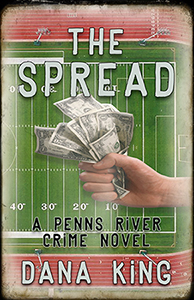
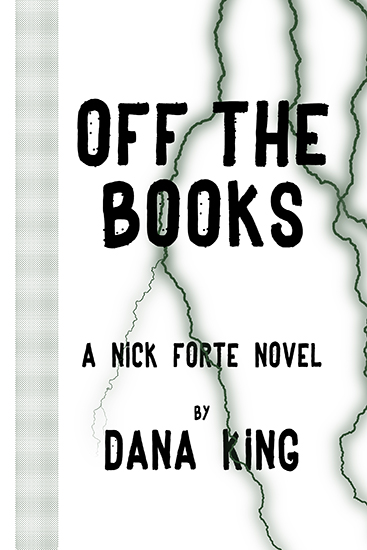
I'm reading a book about a narcoleptic private investigator and having a hard time staying awake.
Now I can't decide whether the book is so good I'm identifying with the main character, or if it's just a yawner.
Tuesday, January 12, 2010


Tuesday, January 5, 2010
"Foresight" on Mysterical-E
Mysterical-E has posted my flash piece, "Foresight," as part of its Winter issue. Several good stories there. Well worth your time.
Sunday, January 3, 2010
Two Surprises
Watched a couple of movies over the weekend. One was a pleasant surprise; one wasn’t.
Being John Malkovich is a trip, if you’re into surrealistic movies that keep their tongue firmly in cheek. (Yeah, it’s a bad metaphor. You get what you pay for.) It took me at least ten minutes to recognize John Cusack, and I wouldn’t have known Cameron Diaz at all if The Beloved Spouse hadn’t pointed her out. (John Malkovich I caught right away.)
Describing too much would ruin the fun. Go into it with an open mind and don’t worry if some things don’t make a lot of sense at first. Appreciate the imagination that came up with the 7 ½ floor and the portal into the mind of John Malkovich.
I’d heard great things about High Sierra for years; IMDB’s readers give it 7.6 on a scale of 10.
They’re on drugs.
I realize the movie will be 68 years old this month, so I’m forgiving a lot. Like the horribly racist portrayal of the attendant at the campsite Bogart and his crew stay at before the heist goes down. And the car chase through the mountains, obviously filmed at about half speed. (Full credit to Raoul Walsh for being way ahead of his time as far as shooting on location was concerned.) Forties audiences probably didn’t think twice about these, and some other things that dated the movie.
That doesn’t account for the acting. I thought we finished the leftover Christmas ham earlier in the day, but there was plenty to go around here. Bogart’s good, as is Arthur Kennedy. Ida Lupino is generally able to restrain herself, and Donald MacBride does well as the bedridden mobster. The rest of the cast make William Shatner look like Steve McQueen.
Movies of that period moved along differently than today’s, but still. Half a dozen scenes can be summarized by the following:
Marie: Take me with you.
Bogie: You can’t come with me, Angel. You’d just slow me down. What kind of a sap would I be, taking you and a dog the places I have to go? It’s no good, I tell ya, no good. It wouldn’t be fair to any of us.
Marie: But I got nowhere else to go.
Bogie: All right, Angel. Get in the car.
Stereotypes abound, and, yes, I’ll bet they were stereotypes even 68 years ago. Aside from the house darkie, there was the bad luck dog, the crooked doctor, the rube farmer, his pretty daughter with the club foot who likes Bogie well enough, but, gee, Pa, I just don’t love him, the hotheaded gang member, and more. You know the crew.
Maybe that’s what audiences wanted then, like they want soulful vampires and pop song montages and Judd Apatow now. It’s what sells and makes a “successful” movie. That doesn’t mean it’s any good.
Being John Malkovich is a trip, if you’re into surrealistic movies that keep their tongue firmly in cheek. (Yeah, it’s a bad metaphor. You get what you pay for.) It took me at least ten minutes to recognize John Cusack, and I wouldn’t have known Cameron Diaz at all if The Beloved Spouse hadn’t pointed her out. (John Malkovich I caught right away.)
Describing too much would ruin the fun. Go into it with an open mind and don’t worry if some things don’t make a lot of sense at first. Appreciate the imagination that came up with the 7 ½ floor and the portal into the mind of John Malkovich.
I’d heard great things about High Sierra for years; IMDB’s readers give it 7.6 on a scale of 10.
They’re on drugs.
I realize the movie will be 68 years old this month, so I’m forgiving a lot. Like the horribly racist portrayal of the attendant at the campsite Bogart and his crew stay at before the heist goes down. And the car chase through the mountains, obviously filmed at about half speed. (Full credit to Raoul Walsh for being way ahead of his time as far as shooting on location was concerned.) Forties audiences probably didn’t think twice about these, and some other things that dated the movie.
That doesn’t account for the acting. I thought we finished the leftover Christmas ham earlier in the day, but there was plenty to go around here. Bogart’s good, as is Arthur Kennedy. Ida Lupino is generally able to restrain herself, and Donald MacBride does well as the bedridden mobster. The rest of the cast make William Shatner look like Steve McQueen.
Movies of that period moved along differently than today’s, but still. Half a dozen scenes can be summarized by the following:
Marie: Take me with you.
Bogie: You can’t come with me, Angel. You’d just slow me down. What kind of a sap would I be, taking you and a dog the places I have to go? It’s no good, I tell ya, no good. It wouldn’t be fair to any of us.
Marie: But I got nowhere else to go.
Bogie: All right, Angel. Get in the car.
Stereotypes abound, and, yes, I’ll bet they were stereotypes even 68 years ago. Aside from the house darkie, there was the bad luck dog, the crooked doctor, the rube farmer, his pretty daughter with the club foot who likes Bogie well enough, but, gee, Pa, I just don’t love him, the hotheaded gang member, and more. You know the crew.
Maybe that’s what audiences wanted then, like they want soulful vampires and pop song montages and Judd Apatow now. It’s what sells and makes a “successful” movie. That doesn’t mean it’s any good.
Thursday, December 31, 2009
Best Reads of 2009
I started keeping track of every book I read a few years ago. I never would have remembered all the great books I read this year if I hadn’t written them down; there were too many.
The following list contains the best books I read for the first time in 2009, regardless of when they were published. (Which is why The Big Sleep isn’t listed.) Last year I named five. This year I planned for ten and was able to pare it to a baker’s dozen only by creating a list of honorable mentions that would have probably made the list in any other year.
Here’s my list, in the order in which they were read.
A Darker Domain, Val McDermid – My first McDermid, it won’t be the last. Excellent cold case story with class differences at the crux. McDermid’s from caol people, and understands them, and their trials. There’s no overt social comment, but it’s rife between the lines, making this en excellent book on multiple levels. The understated writing style is a perfect fit.
The Given Day, Dennis Lehane – Much anticipated, and even better than I’d hoped. Lehane has long written crime stories that were about something more; now he’s written a book about something more than happens to have crime in it. A wonderful book.
The Ice Harvest, Scott Phillips – I saw the movie and liked it. I met Scott at Bouchercon in Baltimore and liked him. Everyone who knew me and had read it said I’d like it, so I read it. Liked it even more than I expected. A noir story with humor, not gags, the narrator and reader laughing at what clueless bastards these guys are, and waiting to see how the crime gods will smite them next.
Hardcore Hardboiled, edited by Todd Robinson – A collection of stories originally published by Robinson’s Thuglit website. As with any anthology, some stories are stronger than others, but this collection touches all the bases. Sean Chercover’s award-winning “A Sleep Not Unlike Death” is here, along with high octane stories from Tim Wohlforth, Ryan Oakley, Victor Gischler, B.H. Shepherd, Vincent Kovar, Duane Swierczynski, David Bareford, Charlie Stella, and several others all worth the time. (Full disclosure: I would have loved this book even if I didn’t have a story appearing in Thuglit’s next anthology. And gotten a free copy based on my detailed knowledge of Apocalypse Now. Honest to God.)
What the Dead Know, Laura Lippman – I’m not much of fan of her Tess Monaghan stories, but Lippman’s shorts and standalones are as good as anyone’s. This book is everything a taut mystery should be.
Fifty Grand, Adrian McKinty – Michael Forsythe has suffered enough in McKinty’s Dead series. This standalone about a Cuban cop looking for answers about how her father died in Colorado is as tightly written as one would expect from McKinty. He knows the territories, having lived in Colorado and spent time in Cuba, and leverages that knowledge with the right amount of cynicism and sardonic eye. Wherever he goes from here is worth watching.
Breathing Water, Timothy Hallinan – Hallinan may be my favorite contemporary writer. No one writes believable thrillers like he does. He doesn’t just pay lip service to the importance of characters and relationships; his books are about them. The writing treads the line between hardboiled and poetic at times. No one writes more complete and engrossing thrillers. And he keep getting better.
All the Dead Voices, Declan Hughes – Speaking of continuing to get better, the fourth Ed Loy novel picks a few scabs from the Irish Troubles that weren’t well received by some who were closer to them than I. The controversy’s a shame, as Hughes merges his usual Macdonald-esque family secrets story with the historical backdrop to go to another level.
Cottonwood, Scott Phillips – I loved The Ice Harvest, I like Westerns, so what the hell? The hell of it is, this might be an even better book than Ice Harvest. Phillips has shown interest in using Bill Ogden in a series. Let’s hope so. The voice here is as perfect as the one used for Ice Harvest, though different, as the stories are much different. Phillips nails them both.
The Friends of Eddie Coyle, George V. Higgins – Technically this shouldn’t be here, as I’d read it quite a while ago, before I knew enough to get what Higgins was up to. Now I get it; this truly is a seminal work.
Chasing Darkness, Robert Crais – Elvis Cole and Joe Pike are reading comfort food to me, among the reasons this book was in my hand when the plane took off for Bouchercon in Indianapolis. That’s not why I was still reading in my hotel room after midnight. Crais is now at the height of his skill; his comfort with these characters is evident on every page. In this familiarity does not breed contempt, but a willingness to take them wherever he wants.
Blood’s a Rover, James Ellroy – My only previous Ellroy was The Cold Six Thousand, and I hated it. Blood’s a Rover hooked me in the first scene and held me, sometimes against my will, through to the end. Love it or hate it, there’s genius sprinkled throughout; you’ll always remember it.
London Boulevard, Ken Bruen – An updated take on Sunset Boulevard, with William Holden’s Joe Gillis replaced by someone more like Richard Stark’s Parker. All the usual Bruen trademarks and a refreshing perspective on a familiar story. Cold-blooded fun.
Swan Peak, James Lee Burke – I wasn’t sure about this one at first, and I still don’t think his lush descriptions suit Montana as well as they do Louisiana, but multiple layers of story and character combine with a nifty twist at the ending to make this a first-class read.
And that still doesn’t cover it. Honorable mention goes to:
Priest, Ken Bruen
High Season, Jon Loomis
Soul Patch, Reed Farrel Coleman
Swag, Elmore Leonard
Slammer, Allan Guthrie
Family Secrets, Jeff Coen
Silent Edge, Michael Koryta
No More Heroes, Ray Banks
Shakedown, Charlie Stella
If 2010 reads as well as 2009, I’d better rest up.
The following list contains the best books I read for the first time in 2009, regardless of when they were published. (Which is why The Big Sleep isn’t listed.) Last year I named five. This year I planned for ten and was able to pare it to a baker’s dozen only by creating a list of honorable mentions that would have probably made the list in any other year.
Here’s my list, in the order in which they were read.
A Darker Domain, Val McDermid – My first McDermid, it won’t be the last. Excellent cold case story with class differences at the crux. McDermid’s from caol people, and understands them, and their trials. There’s no overt social comment, but it’s rife between the lines, making this en excellent book on multiple levels. The understated writing style is a perfect fit.
The Given Day, Dennis Lehane – Much anticipated, and even better than I’d hoped. Lehane has long written crime stories that were about something more; now he’s written a book about something more than happens to have crime in it. A wonderful book.
The Ice Harvest, Scott Phillips – I saw the movie and liked it. I met Scott at Bouchercon in Baltimore and liked him. Everyone who knew me and had read it said I’d like it, so I read it. Liked it even more than I expected. A noir story with humor, not gags, the narrator and reader laughing at what clueless bastards these guys are, and waiting to see how the crime gods will smite them next.
Hardcore Hardboiled, edited by Todd Robinson – A collection of stories originally published by Robinson’s Thuglit website. As with any anthology, some stories are stronger than others, but this collection touches all the bases. Sean Chercover’s award-winning “A Sleep Not Unlike Death” is here, along with high octane stories from Tim Wohlforth, Ryan Oakley, Victor Gischler, B.H. Shepherd, Vincent Kovar, Duane Swierczynski, David Bareford, Charlie Stella, and several others all worth the time. (Full disclosure: I would have loved this book even if I didn’t have a story appearing in Thuglit’s next anthology. And gotten a free copy based on my detailed knowledge of Apocalypse Now. Honest to God.)
What the Dead Know, Laura Lippman – I’m not much of fan of her Tess Monaghan stories, but Lippman’s shorts and standalones are as good as anyone’s. This book is everything a taut mystery should be.
Fifty Grand, Adrian McKinty – Michael Forsythe has suffered enough in McKinty’s Dead series. This standalone about a Cuban cop looking for answers about how her father died in Colorado is as tightly written as one would expect from McKinty. He knows the territories, having lived in Colorado and spent time in Cuba, and leverages that knowledge with the right amount of cynicism and sardonic eye. Wherever he goes from here is worth watching.
Breathing Water, Timothy Hallinan – Hallinan may be my favorite contemporary writer. No one writes believable thrillers like he does. He doesn’t just pay lip service to the importance of characters and relationships; his books are about them. The writing treads the line between hardboiled and poetic at times. No one writes more complete and engrossing thrillers. And he keep getting better.
All the Dead Voices, Declan Hughes – Speaking of continuing to get better, the fourth Ed Loy novel picks a few scabs from the Irish Troubles that weren’t well received by some who were closer to them than I. The controversy’s a shame, as Hughes merges his usual Macdonald-esque family secrets story with the historical backdrop to go to another level.
Cottonwood, Scott Phillips – I loved The Ice Harvest, I like Westerns, so what the hell? The hell of it is, this might be an even better book than Ice Harvest. Phillips has shown interest in using Bill Ogden in a series. Let’s hope so. The voice here is as perfect as the one used for Ice Harvest, though different, as the stories are much different. Phillips nails them both.
The Friends of Eddie Coyle, George V. Higgins – Technically this shouldn’t be here, as I’d read it quite a while ago, before I knew enough to get what Higgins was up to. Now I get it; this truly is a seminal work.
Chasing Darkness, Robert Crais – Elvis Cole and Joe Pike are reading comfort food to me, among the reasons this book was in my hand when the plane took off for Bouchercon in Indianapolis. That’s not why I was still reading in my hotel room after midnight. Crais is now at the height of his skill; his comfort with these characters is evident on every page. In this familiarity does not breed contempt, but a willingness to take them wherever he wants.
Blood’s a Rover, James Ellroy – My only previous Ellroy was The Cold Six Thousand, and I hated it. Blood’s a Rover hooked me in the first scene and held me, sometimes against my will, through to the end. Love it or hate it, there’s genius sprinkled throughout; you’ll always remember it.
London Boulevard, Ken Bruen – An updated take on Sunset Boulevard, with William Holden’s Joe Gillis replaced by someone more like Richard Stark’s Parker. All the usual Bruen trademarks and a refreshing perspective on a familiar story. Cold-blooded fun.
Swan Peak, James Lee Burke – I wasn’t sure about this one at first, and I still don’t think his lush descriptions suit Montana as well as they do Louisiana, but multiple layers of story and character combine with a nifty twist at the ending to make this a first-class read.
And that still doesn’t cover it. Honorable mention goes to:
Priest, Ken Bruen
High Season, Jon Loomis
Soul Patch, Reed Farrel Coleman
Swag, Elmore Leonard
Slammer, Allan Guthrie
Family Secrets, Jeff Coen
Silent Edge, Michael Koryta
No More Heroes, Ray Banks
Shakedown, Charlie Stella
If 2010 reads as well as 2009, I’d better rest up.
December's Best Reads
My reading year ended with a bang.
Mischief, Ed McBain – A good, old-school, everyone gets into the act 87th Precinct story, featuring the Deaf Man. Meyer and Hawes get the mystery of abandoned Alzheimer’s patients, Parker and Kling have to work the killings of graffiti artists, and Carella and Brown have to figure out what the hell the Deaf Man is up to. All the stories end with less than perfect resolutions, and McBain is in fine form as the narrator.
Somebody Owes Me Money, Donald Westlake –The Hunter, played for laughs. Chester Conway gets a tip on a horse and winds, then shows up to collect a few minutes after his bookie gets clipped. The bookie’s widow, his sister, two crime factions, and the cops all think Chet’s involved when all he wants is his $930. He’s going to get it, though. Laugh out loud funny in spots, especially when Chet is laid up and all the other players pass though his bedroom to advance their agendas. Great fun.
Swan Peak, James Lee Burke – His flowing descriptions seem better suited for the lush vegetation of Louisiana than to the sometimes stark beauty of Montana, but Dave Robicheaux always delivers. Clete’s more involved here than usual as a vacation goes sour when he accidentally camps on restricted property. Local law, the feds, organized crime, and a Texas escapee and his pursuer complicate things right up to the ending that doesn’t end quite how you expect.
Shakedown, Charlie Stella – A New York bookie quits the business three months before his old boss turns state’s evidence. Multiple plot lines interweave, and no one does anything out-of-character stupid just to advance the plot; it all makes sense when the decisions are made, no matter how badly things turn out. The mobsters are unapologetically, not caricatures, and the dialog is dead on.
Mischief, Ed McBain – A good, old-school, everyone gets into the act 87th Precinct story, featuring the Deaf Man. Meyer and Hawes get the mystery of abandoned Alzheimer’s patients, Parker and Kling have to work the killings of graffiti artists, and Carella and Brown have to figure out what the hell the Deaf Man is up to. All the stories end with less than perfect resolutions, and McBain is in fine form as the narrator.
Somebody Owes Me Money, Donald Westlake –The Hunter, played for laughs. Chester Conway gets a tip on a horse and winds, then shows up to collect a few minutes after his bookie gets clipped. The bookie’s widow, his sister, two crime factions, and the cops all think Chet’s involved when all he wants is his $930. He’s going to get it, though. Laugh out loud funny in spots, especially when Chet is laid up and all the other players pass though his bedroom to advance their agendas. Great fun.
Swan Peak, James Lee Burke – His flowing descriptions seem better suited for the lush vegetation of Louisiana than to the sometimes stark beauty of Montana, but Dave Robicheaux always delivers. Clete’s more involved here than usual as a vacation goes sour when he accidentally camps on restricted property. Local law, the feds, organized crime, and a Texas escapee and his pursuer complicate things right up to the ending that doesn’t end quite how you expect.
Shakedown, Charlie Stella – A New York bookie quits the business three months before his old boss turns state’s evidence. Multiple plot lines interweave, and no one does anything out-of-character stupid just to advance the plot; it all makes sense when the decisions are made, no matter how badly things turn out. The mobsters are unapologetically, not caricatures, and the dialog is dead on.
Tuesday, December 29, 2009
Female Protagonists
Christa Faust recently linked her blog to an article she wrote for Los Angeles Magazine on the fetishization of beautiful female victims. (It’s well worth your time; I’ll wait until you finish.)
I don’t read as much crime fiction by women, or with female protagonists, as I might, or probably should. This has gotten better over the past couple of years, but not greatly so. I have my reasons:
Female protagonists are too often men with breasts and no Adam’s apples. They’re young, sexy, and kick ass. I have nothing against young, sexy, kickass women in principle, but they’re not exactly falling out of trees. (Neither are young, sexy, kickass men, either, but the genre isn’t afraid to have middle-aged, dumpy male heroes.) What’s the point of replacing one stereotype with another, even less realistic?
Female protagonists too often depend on men (or divine intervention) to solve their cases or save their asses. Stephanie Plum comes to mind. You can think of others without me.
Stories with female protagonists are too often cozies in hard-boiled clothing. A lot of people like cozies; generally, I don’t. Whether you do or don’t, a cozy masquerading as hard-boiled is either awkward or comes off as a parody, and parody is harder to pull off than it looks.
Authors—male and female—too often seem uncomfortable with a heroine’s, uh, personal life. How sexually aggressive, or even sexually active, should she be? Will she seem like a bitch if she’s Type A, or a pushover if she’s not? Awkwardness by the writer in this area can easily ruin a book. (Awkwardness in this area by the character can make a book. Many people have this issue, and I suspect women in traditionally male positions probably more than most.)
I’ve come across three female authors who handle all of the above well: Sara Paretzky, Libby Fischer Hellmann, and Christa Faust. (There are, I know, many more. I just haven’t got to them yet.) Christa’s Angel Dare in Money Shot could be a seminal character. (No pun intended.) It’s good to hear Christa has finished the sequel. Having gone that far, Christa is now looking at another breakthrough:
Would it be possible to create a female version of Bucky Bleichert, the obsessed detective in Ellroy’s Black Dahlia? Would a traditionally feminine woman ever fall for a murdered man? Would she moon over his handsome photo, promising his image that she would bring his killer to justice? Or is there something so inherently masculine about the archetype of the white knight avenging the dead maiden that its opposite just doesn’t work?
There’s some hard-wiring to be overcome. Men are the traditional hunters/protectors and women are the traditional gatherers/nurturers. We also know those are not hard and fast rules, especially not in the 21st Century where familial roles are often reversed and single parents are not uncommon. Why wouldn’t some of these characteristics bleed over into the other gender in a realistic way?
Why can’t a woman go “down these mean streets…who is not [her]self mean, who is neither tarnished nor afraid?” The situations she could reasonably get herself out of might not get as dire as what a man might be expected to handle, but such a woman would have to be smart and resourceful enough to recognize them and plan exit strategies. She need be neither a nymphomaniac nor frigid; she’s more likely to handle a .32 than a .44, but the smaller gun is just as deadly if used expertly. She may prefer cooking over sports, or not; I know women of both persuasions, and neither precludes the smarts and toughness needed to carry such a story.
Personally, I’d love to read a book like the one Christa describes, so long as it’s not done as a novelty. (And she certainly wouldn’t do it that way.) Such a book might open the gates for a lot of writers. If Spenser can be so overtly masculine while loving to cook, why can’t a woman be solidly feminine and like to build cabinets?
There are two potential hurdles to be overcome. One is whether a woman such as we’re talking about could be reasonably written. I suspect so, but not by me. Part of that is, frankly, because I’m a man. I can relate to the “Laura” scenario; I have no idea if a woman would be so inclined to fall prey to a “Lawrence” obsession. There are a lot of excellent writers who don’t have that problem.
The second, and, I suspect, greater problem is how the public would take to it. We all know best-sellers aren’t created by challenging people’s notions. James Patterson didn’t get to be James Patterson by trying to expand his readers’ horizons. Even Lee Child, whose writing I like, gives pretty much the same Reacher conventions book after book. There may be a glass ceiling here of “cult phenomenon.” Nothing wrong with that. Hell, compared to what makes a best seller, much of what anyone who sees this might read probably qualifies as a cult book.
What such a book might best do is start a discussion. A sub-genre might spring up. A lot of those books would be shit—most of anything is shit—but good examples would grow like mushrooms through it. Enough of this and the female characters who support traditional male heroes might eventually become more diversified and multi-dimensional in a realistic way. There’s no down side to any of that.
I hope she follows through and finds a publisher. She’ll sell at least one copy.
I don’t read as much crime fiction by women, or with female protagonists, as I might, or probably should. This has gotten better over the past couple of years, but not greatly so. I have my reasons:
Female protagonists are too often men with breasts and no Adam’s apples. They’re young, sexy, and kick ass. I have nothing against young, sexy, kickass women in principle, but they’re not exactly falling out of trees. (Neither are young, sexy, kickass men, either, but the genre isn’t afraid to have middle-aged, dumpy male heroes.) What’s the point of replacing one stereotype with another, even less realistic?
Female protagonists too often depend on men (or divine intervention) to solve their cases or save their asses. Stephanie Plum comes to mind. You can think of others without me.
Stories with female protagonists are too often cozies in hard-boiled clothing. A lot of people like cozies; generally, I don’t. Whether you do or don’t, a cozy masquerading as hard-boiled is either awkward or comes off as a parody, and parody is harder to pull off than it looks.
Authors—male and female—too often seem uncomfortable with a heroine’s, uh, personal life. How sexually aggressive, or even sexually active, should she be? Will she seem like a bitch if she’s Type A, or a pushover if she’s not? Awkwardness by the writer in this area can easily ruin a book. (Awkwardness in this area by the character can make a book. Many people have this issue, and I suspect women in traditionally male positions probably more than most.)
I’ve come across three female authors who handle all of the above well: Sara Paretzky, Libby Fischer Hellmann, and Christa Faust. (There are, I know, many more. I just haven’t got to them yet.) Christa’s Angel Dare in Money Shot could be a seminal character. (No pun intended.) It’s good to hear Christa has finished the sequel. Having gone that far, Christa is now looking at another breakthrough:
Would it be possible to create a female version of Bucky Bleichert, the obsessed detective in Ellroy’s Black Dahlia? Would a traditionally feminine woman ever fall for a murdered man? Would she moon over his handsome photo, promising his image that she would bring his killer to justice? Or is there something so inherently masculine about the archetype of the white knight avenging the dead maiden that its opposite just doesn’t work?
There’s some hard-wiring to be overcome. Men are the traditional hunters/protectors and women are the traditional gatherers/nurturers. We also know those are not hard and fast rules, especially not in the 21st Century where familial roles are often reversed and single parents are not uncommon. Why wouldn’t some of these characteristics bleed over into the other gender in a realistic way?
Why can’t a woman go “down these mean streets…who is not [her]self mean, who is neither tarnished nor afraid?” The situations she could reasonably get herself out of might not get as dire as what a man might be expected to handle, but such a woman would have to be smart and resourceful enough to recognize them and plan exit strategies. She need be neither a nymphomaniac nor frigid; she’s more likely to handle a .32 than a .44, but the smaller gun is just as deadly if used expertly. She may prefer cooking over sports, or not; I know women of both persuasions, and neither precludes the smarts and toughness needed to carry such a story.
Personally, I’d love to read a book like the one Christa describes, so long as it’s not done as a novelty. (And she certainly wouldn’t do it that way.) Such a book might open the gates for a lot of writers. If Spenser can be so overtly masculine while loving to cook, why can’t a woman be solidly feminine and like to build cabinets?
There are two potential hurdles to be overcome. One is whether a woman such as we’re talking about could be reasonably written. I suspect so, but not by me. Part of that is, frankly, because I’m a man. I can relate to the “Laura” scenario; I have no idea if a woman would be so inclined to fall prey to a “Lawrence” obsession. There are a lot of excellent writers who don’t have that problem.
The second, and, I suspect, greater problem is how the public would take to it. We all know best-sellers aren’t created by challenging people’s notions. James Patterson didn’t get to be James Patterson by trying to expand his readers’ horizons. Even Lee Child, whose writing I like, gives pretty much the same Reacher conventions book after book. There may be a glass ceiling here of “cult phenomenon.” Nothing wrong with that. Hell, compared to what makes a best seller, much of what anyone who sees this might read probably qualifies as a cult book.
What such a book might best do is start a discussion. A sub-genre might spring up. A lot of those books would be shit—most of anything is shit—but good examples would grow like mushrooms through it. Enough of this and the female characters who support traditional male heroes might eventually become more diversified and multi-dimensional in a realistic way. There’s no down side to any of that.
I hope she follows through and finds a publisher. She’ll sell at least one copy.
Wednesday, December 23, 2009
My Year In Review
There’s not a lot has changed for us
Since last I sent a rhyme,
What has changed has been memorable,
And worth a little time.
So chronologically I’ll tell
The story of our year,
I’ll say my piece and then get out,
I’ll not long bend your ear.
A story Dana wrote will be
In print in twenty-ten,
We’ll give a date precise when we
Find out, and only then.
The spring is when it’s likely to
Be found in better stores,
As part of an anthology
Made up of crime and gore.
The Sole Heir donned a cap and gown
To graduate in June,
The family convened in droves;
Agoraphobes would swoon.
In summer Colorado Kings
Came east, and we northwest,
To spend a week with Mom and Dad,
And get a little rest.
‘Twas meant to be relaxing time
Back at the old homestead,
Instead, most time was taken up
In building me a shed.
Then Rachel took the center stage
When school came letting in
Matriculating at the U
Of M, a Terrapin.
A scholarship hard earned will pay
For most of what she owes,
Allowing her to save some cash
For where’er next she goes.
Then just when everyone was sure
The year would surely pass
With whimper in lieu of a bang,
Like many in the past
Beloved Spouse Equivalent
And I had one surprise:
Thanksgiving weekend, here at home,
For just the family’s eyes
We married in our living room,
A most informal wed,
Still, binding legally it is,
(At least, that’s what they said).
An honest man and woman we
Have made of her and me,
To bring this year to rousing end,
Another full of glee.
Since last I sent a rhyme,
What has changed has been memorable,
And worth a little time.
So chronologically I’ll tell
The story of our year,
I’ll say my piece and then get out,
I’ll not long bend your ear.
A story Dana wrote will be
In print in twenty-ten,
We’ll give a date precise when we
Find out, and only then.
The spring is when it’s likely to
Be found in better stores,
As part of an anthology
Made up of crime and gore.
The Sole Heir donned a cap and gown
To graduate in June,
The family convened in droves;
Agoraphobes would swoon.
In summer Colorado Kings
Came east, and we northwest,
To spend a week with Mom and Dad,
And get a little rest.
‘Twas meant to be relaxing time
Back at the old homestead,
Instead, most time was taken up
In building me a shed.
Then Rachel took the center stage
When school came letting in
Matriculating at the U
Of M, a Terrapin.
A scholarship hard earned will pay
For most of what she owes,
Allowing her to save some cash
For where’er next she goes.
Then just when everyone was sure
The year would surely pass
With whimper in lieu of a bang,
Like many in the past
Beloved Spouse Equivalent
And I had one surprise:
Thanksgiving weekend, here at home,
For just the family’s eyes
We married in our living room,
A most informal wed,
Still, binding legally it is,
(At least, that’s what they said).
An honest man and woman we
Have made of her and me,
To bring this year to rousing end,
Another full of glee.
Subscribe to:
Posts (Atom)