Friday, April 10, 2020

Why the Blog is Back


An existential reason sent the blog into a coma over the winter: Do I have a point? It’s not like some fledgling writer in Goodland KS is wondering what I think about the Oxford comma. No reader in Pahokee FL waits for my opinion before purchasing a book. Too many of my justifications for continuing sounded like ego gratification, and god knows we don’t need any more people exposing us to masturbatory exhibitions of their self-perceived greatness.

Two things changed my mind. Primary was that I work out ideas better when I apply myself to writing about them. Bullshitting among friends is one thing, but I have internal standards—as all writers should—that demand anything written down needs to be well thought out, especially if others might see it. Continuing on with the blog should be a learning experience for me more than anyone, and I truly believe a day spent without learning something is a day wasted. Given my age and the current world health situation, the time I have available for wasting does not yawn ahead into infinity.

Another reason came to mind as I looked through the archives for a post a few weeks ago. I’ll admit I don’t read as many blogs as I used to, mainly because much of what I read in them are things I already know, or made up my mind about, long ago. Among the reasons I stopped posting was because the world didn’t need another blog not to read.

If I had to pick one vocation I am best suited for, it’s not writing; nor was it music. I’m a teacher. Few things give me more satisfaction than sharing my knowledge. It’s an infinite resource, as the surest way to learn something is to teach it. (Thanks to Dr. Sole Heir™ for reminding me.) There is nothing in the world better than seeing the look on a student’s face when an elusive concept snaps into place. (Laughing babies is close.) Many of my fondest memories of The Sole Heir™ (pre-doctor) are of teaching her things, or, even better, helping her figure something out. I am beyond proud when I see her use concepts and methods we worked on now that she and Lieutenant (j.g.) Sole Son-in-Law™ move through life together.

It also occurred to me that, while the bulk of my author contacts are people of experience who now take many of these thoughts for granted, we didn’t always. There are writers today who might benefit from some of what I’ve discovered for myself, and, as a teacher, that’s where the payoff lies.

Not that I’m a better teacher than anyone else, or even as good. I’m different. I’ve learned that how something is phrased can make all the difference. When is important, too, as students often aren’t ready to assimilate imparted knowledge the first (second, fourth, twentieth) time they’re exposed to it.

So I’m looking at the blog as more of a teaching/learning thing. I’ll reach into the archives at times, but those reaches may be to show my evolution, or even something I changed my mind about altogether. Long-time readers may think, “Meh. I know that already.” That’s cool. Quit reading when it sounds too familiar, but feel free to pass it along to someone it might help.

Thursday, April 2, 2020

Just When I Think I'm Out...


I have a well-defined process for finishing a book. (Some might call it obsessive-compulsive. Reasonable people might think they’re right to do so. I prefer “well-defined.” You be the judge, then keep your opinion to yourself.)

Once I realize I have all the pieces in place and the writing is about as good as I can get it, I make up my mind that this next pass will be the last.

Day One: Read Chapter 1. Don’t do anything with it. Don’t even fix typos. Inevitably, things present themselves to be improved. Leave them be. Just read it so the writing ferments overnight.

Day Two: Edit Chapter 1 on the computer screen, most likely while reading sotto voce.
Read Chapter 2.

Day Three: Print Chapter 1 and read while reading aloud. Edit Chapter 2 on the screen. Read Chapter 3.

Day Four: Re-print Chapter 1 and read it aloud to The Beloved Spouse™; note problems and correct. (Shouldn’t be more than proofreading by now, but things sometimes pop up.) Print and edit Chapter 2 while reading aloud. Edit Chapter 3 on the screen. Read Chapter 4.

Repeat until, complete.

Then, and only then, can I type THE END.

This book is different. About two-thirds of the way through this process I realized the timelines were off. Nothing dramatic, and maybe I only noticed them because I’ve been bingeing Sons of Anarchy and their timelines make no sense at all, but it bothered me enough that I resolved to make another pass.

This is where things get messy. I essentially re-outlined the book, tore it apart, and put it back together in what I thought made more sense. This required stepping back and looking at the book as a whole; I needed to see the forest.

First I created a new set of index cards in Scrivener. (I did the first two drafts in Scrivener, then the serious editing in Word.) The plan was to paste the content back into Scrivener, re-arrange the cards as needed, then export back into Word for a final proofread. Problem: there are too many scenes to get them all onto one screen and still be able to read them easily.

Plan B was to put every chapter into an Excel spreadsheet. Same problem.

I ended up making a BFC (Big Fucking Calendar) on a three-foot-by-four-foot dry erase board in my office. Took notes on what had to go together and which had to happen before or after something else. No hurry to finish. I let things fall together as they wanted to. I know my process well enough to know that I work best in relatively short bursts, after which things can sit overnight.

Today I’m using a previously scheduled day off work to copy and paste what’s on the calendar into a new Word file. New chapter headings are needed, as I think the point I’m trying to make with all this obsessing agonizing over timing can be aided by not only marking each chapter with the date and time (hat tip to Mark Bergin and his fine novel Apprehension for the idea) but by noting which cops are involved so the reader can see how they get run around and how hard it is to focus on the task at hand sometimes.

It still won’t be done. I’ll edits to reflect chapters’ new positions. I’ll do searches for extraneous words that always sneak in, such as just, actually, enough, that. (If you’re not familiar with Allan Guthrie’s brilliant list of writing tips, “Hunting Down the Pleonasms,” you need to be.) A spell and grammar check. (Not that I love Word’s grammar but it does flag the passive sentences that slip in after spending all day writing shit for the government.) Then one more proof read to make sure the spell check hasn’t missed a word that’s spelled right but is the wrong word.

Then I can type THE END.

And fucking about time it will be. This book has taken me almost twice as long as anything else I’ve written. Some of that has to do with life’s interventions. I also can’t work as fast or as much at one stretch as I used to. The lion’s share is because this is in many ways the most ambitions book I’ve ever tried, a reach for me to see how many balls I can keep in the air. I think it’s come out pretty well, just as I’m also pretty sure I’ll not try one quite like it again.

Friday, March 27, 2020

Favorite Reads of 2020, Part One


I can’t read nearly as fast or as much as I used to, so I’m pickier about what I do read. Books get far fewer pages than before to prove their worth. Lucky me that I’ve already read five I was sorry to see end.

The Fifth Risk, Michael Lewis. I planned not to read any books about the trump administration, but this was Michael Lewis. The germ of the narrative is how the trump team handled the transition from the Obama Administration, or, more to the point, didn’t handle it. What begins as an examination of how power changes hands spins through a description of the expertise that resides in government and then into a parable about being careful what you ask for. It’s brilliant, Lewis’s finest work, and that’s saying a lot.

Cold in July, Joe Lansdale. I’m late to the party on Lansdale but that’s among the reasons I’m trimming some of my other reading, so I can catch up. A damn near perfect book with well-drawn characters and one that belongs on the pantheon of greatness, namely Jim Bob Luke. What begins as a simple home burglary turns deadly and a solid revenge story starts to spin out until a plot twist that made me lower the book and take a deep breath. There are a couple of things that might defy the suspension of disbelief in lesser hands, but Lansdale pulls off the ultimate success: an ending that seems surprising yet inevitable. The movie’s good, but it only scratches the surface and makes a few odd choices. By all means read the book.

Apprehension, Mark Bergin. Just because I’m fussier about what I read doesn’t mean I’m only reading big names. Bergin’s debut is a combination police procedural/courtroom drama that succeeds on all counts in a manner that would make Joe Wambaugh proud, a fascinating story that is far more about how the cases work on the cops than how the cops work on the cases.

The Ghosts of Galway, Ken Bruen. Been a while since I read a book by Bruen. Can’t let that happen again. His style is as unique as Ellroy’s in its own distinctly Irish way. This time Jack Taylor gets involved in a classic MacGuffin tale that’s ostensibly about a rare book that ends up not being any more about the book than The Maltese Falcon is about the Audubon Society. Everyone uses Taylor for a pawn, not the least of which is a young woman who give Alice from the Luther TV show a run for her money in the crazy bitch department. What no one figures is the man they dismiss as an aging, broken-down drunk has limits to what he’ll put up with and skills to do something about it.

Cozy up to Death, Colin Conway. You might have assumed I don't read many cozies. The figure "none" comes to mind. This is a cozy with a difference. Sure, it's in a quaint New England seaside village. Sure, the protagonist owns a mystery bookstore and the bookstore has a cat. The lone police patrol officer rides a bike. Ah, but the store owner is a biker who ratted on the MC and is in Witness Protection, where he rubs up against some people he should really have stayed clear of. Delightful way of turning the genre on its head while still observing all the conventions.


Friday, March 20, 2020

Colin Conway, Author of Cozy Up To Death


I met Colin Conway at Bouchercon in Dallas and liked him right away. (Of course he was standing right next to Frank Zafiro, so the bar was pretty low, but still.) I was aware of Colin’s work from having read, and loved, Charlie 3-16, which he wrote in collaboration with Frank. We got to discussing Colin’s current solo project, Cozy up to Death, the first book in a series that would fit the description of a cozy—bookstore in a small seaside town, bookstore cat, bookstore owner solves crimes—except that the main character is a biker in the Witness Protection Program. That hooked me right there and I asked him to talk about it on the blog.

Besides writing the Cozy Up series, Colin is the author of the 509 Crime Stories, a series of novels set in Eastern Washington with revolving lead characters. They are standalone tales and can be read in any order.

He is also the co-author of The Charlie-316 series. The first book in the series, Charlie-3-16, is a political/crime thriller and has been described as “riveting and compulsively readable,” “the real deal,” and “the ultimate ride-along.”

Colin served in the U.S. Army and later was an officer of the Spokane Police Department. He's a commercial real estate broker/investor, owned a laundromat, invested in a bar, and ran a karate school. (If all of these gigs in conjunction don’t sound like fronts, I don’t know what does.)

He lives with his beautiful life partner, their three wonderful children, and a crazy, codependent Vizsla that rules their world.

Find out more about Colin at his official website—colinconway.com.

One Bite at a Time: Hi, Colin. Good to see you back on OBAAT. You were here last with Frank Zafiro to talk about Charlie-316 but Cozy Up to Death is a solo venture for you. Start us off by giving just a tease of the story.
Colin Conway: I’ve looked for catchy ways to describe the book and I have a couple. The first is the back copy of the book. “A man in hiding. A gang of outlaws searching for retribution. This is no time for cupcakes.”

This second is a blurb from Libby Klein, the author of the Poppy McAllister mysteries, who said, “This is not your grandma’s cozy.”

OBAAT: Cozy up to Death has all the hallmarks of a cozy: The protagonist runs a bookstore, the bookstore has a cat, it’s in a small waterfront town in Maine, there’s a chaste love interest, and a quirky group of characters. The things that happen day to day are appropriate. Yet the “store owner” is an ex-biker on the lam and the prospect of violence is there almost all the time. It’s a trick path to walk and you did it quite well. What gave you the idea to mess with the cozy structure?
CC: The idea came to me while attending Left Coast Crime (LCC), a writer’s conference. My girlfriend had batted around her own cozy concept for several years and, because of that, I thought it would be helpful to attend one of the LCC sessions on that genre.

There are certain rules when writing cozies—limited (or no) violence, limited (or no) sexy stuff, and limited (or no) swearing.  The genre also has certain tropes.  Among them are small towns, charming protagonists who work in cute businesses, and often an adorable pet.

None of that sounded like anything I would ever write. However, being a writer who doesn’t like being told what to do, I thought, “What if I wrote a cozy?  How would that look?”

That’s when I came up with the idea of an anti-cozy cozy.  Basically, my protagonist would be a big, tattooed guy who is an informant for the FBI.  Because of his physical attributes, he would be hard to hide.  If I dropped him into any type of Murder, She Wrote scenario, he’d wreak havoc, even if it was unintentional.

OBAAT: Beau Smith—sorry, Brody Steele is in Witness Protection. You had to fudge a few things about how the program is run to fit the demands of a cozy structure, but never in a way that even I, a notorious prick when it comes to verisimilitude, objected. On one hand, that a sign of an author who knows the material so well he understands what can be messed with before the shark gets jumped. That said, did it ever give you pause while you writing to think, “They’d never do this…ah what the hell.”
CC: Even in a cozy, verisimilitude should be important. Several things I chose to do came from some sliver of truth. In fact, a Popular Mechanics article, How the Witness Protection Program Decides Where to Send People, helped spark the whole plan for the series.

In the article, a retired FBI agent explains that his agency had businesses they used for agent cover stories.  It’s a procedure called “backstopping.”  This agent opined that the U.S. Marshals probably had similar business for those in witness protection.

I thought what if they actually put witnesses to work inside those businesses instead of just using them for backstories?

There was one convention I created in my story—a website tracking mob informants—that I have often thought, “Why doesn’t something like it exist?”  It seemed like a natural thing to create especially with so many people in hiding.  After I put it on the page, I’ve had numerous people say, “Does something like that really exist?” When I tell them I don’t think so, they usually respond, “Why the heck not?”

OBAAT: You were a cop and even though Cozy Up to Death is not a procedural, are there any things in the book based on your actual experience?
CC: Nothing based on law enforcement experience made it into the book. Beau is an amateur sleuth who previously solved all his problems in the motorcycle club by force.  Now, he’s trying to use his head which creates its own set of issues.

Beyond being a mystery, Cozy Up to Death is a fish-out-of-water story. Think Crocodile Dundee, if you will.  We’ve all been that fish at some point in our life.  For this story (and its sequels), I’ve ramped up that feeling of being out of step with everyone around.

OBAAT: The style and genre of Cozy Up to Death is far removed from Charlie-316; your range impresses me. Is there anything different in how you approach the different books either in your writing method or frame of mind?
CC: Thank you for the compliment.  I really appreciate it.

The most important thing about writing the two different series was my audience.  I wrote Cozy Up to Death for my mother-in-law.  She is a deeply religious person who has read my other works.  Violence and swearing in books like Charlie-316 bothers her, but she still wants to be supportive.

So when I first started CUTD, I kept thinking, “Can she show this part to her friends at church?”  Once I got into that groove, the book flowed easily along.

With that being said, the story is for anyone who digs traditional crime fiction or mysteries. Especially since I push the bounds of the genre in the arena of violence.

I’m willing to bet that no cozy has ever featured a full-on donnybrook inside a bookstore with a protagonist using a hardback as his weapon of choice.

OBAAT: This is an awkward question but we all know publishers are in the business of putting out books that they can shoehorn into a known market. Cozy up to Death plays with the cozy genre to the point where I can imagine a cautious editor deciding it’s neither fish nor fowl and take a pass. Did you run into any of that on the road to publication?
CC: Not awkward at all.  I decided early on I was going to publish this through my own company.  Publishing is a different game now.  As Mark Dawson’s Self-Publishing Show says as part of their intro, “There’s never been a better time to be a writer.”  Some of my work goes through a publisher while some of it is being independently handled.

I choose to go the indie route with the Cozy Up series due to how quickly I wanted the books to follow each other.  I waited to launch the first book until I had three of them written and ready to go. That way they could all come out shortly after the previous one. 

Any reader will tell you the worst part of a new series is the wait for the next book.  I will launch the first three books of the series in roughly ninety days.  That is unheard of in traditional publishing.

OBAAT: Tell us a little about your 509 stories.
CC: The 509 Crime Stories are set in eastern Washington state and feature stories with alternating viewpoints.  The novels are centered around the Spokane Police department, but the lead characters change with each story. Due to the alternating points-of-view, I’m able to not only tell different stories, but deal with different issues.

For example, in the first book, The Side Hustle, a detective (Quinn Delaney) is struggling through overwhelming personal debt.  He’s got collectors after him and he’s received a notice of foreclosure on his home.  It’s something I’ve never read in a crime fiction book, and I thought it would be interesting to read how that impacts a Major Crimes detective during an investigation.

In the second novel, The Long Cold Winter, our hero (Dallas Nash) is depressed following the recent death of his wife.  As such, he’s begun hearing music every morning and is struggling to understand if his wife is sending him messages from beyond the grave. This leads him to wonder if he might be crazy.

Both characters are in the other’s story albeit as minor players.  That’s how the series continues as we see the characters grow and change not only through their own eyes, but also through the actions and opinions of those around them.

Everybody is the hero of their own story—even a dirty cop (whose tale is coming soon).

OBAAT: Classic last question: What are you working on now?
CC:  It’s going to be a busy 2020.  As I mentioned above, the second and third novels in the Cozy Up series will be released in early spring (Cozy Up to Murder and Cozy Up to Blood).  Beau will be on the move in both those books.  Unfortunately for the big man (but great for the reader), he’s going to have a tough time fitting in anywhere.

I’ve got the next several Cozy Up stories mapped out, so I’ll get to writing them in late spring.

Beyond the cozy genre, the final three books for the Charlie-316 series will be released this year from Down & Out Books.  This starts in late June with Never the Crime.  Frank Zafiro and I had written the final three books and petitioned D&O to release them all this year (the previous plan was one a year).  They graciously agreed so book three will be out in September and book four will drop in November.

There are a couple 509 works that are done and sitting in the editing queue.  Once those get cleaned up and approved, I’ll figure out what to do with them.


Friday, March 13, 2020

From the Vaults: "Something Worth Remembering" (January 20, 2009)


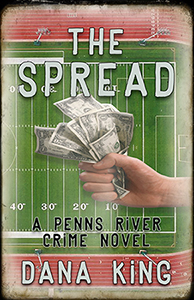
It’s been a busy couple of weeks. I was knee-deep in what I thought would be the final draft of the sixth Penns River novel and the time had come to start getting busy promoting the fifth, Pushing Water. (Available May 4 from Down& Out Books, in case I hadn’t mentioned it before.) Then the editor’s notes for Pushing Water came in, requiring a major re-arrangement of things in general.

A busy time with a lot of other things going on in my personal and work life. Hectic? Yep. Frustrating? You bet. Lucky for me I had a blog post due today. With no time to write one, I searched the archives and found the perfect piece, from January 20, 2009. Here it is, in its entirety, to show that even after eleven years, some things never change, damn glad I am to be reminded.

///

Writers have been known to remark on what hard work it is to finish a book. Successful writers sometimes comment on the difficulties of cranking out a book a year. In the press kit for her now book, A Darker Domain, no less an authority than Val McDermid lays it out:

People sometimes remark that I must work hard to produce a book a year. They look offended when I laugh. Then I explain. And they get it.

Both my grandfathers were miners. The one who only had daughters rejoiced that no child of his was going to have to spend a working life underground. Deep underground in the heat and the stink and the filth and the danger, they knew what hard work was, my grandfathers.

The next time any of us, myself included, feels the need to complain about a writer’s plight, we should stop, get on our knees, and thank whatever higher power we choose that we have the privilege, and the leisure, to be able to write.

Wednesday, March 4, 2020

He's Ba-a-ack


Yes, the blog is back. (You didn’t really think I fired it up just to interview Beau Johnson, did you? Not that it wouldn’t have been worth it. Beau’s a hoot.) “One Bite at a Time” is back because a few months away recharged my batteries. The release of Pushing Water on May 4 from Down & Out Books gave me a concrete reason. Setting up the online tour has gone better than in the past, so that helps, too. I’ve settled into a more stable situation with my vision now and, while I don’t read as fast or as much as I used to (or would like), my attitude has improved to the point where I have things to say and books to praise again.

The differences won’t be great, though the approach may vary a little. I’ll resume the capsule reviews of books I liked, though maybe not monthly. Movie reviews will probably only happen for things I really liked, or really didn’t like.

(“Why do I only review books I liked and will rip a movie?” you ask. Because I rarely read bestsellers and the publishing industry is already a harsh enough mistress for anyone else. And because we already have “CatLadyinDesMoines56,” who was okay with the fifteen ritual torture murders your book intimately described but you lost her when the killer dropped an egg and said, “Shit” so she stopped reading and gave the book one star and the title for her review is “If you like disgusting language you’ll love this book.” Multiple people have already said any movie you get to see is good enough to spend tens or hundreds of millions of dollars on, so fuck them if I think it sucks.)

There will be interviews. Guest posts. It occurred to me some things I said years ago are still relevant, or have become relevant again, so I may repost for those who didn’t see them the first time. I may even do a little promotion of my own books. (Did I mention Pushing Water drops May 4 from Down & Out? Interested in pre-ordering? Step this way.)

Mostly, the resurrected OBAAT will be fun to write. What shut it down in the first place was it had become a chore. I realize now that the long-term solution is not to stop writing, but to make sure it doesn’t become too much like work. If I find something funny, or interesting, or worthy of snark, that’s what keyboards and blogs are for. I’ll keep to the regular Friday schedule but may drop in the occasional quick hitter during the week for a random thought that won’t keep.

In short, this iteration of the blog will better reflect my general attitude toward life in general: The world does a piss poor job of entertaining me, so I have to do it myself. Whatever happens to the rest of you is collateral damage.

Friday, February 28, 2020

Beau Johnson, Author of All of Them to Burn


Every so often we like to take a break from the usual stuffiness of OBAAT and bring in something cheesy. Knowing no one cheesier than Beau Johnson, he’s the logical choice. Beau has been published before, usually on the darker side of town, and often as the prelude to an investigation. He is the author of A Better Kind Of Hate, The Big Machine Eats, and All Of Them To Burn, which drops February 24. He enjoys golfing, the odd chocolate bar, and both Beckys from Roseanne equally. (No, I’m not going to ask if he enjoys them simultaneously, and you’re disgusting.)
One Bite at a Time: Welcome back, Beau. It’s always fun when you make your more or less annual visit with another collection of stories. Your titles always intrigue me. Last time it was The Big Machine Eats. This new one is called All of Them to Burn. How did you come up with that one?
Beau Johnson: Dana, thanks for having me back!  Always fun talking
with you.  As for the title, no big idea behind this one.  Pretty much wrote itself if I’m honest, falling right in line with Bishop, Batista, and their continued struggle.  That’s not to say I wouldn’t like there to be a story behind the title of the new book.  You know, something that involved decapitations, foot amputations, and the odd immolation or two.  Might get me a little more traction this time round.  Perhaps some free tickets to Cirque du Soleil!
 OBAAT: When last we spoke you said you were a little surprised that Bishop Rider came back for The Big Machine Eats. May I assume that by now you accept him as someone you’re joined to in a mutually beneficial way?
BJ: Yes, definitely. I remember that time well, a good long chunk where Rider would not talk to me. So much so, that yup, I thought we were quits for good.  Little did I know all it would take was for me to break a collarbone and spend ten weeks in a lazy boy for him to rear his head.  I’m grateful, don’t get me wrong, but damn, breaking your collarbone is some pain I suggest you do not try.
OBAAT: You mentioned something there I’ve heard writers say before, how a character “didn’t speak to them” for a time, then did again. Speaking for yourself, why do you think Rider gave you the cold shoulder and why did he come back?
BJ: For me, I’d say it was time more than anything. Me sitting in a chair and bored out of my skull being what allowed him to return.  As for why he left, or why I couldn’t hear his voice anymore, that I have no clue.  Fingers crossed it doesn’t happen again.
 OBAAT: Are your Bishop Rider stories sequential in any way, or are they more or less random events in his life?
A candid shot from Beau's wedding reception.
BJ: Ha! If only it were that easy! Before I knew Bishop was a recurring character, it was random events all the way.  But as I realized he may have some legs under him, well, sequential came into play, albeit from different windows of his life.  A lot of balls to juggle, so to speak.  And I’ve come to understand that the dividing line of his life was when I took his right leg at the knee.  Makes it easier if I write things pre-leg/post-leg if that gives you sense of how I attempt to make sense of his timeline.
OBAAT: We’re going back and forth about Rider here like we assume everyone has read all the stories and our previous interviews. What’s his deal and has he changed any since you first started writing him?
BJ: Ah, great question, Dana. His deal is this: As a rookie, he’s partnered with a man named John Batista but Bishop, after two years on the force, he enlists.  As he’s in Kuwait his sister and mother end up in the wrong place at the right time and long story short, his mother is found face down in a dumpster and his sister is raped and murdered by six men in masks.  This event is recorded too, and once Bishop is home and not only watches what is done to his sister, he feels his department has failed him in finding his family’s killers.  He resigns. And chooses to find justice the only way he feels he can—his birth into murder so to speak.  Batista, however, while not totally down for it, decided to help Rider, and the two of them begin to hunt pedophiles, dirtbags, and any of the men like the ones who took April and his mother from the world.  Takes Rider years but he finally tracks down the men responsible, Marcel and Marty Abrum.  Dispatched, Batista and Rider, along with an old war buddy of Rider’s named Ray, they continue on, for twenty years in fact, until they are betrayed from within, and Rider loses part of a leg in the process.  When this occurs, however, a piece of the past comes forward to save Rider, and somehow, somewhere along the line I think it’s a good idea to have the son of the man who killed Rider’s sister and mother be the one who saves him. Not only save him but to join Rider’s cause, bringing to the table his father’s money, a guilt Jeramiah has harbored since finding out what his father and uncle had done to Rider, and a prosthetic more bionic than plastic. After that, it’s business as usual, and as Bishop usually says in one story or another: they go to work.
Also, yeah, I don’t think Bishop has ever changed.  Not in all his years.  His hate, it still fuels him.
OBAAT: Knowing what a cheese aficionado you are, I of course thought of you when The Beloved Spouse™ made macaroni and cheese a couple of weeks ago. What’s your favorite deal that involves cheese prominently, or do you prefer yours neat?
BJ:  TM, love it!  As for the ways I like my cheese? Anyway I can get it, really.  Mac and cheese, pizza, a hunk of Havarti.  It all works.  Lately, however, it’s been marble on pan-seared chicken, the lot then slammed into a panini press.  So good.