Thursday, January 12, 2023

Jim Winter, Author of The Dogs of Beaumont Heights

 Jim Winter is the crime fiction name of TS Hottle. Born in Cleveland, he was raised on a steady diet of Star Trek, The Rockford Files, and early Spenser novels. He moved to Cincinnati in 1991 to be with the love of his life. He finally met her in 2017 and married her a year later.


As TS Hottle, he writes science fiction, but as Jim, he's written crime fiction for over twenty years. By day, he is a software developer. He lives with his wife Candy in suburban Cincinnati.


One Bite at a Time: Hi, Jim. It’s always good to talk with you. I think we go all the way back to the old Crimespace web site. Your new book is The Dogs of Beaumont Heights, which is an intriguing title that could go several ways. Which way does it go?


Jim Winter: It's a play on words. The dogs refer to the gang members trying to use vacant houses to store their stashes. It also refers to the literal dogs the leader Linc uses to guard those stashes. He has an associate running a fighting ring for pit bulls and hits on the idea of using the females to guard the houses in a neighborhood called Beaumont Heights.


OBAAT: This is the second book in the series set in Monticello, Ohio and featuring Detective Jessica Branson. Is this a sequel, a separate entity that uses the same characters and location, or a mix of the two? For example, are the bad guys here the same, related to, or completely different from those in Holland Bay?


JW: Special Investigations is the same. I actually didn't add anyone new to the mix. But Branson is more established in her role. Linc was a minor member of Baggy's crew in Holland Bay. Now he's stepped into the roles filled by Baggy and Armand. And Rufus King still looms over that operation, all with an eye of leaving the Game, as it's called in Monticello.


Roberts was a minor character in Holland Bay, a potential threat to Branson. But now he's doubly frustrated trying to get rid of Branson and chasing after the chief's position.


If anything is new, it's Isaac, the former Amish man who runs the junkyard. He enjoys dressing the part of his former life, but he's also every bit as ruthless and shrewd as those he does business with.


OBAAT: What led you to choose Ohio as the setting?


JW: When I first had the idea for Holland Bay, I had written stories set in Cleveland, where I grew up. But the city has become unrecognizable to me over the years, and Cincinnati, where I live now, is too close for me to write about. I need distance. On the other hand, placing a city in between Cleveland and Toledo and giving it a history and cast of characters from history let me come up with a living, breathing setting. And you can see reality from Monticello. Cedar Point and Put in Bay are visible from the lakefront, and the tallest building downtown offers a view, on clear days, of Canada and of the Key Tower in Cleveland. Once you have the source for names of streets and neighborhoods and the geography, a fictional city just comes alive.


OBAAT: Tell us a little about Jessica Branson, including who would play her in a movie?


JW: Branson, after several rewrites, became the series' central character. I was drawn to her because she got knocked down for doing her job and sent to a dead-end squad in hopes she'd quit. But she likes being a cop and decided to force a paycheck out of the city until they fired her. Only the dead-end squad suddenly becomes the mayor's pet project, and the man who investigated her gives her the second chance he thought she originally deserved. So Jess has to adapt. She's got a house she can't afford to keep and can't afford to sell, and, as I had happen when I owned a rental, gets saddled with the tenants from hell. That puts her in Roberts's crosshairs. But, as we found out in Holland Bay, she's done taking crap off of people more powerful than her. She tells Roberts the only way he can get rid of her is to fire her, and of course, she's going to make sure that decision hurts badly.


When Holland Bay started making rounds, I always thought Jessica Chastain or Jeri Ryan could play her, and Ryan could probably still pull off the character. Now, maybe if it were a streaming series or a movie, Jess Bush from Strange New Worlds could be a logical next step for her. Justine Lupe from Succession and Mr. Mercedes might be a good choice. Only she would have to play the role a lot harder than she did Holly Gibney (whom she really brought to life), but I think she has the chops.


OBAAT: What writers, books, films, or television shows influenced you when you developed the idea for this series?


JW: Originally, I pitched Holland Bay as The Wire meets 87th Precinct. I still think that's true, though the idea of a rotating central character has gone by the wayside. From the police side of things, Branson is front and center when I'm not focusing on the political machinations within the city. So she's more McNulty than Carella, though she has better control of her appetites than McNulty ever did.


I also drew a bit from Stephen King, whose fictional Maine is more real than some people's real-life settings. Castle Rock and Derry and TR 90 are more real than some writers' LA or New York, or even the Cleveland written by this hack in the early 2000s… Oh, wait. That was me.


OBAAT: How long have you been writing and what would you say is the most important thing you’ve learned? Could be about craft, the business, or anything related.


JW: I started doing this "for real" about twenty years ago, with a couple of breaks during that time, and a sidetrack into science fiction. Over time, I learned you're not likely to get rich, I'm a bit of a control freak (hence my approach to science fiction), and you have to love what you're doing.


OBAAT: What are you working on now?


JW: I am working on the follow up to The Dogs of Beaumont Heights with the working title Harbourtown. That name will likely go away as the story progresses. And I'm prepping one of several sci-fi books I dictated during what I call my Stupid Writer's Trick™ when the pandemic raged.


Thursday, January 5, 2023

How Much is Enough?

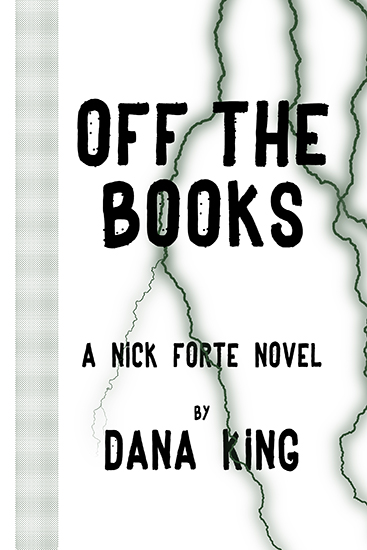
 Editing began last Tuesday on the still untitled work in progress. (Working title: Forte 6.) The current length is 58,427 words. With time on my hands and being a statistically minded SOB, I decided to see where that fell in context with my other books. I knew it was relatively short by my standards, but how short?


Fifteen minutes of research showed it’s shorter than every book I’ve written except its predecessor in the Forte series, Bad Samaritan. Let’s take a look of the numbers and see if anything pops.


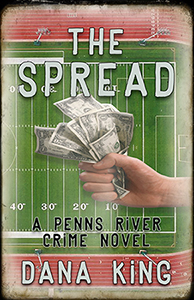
Forte novels are shorter than Penns River books by about 16%. (67,037 words vs. 80,154. Everything is rounded to whole numbers because, while I may be a stat nerd, I’m not Rain Man.) This is to be expected. Penns River stories have subplots, tangential anecdotes, and are told through the eyes of multiple characters; Forte’s stories are his alone.


This is unplanned evidence of something I suspected for quite a while: PI stories work better when they’re shorter. There’s only so much heavy lifting one character can do.


All the Penns River books are longer than any of the Fortes, with two exceptions. Forte’s The Man in the Window is a little longer than a few of the Penns River books, coming in just under the PR average. (77,665 vs. 80,154.) The fourth Forte novel, A Dangerous Lesson, is the longest at 81,199. It is also my least favorite of the Fortes.


Much of this is due to it being a serial killer novel, which I wrote because it seemed like I should, breaking one of my cardinal rules, to wit: Write the story you’d want to read. The book is also artificially long, as I was about to publish when a plot twist came to mind. Looking back, I’m glad I made the addition. The book is better and goes a long way to showing Forte’s growing darkness of character.


(Side note: My sole standalone, Wild Bill, is 76,928 words long which is between the two series, though much closer to Penns River than Forte. This also makes sense, as it is a multi-POV story with a lot of moving parts.)


I suspected going into this little project that Forte 6 was my shortest book and learned that’s not the case. Forte books are getting shorter, though. Bad Sam and Forte 6 are 23% shorter than the average of the first four.


Numbers are fun to play with but they’re only important if they teach, so now that I have empirical evidence of things I’ve suspected for some time, what conclusions can I draw?


My writing and storytelling have become tighter. The first four books I wrote were Fortes, and I had an idea in mind of what should be “in a book.” I included tropes that, while not injurious to the book, didn’t really add much. The multi-POV books could get out of hand if I didn’t rein that in.


It didn’t happen right away. PR-1, Worst Enemies, came in at 96,800, by far the longest book I’d written. (And still the leader in the clubhouse.) Grind Joint was 73,763; Resurrection Mall gobbled up 93,076 words. I’m proud of all three, but Grind Joint is my favorite for multiple reasons, not least is that I told a complex story and got out quickly and cleanly. I never thought consciously about that, but my longest book since Res Mall is 80,387 (White Out).


Among interesting (to me) sidelights I found is that I have now written over a million words in novels that have been published or are pending publication. (1,120,429 to be precise. I have that much Rain Man in me.) Elmore Leonard said a writer’s voice should be set once he has a million words under his belt. Things I used to agonize over are more quickly resolved. There’s a pace and rhythm to my writing now that comes naturally, and it’s about time. I’m not as young as I used to be. I no longer feel like everything that isn’t hard is cheating.


Thursday, December 29, 2022

The Year in Review


Holiday greetings from Castle Schadenfreude! This past summer marked a return to more normal activities after the worst of the covid pandemic, so of course The Beloved Spouse™ and I both got it. The rest of the year was mostly quite nice. Here are the highlights.


·       January

o   Spent a few days in a lovely house on the Outer Banks of North Carolina owned by Corky’s niece and her husband. January is a slow rental month, so they let us stay for free. We had a very relaxing few days, highlighted by lunch with Mark and Ruth Sharpe Bergin.

o   My short story, “The Box,” appeared in Mystery Tribune magazine.

·       February

o   We are retired and old enough to know not to go out in February.

·       March

o   The Suffolk Mystery Author’s Festival was virtual again this year. I moderated a panel and we’re both looking forward to attending in person in 2023.

·       April

o   Attended the Left Coast Crime conference in Albuquerque. NM. (I mention the state so no one confuses it with any other Albuquerques.) We saw several friends, found some great Detroit-style pizza, and I snared a panel.

o   Spent a week with The Sole Heir in New Orleans. Highlights included a swamp tour on an air boat, the World War II Museum (parts of it; we’ll be back), invigorating walks in Audubon Park, a trip to the zoo, and, as always, great food.

·       May

o   I joined our neighborhood Homeowners’ board, a decision I’ll live to regret. (Frankly, I regret it already, but someone has to do it.)

·       June

o   Back to New Orleans for The Sole Heir’s graduation from her residency at Tulane, and to help pack the truck for her move to Florida. She’s a bona fide doctor now.

·       July

o   Down & Out Books released the seventh Penns River book, White Out..

o   A brief tour of North Carolina and southern Virginia which included

§  Reading for a Noir at the Bar event in Hillsborough NC.

§  A day touring Williamsburg VA.

§  Another reading, this time for Noir at the Voir in Midlothian VA

§  We’ve reached the age where we don’t buy many souvenirs, as the house is full already. All we brought back this time was covid, which stowed away, taking up so little space we didn’t know we had it until we’d been home a couple of days.

·       August

o   The covid wasn’t too bad, but the post-infection fatigue kept us pretty well stationary through the month.

·       September

o   Re-established our confidence about being in the world again.

·       October

o   Attended the Creatures, Crimes, and Creativity conference in Columbia MD. Saw a lot of old friends; I hosted Noir at the Bar, moderated one panel, and sat on two others.

o   Back to Hillsborough to attend the Halloween Noir at the Bar.

·       November

o   Mostly we gave thanks for getting through everything else in good shape.

·       December

o   Spent Christmas in Tampa with The Sole Heir. Alas, we missed The Sole Son-in-Law except for one day, as he was deployed for a couple of weeks.


In more general, non-date-specific news:

·       We’re both in good shape with no major heart, lung, or cognitive issues. My vision remains stable.

·       We both started to not just talk about regular exercise but do it.

·       The Sole graduated from her residency and passed her boards for certification. (Not the homeowners’ board Dana belongs to. These are people who know what they’re doing.) She may be close to an exciting career opportunity; we hope to have details next year. The Sole Son-in-Law is a lieutenant in the Coast Guard and a helicopter pilot. You might have seen him on the news in September, or at least his chopper, as among his tasks was evacuating people from Sanibel Island after the hurricane.


Summing up, TBS and I had a pretty good year, albeit with a few bumps. We hope this past trip around the sun has been at least as good for all of you, and the next trip brings more of the same.

Thursday, December 22, 2022

Fall's Favorite Reads


A bit of a slump in my fall reading. I read about as much as usual but didn’t love as many books as I do in a typical quarter. Those I did like, I liked a lot.


The Glitter Dome, Joseph Wambaugh. Not close to my favorite Wambaugh but he’s so good it still makes the list. Why is it not my favorite? It had all the things I love about him, but it reads to me as if he was trying to outdo himself. It’s a little like my feeling about Quentin Tarantino, that somewhere along the way he decided he’d rather make Quentin Tarantino movies than good movies. This reads like Wambaugh decided to write a Wambaugh novel without just letting it be a Wambaugh novel. The difference between Wambaugh and Tarantino is that Wambaugh gets away with it.


Life’s Work, David Milch. An honest and unflinching memoir of one of the great TV writers of our time. Milch studied with Robert Penn Warren at Yale and broke into television with Hill Street Blues; his first script won a Humanitas Prize. He went on to create several other shows, most notably NYPD Blue and Deadwood. It’s a fascinating story, though an uncomfortable read, of how a man’s demons can not only inspire great art but also interfere with it. Highly recommended for Milch fans and those who want to understand some of what drives a writer.


The Ride-Along, Frank Zafiro and Colin Conway. One graveyard patrol shift with a cop and a skeptical citizen who may or may not have her own agenda. The book examines current policing controversies in detail and from multiple angles. Both collaborators are former cops with open-minded evaluations of the profession. The only way it might have been better was if one of the writers was actually a civilian with the same issues with law enforcement the civilian in the book has. Highly recommended for anyone with an interest of current police issues.


Big Maria, Johnny Shaw. Like reading a novelization of a good Shane Black movie, except set in the desert. On an Army artillery range. Picture Harry Dean Stanton (when he was alive), Gil Birmingham (Hell or High Water, Yellowstone), and maybe Alan Ritchson (Reacher) looking for gold hidden in the Big Maria mine, now somewhere in the Chocolate Mountains and meeting an AWOL soldier, a starving cougar, war games, artillery practice, and an exploding burro. No one combines action and humor better than Shaw.

Thursday, December 15, 2022

The West Wing

 The Beloved Spouse™ and I recently watched The West Wing start to finish. She saw the show in its original airing; I had seen only a handful of random episodes. The thoughts brought to mind could fill multiple posts if expanded on, so I’ll use bullets to cherry pick what sticks most with me. Please leave a comment if you’d like more of a discussion of any aspect, including things I do not mention here.


·       Let’s start with an acknowledgement: it’s network television at its best. I didn’t find it the mind-blowing event I remember hearing about at the time (two good friends named their dog Bartlet), but there are likely good reasons for that:

o   It’s been twenty years. We’ve seen a lot of groundbreaking stuff since then.

o   Much of the show aired during the presidency of George W. Bush. A lot of liberals thought Jed Bartlet was the president they deserved.

·       The acting is wonderful throughout. I can’t say who I thought did the best job. Even bit player guest stars were outstanding.

·       Much of that has to do with the words they were given to say. Even after Aaron Sorkin left the show and the plots weren’t always as tight, the dialog sparkled.

·       The production values were incredible. I don’t know what the West Wing actually looks like, but if it doesn’t look like this, it should.

·       Helen Santos was a wonderful character to show how an everywoman would react to being thrust into the spotlight, especially after she becomes First Lady-elect and sees the staff arrayed for her.

·       It was refreshing to see a character (Bartlet) faced with so many “damned if you do and damned if you don’t” scenarios and how he pulled his advisers together to find some sort of resolution, however imperfect or unpleasant.

·       In general, the show does a great job of not wasting time on conversations when the result is obvious. On the other hand, there were occasions where it looked like the missing scene would have been a bastard to write so the writer allowed your imagination to fill the gap.

·       It’s one of the most depressing shows I’ve ever seen.

o   So many things that were hot topics then still haven’t changed: gun control, abortion, magically curative tax cuts, etc.

o   Much of what has changed went the wrong direction: polarization, January 6, politics as blood sport.

o   Even the good guys, notably Josh and Toby, are less interested in doing good than they are in winning. Their arrogance can be stultifying. Sure, they’re fictional characters serving a dramatic narrative, but a lot of people with intimate knowledge of such things vouched for the show’s insider authenticity.

·       Jed Bartlet’s heart may be in the right place, but he’s a pedantic, often condescending know-it-all who doesn’t think rules should apply to him, and I don’t mean because he’s president; because he’s Josiah Bartlet.

·       The character that Abby Bartlet reminds me most of is Carmela Soprano. In Abby’s defense, she has led a remarkable life of her own with a sterling reputation as a doctor. On the other hand, no one elected her to anything. The level of fealty she expects from the White House staff is unbecoming, and she, too, doesn’t see why the rules everyone else lives by should apply to her.

·       The shows wander during the Santos-Vinick election campaign. The debate episode is a wasted hour that would have been far more interesting if we saw how the campaign staffs reacted off-stage in real time.


In the end, many of my complaints are quibbles, but the compliments are wholehearted and sincere. As we neared the end, part of me was ready to get to it, but another part couldn’t wait to see what happened and how they’d show it.


It’s too bad streaming services weren’t a big deal then. The Santos presidency and the problems faced by the first minority president would have made a great series, especially as it would have preceded the Obama Administration. (The final episode aired May 14, 2006.)

Thursday, December 8, 2022

The Work in Progress, uh, Progresses

 The rewrite is going well; I hope to finish this week. (Editor’s Note: It may be complete by the time this posts.) I made noticeable changes in several places. Some cuts, some additions, some rewording. All told it’s much better than what I started with.


It’s still not done.


While I take more care with the rewrite than I did with the rough draft, it’s still a right brain exercise. I make decisions, but putting those decisions into effect are creative choices that sometimes require writing a passage as if I had not already written it. (And some should not have been. Jesus. What was I thinking?)


That’s fine, as the prevailing sentiment and sensibility for the rewrite is Dennis Lehane’s dictum, which resides in large print to the immediate left of my writing chair:


NO ONE CARES


No one cares what the rewrite looks like, because no one but me is ever going to see it. No one cares what I changed or left the same because no one will ever see the original rough draft, either. At this point, no one cares what I do or how I do it. The key is to get it done. The rate that felt comfortable to me is 2,000 words a day, broken up into two 1,000-word sessions. That moves the chains without burning me out.


I’m taking the holidays off. When the edit begins in January the mantra will something else I have in plain sight to my left, this morsel from Wes Anderson’s movie The French Express:


Try to make it sound like you wrote it that way on purpose.


That’s when the minutiae come in. Can I say this in seven words instead of nine? Should this be one sentence or two? Do I need that comma? Does this sound like something that character would say? Is that simile good enough? Is it a reach I’d be better off without?


The rough draft is the ore; the rewrite produced the iron. The edit will refine it into steel.


Thursday, December 1, 2022

Things All Writers Should Beware


Gabino Iglesias is a writer, professor, book reviewer, editor, and translator living in Austin, TX. He is the author of Zero Saints and Coyote Songs and the editor of Both Sides. His work has been translated into five languages, optioned for film, nominated to the Bram Stoker Award and the Locus Award and won the Wonderland Book Award for Best Novel in 2019. His reviews appear regularly in places like NPR, the Los Angeles Review of Books, the San Francisco Chronicle, Vol. 1 Brooklyn, Criminal Element, Mystery Tribune, and other venues. He's been a juror for the Shirley Jackson Awards twice, the Newfound Prose Prize, the Splatterpunk Awards, and PANK Magazine's Big Book Contest. He teaches creative writing at SNHU's online MFA program and runs a series of low-cost writing workshops.


He and I have not met in person, but we follow each other on Facebook and (for the time being) Twitter. Even his casual comments are worth listening to, and you should pay close attention when he takes the time to spell something out.


The following list of things to beware when submitting to magazines and anthologies (or agents and publishers, for that matter) appeared in Twitter a little while ago and are worth the time of every writer, even if only for validation.


1. Unless you can buy food and pay rent with exposure wherever you live, focus on paying anthologies. There are some situations—charity anthologies, tributes, etc—where this rule can be ignored.


2. Any editor or publisher that asks you to pay to be in a book is a predatory asshole. Tell those people to go die in a tire fire. A real professional editor will never ask a writer to pay their way into an anthology. The money goes to you, not the other way around.


3. Just like you should never pay to be in an anthology, working with a professional publisher means that they will not ask you to pay for a cover, editing, proofreading, formatting, or layout. A real press takes care of all that, which is why sometimes small payments are okay.


4. Covers matter, and anyone who tells you otherwise is someone you don’t want to work with. If the cover is trash, there’s a chance they also don’t care much about what goes into the book.


5. If you’re reading a submission call and find a dozen typos and a few misspelled words, forget about it and move on. Your aim should be to always work with professionals who care about what they put out there.


6. Read submission calls carefully and follow the guidelines. Don't send in stuff you know isn't a fit. You want to work with professionals, and sometimes that starts with you behaving like one.


7. If you are ever in doubt about a publisher or editor, reach out to someone who’s been around the block a few times. Ask questions. Most of the writers who have been in the game for a while are willing to help new authors stay safe and make the right decisions.


8. I know this one is tough, but your desire to see your name in print should not blind you from the things happening around you. An editor or publisher who works with racists, bigots, or sexual harassers is not someone you want to work with. If it is, that says a lot about you.


9. Get a contract and read it carefully. Promises are for religious stuff and to help dying folks shove off this mortal coil in peace, not for business. Get things in writing and know what you're getting into.


10. Don't be afraid because big names are attached to a project or because lots of writers are submitting. Do your best, but do it. Submit. Try. Keep at it.


11. Lastly, don't take rejections personally. I've been rejected by strangers and friends alike. I've had to reject NYT bestsellers because their story wasn't a good fit. And remember: all editors have different tastes and rejections are invitations to send your stuff elsewhere.