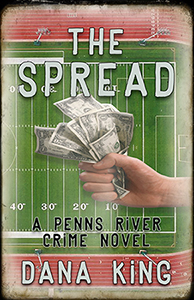
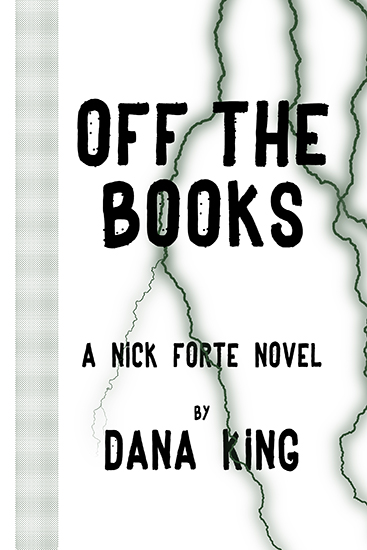
Joe Ricker has appeared three times on the blog; until today, all have been as an author. (In case you’re interested, Joe’s prior appearances were in 2015, 2020, and 2021.) Today he takes his first questions since he resurrected the ashes of Down and Out Books and became its owner and publisher.
I got out before Down and Out became Way Down
and All-the-way Out, but I had many friends with contracts there and am
delighted to see they may be finding homes; Joe’s history as an author gave me
hope for a more generous atmosphere. With that in mind, I wanted to give Joe a
platform, as well as give authors some much needed information about what’s
going on at the new Down and Out. So, without further ado, here’s Joe Ricker.
OBAAT: Welcome back to the blog, Joe. It’s
always good to have you here. No book to promo this time. Today we’re getting
together to talk about your new role as owner/operator of the resurrected Down
& Out Books, so these questions may be a little more pointed than usual.
With that in mind, tell us a little about your writing journey. Not the writing
resume — that’s in the intro — but what inspired you to write in the first
place, how you came to be published, and how smooth or bumpy the road was up to
the time you signed with Down & Out.
JR: My father is a poet, so writing was in the
house before I had any say about it. I grew up emulating him, and for most of
my adolescence I wrote almost nothing but poetry. What prose I did write was
fan fiction before I knew there was a word for it — Westerns, mostly. I once
wrote a story that put Josey Wales and Billy the Kid in the same world. I’d
hand those pages to my dad, looking for some kind of bonding, or validation, or
both.
After military school I hit a bleak stretch.
It got bad enough that I needed help finding my way out of a lifestyle that
didn’t have any brakes on it. Reading fiction again was part of how I climbed
out of that. So was journaling, and then poetry again. That poetry did more to
shape my style than anything I was taught later.
In undergrad I drifted from poetry into
fiction without knowing what kind of fiction I wanted to write, and I tried a
lot of things that didn’t fit. I didn’t land on crime until graduate school. My
thesis wasn’t considered crime fiction, but somewhere in there I wrote a story
called “Ice Shack,” the first thing I’d ever written that I was genuinely happy
with, and it lit the way toward the genre I’ve stayed in since. It came out of
a hard-scrabble upbringing and the kind of details you don’t get from research.
“Ice Shack” also became my first published story, in a Level Best Books
anthology, and after that I mostly wrote crime short stories. I’d written a
crime novel during undergrad, too, but I couldn’t figure out how to clean it
up. That book took me years. It eventually became All the Good in Evil.
The road was bumpy. Short story publications
kept me moving — there’s a charge that comes with placing something when you’re
young and trying to emerge, and it makes you want to write the next one. I had
my first novel under contract at one point and watched that deal dissolve. It
wasn’t hostile. The editor was taking the book somewhere that wasn’t wrong,
exactly; it just wasn’t mine, and too much of what I wanted on the page was
disappearing. So, I walked and went back to submitting. Dozens and dozens of
agents and publishers, back when the rejections still came on paper. I wish I’d
kept them.
Then, after grad school, when I was living in
New York, I submitted a novel that got rejected — but the publisher had read
some of my short stories and asked if I had anything else. I asked if they’d
take a collection. They said yes. I did not have a collection. I was teaching,
I wasn’t making any money, and there wasn’t much to do besides hike with Kamani
and sit in front of a blank screen, so that’s what I did until I had enough
stories. That became Walkin’ After Midnight. The title was the publisher’s
idea, off the Patsy Cline song. I’d recently been divorced and it had been my
ex-wife’s favorite song. It seemed fitting, and a little ironic, which is
usually how these things go.
OBAAT: How did you first connect with Down
& Out?
JR: By way of another publisher going under. Walkin’
After Midnight came out from 280 Steps, and for a while that looked like a
promising, long-term home. I took a semester off from teaching, spent my
savings, and put together a tour with some help from the publisher and from
people I knew — Square Books in Oxford, Mississippi, A Capella Books in
Atlanta, Dan’s Silver Leaf in Denton, Texas, and a few others. The turnouts in
the places where I’d lived and tended bar were the good part. Then I went back
to New York and things went to hell: disagreements about royalties, no
paperwork to support what the sales supposedly were, and no way for me out of
the contract. The publisher folded within about a year. The rights came back to
me and I was at square one, disillusioned enough that I didn’t make much effort
to place the book anywhere else.
What changed it was Jonathan Ashley, another
280 Steps author, who had moved his books to a publisher I’d never heard of. He
told me I needed to submit Walkin’ After Midnight to Down & Out. I
sent it in, Eric [Campbell] and I talked, and the book was accepted — though
the plan was to let some time pass, since 280 had just closed and there was bad
blood in the water.
Then it went quiet. In that stretch I quit
teaching, worked remotely doing freelance writing and voiceover, and lived out
of my SUV, driving around the country trying to figure out where home was going
to be. I worked on a goat ranch in New Mexico, kept working on Some Awful
Cunning, and kept striking out with agents. It had been a year or so when I
finally followed up with Down & Out while I was in the Michigan U.P., and
the conversation picked back up where it left off. I asked about some other
books, and those were taken on as well. By the time Walkin’ After Midnight
was re-released, I’d settled in Reno, where I was bartending and teaching at
the University of Nevada. Down & Out went on to publish four of my books,
two of them during COVID, which made getting any traction that much harder.
OBAAT: How did you learn of Down & Out’s
demise? What was its effect on you personally and professionally?
JR: I was back in Maine visiting family. I
hadn’t been home in seven years, not since I’d moved to Reno, and I went
because my father was sick and I needed to make up some lost time. I was
staying at my brother’s — he’d just bought a house — and one day I checked my
email and there it was. The notice Down & Out had closed their doors out
about a week earlier.
Professionally it meant four books in limbo
and no publisher, which is a daunting place to be at any age. Personally, it
was 280 Steps all over again, except this time there was more of my work and a
longer relationship tied up in it. What it really took out of me was
motivation. I knew exactly what the road back looked like — the submissions,
the waiting, the starting over — and I didn’t have much appetite for walking it
a third time.
OBAAT: What made you decide to bring Down
& Out back to life?
JR: Partly it was that I was already thinking
hard about what kind of life I wanted, apart from the work I was doing at the
time. The idea started as a maybe. I tossed it around for a while and talked it
over with my wife.
My first email wasn’t about buying anything. I
asked if there was any way I could help — managing it, running some part of it,
whatever would keep the doors open. From there the conversation turned into
buying the brand outright. A few conversations later the transfer was agreed
to, and here I am.
The reasoning was simple enough. I didn’t
think I had the platform to build a press from scratch and make it work, by
whatever measure you want to use for that. Taking over a name with a real
history in crime fiction gave me better odds. And it wasn’t only about my four
books. There were a lot of other authors in exactly the position I’d been in
twice already. I could see online how much frustration was out there, and I
knew it was going to be a very difficult challenge — that created plenty of
doubt — but the alternative was watching a good house and a strong list
disappear. I decided it wasn’t going to.
OBAAT: No offense intended, but what qualifies
you to run a publishing company?
JR: None taken. If you’re looking for a résumé
of publishing-house management, I don’t have one, and I’m not going to pretend
otherwise. When I stepped into this, my knowledge of how a press actually runs
was limited.
What I do have — and I’d argue it’s the most
important qualification on the list — is the motivation to make it work and
keep it going. Beyond that, years of freelance writing, the organizational
demands of academia, and teaching at the college level taught me how to
network, keep complicated projects moving, and get other people invested enough
to contribute. Just as important for a genre house is that I know the material.
I’ve lived in crime and noir a long time, as a reader and a writer, and I
understand what these books are supposed to do.
The rest I’m learning as I go, and I’m doing
most of it myself right now: marketing, interior layout, contracts, cover
design — things I never expected to have to learn. It’s been an interesting
education, and honestly an enjoyable one. Some of it has been harder than the
paperwork. Taking over a company that closed and upset a lot of people meant
taking some of the brunt of that, and figuring out how to talk to writers who
are disappointed and have every right to be. I’ll develop the rest of these
qualifications by running the company, and I expect a fair amount of that
education to come through failure.
OBAAT: What changes do you intend to make to
the business model?
JR: The biggest one is scale, and I’d rather
talk about where we’re going than where anything has been. Our target right now
is ten books a year. That number is deliberate. It’s a pace that lets us put
real time, money, and attention into every single title instead of pushing
books out the door and hoping they find readers on their own.
Keeping the list that size is what makes
everything else possible. It means more time and money on marketing and
promotion — I’m already talking with marketers and other firms about that, and
looking at avenues we haven’t used before. It also means more development per
book: audio editions, and where a project lends itself to it, screenplays and
treatments, graphic adaptations, serialized versions. Those conversations are
underway now.
The other priority is author exposure. We’re
reaching out to magazines and podcasts to get our writers interviews and
coverage, and pushing to get physical copies onto bookstore shelves rather than
living entirely online. In the immediate term, the work is getting re-contracted
authors’ books back up, restarting promotion on those titles, and rebuilding
the website and the public face of the company.
Some of that is already in place. We’ve
re-signed twelve former Down & Out authors and kept more than fifty books
in print. We’ve signed four new authors with books coming out next year.
Royalties have been paid to the authors who decided to take a chance on me as
an inexperienced publisher with a press most of their peers have done nothing
but cast shade toward. We’re rolling into a rhythm now, and I think that rhythm
is what will carry Down & Out to the place I see for it.
In a nutshell: We won’t take on more than we
can carry. I’d rather give a smaller list the attention it deserves and help
those authors actually sell books than spread us thin across a catalog nobody
has time to support.
OBAAT: A lot of newly-orphaned writers are
looking hopefully in your direction. What can you tell them to set their minds
at ease that things won’t turn out the same as they did under your predecessor?
JR: Honestly, I don’t think there’s anything I
can say right now that will put anybody’s mind at ease, and I’m not going to
insult anyone by trying. Writers who had a bad experience are upset and
frustrated, and that’s earned. I’ve been orphaned by two publishers myself. I
know what promises are worth at this stage.
What I can do is point at what’s already been
done rather than at what I intend to do. Twelve former authors have re-signed.
More than fifty books are still in print. Four new authors are signed with
books coming out next year. Royalties have been paid. That’s the whole
argument, and it will keep being the argument: sticking to the model, keeping
the list small enough that we can actually support it, communicating clearly,
and prioritizing each author’s success rather than just the company’s. Some
writers are going to want a clean start somewhere else, and I understand that
completely — a number already have. For the ones who stay, or who come aboard,
the plan is to put our heads down, do the work, and get people talking about
Down & Out in a positive way again. That’s not something I can say into
place. It has to be shown, one book at a time.