Showing posts with label Artificial intelligence. Show all posts

Thursday, March 13, 2025

A Case for the Legitimate Uses of AI

It’s safe to say I’ve been harsh in my denunciations of writers who use artificial intelligence in their work. Nothing I’ll say here contradicts that. Artificial intelligence (AI) is, and will continue to be, useful in too many aspects of life to mention; I welcome many of them. It’s in the creative arena where I have my primary issues with its use.

Let’s get the vitriol out of the way: I have no time for ‘writers’ who use AI to ‘create’ anything, or even to generate ideas. If you feel the need for AI to write ad copy or marketing materials or a news or journal article, you be you. Just don’t call yourself a writer, as you’re a notch below plagiarist on the food chain. At least the copycat looked up what to steal.

That said, AI can be of legitimate value to writers. I’ll use myself as an example.

I used to print my final drafts a chapter at a time and read them aloud, marking the printed page as I found things that needed improvement. This became a difficult process when I developed macular degeneration, as I had to devote too much concentration to reading accurately to have any left over for listening to how it fell on the ear.

Enter Microsoft Word’s Read Aloud feature, which allows me to listen to a disembodied voice read what I see on the screen, which I magnify and reverse the image to accommodate my eyesight. I then go back and make the necessary changes right there on the screen.

How do I remember what needs to be changed? I never do more than a chapter at a time, and I always have Word display the document’s line numbers. I then make note of which lines need an adjustment and go directly there to make them.

A piece of advice: When making corrections in this manner, work backward. That way the line numbers you’re looking for won’t have changed as you make edits to the document.

When that draft is complete, I use the Check Document tool to look for spelling, grammar, and a few other potential errors. Many – maybe even most – of the suggestions will be ignored in a work of fiction. Names, places, and bits of dialog may not be in Word’s dictionary until I add them. (‘Jagov’ comes to mind in the Penns River stories, as well as names such as Napierkowski, Neuschwander, and Wierzbicki.) I may want some grammar to remain incorrect, especially in dialog. (As Chandler once famously wrote, “When I split an infinitive, God damn it, I split it so it will remain split.”) The clarity check typically calls out passive voice, which my years of writing documents for the government make me particularly prone to.

That’s what I use AI for: proofreading. It makes up for my deficiencies in vision and lack of training in proper grammar. Creating and driving the story forward are my job and always will be. AI’s only function is to clean up the horse shit after my parade has passed. 

Thursday, February 13, 2025

Legitimate Uses of AI for Writers

 It’s safe to say I’ve been harsh in my denunciations of writers who use artificial intelligence in their work. Nothing I’ll say here contradicts that. Artificial intelligence (AI) is, and will continue to be, useful in too many aspects of life to mention; I welcome many of them. It’s in the creative arena where I have my primary issues with its use.

Let’s get the vitriol out of the way: I have no time for ‘writers’ who use AI to ‘create’ anything, or even to generate ideas. If you feel the need for AI to write ad copy or marketing materials or a news or journal article, you be you. Just don’t call yourself a writer, as you’re a notch below plagiarist on the food chain. At least the copycat looked up what to steal.

That said, AI can be of legitimate value to writers. I’ll use myself as an example.

I used to print my final drafts a chapter at a time and read them aloud, marking the printed page as I found things that needed improvement. This became a difficult process when I developed macular degeneration, as I had to devote too much concentration to reading accurately to have any left over for listening to how it fell on the ear.

Enter Microsoft Word’s Read Aloud feature, which allows me to listen to a disembodied voice read what I see on the screen, which I magnify and reverse the image to accommodate my eyesight. I then go back and make the necessary changes right there on the screen.

How do I remember what needs to be changed? I never do more than a chapter at a time, and I always have Word display the document’s line numbers. I then make note of which lines need an adjustment and go directly there to make them.

A piece of advice: When making corrections in this manner, work backward. That way the line numbers you’re looking for won’t have changed as you make edits to the document.

When that draft is complete, I use the Check Document tool to look for spelling, grammar, and a few other potential errors. Many – maybe even most – of the suggestions will be ignored in a work of fiction. Names, places, and bits of dialog may not be in Word’s dictionary until I add them. (‘Jagov’ comes to mind in the Penns River stories, as well as names such as Napierkowski, Neuschwander, and Wierzbicki.) I may want some grammar to remain incorrect, especially in dialog. (As Chandler once famously wrote, “When I split an infinitive, God damn it, I split it so it will remain split.”) The clarity check typically calls out passive voice, which my years of writing documents for the government make me particularly prone to.

That’s what I use AI for: proofreading. It makes up for my deficiencies in vision and lack of training in proper grammar. Creating and driving the story forward are my job and always will be. AI’s only function is to clean up the horse shit after my parade has passed.

Thursday, August 31, 2023

Artificial Intelligence, Part Two

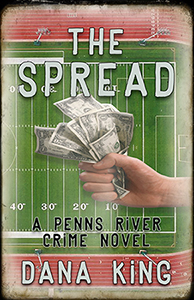
 Last Friday I ranted about artificial intelligence. That post was written several weeks ago, its publication postponed due to other, more time-sensitive pieces. (Sleuthfest and the launch of The Spread.) In the interim I was alerted to an article titled, “I was fired by a client for using AI. I'm not going to stop because it's doubled my output, but I'm more clear about how I use it,” by Tina Sendin, which, if nothing else, shows she’s badly in need of a title editor. I gave her article a read to see if Ms. Sendin had thought of anything I missed in last week’s post. Her piece is a little under a thousand words, and I realize not all of you have the time, so I’ll digest it:


Ms. Sendin works full-time in marketing, and part-time as a freelance writer. A long-time client came to her with more work than Ms. Sendin could do in the time allotted. In her own words, “Since I couldn't clone myself, I tried what I thought would be the next best thing: I used AI…. Jasper did most of the work and I did minimal editing. AI lost me a longtime client.”


To which I say, “You go, client!”


Ms. Sendin continues:

“I learned a valuable lesson the hard way — AI is a tool, not something that should replace you.”


Duh.


“Looking back, I know things weren't right when I was letting AI do the work and not communicating this to my client.”


She should have known “things weren’t right” when she “[let] AI do the work.” Failure to communicate that to her client wasn’t the crime; it was the cover-up.


Having seen the error of her ways, Ms. Sendin now discusses her use of AI with prospective clients before starting work. She claims she no longer uses AI to write the draft, only to “enhance” it by “using the paragraph generator to expand a sentence into a paragraph,” among other things.


She might want to consider getting into political consultancy, as she appears to have at least a Master’s Degree in obfuscation. “Using the paragraph generator to expand a sentence into a paragraph” is not “enhancing” the draft. It’s writing significant portions of it.


Among her other dodges:


“I use AI to give me ideas on sources and statistics.” Or, as we used to say back in the day, “research.”


“AI helps with the tone of voice and brand voice.” In other words, “the hard part.”


“AI helps with condensing large volumes of text.” Also known as “editing.” (Some of which would have helped her title.)


“AI has cut my writing time in half.” Goddamn right. She’s doing less than half as much writing, since it takes her half as much time and AI is doing a goodly portion of that. Hopefully that “level of effort” on her part is reflected in her rates.


“AI still scares me sometimes, but early adopters of new technology have historically reaped more rewards than punishments.”


Writers have always been our own worst enemies. We work for peanuts because we will. Publishers take advantage because they can. You don’t like it, there are a hundred others who’d love to have us screw them the way we’re screwing you, if not worse.


Now we have writers who think they’ll get ahead of the game by using AI. It’s not unlike athletes using steroids. Steroids don’t allow you to do things you couldn’t do before; they just allow you to “enhance” your physique so you can do better than you could have done without them. It’s still cheating.


I realize this is a “Get off my lawn” post. So be it. This is the hill I’m willing to die on as a writer.


(Full disclosure: I used Word’s “Check Document” function to proofread this piece before posting, after Word read it aloud to me. Everything prior to the reading and proof is all mine.)


Thursday, August 24, 2023

Artificial Intelligence

 (Full disclosure: I use what some might consider artificial intelligence at times in my writing, by which I mean the text-to-speech, Check Document, and Dictate features in Microsoft Word. I use them to compensate for some of my vision issues when proofreading and notetaking.


The Beloved Spouse™ and I also have Alexas all over the house. They are mostly quite useful, especially in setting timers and alarms, and occasionally answering questions when I’m too lazy to look something up. Alexa is also a pain in the ass, and shows signs of what we call “artificial dementia. I’ve given up asking her to turn lights on and off.)


I have no firsthand experience with this, but a trusted friend told me there are places that now review AI-generated writing. The Facebook post asked what his friends thought of this.


My reply: I cannot conceive of any circumstance under which I'd read a book even partially written with AI, so I obviously have no reason to want to see reviews.


Anyone who uses artificial intelligence as part of their creative process is not a writer. What are they? Off the top of my head I come up with charlatan, shirker, cheat, lazy. This is someone who cares more about getting over than creation. A person who takes less pride in accomplishment than in passing something off as their accomplishment. An untrustworthy, dishonest, con artist who is only interested in what he can get from writing than in investing something of himself to enhance the craft. This is worse than plagiarism, as plagiarists at least take the time to find what they rip off.


Writing with AI is like giving someone else money to buy the ingredients, hiring a different person to make the cake, then taking credit for the end result. It’s hitting a baseball off a tee, then claiming Justin Verlander is your bitch. It’s running a 5K on a Segway. You’re the man with a two-inch erection who, when asked by his potential lover who he intends to satisfy with that, says, “Me.” All you care about is what you can get from it.


Artificial intelligence will be able to do many wonderful things. It may also take over and make the Terminator scenario look like a Labor Day picnic. What it cannot be allowed to do is replace what makes humans human.


In the Dune novels, Frank Herbert creates the Orange Catholic Bible. One of its tenets is “Thou shalt not make a machine in the likeness of a human mind.” I am by no means a religious person, but this is good advice. I don’t want to see Commander Datas or Blade Runner replicants roaming the Earth, no matter how hot Joanna Cassidy was. There should never be a dilemma of conscience when debating whether to turn off a machine.


Most important, turning off the machine should always be a human choice.


AI and robot technology can remove tedious and dangerous tasks from the human to-do list, freeing us to explore and embrace more of what humans might be capable of if not bound by those tasks. To use AI in a creative act denies what it is that makes us human by saying a machine can do everything we do, and acting like that’s a good thing.


I have no interest in reading a novel or a short story or even a reference book written with AI. I have no desire to see a motion picture created through AI. I see no joy in replicants or androids or whatever they will be called playing sports or performing music or dancing.


I applaud and encourage all efforts to promote diversity among humans. There’s a line. Nothing should ever blur the line between what is human and what is not.