What is it about
cops?
It’s said they’re
never around when you need them. Used to be they stole apples from fruit stands
and guided lost children home safely. Depending on who you ask they’re either
murderous racists or targets. We can all agree cops are those who run toward
the danger. Whether that’s because they’re heroes or adrenaline junkies, once
again, depends on who you ask.
It’s not unfair to
say there are elements of all of the above in the average large police force.
Why wouldn’t there be? Police departments recruit from the general population,
which means cops are fathers (good and bad), mothers (good and bad),
teetotalers and alcoholics, straight and gay, straight shooters and assholes,
nice guys and hard-ons, just as they are also tall, short, fat, or thin.
Departments do what they can to weed out those less desirable for police work,
but no process is perfect and it’s generally accepted that the skill set
required to make rank is not the same as what is needed to effectively run a
department.
So that’s what it
is about cops: just like everyone else, with one difference. To paraphrase
Dennis Lehane in an interview I saw last week, writing about cops allows an
author to show conflict on multiple levels, and conflict is Drama 101. (This
was in response to a question about why he wrote crime, to which he also added
that, while trained to write literary short stories, he grew tired of reading
about people who were vaguely dissatisfied in Connecticut. Touché.)
Cops resolve
conflict for a living, then go home and resolve all the usual bullshit
conflicts the rest of us have, with one key difference: it’s impossible to
leave the conflicts they dealt with on the job in the locker room when they
take off the bag. The residue and frustration soaks into their pores. It’s a
lucky cop who can leave that behind. I doubt any of them can do it all the time.
One who can probably isn’t a very good cop.
I’ve never been a
cop, and doubt I would have been a good one. I lacked the temperament a
patrolman needs when I was of an age to be one, and all policing grows from the
street cop. (One of my proudest moments as a writer came at this year’s
Bouchercon when a retired cop mistook me for one. Yes, I corrected him.) That
said, I’ve read enough cop memoirs to have a sympathetic and empathetic
outlook, and I’ve been told I get the cop stuff right in my books.
Joseph Wambaugh is
the Godfather of realistic cop fiction. He worked as an LA cop for fourteen
years before switching to writing full-time, having written the books that made
his career while still working. (The New
Centurions, The Blue Knight, The Onion Field, and The Choirboys, which didn’t come out until after he left the
force.) Wambaugh holds that lots of jobs are more physically dangerous than police
work: firefighters, miners, construction workers, to name a few. To him, police
work is primarily dangerous psychologically, as is shown by the high rates of
divorce, alcoholism, and suicide. I’m far from the first to say Wambaugh’s
books worry less about how the cops works on the cases than about how the cases
work on the cops
That’s what I’m
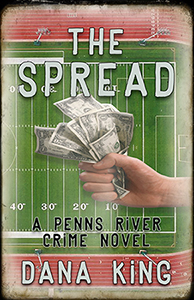
working toward in the Penns River series. I’m not going to get to Wambaugh’s
level. He’s a unique blend of police experience and writing talent that I can’t
match on either end. That’s fine. The goal is to up my game beyond what it
might otherwise have been. You’re not always going to like my cops. Frankly, as
the series goes on, you’re going to find things to like even less about them.
That’s okay, too. If I can get readers to empathize, even when they may not
agree with the cop’s perspective or actions, I will have succeeded in
humanizing them.
I don’t want to
write cop heroes or villains. I want to write people who are cops. They may be fathers
(good and bad), mothers (good and bad), teetotalers, alcoholics, straight, gay,
straight shooters, assholes, nice guys, hard-ons, tall, short, fat, or thin. SO
long as they’re people first, and the story is entertaining enough for people
other than myself to want to read, that’s a pretty good target to aim for.