Showing posts with label fictional detectives. Show all posts

Thursday, October 10, 2024

The Ethics of Fictional Detectives, Part 2

 Welcome back to One Bite at a Time. Today Bill Gormley and I will conclude our discussion on the ethics of fictional detectives. For those who missed last week’s installment, here you go.

One Bite at a Time (From last week): You mentioned characters can go from Moralist to Pragmatist and from Pragmatist to Rogue as conditions dictate. Does it work in the other direction? Can a Rogue evolve into a Pragmatist or a Pragmatist into a Moralist?

Bill Gormley:  That’s an excellent question, Dana, but a tough one to answer.  I find myself asking whether there’s a fictional detective out there who previously served time in prison?  I know that there’s a very successful mystery author who served time in prison for a capital offense.  Anne Perry.  I wonder if she’s ever featured a detective who was an ex-con in one of her books.  Do you happen to know? 

The one detective I can think of who’s sort of progressed from a Rogue into a Moralist is Sean Duffy, who’s featured in Adrian McKinty’s splendid mystery series, set in Ireland during the Time of the Troubles.  As a young man, Duffy, a Catholic, tried to join the IRA.  Had he succeeded, he would probably have killed many people outside the confines of the law. Very rougish. But he was rebuffed by the IRA.  At that point, he made an odd choice – to become a policeman for the Royal Ulster Constabulary, which  was the police force for northern Ireland.  A great story line, right?

Truthfully, Duffy is very hard to classify, for all sorts of reasons.  At times, he’s been a Moralist, a Pragmatist, and a Rogue.  Sometimes while working the same case!  Another way to put it is that he has his own moral code, which reflects the reality that neither side in the long, bloody Irish dispute had a monopoly on virtue.  Duffy tried to apprehend and punish lawbreakers, but he also administered his own moral code, even when it was clearly contrary to the law of the land.  What I really like and admire about Duffy, in addition to his wonderful sense of humor, is that morality is front and center for him.  Instead of siding with his tribe through thick and through thin, Duffy distances himself from both sides and tries to act as a just God might act.  Vigilante justice, in a way.  But fueled by an ethical code, not by hatred or a desire for revenge.***

OBAAT: None of Ann Perry’s series protagonists had criminal backgrounds; I didn’t dive into her other works. While several writers served time themselves – Chester Himes and Les Edgerton come to mind – I know of none who wrote detectives who had themselves been felons. Given today’s propensity for companies and governments to hire convicts as security consultants, this seems to be an area ripe for exploitation.

I’m glad you brought up Adrian McKinty and Sean Duffy. I’ve been a fan of Adrian’s work since I first read the Michael Forsythe stories. I can’t remember reading anything that was better than the Duffy novels at putting me in a different place and time. Cold Cold Ground is a harrowing description of life in Northern Ireland during The Troubles, with the horror made more real through Duffy’s casual description of how he deals with it.

More to our point about ethics, your comment about Duffy’s personal code got me to thinking that may be the common thread that runs through all the ethical trees of detectives: fictional detectives, especially PIs, live by their own codes. A Moralist’s code may be to do things by the book, but that was his or her decision. Rogues and Pragmatists may/will break the written rules, but always in support of their own vision of what needs to be set right and how best they can do it without crossing the lines they have drawn for themselves.

This seems to me to be a core element of fictional detectives. Can you think of any who lack their own internally imposed set of ethics?

BG:  Thanks for investigating Anne Perry's books.  She may be one of those rare novelists whose personal story would be even more riveting than a great work of fiction.  When I think of detectives or P.I.s with a troubled past, I think mainly of recovering alcoholics.  Like Matthew Scudder in Lawrence Block's outstanding mysteries.  A detective who did hard time has some potential.  Or a detective who committed a crime that has not yet come to light, as in the first Kate Burkholder mystery by Linda Castillo.  The back story, from an Amish community in rural Ohio, is compelling.

 I think you're right that most fictional detectives and P.I.s have strong views.  I'm less convinced that they have a well-formulated system of values.  Many of them are deeply committed to preventing crime, capturing criminals, and punishing criminals.  To some extent, they are playing a role.  At the same time, it is a role they have chosen, which means it is probably consistent with many of their views.

In many of the mysteries I read, detectives and P.I.s frequently collide with their bosses.  Supervisors want quick results, which encourages detectives to cut corners.  Supervisors want to protect the rich and powerful, which encourages a cover-up.  Detectives may comply or resist.

We can infer values from the choices detectives make when they clash with their bosses.  But I like it when authors give their detectives the chance to articulate what they believe and why they believe it.  To me, that makes for rewarding reading.  It's great to get inside other people's heads.

OBAAT: Your comment, “Supervisors want to protect the rich and powerful, which encourages a cover-up.  Detectives may comply or resist.” Reminds me that many of the best detective fiction – cop or private – uses the reluctance of the detective to go along with a protective coverup as the core of the story. This always brings to mind A quote from Raymond Chandler’s “The Simple Art of Murder”: “He is a relatively poor man, or he would not be a detective at all. He is a common man or he could not go among common people. He has a sense of character, or he would not know his job. He will take no man’s money dishonestly and no man’s insolence without a due and dispassionate revenge. He is a lonely man and his pride is that you will treat him as a proud man or be very sorry you ever saw him.” That describes a man who is not likely to accede to a coverup and, if confronted with one he cannot overcome directly, will exact his own idea if justice, however flawed.

Detective fiction, especially private detective fiction, waxes and wanes in popularity; I doubt it will disappear, for the reasons we have discussed these past two weeks. There are just too many ways of exploring too many things.

Many thanks to Bill Gormley for his time and insights. I hope he had as much fun as I did. If you’re at a conference and have a chance to catch him on a panel, by all means do so.


Thursday, October 3, 2024

The Ethics of Fictional Detectives, Part 1

I became acquainted with Bill Gormley at last spring’s Malice Domestic conference after hearing him speak on a panel that discussed the ethics of fictional detectives. As a detective guy myself, what he said intrigued me and I asked him if he would send me his comments for use here in the blog. That led to a discussion that will play out here over the next few weeks. I hope you enjoy reading it as much as I enjoyed working with Bill to put it together.

Bill served as University Professor of Public Policy and Government at Georgetown University, where he co-directed the Center for Research on Children in the U.S. (CROCUS). He is the author of Too Many Bridges, a murder mystery published by Level Best Books in August. He is also the creator of Profs on Cops, a podcast that features interviews with criminologists and social scientists who are doing cutting-edge research on police practices and behavior. I’ve become a regular listener and it’s costing me money, as I find myself wanting the books several guests have written.

Bill Gormley: Most detectives and private eyes see their primary goal as solving crimes.  But how far will they go in pursuing that goal?  Will they ignore a direct order from a superintendent or client?  Will they lie?    Will they break into someone’s home or place of business without authorization?  Will they engage in violence?  And what if other goals come in to play?  Their reputation?  The well-being of their family members or friends?  Getting to take a vacation on schedule?

These are ethical questions.  Whether we like it or not as mystery authors, our detectives face many ethical dilemmas in their line of work.  How do they resolve them? 

As a starting point, I believe that detectives and private eyes can be placed into one of three categories:  moralists, pragmatists, or rogues.

A MORALIST is someone who obeys the law, who follows orders, who tells the truth, and who eschews gratuitous violence. Examples: Adam Dalgliesh (P.D. James);  Matthew Venn (Ann Cleeves);  Joe Leaphorn (Tony and Anne Hillerman);  Armand Gamache (Louise Penny);  Ian Rutledge (Charles Todd).

A ROGUE is someone who does not follow the letter of the law, who disobeys orders that get in the way of professional or personal goals, who lies or stretches the truth when it is convenient, and who sometimes inflicts violence on others out of anger or in pursuit of rough justice. Examples: Harry Bosch (Michael Connelly);  John Rebus (Ian Rutledge);  Liz Salander (Stieg Larsson);  Harry Hole (Jo Nesbo);    Dave Robicheaux (James Lee Burke).

A PRAGMATIST is someone who tries to be moralistic but who behaves as a rogue when fatigue sets in, when a conflict of interest arises, when the stakes are high, or when it is the most expedient way to solve a crime and identify or convict a murderer. A majority of fictional detectives are pragmatists:  Anna Pigeon (Nevada Barr); Zoe Chambers (Annette Dashofy); Kinsey Millhone (Sue Grafton); Joe Pickett (C.J. Box);  Easy Rawlins (Walter Mosley).

Dana King:  Why should we care about this?  And do you have a preference for one type of detective over another?

Bill Gormley: Stories populated by moralists have advantages and disadvantages.  Stories populated by rogues have advantages and disadvantages.  Highlighting ethical dilemmas adds another dimension, an important dimension, to our characters.  A window to their souls.  As a profession, we should be thinking about these issues.

Rogues are especially compelling.  It’s like watching a train wreck in progress.  Disturbing but riveting.  Moralists are especially admirable.  It’s easy to root for them.  They appeal to our better natures.  Pragmatists are especially realistic.  We recognize pragmatists in detective fiction, because most of us are probably pragmatists in real life.  For most of us, moralism is aspirational but not always attainable, while outright roguery is beyond the pale.

One Bite at a Time:  Are some settings especially fertile ground for ethical dilemmas?

BG: If you’re drawn to ethical dilemmas, there are plenty of opportunities to harvest them.  Ireland in the time of the Troubles (1968-1998) presents such an opportunity.  An abundance of searing conflicts based on religion, geography, and politics. Police at the Station and They Don’t Look Friendly (Adrian McKinty) is a good example. Anjili Babbar does a brilliant job of dissecting and probing the values of fictional detectives in Ireland and expats in the U.S. during the time of The Troubles. You can find her take on these issues in Finders:  Justice, Faith, and Identity in Irish Crime Fiction (Syracuse University Press, 2023).

Conflicts between whites and Blacks in the U.S. also present such an opportunity.  In the Heat of the Night (John Ball). Blanche on the Lam (Barbara Neely). Small Mercies (Dennis Lehane). All the Sinners Bleed (S.A. Cosby).  Crook Manifesto (Colson Whitehead). What does racial prejudice and inter-racial violence look like from a Black person’s perspective?  From a white person’s perspective?  What are your obligations to your family, to your community, to your race, to your employer, to your co-workers?  And what if they conflict? 

There are other ethical dilemmas out there waiting to be discovered by mystery writers.  What obligations, if any, do we have when a close relative needs a kidney transplant?  What obligations, if any, do we have when a close relative, near death, wants a push to the other side?  (See Richard Osman’s The Last Devil To Die.) What obligations, if any, do we have when we discover that a friend or colleague has committed a serious crime?  There is lots of grist for the mill out there, and it’s exciting to think about these possibilities.

OBAAT:  What types of detectives or P.I.’s do you think that readers prefer?  Moralists, Pragmatists, or Rogues?

BG: We read mysteries for different reasons.  If we want to see a criminal brought to justice, then we might be drawn to rogues, because they are willing to do almost anything to catch, prosecute, or kill a murderer.  If we like unpredictability, we might be drawn to rogues, because you never know what they are going to do.  Neither the law nor their department’s rules and regs nor their boss’ direct orders has much effect on their behavior.  But if we want to immerse ourselves for a day or two in a grim struggle between good and evil, then we might be drawn to moralists, because they are on the victim’s side but they also play by the rules.  They are respectful, thoughtful, admirable.  It’s easy to root for them.  And it’s easy to distinguish between them and the criminals they are trying to catch. 

Personally, a rogue hooks me on a book; a moralist hooks me on a series.  For example, I recall being very excited when I read Jo Nesbo’s first murder mystery, The Bat, featuring Oslo police detective Harry Hole.  He was a loose cannon but relentless in pursuit of the murderer.  A fascinating character.  But as the series wore on, I came to view Harry as annoying and self-destructive.  He was not a team player and he often got in the way of solving a crime.  His alcoholism was problematic. He also kept losing body parts!  For the long haul, I’d prefer to follow Armand Gamache, the Chief Inspector in Louise Penny’s marvelous series about the Quebec Surete.  You don’t know what tricks or strategies he’ll employ to snag a murderer, but you can be sure that he will be fair and honest and keep his eyes on the prize.  I enjoy following him in case after case.  Plus you get to enjoy a slice of life in Three Pines, where Penny has created some memorable and amusing characters.

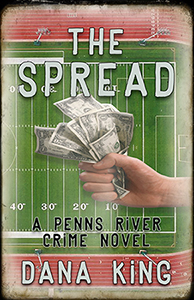
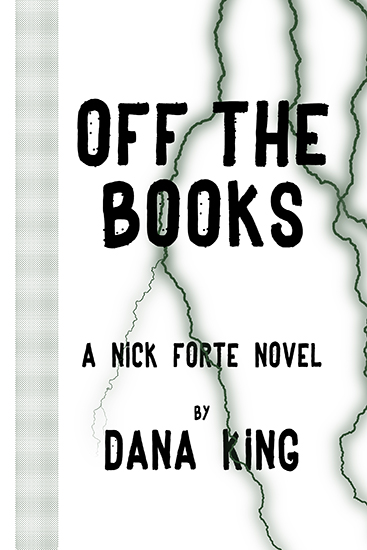
OBAAT: Thanks, Bill. Reading this brought back the interest you piqued when I heard you speak at Malice Domestic. I particularly like how you allow for some blurring of the lines, e.g. how a Moralist might be pushed into becoming a Pragmatist by circumstances. The main detective in my Penns River series of procedurals is a Moralist, though he’s also a smartass who may tread a line verbally from time to time. On the other hand, my private investigator, Nick Forte, was a Pragmatist who has crossed over into Rogue status in recent books.

You mentioned characters can go from Moralist to Pragmatist and from Pragmatist to Rogue as conditions dictate. Does it work in the other direction? Can a Rogue evolve into a Pragmatist or a Pragmatist into a Moralist?

Come back next week as Bill and I continue our chat on the ethics of fictional detectives.