Monday, April 9, 2018

The Lindell A.C. is Gone


(This story originally appeared in Spinetingler Magazine, January 25, 2016)


Jason Pelekoudas tried to explain to Pete the Polack how it worked.

“See, it was a hundred and eight months and you can get parole in a third. But, they count every day you don’t fuck up as two—good time, they call it—so I come up for review in a year and a half.”

“A hundred and eight months still seems like a hell of a long time to be out in a year and a half, I’m thinking,” Pete said. Pete’s last name was Woods. Everyone called him Pete the Polack because he was dumb enough for two of them.

“It’s nine years.” Jason tired of going over it, afraid Pete might think he cut a deal, let the wrong story get back to the wrong person.

“Then why don’t they say nine years?”

“I don’t know why. They just do. So a hundred and eight months—nine years—a third of that is thirty-six, right?”

“If you say so.”

“And half of thirty-six is eighteen.”

“Why half? I thought you said a third.”

“They already took the third.” Jesus. This was worse than the time Jason had to explain menstrual cycles to the rapist on his cellblock. “Now they take half of what’s left, on account of every day I served counted for two, since I kept my nose clean.” Jason hurried on before Pete asked anything else stupid. “So, every day for eighteen months counts twice, which makes it the same as thirty-six months, which is how much time I needed for a hearing. Crowded as the joint is, they was happy to see the back of me.”

Pete had to think about it. “Yeah, but you’re out in, what? A year and a half.”

Jason wondered if beating the shit out of this dumb son of a bitch was worth going back in for. “Eighteen months is a year and a half, Pete.”

“Okay, fuck it. I never said it wasn’t.” Pete spit onto Cass Avenue from the sidewalk in front of the Rosa Parks Transit Center. Jason looked over his shoulder, remembered the night him and Pottsy Mercuri got into it in the alley behind, when it was still the Lindell A.C. Pottsy pissed because he thought Jason had balled his girlfriend. Which he had, not that she was worth getting beat up over. “You been to see Muzzy lately?” Pete said.

“I only been out a week, Pete.”

“Okay, then. You been to see him since you got out?”

“No. It ain’t like Muzzy and me was ever close, you know?” Not since Muzzy thought Jason shorted him on his end of a job, which Jason hadn’t. Muzzy the kind of cheap SOB who rounded everything in his favor, stayed in shape by carrying the grudges he’d accumulated.

“He’s sick, you know,” Pete said. “Got that ALS shit.”

“Ugh. I feel for him.” Jason did, too. Read that sportswriter’s book about Morrie, who seemed like too nice a guy to have be fed through tubes, other people wiping his ass. “That’s no way to go. How bad is he?”

“He’s in a wheelchair, but he still gets around pretty good. He was asking for you.”

“Asking for me?”

“Yeah. Said he has something he wants to talk to you about. Only you. I think he’s trying to clear his conscience before he checks out.”

Jason didn’t remember Muzzy having much of a conscience. Of course, seeing the light at the end of the tunnel and knowing it was for you… “He still at the same place?”

“Yeah. Just him and the wife now, and he’s wearing her down. I’m half surprised she ain’t taken him out yet.”

Muzzy Marcol lived in a shotgun house half a block off of Holbrook Avenue, a quarter mile from St. Florian’s Church in Hamtramck. Jason paused on the top step, thought about going home, knocked. Muzzy’s wife answered the door. Mrs. Muzzy—people had called her that for so long Jason didn’t remember her real name—went to Mass every morning since she and Muzzy moved here almost thirty years ago. Fat lot of good it did her, waiting on him in his wheelchair, aging herself two days for every one served. “Jason! Muzzy said you were out. How does it feel?” She raised up to peck his cheek, showing her age but still a sweetheart.

“It feels great. Thanks.” Jason stuck for what to say next.

“Come on in.” Mrs. Muzzy took his elbow. “Muzzy’s been asking about you. You want a cold beer?”

“No, thanks. I really can’t stay.”

“Give him a fucking beer!” Muzzy’s voice carried from the next room. “And bring me one.”

“Muzzy, you know you’re not supposed to drink.”

“Why? It bad for my health, or something? What do you think I do all morning while you’re at Mass? I need a load on to get through all the fucking good cheer you bring home.” That sounded more like the Muzzy Jason remembered.

Beers in hand, Jason and Muzzy sat at an angle to each other in the re-arranged living room. Paths had been cleared for the wheelchair to move into the kitchen, powder room, or to the stairs, where one of those ski lift-looking contraptions could haul Muzzy up and down. Jason took a peek upstairs, saw another wheelchair ready. “Pete the Polack says you’re looking for me.”

“That’s it? You’re not gonna ask how I’m doing? What’s going on? Nothing?”

Jason opened his hands to include the new room arrangements. “I figured it might be a sore subject, you know, so I let it pass.”

“And got right down to business. ‘What do you want, Muzzy?’ Could you at least pretend you give a shit how I am?”

“I’m sorry. Really. How are you?”

“I’m dying, you inconsiderate bastard. How the fuck you think I am? Every day I get a little worse until one day I won’t be able to breathe and I’ll die. How are you, asshole?”

“Better than that,” Jason said and Muzzy broke up.

“All right, all right. I wasn’t looking for you just to break your balls. Things ain’t been right between us for a long time. I might’ve been wrong about that. I wanted to see you to maybe square things a little, before… you know.”

“Sure, Muzz. What do you have in mind?”

“I know a guy, works for a private security monitoring company. You know, household and business alarms, shit like that. He was in this house in Livonia a few weeks ago, fixing a problem, and he sees this guy’s got what my friend thinks is hundreds of thousands of dollars in sports memorabilia. Jerseys, hats, football helmets, balls. All kinds of shit. He called me last week, says the guy’s going to be out of town for a few days. The place will be empty.”

“Except for the alarm.”

“My guy’s on the inside. He can get you past the alarm.”

“Why doesn’t he do the job himself, he knows how to get past the alarm?”

“The truth? He ain’t got the balls. He’s willing to tee it up for ten percent of your net.”

“When’s the house going to be empty?”

“Tomorrow, through the weekend.”

“Jesus Christ, Muzzy. That ain’t much time to set something up and case it.”

“Not my fault you took your time dragging your ass over here. I spread the word soon as I heard you were out.”

The last words Demmi Kiraitis said to Jason before he went away forever were, “Anything that sounds too good to be true, is.” Had to be something Muzzy wasn’t telling. “How’s this inside guy so sure when the mark will be out of town?”

“He called last week, told the company he’d be away and no one should be in the house. Anyone tripped the alarm and the master code didn’t get put in right away, don’t waste time calling him. Just scramble the police.”

“And I’ll have the master code, courtesy of this mystery man.”

“Right.”

“Won’t it point back to him, working for the company, and all, being there in the past few weeks?” Guy didn’t have the balls to do this himself would roll over on Jason in a heartbeat.

“He says he has that dished. Even if he doesn’t, don’t worry about it. That’s his problem.”

“Until he flips.”

“The only name he has is mine.” Jason drilled Muzzy with a look. Muzzy opened his hands, looked down at himself. “Why would I give you up? What are they going to threaten me with? Worst thing can happen is they put me away for a few months and the state pays my medical bills. They’re not gonna want to do that, so I know I’m getting a pass. I have no reason to put you in.”

Jason had no argument for that. “How much we talking about?”

“My guy thinks maybe half a million. Even if you only get ten percent from the fence, that’s fifty grand for an hour or two’s work.”

A fifty grand score a week out of Jackson could set Jason up for a nice year. “Still…I wish I had more time.”

“Well, you don’t. You want in, or not? Either way, my conscience is clear. We’re square. Come on, kid. It’s time to fuck or walk.”

Jason didn’t walk, hoped he wasn’t about to get fucked.

***

Seemed like a lot more stairs up to Muzzy’s front porch than last time Jason was there. Mrs. Muzzy let him in, handed him two cans of beer, one with a straw. Jason shrugged, walked into the living room. First thing he noticed was the new wheelchair, then how much smaller Muzzy looked, two weeks since he’d seen him.

“Nice chair,” Jason said. Handed Muzzy the beer with the straw.

“I couldn’t get around in the old one no more.” Muzzy worked a finger on a pad on the arm of the chair. Backed it up, turned it around, brought it back.

Jason sipped his beer. “Nice. They have competitions for those? Slaloms and shit?”

Muzzy sucked beer through the straw. “Took your time getting here. I was starting to think you weren’t coming.”

“You were starting to hope, you mean. You knew I’d come.”

“Probably think it’s my fault, don’t you?”

“Things happen. I felt rushed, I shouldn’t have taken the job. I took it, so that’s on me.”

“I talked to my guy. You know, at the security company. Asked him what the hell went wrong.” Muzzy’s torso moved, could have been a shrug. “Said, how was he supposed to know the guy’d come back early?”

“No way he could,” Jason said. Muzzy’s taste buds must be going, too. Shitty beer. “Still, funny he’d see all that memorabilia and never notice the gun rack right there on the wall above the seats from Tiger Stadium.”

“Guns in the house shouldn’t of been a problem with no one home.”

“But the guy was home, Muzzy. Or someone was. That’s why I been two weeks getting back to you. Shotgun took a chunk out of my leg. Today’s the first day I’m getting around good enough to come.”

“Ah, jeez. I’m sorry to hear that. Was supposed to be a milk run.”

“Like I said, it happens.” The beer felt good going down over the Vicodan. “You seen Pete the Polack lately?”

“Pete? No. We don’t run in the same circles much anymore.” Muzzy looked down at the wheelchair, legs dangling.

“I thought your social life might be suffering, so I brought him with.”

“Where is he?’

“Outside. In the car.”

“Bring him the hell in.”

“He’s good out there. Listen, about that mark being home that night. Dumb luck and all, him coming home like that.”

“Like you said, it happens. I still feel bad about it, though. I get word of anything else good, it’s yours. I don’t get included too much anymore, but whatever I hear, you can have.”

Jason shook his head. “It’s cool. The way I figure it, you did what you could, and you’re a sick man. I probably owe you a little, extending yourself the way you did.”

Muzzy waved that off with just his fingers. “You don’t owe me dick. I almost got you killed.”

“Yeah, but it wasn’t your fault, Muzzy.” Jason finished his beer, crushed the can in his hand. “The almost part.”

Jason not sure Muzzy was breathing, he got so still. “What are you talking about?”

“I didn’t waste that day I had to case the place. Drove the neighborhood, I forget how many times. Day, night. Rented a car so people wouldn’t see mine too often. Staked out the house when it got dark. No one came in and no one went out. The lights went on and off with timers the same times as the night before. Didn’t see anyone moving around inside. The garage was empty when I backed the van in, two o’clock in the morning.”

They looked at each other for at least a minute. Jason went over to the wheelchair, took the straw from Muzzy’s can and folded it into his pocket. Picked up the beer and took a sip. “Pete says his cousin dropped him off in the middle of the afternoon to wait. I must’ve just missed him. More bad luck.”

“Yeah,” Muzzy said.

“It was Pete fucked it up.” Another sip. “Said my name so I’d turn around. Didn’t want to shoot me in the back, I guess. I heard a voice, no one supposed to be home, I hit the floor. Threw myself out the window when he come around the couch for a better shot.” Jason rubbed his leg. “Must’ve been me running away got Pete over his reservations about back shooting.”

“You say he’s in the car?”

“I told him I’d bring you out, clear the air. I ain’t mad. It was business. I understand that. A couple things still need to be straightened out.”

“Bring him in here. Christ, look at me.”

“It’ll be okay. This kind of conversation, you don’t want no one to accidentally overhear. Your wife’s at the store, but we might not be done by the time she gets back. I’ll wheel you out, we’ll take a drive. Put the top down, get you some fresh air. Supposed to be good for you, right?”

“Nothing’s good for what I got.”

Jason dipped his head. “I guess not. Sorry. Still, it can’t hurt. Beautiful day out. Like Indian summer. It’ll be nice.”

Jason moved behind Muzzy, took hold of the chair’s handles. Muzzy did something on the control panel. “No, we can talk here. She don’t come in when I got company unless I tell her. Go get Pete.”

Jason gave a push, felt the resistance. “Muzzy, we’re going outside. I can wheel you out, or I can carry you. It’s your choice.”

Muzzy rocked his head back and forth a few times. Moved his finger on the arm of the chair and Jason felt the wheels unlock. Pushed him though the kitchen, backed the chair down the steps. Maneuvered around a chip in the front walk.

“Where’s Pete?” Muzzy said. “I thought you said he was in the car.”

“He is.” Jason opened the passenger-side door, lifted Muzzy out of the chair. “In the trunk.”

“What the fuck is this? You said the three of us was going to talk.”

Jason folded the chair, put it in the back seat. “We are going to talk, Muzz. You and me. Pete can if he wants to, but he wasn’t all that talkative on the way over.” Started the car.

“What the fuck is going on? You said just talk.”

The car pulled away from the curb. “We’ll talk all you want, Muzz. The Lions, the Wings, the weather. Talk about the Middle East, for all I care. We got about four hours.”

“Four hours? Where the fuck we going?”

“Cheyboygan. Actually, a little past, up closer to the bridge. I know a pretty little woodsy area off US-23. Real nice up there. A little cool this time of year, but it’s not supposed to be too bad for a few days.”

“What the hell are we gonna do up there for a few days?” Muzzy slumping against the door, side of his face pinned to the glass.

“Not we, Muzzy. You. You’re gonna wait.”

“For what?”

Jason shrugged. “Depends. Winter. A bear, maybe.”

THE END

Wednesday, April 4, 2018

The Choirboys


Only one book really stood out for me in March. That’s not because it was a slow or fallow month for reading, but when the last two books read in February were The Given Day and All the Pieces Fit (Jonathan Abrams’s outstanding oral history of The Wire) and the first book read in March is Joseph Wambaugh’s The Choirboys, let’s just say any other books in the immediate future have some unfairly high expectations to overcome. (I did read one pre-release book that merits attention, but I’ll save that until closer to the release date.)
Joe Wambaugh pretty much invented the realistic cop-in-the-street thriller with The New Centurions and The Blue Knight, but The Choirboys is the Catch-22 of police fiction. Bawdy, crude, terrifying, heartbreaking, surprising, and then some, it’s as close to a perfect book as I can imagine.
Since The Choirboys is the only book I called out this month, let’s dig a little deeper into why. The most obvious thing about any Wambaugh novel are the anecdotes that make up the bulk of the narrative. Here they don’t necessarily seem to be going anywhere, character sketches of weird and frightening things that happen to a dozen cops and how those cops relate to the events, and each other, through that’s called “choir practice,” night-long alcohol- and sex-fueled parties held in MacArthur Park. Wambaugh tells stories few others can, fourteen years an LA cop who gained enough cred with other cops that they still line up to tell him stories he can use in books over forty years later.
What keeps Wambaugh apart from dozens of other cops who fictionalize their stories is his talent for writing, as well as for constructing the books. Two things stick out to me, in addition to the wonderful and nuanced characterizations and laugh-out-loud dialog: structure and foreshadowing.
The structure is something to behold, the work of an author who trusts his audience to remember what he’s told them as much as he trusts his ability to tell them something memorable. The first several chapters deal with the bosses, lieutenants and above, and what ignorant assholes they are. Those who pay attention have likely figured out kinds of people join police departments. Some are there to be cops. They may want to remain on patrol their entire careers or move up to detective, but what they care about is police work.
Then there are the bosses, those who immediately jump into the political aspect of the profession. Wambaugh makes no secret where his sympathies lie, which is why he had to leave the force after the book came out. The bosses here make The Wire’s Ervin Burrell look like Dwight Eisenhower by comparison. Having established these incompetent womanizing nincompoops as those in charge, Wambaugh leaves them alone so he can tell you about those they command, dropping in the bosses’ names and actions as needed, trusting you to remember them. It’s never a problem.
I’m not a fan of foreshadowing, which in contemporary thrillers consists of little more than ending chapters with, “I had no way to know I’d never see her again alive,” or, “The next time I’d see him I’d have a gun pointed at his head.” Wambaugh is much more subtle and effective. Establishing in Chapter 4 that the Wilshire District officers “chose MacArthur Park as the choir practice site because it was in Rampart Station’s territory. They believed that one does not shit in one’s own nest,” he’s free to allow the cops less discretion that they might have received here they might be more easily recognized.
The first reference to what is the point of the whole book is at the beginning of Chapter 6: “Willie Wright was also destined to become a police celebrity. It happened four months before the choir practice killing.” Chapter 7 opens with, “A choir practice was certainly in order and was called for by Francis Tanaguchi… It was three months before the killing in Macarthur Park.” After that the amount of time between the chapter in question and the killing is always less, but not every chapter begins so. Wambaugh has accomplished the true goal of proper foreshadowing: leaving the idea in the back of your mind without telling you any more of what is to happen than he has to.
Maybe when I retire I’ll have time to take apart The Choirboys and give it its due. It’s not the kind of book one unpacks lightly, regardless of how funny it is, and I’ve never read a funnier book. If you haven’t read it, do. If you have, it’s worth another look. And another. And another…

Monday, March 26, 2018

The Given Day


I don’t usually post about individual books. Lots of people can dissect a book better than I and I’ll leave them to it. What I am qualified to write about are books that affect me in such a way I have to take a deeper look, bot at the book and myself. I read two of them almost back-to-back over the past few weeks.

First is Dennis Lehane’s masterpiece, The Given Day, describing the events leading up to the Boston police strike of 1919 as seen through the eyes of Boston cops and a fugitive African-American. The book covers the molasses explosion, the 1918 World Series players’ strike, race relations, labor strife, terrorism, income inequality, class warfare, and immigrant antagonism. You know, all the things that made—and continue to make—this country great.

There is no living writer I hold in higher esteem that Dennis Lehane, and I’m not sure there is any writer, living or dead, I’d rather read. To me, reading a Lehane novel is an event. They’re not all equally good—no one ever has or will meet that standard—and they’re not all equally weighty. What Lehane does better than anyone else is speak to me. He shares many of my sympathies and sensibilities and isn’t afraid to let them show in his fiction. What makes him special is how he can express those sensibilities and never stoop to proselytizing.

What is it about this book? It’s much longer than what I usually read. I don’t think I have an attention span that demands short novels, but most writers who can’t tell their story in 300 – 350 pages would have been better off doing so. (Much as I love his writing, James Ellroy’s books could often stand having a machete taken to them, American Tabloid the notable exception.) The Given Day comes in at twice that and I was sorry when it ended.

What readers most often overlook in a book like this is how funny it is. There are laugh out loud sections, and countless examples of the kind of situational and interpersonal humor that occur in daily life. It’s what keeps the book—and daily life—from being a slog from one bad situation to another.

Fiction is the art of telling truth through lies, and there is no greater example than The Given Day. None of the things that happen to his protagonists are documented, yet none strain the reader’s credulity. The most outrageous things, the things that might hint at shark-jumping, are all provably true. On January 15, 1919 in the North End neighborhood of Boston a large molasses storage tank did explode and a wave of molasses rushed through the streets at an estimated 35 mph, killing 21 and injuring 150. The Harvard football team was armed and sent to defend a bridge during the police strike, where they shot at protesters attempting to cross the bridge into the wealthier sections of the city. Several people were killed. These are facts.

It’s the made up stuff one can most easily believe. Their actions are born of human interaction, frailty, and vice. People are caught up in situations beyond them, overextend their power, and make mistakes that seem like good ideas at the time.

Ten years since The Given Day’s publication there’s something else that makes my hair stand on end: It’s now 100 years since the book begins, 99 since the strike, and it’s frightening and depressing to see how much has not changed. Immigrants are seen as threats, their goodness or badness of the individuals be damned. The unspoken policy of making every man feel secure so long as he can comfortably believe someone else is lower than he is. The almost pathological need for those at the top to keep everyone else in their places, the fiction of the American Dream be damned. It was a time of anarchist terror in Boston, and the predecessor of the FBI was only too happy to claim terrorists had blown the molasses tank, never retracting the argument after the explosion was proven to be the result of commercial negligence.

The Given Day is a reminder that those who come to great power and wealth in this country—the two are often sides of the same coin—did not reach those stations through philanthropy. They rose through ruthless ambition and did everything they could to pull the ladder up behind them. There are too many examples today to doubt this was the case a hundred years, and no reason to doubt it was the same a hundred years before that; it has always been so. The Given Day is a highly entertaining book that also takes the time to remind us that eternal vigilance, and maybe even a willingness to raise some hell, are all that separates the American idea of capitalism from feudalism on a given day.

Wednesday, March 21, 2018

"Stick With 'Said," He Admonished Gravely.


3. Never use a verb other than “said” to carry dialogue.
4. Never use an adverb to modify the verb “said.”
(Elmore Leonard, “Elmore Leonard’s Ten Rules of Writing)

This is no bullshit. If you’re looking for ways to be clever and unique try writing better dialog. If the urge is overcoming you to have a character announce, assert, declare, disclose, express, maintain, reply, report, retort, respond, reveal, state, suggest, affirm, allege, divulge, exhort, imply, opine, relate, or remark, just lie down until it passes. All you’re doing is drawing attention from the important points of the story while the reader looks up “asseverate.”

I’m firmly in the “said” camp. Have been for as long as I’ve been a serious writer. (Pause inserted while readers consider whether I qualify as a serious writer….Okay, long enough.) I occasionally hear other writers rationalize that “said” gets boring and some variety is needed. To them I say, “You’re wrong.” “Said” is the invisible word. In the context of a dialog attribution, the eye passes over it like a warm breeze on the beach, disturbing one’s attention not at all.

Granted, there are pitfalls. Even the great Robert B. Parker was not above carrying a good thing too far, as in this excerpt from his otherwise excellent Western, Resolution:

“Why’s it swole?” Virgil said.
“’Cause she’s lame,” Blue Shirt said.
“Wasn’t swole when I sold her,” Pink Shirt said.
Virgil took a long breath through his nose.
“Where’s the horse?” Virgil said.
“Out front,” Blue Shirt said.
“Lemme see her,” Virgil said.

Now he’s violating the rule that prohibits using the same word too often too close together, even when it’s an “invisible” word. He could have saved one “said” by adding Virgil’s second line of dialog to the small bit of stage business that breaks up the dialog. (Editor’s Note: What follows is not in any way an attempt to improve on Robert B. Parker. I will throw down on any man who even implies I think I could improve on Parker. This is attempt to dissuade those who not already in the “said only” school from using it as an example of why other attributive verbs would be better.)

Virgil took a long breath through his nose. “Where’s the horse?”

Now it’s still obvious Virgil is speaking and we saved one example of driving “said” into our brains like a 10p common nail.

Parker does have a challenge here, as there are three people in the conversation. He can’t just leave the attributions out altogether. Well, he could, as each speaker has a distinctive point of view, but Blue Shirt and Pink Shirt aren’t in the book enough for us to have a good idea about them beyond this exchange. (Which is their only appearance.) Anything that causes the reader to have to think about who’s speaking takes them out of the story which is, by definition, a problem.

He could make use of some stage business, which he almost did by having Virgil take a long breath through his nose. One can also rephrase a comment so the speech appears as narrative.

Virgil asked why it was swole.
“’Cause she’s lame,” Blue Shirt said.
Pink Shirt crossed his arms in disgust. “Wasn’t swole when I sold her.”
Virgil took a long breath through his nose. “Where’s the horse?”
“Out front,” Blue Shirt said.
Virgil started walking. “Lemme see her.”

This may or may not be any better, or even as good. It does break up the scenery a little without slowing things down too much.

I’m making such a big deal of this because I agonize over dialog attributions. Breaking up the dialog to show some little action, not going too long in even a two-person conversation without mentioning who is speaking. Whatever I think will work. What troubles me more than anything is leaving the attribution to the end of the sentence so the reader may have to read the line again in the proper character’s voice if she didn’t pick it up on the first pass.

This last bothered me quite a bit on my final draft of the work-in-progress until I lucked into a solution. First, a brief digression. I know quite a few authors who don’t like to read fiction when they’re working on a book. They’re afraid the other author’s voice may creep into their own work. I understand that but disagree. To me, reading other fiction while working on a book is like taking a continuing master class. Not that I want to rip them off (not that I never do, either), but I’m often reminded of things I wanted to make sure are in my book but may have been forgotten as I focused on other details.

What happened here was different: I learned something. I was reading James Ellroy’s White Jazz when the answer to my dialog attribution problems fell into my lap. The particular question I had was how not to slow things down in a multi-character conversation by adding stage business when none would likely take place, yet still make it clear.

A colon.

Long a staple of stage and screenplays, dialog attribution by means of a colon works well in novels, too. Here’s an excerpt from White Jazz, where first-person narrator Dave Klein eavesdrops on a conversation between Touch, Rock, and Glenda from behind a door.

Smells: cotton, stale perfume. Dark going gray—I saw a bed and bookshelves. Voices—hug the door—listen:
Glenda: “Well, there is a precedent.”
Touch: “Not a successful one, sweetie.”
Rockwell: “Marie ‘the Body’ McDonald. A from-nowhere career, then this kidnapping out of nowhere. The papers smelled publicity stunt quicksville. I think—”
Glenda: “It wasn’t realistic, that’s why. Her hair wasn’t even mussed. Remember, Mickey Cohen is bankrolling our movie. He’s hot for me, so the press will think gangland intrigue right off. Howard Hughes used to keep me, so we’ve got him for a supporting play—”
Touch: “’Keep,’ what a euphemism.”
Rock: “What’s a euphemism?”
Touch: “Lucky you’re gorgeous, ’cause you’d never make it on brains.”

Another half a page like that. Granted, Ellroy’s style isn’t for everyone, but look what he accomplishes. Three people more or less talking over each other in a rapid-fire conversation. Three people the narrator can’t see. I’d never try to pull it off for that long, but the scene flies.

So now I have another tool available for judicious use. Like anything else, I have to be careful not to overuse it. Just like “said.”


Friday, March 16, 2018

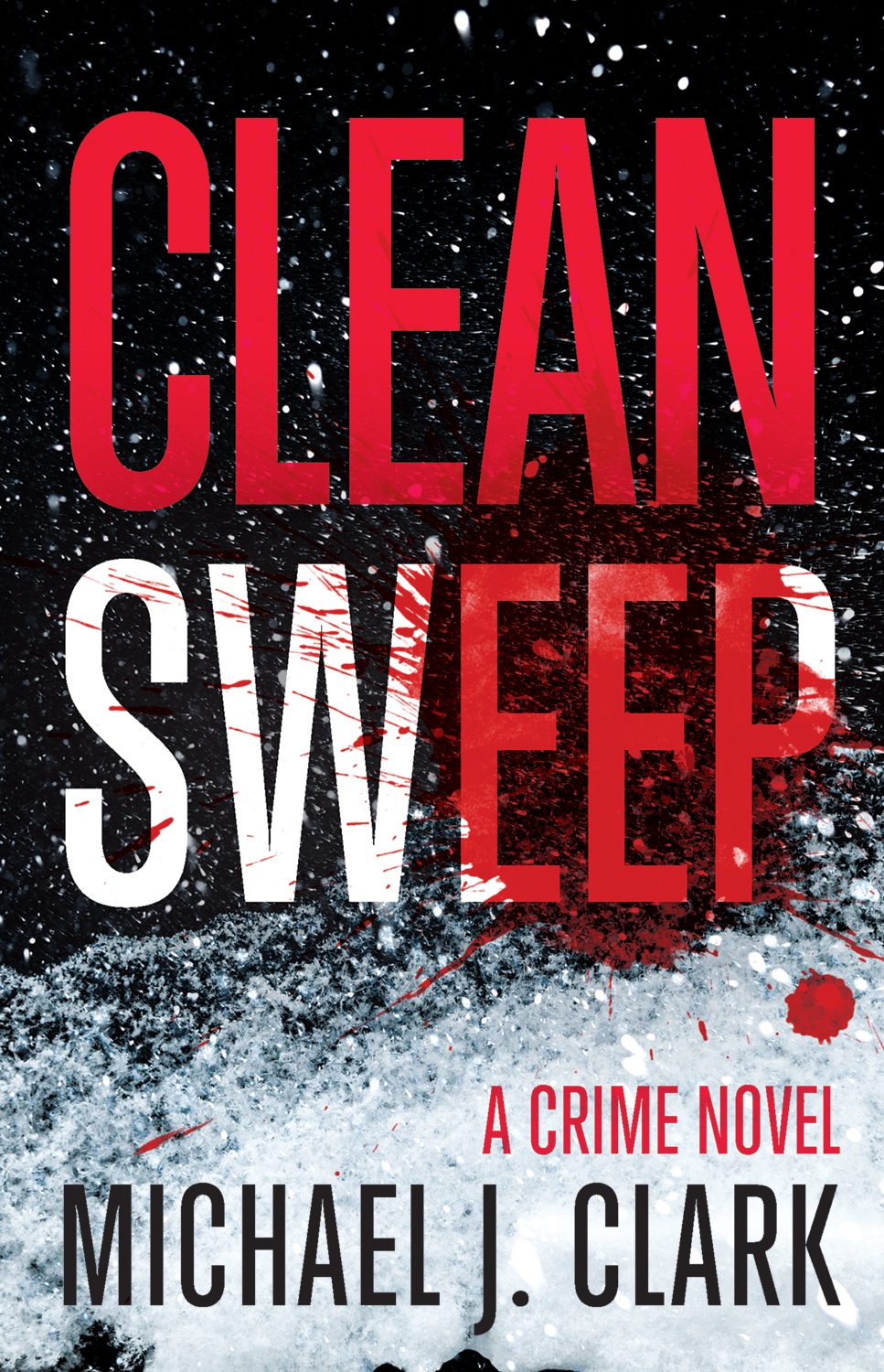
A Conversation With Michael J. Clark.


Michael J. Clark is best known to Winnipeggers, Nova Scotians, and pretty much anyone with an internet connection as an award-winning Canadian automobile journalist. In 2015, he decided to take a break from the road and finish his first novel, Clean Sweep, published by ECW Press. He's currently wrapping up his second novel, set in Winnipeg circa 1985. Michael lives in Winnipeg with his very understanding wife, Carol.

One Bite at a Time: Readers love to ask where authors get their ideas and most authors reply with something along the lines of “we’re tripping over them. The trick is to find the idea that works best for me.” What made this idea worth developing, and how much development from the original germ was required?
Michael J. Clark: It all began with the real-life Tommy Bosco, one of my best friends with a
colorful past. We’ll call him OTB, the Other Tommy Bosco for short. OTB’s stories pull you in, like a Death Star tractor beam. You must find out how it ends. To be fair, an OTB story is rife with embellishment, just like the angler tales that roll out with ease on a Canadian lake, after a baker’s dozen of Extra Old Stock. I knew that I wanted to take the reader to a place that was newish for the genre, (Winnipeg) and to insert just enough historical reference that, when the ugly truth is revealed, there’s at least a hint of believable.

OBAAT: How long did it take to write Clean Sweep, start to finish?
MJC: This was a long haul. I started in 2009, trying to fit it in here and there when I had time on press trips for my automotive journalism gig. When I finally got tired of finding out which car had the best cup holder, I finished the book in early 2016. Hindsight being 20/20, I preferred the writing of my second novel. That was about ten months start to finish. It will be out in the spring of 2019.

OBAAT: How did Clean Sweep come to be published?
MJC: I’d love to tell you that I had to send it off to hundreds of publishers, with an equal amount of rejection letters. I sent it out to three. Jack David from ECW Press reached out to me immediately after his read, and the rest is history.

OBAAT: What made you decide to be an author?
MJC: Let’s blame that on failure to launch as a screenwriter. (Yet.) Another reason is the film industry in Winnipeg, one that I hope continues as strongly as it does today, with         attractive tax credits. It’s amazing how many times my city is Someplace Else. Imagine          how much time will be saved just in not having to change out license plates. My ultimate goal is to see my stories on the big screen. I love my town! It is a worthy location, with plenty of dark and dank. 

OBAAT: What do you like best about being a writer?
MJC: The wardrobe. Threadbare, with a side dish of comfy. (I’ll put on something fancier for the launch events.)

OBAAT: Favorite activity when you’re not reading or writing.
MJC: I love to tinker. Anything that I can fix without bringing in outside help. I’ve been twisting wrenches on my own cars for years. I love fixing something that I’ve never fixed before. (Thanks, YouTube.)

OBAAT: What fuels your writing?
MJC: The possibility that it could truly be my primary source of income.

OBAAT: What’s your writing routine like? Are you a plotter or a “pantser”?
MJC: Total pantser!

OBAAT: What are you working on now?
MJC: I’ve just completed my second novel, set in 1985 Winnipeg. I’m working on the framing of Book Three, which will be based in Manitoba, though more of a rural thriller/conspiracy piece. (That’s all I can let out of the bag right now.)


Monday, March 12, 2018

A Conversation With Jenny Milchman


Jenny Milchman gets around, and I mean that in the most flattering sense. She spent eleven months in her car taking her debut novel Cover of Snow—as well as her husband and kids—to 400 bookstores. The book went on to win the Mary Higgins Clark award, was praised by the New York Times, and chosen as an Indie Next and Target Pick. Subsequent books—Ruin Falls and As Night Falls—also earned outsized acclaim. Her newest, Wicked River, drops May 1 from Sourcebooks.

Jenny speaks nationwide about the publishing industry and the importance of sticking to a dream. She is Vice President of Author Programming for International Thriller Writers, and the founder of Take Your Child to a Bookstore Day. Jenny led the literary series Writing Matters, which covered the publishing industry during the upheaval of 2009, attracted guests coast-to-coast, and received national media attention. She teaches writing and publishing for New York Writers Workshop.

She’s here today to talk about her involvement with the New collection from Down & Out Books, The Night of the Flood.

One Bite at a Time: I have to start with the obvious question. You have a sizable footprint in the industry. You’re a talented writer, come across as intelligent and you have your whole life ahead of you. What got you involved with Ed Aymar?
Jenny Milchman: Oh, well, you know what they say about appearances. In all seriousness, meeting Ed Aymar made everything in my life easier. Well, not everything. I still have to do the dishes. But given my role as ITW board member, Ed has been one heckuva connection for me because he is just as devoted to helping other writers, doing what he can to further their careers, as I am. This anthology being just one example. A couple of years ago, Ed became Managing Editor of ITW’s debut authors blog, The Thrill Begins, completely revamping it. And it’s grown into one of the best, most lively and interesting resources for writers on the web. (Do people still say “web” when referring to the internet? See, this is why I need Ed.)

OBAAT: Ed and Sara Chen were here a couple of weeks ago to talk about the anthology in general. Tell us a little about your contribution.
JM: Small. That’s what I have to say about my contribution to The Night of the Flood. When Ed described the project to me, I happened to be in a particularly frenetic phase of my career—losing my first editor, on submission for what would turn out to be the dream publishing team, only I didn’t know that then—and still, his idea completely swept me away. A novel in stories—told by writers whose talent I knew firsthand from reading their debuts, and in many cases, their follow-ups. I didn’t think I could add much, but when Ed mentioned that there’d be a sort of forward—an open letter to the townspeople of Everton—two things happened. One, I thought I could handle writing such a piece, and two, the voice of the character came to me, fully formed. She just began dictating words in my head, and I wrote them down. So that’s why I say my contribution was pretty small. And easy.

OBAAT: You’re able to write short stories and novels equally effectively. Is it as effortless as you make it seem? Short stories kill me. I write them, but to me they’re much harder than novels.
JM: Oh no, I completely agree with you. (See above). Writing a short story is like trying to swallow a whole lasagna in one bite. (I don’t know why I came up with lasagna. Could’ve been a casserole. Or a chocolate cake.) You know, the fullness and grandness of a novel loses something when I try to trim it down to 5000 or so words. I’ve written a handful of short stories I’m really proud of; two of them were published in Ellery Queen Mystery Magazine, and the best in my opinion is called “The Closet”, about a young girl who takes revenge—hey, shades of The Night of the Flood—but every short story takes me months and months of whittling, shaping, trying to find the core. It’s novels that have my heart.

OBAAT: Let’s talk about your novels. I write two series, mainly because once I get a universe down my ideas tended to come in that form. You’ve written three well-received standalones with a fourth to come. Are there any connective threads? Similarities in protagonist or location or themes?
JM: Actually, the dirty little secret behind my books is that they are a series that can be read as standalones. That secret isn’t so dirty actually. If it were, it’d probably get a lot more press. OK, rewrite! The secret behind my books is that they are a series that can be read as standalones.
Here’s how: They all take place in the same fictional town. It’s called Wedeskyull, and the town becomes a character in the books. A mountain village, largely lost to time, and riven by a cultural chasm between the old-timers and the newcomers, the locals and the expats. When those two groups share a land and their lives, it makes for a great deal of drama. Even though my forthcoming novel, Wicked River, is set in the back-country, the town still plays a role. The local police chief is first on scene when my honeymooning couple fails to arrive back home. People who read all four of my books will see small characters from one tale play bigger roles in another, and vice versa. It’s one of the joys of writing for me—to see this town come alive in layers and ripples.

OBAAT: In 2013 you and your family traveled to 400 bookstores over nearly a year. You’ve repeated the tour for each book since. What gave you the idea and how did you keep up with the rest of your life while you were living out of suitcases for so long?
JM: In 2013, after a thirteen year odyssey to see my “first” novel published (it was actually the eighth one I had written), my husband and I rented out our house, traded in two cars for an SUV that could handle Denver in February, and pulled the kids out of first and third grades to “car-school” them on a 35,000 mile drive around the country. I did a book event nearly every day, sometimes two. And my publisher thought I was nuts. They actually convened a call to tell me I was nuts. And here’s the thing—I was nuts. The whole idea was crazy. Who goes to one book event for an unknown novelist, traveling far from home, where she doesn’t know anyone—let alone 250 of them? Then my debut novel went into six printings in hardcover, and all of a sudden, well, I was still nutty, but the nuttiness had somehow worked. I think that may be because in this virtual world, we still crave the face-to-face. The handshake, the smile, the words exchanged in person. I was introducing my book to the world, but really I was introducing myself—and meeting people in return. Much as I appreciate all the riches on offer online, truly great was to see Facebook friends become friends IRL. As for keeping up with regular life—we didn’t for the most part. Book tour was like a step out of time for us, and we all really embraced it, and enjoyed the 24/7 aspect of being together. The humorous or ironic (or wonderful) punch line to all this is that I’m now with a publisher that believes in relationships and word of mouth and bookstores and libraries just as much as I do, and for my fourth novel, they’re sending me out on a mega tour again!  

OBAAT: You’re a board member and Vice President of the International Thriller Writers and run the Author Programs operation. How did you get involved in that?
JM: A long, long time ago—actually it was five years, a blip in publishing terms, which is roughly the scale of geological time—I was a newbie author, and ITW’s Debut Authors Program helped introduce my book to the world, and teach me about the biz. Being a writer is one thing, and usually by the time we’re published, we know a thing or two about craft. But becoming a professional in a very high stakes, major media industry is a whole other ball of wax, kettle of fish, pick your cliché, and ITW guided me as I began. I wanted to do as much as I could for the next wave of authors. First I served as Chair of the Debut Authors Program, then I joined the board as Vice President of Author Programs. This includes overseeing the Debut Program committee, a podcast featuring ITW members as guests called the Inside Thrill, a yearly program in Palm Beach that showcases debuts alongside one headliner—this year it’s R.L. Stine—our newly expanded YA/MG arm, and of course, all of Ed Aymar’s brainstorms.

OBAAT: Clearly we’re talking about two different Ed Aymars, but that’s a discussion for another time. What are you working on now?
JM: Well, it’s a story about this guy named Ed who’s sort of a Jekyll and Hyde figure…OK, actually, right now I am at the delicious, rubbing-my-hands-together-in anticipation stage of being about to begin a new novel. I call this the sprinkle-frosted cupcake stage. Nothing I enjoy more—about writing and the biz anyway—than a first draft. Now, this is because I suffer from a perseverative delusion that I am writing the world’s first perfect first draft, and I get my comeuppance come editing time, so don’t hate me. But right now, I am a happy, happy writer. The new book is called Mercy Island, and that’s all I can say, except that it’s a stranger-comes-to-town story, written from the perspective of the stranger.

Wednesday, March 7, 2018

A Conversation With Patti Abbott


The second-best thing about a new Patti Abbott book is that I get a chance to interview her for the blog. (The best thing? The book, dumbass.) Patti is one of my first writing friends, from way back when the Crimespace web site was where all the cool kids hung out. I honed a lot of my writing chops working on the flash fiction challenges she used to run on her outstanding blog, pattinase. In fact, I think most, maybe all, of my best short fiction has roots in one of Patti’s challenges.

In addition to being an inspiration, Patti’s a damn fine writer. Her short fiction regularly appears in heralded collections and her novels routinely receive award nominations, notably two Anthonys and an Edgar. Her new book, I Bring Sorrow, released last week from Polis Books. (Breaking news: Patti has had a story accepted for the 2018 Bouchercon anthology, one of over 300 submissions. Congratulations, my friend.)

One Bite at a Time: Let’s start with the obvious first question: what is I Bring Sorrow about?
Patricia Abbott: I Bring Sorrow is a collection of stories that mostly deal with the idea of "flight." A woman flees the city that has forsaken her, a woman flees the husband that is responsible for their daughter’s death, a group of women flee the dying earth, a couple takes a boy out of a Tucson cafe. The original title was “Flight Tales” but it lacked any poetry.

OBAAT: Did you sit down to write a set of stories with similar themes with the idea of collecting them?
PA: Not at all. I think my work is pretty similar in both theme and tone without my giving it much thought. I find it hard to write light. I have another 20 stories that could have just as easily fit in here. Of course, it may be just me that sees my stories as similar. Maybe a reader would find them quite diverse. A few are humorous but again, it’s a dark humor. Writing a cozy would be impossible for me given my world view.

OBAAT: Your novels Shot in Detroit and Concrete Angel were nominated for Anthony, Edgar, and Macavity awards; I Bring Sorrow is a collection of short stories, which harkens back to your previous efforts Monkey Justice and Home Invasion. (The latter a novel in stories.) As someone who thinks of himself as a novelist, I always wonder how people who switch back and forth make the decision on what to write next. I mean, I write the occasional short story for an anthology, but all my shorts together might make one not very thick volume. You knock them right out.
PA: Almost always an idea comes to me as a short story. Both of the novels started from a short story. I wrote short stories for ten years before trying a novel so it was a real leap from the ledge to try a longer work. I like the hyper-focused lens of a short story best. However, I realize this is not true for most readers or most writers.

OBAAT: What was it that grew the shorts into novels? Was it that you had more to say? Or did additional things keep wanting to happen?
PA: Shot In Detroit bulged as a short story. Who kills a dozen men in 4000 words successfully? So it was ripe for expansion. I needed to talk about many more things and I saw that quickly. What kind of woman would photograph dead men? Why did so many young men die in Detroit? Can you make art from such a gruesome subject? So yes, to both questions. I wanted to explore how Violet reflected the city she lived in. I am trying to expand another short story now. But the focus is really changing as I write it. Not sure if it will really be a crime story at all by the end.

OBAAT: When did you realize you had more material than a short story could hold and how did you make the decision to expand the format rather than trim the potential material?
PA: Well, to be honest they grew into novels because the stories ended up functioning as outlines. Despite reading novels my whole life, I found it difficult to see an idea fully developed. I found it difficult to populate a 300-page story. By starting with the short story as a blueprint, I was able to add more here and there. My stories are usually trimmed to the bone already. I edit compulsively so allowing myself more space was the challenge.

OBAAT: You’ve built quite a career for yourself: hundreds of short stories, novels nominated for major awards. It has to be a good feeling. Looking at things another way, how much fun is it to be Megan Abbott’s mother, knowing the influence you’ve had on her talent and career?
PA: If we are to take any credit for Megan’s career (my husband has written 13 scholarly books) it would be in providing a bookish environment. We took our kids to the library weekly, to movies that were probably far too adult for them. We all talked about what we were reading all the time. Megan grew up watching her father write. Actually we expected her to do something in art because she drew all the time. Later I realized though that she was drawing stories. I am sure this scenario plays out in the homes of most educated families so I am going to say the influence was inadvertent if at all. We were open to her (and my son) pursuing their interests even if the chances for success were less than a business or engineering degree might offer.
It is often more worrisome than fun watching her work so hard in such a difficult field. No one works harder than Megan.

OBAAT: Patti, it’s always a treat to have you on the blog. You’re a class act and my respect for you and your work s boundless. What are you working on now? Will we get together at Bouchercon in St. Petersburg? I’m on the fence about NoirCon. Will you be there?
PA: I have recently finished a few invited short stories and I am 70 pages into a new novel. I have no plans yet for conferences. With the new tax laws, none of the expenses are deductible, which changes things. But I have been known to change my mind. Thanks, Dana. You are the class act.