Showing posts with label Larry Matthews. Show all posts

Monday, November 9, 2015

Promotion (Self and Otherwise)

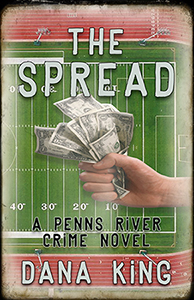
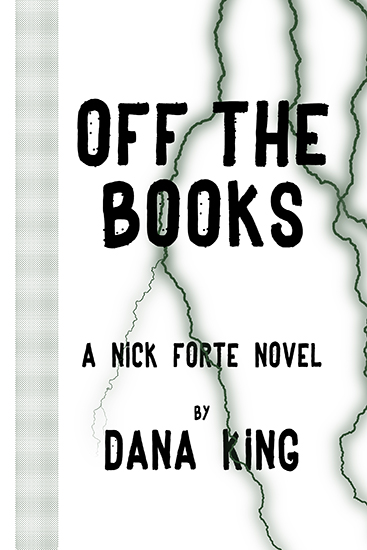
Before we get into my best recent reads, a brief moment of self-promotion. In fact, not even that. More like a grateful acknowledgement of a generous review. Jochem Vandersteen is a Dutch writer who is as active as anyone I’ve heard of in promoting PI fiction. A fine writer himself, he has not only edited two anthologies of PI shorts (The Shamus Sampler, foreword by Reed Farrel Coleman; and The Shamus Sampler II, foreword by Timothy Hallinan), he is the tireless owner/editor/author of the excellent Sons of Spade blog. Mijnheer Vandersteen recently flattered The Man in the Window with a review.

An excerpt:
I'm so glad Dana King decided to continue to write these Nick Forte books... He's just really good at it, understanding which dose of the legacy to follow and what new parts to add…There are multiple twists in the end, two cool sidekicks, good action scenes and some pretty nifty Chanderlisms in this book, adding up to a perfect PI read.

The entire review is available on Sons of Spade, along with a nice comment from Jack Getze, author of the Austin Carr series. (Big Numbers, Big Money, Big Mojo, and Big Shoes.)

Kind words are always appreciated, but kind words from those whose work one respects are the best of all.

Now to our regularly scheduled program.

I Used to be in Radio, Larry Matthews. A memoir that will hit every emotion, delivered in a matter-of-fact style that brings home the full effect. Matthews started in radio when he came back from Vietnam, mostly in the DC area. The first part of the book describes how he sort of fell into the business, and moved from station to station looking for the perfect gig. Much of it is laugh out loud funny and shows that WKRP in Cincinnati was not a stretch. A more mature Matthews finds himself freelancing in Washington, doing business reports for NPR and news stories for a variety of other stations, until a story on child pornography gets its hooks into him. He has a semi-informal agreement with a magazine to write a story, but doesn’t think to notify the authorities of the research he’s doing, and…well, you have an idea of where this leads. In Matthews’s case it led to a year and half in federal prison, after an arrest and trial story that would piss off the Dali Lama. Matthews’s mistakes are logistical, not moral, but seeing what’s coming doesn’t make it any easier to watch. Why this hasn’t been optioned for a movie is beyond me. Think A Civil Action or The Insider.

Every Contact Leaves a Trace, Connie Fletcher. Next to The Beloved Spouse™, Connie Fletcher may be the closest I have to a Muse. I read one of her books every year and never fail to come away with new appreciations. She gets law enforcement to talk to her the way they talk to no one else. Asked about research at my Bouchercon panel this year, I summed it up by saying, “I read everything Connie Fletcher writes.” This time she let the pros tell how CSI really works. If you have any interest in how law enforcement actually operates, hers is the series to read.

The Hot Countries, Timothy Hallinan. No one is more consistently excellent than Tim Hallinan. I’ll have more to say about The Hot Countries next week.

Last of theIndependents, Sam Wiebe. Hell, yeah, it won awards. Wiebe’s debut shows all the polish of a veteran as he makes the traditional tropes his own. He’s also at home in not trying to make Vancouver into LA, letting the unique qualities of his setting carry their parts of the story without trying to shoehorn them into anything.

For years James Crumley’s The Last Good Kiss has been acclaimed as having the greatest opening in crime fiction. Now there’s a competitor: The younger Thomas Kroon leaned forward on the clients’ bench and said, “There’s no real polite way to say this, Mr. Drayton. Someone’s fucking our corpses and we’d like it to stop.”

Thursday, March 26, 2015

Even More Thoughts on Writing


Among the many benefits of writing crime fiction is interacting with other crime fiction authors, who are, as a group, as entertaining and generous a bunch of professionals as you’re going to find. Never was this more obvious to me than when I was asked to participate in a group of four writers called Meet Myster Write, pulled together as a promotional device to give presentations on our approaches to crime writing, and, hey, if you want to buy a book, ain’t no one stopping you.

That’s where I met Larry Matthews, creator of the Dave Haggard series. (It’s not hard to see why Dave is haggard, all the shit he has to go through.) Larry has a thirty-five year career in broadcast journalism, working in radio and television as a street reporter, investigative reporter, anchor, news director, editor, and producer. He’s worked at some of the nation's premier radio stations, including WMAL in Washington when it was the market leader and one of the most respected stations in the country. He also reported and anchored newscasts for ABC and National Public Radio.

He also taught broadcasting and writing for radio and television at The George Washington University, where he conducted media workshops and training, and has produced programs and reported for Maryland Public Television. His awards include The George Foster Peabody Award for Excellence in Broadcasting, The DuPont/Columbia Citation, The National Headliner Award, and other national and regional awards for journalism and excellence in broadcasting.

Larry is the author of nine published books, including his acclaimed memoir, I Used to be in Radio. His newest Dave Haggard thriller is Detonator, where Dave uncovers competing terrorist cells that have turned on each other. At least as important as all of the above, he’s a gentleman in the best sense of the word, always ready to provide thoughtful and honest answers to any question. That’s why I was delighted when he volunteered to help me out with this guest post.

Enough from me. Take it away, Larry.

As a writer I often find myself comparing my work against the works of others. I write thrillers at the moment and so I read thrillers written by other, more famous authors. People like John Grisham and Jeffery Deaver, to name only two out of many. How do my opens compare to theirs? My characters? My pace? Things like that. I won’t bother to tell you the score.

So it was a bit of a surprise when my publisher suggested that the authors published by W&B Publishers, a unit of Argus International, read and review each other’s books. W&B publishes dozens of authors in all genres. Take your pick, we were told. The company has best-sellers, newbies, wannabees, you name it. It was eye-opening.

The first author I chose to review was David O’Neil, a best-selling British author who favors swashbuckling tales of the sea set in the early 19th Century. The book was Quarterdeck, part of a series. Now swashbuckling tales of the sea are not a regular part of my reading but I was impressed by how much research O’Neil had put into the book and how alive the action was. The story had all the elements, of course. Beautiful women, spies, handsome heroes, bravery, battles at sea. Five stars.

The next book I read and reviewed was a tough read. It’s called Daddy, Don’t. Mommy, Why? by Jaqueline Aaron. It’s a book about horrendous child abuse said to be based on a real story. Unless you’re researching such abuse I suggest you leave this one on the shelf. Frankly, this is a book about a monster.

Finally, Bryce Baker’s Ghosts of Time. This is a book for folks who like creepy stories about weird people.

The real lesson for me was experiencing the work of authors who do not write in my genre nor do they write in a style I am comfortable with. For authors who are curious about other writers such an exercise can be valuable and fun.

Writers are often bombarded with advice about how to do it “right” or how to follow “the rules.” As W. Somerset Maugham famously said, there are three rules to writing a novel. Unfortunately, no one know what they are. Reading different authors across different genres can remind us that there are no rules and no proper way. It’s all about the story.

I’ve read books that were, frankly, insults to proper English. Here, I suppose, I should refer you to Dave Barry’s review of Fifty Shades of Grey. But some badly written books have compelling stories that make the books work. I won’t comment about Fifty Shades… but other books tell a good yarn and keep you turning the pages even though you might wince at the language from time to time.

A best-selling author friend offered some sound advice after he read my latest Dave Haggard thriller, called Detonator. I use a bit of Spanish in the dialogue, which I translate for the reader. “Don’t use that much foreign language,” he said. “It gives the reader a chance to go to the bathroom. Never give the reader an opportunity to put the book down.” His advice is sound. Foreign language breaks the mental state the reader is in and lets him/her take a break from the story the author has so carefully created.

In this case the reader of my book wasn’t trolling for ways to improve his own writing. He was finding ways to improve mine. It’s often said that the way to become a better writer is to read. There’s truth in that, although I also believe a key to becoming a better writer is to write. Often. Every day.

If you chance to read any of my books I would love to hear from you, pro or con. I’m at www.larrymatthews.net


Thursday, November 13, 2014

Twenty Questions With Larry Matthews

Ha! I’ll bet you thought you’d be rid of me for a while, what with Bouchercon and all. No such luck. There are still readers of this blog who need servicing. (I hope using the plural was not overoptimistic, and that some of the less generate of you don’t take that “servicing” comment the wrong way.)

Fortunately for all of us, Larry Matthews has graciously consented to sit for Twenty Questions in my absence. Larry is a former broadcast journalist and recipient of the George Foster Peabody Award for Excellence in Broadcasting, the DuPont-Columbia Citation, and many other national and regional awards for his investigative reporting. His memoir, I Used to Be In Radio, was praised as "a funny and moving page-turner" and "a must-read in journalism schools, especially for those who aspire to be investigative reporters."

Detonator is his latest thriller to feature investigative reporter Dave Haggard, following Butterfly Knife and Brass Knuckles. In Detonator, Haggard works to thwart a terrorist plan to blow up Nationals Park in Washington. New York Times best-selling author D.L. Wilson says of Detonator "... powerful characters, fascinating scenes, and great technical research and content." The Washington Independent Review of Books says "Detonator works...and more!"

One Bite at a Time: Tell us about Detonator.
Larry Matthews: Detonator is the third Dave Haggard thriller. Dave is an investigative reporter for a public broadcasting outlet in Washington. In Detonator he investigates a plot to blow up Nationals Park during a sold out game. As usual, he barely escapes with his life.

OBAAT: Where did you get this idea, and what made it worth developing for you? (Notice I didn’t ask “Where do you get your ideas?” I was careful to ask where you got this idea.)
LM: All of the Haggard thrillers start with a simple idea. Detonator is terrorism. The previous books worked around the same idea. Butterfly Knife was perversion of religion, Brass Knuckles was greed.

OBAAT: How long did it take to write Detonator, start to finish?
LM:  I write in spurts. I get the idea and begin the book and write for maybe twenty thousand words and take a breather. Detonator took me about five months. When I’m writing I’m pretty fast, a habit, I assume, from over thirty years in daily journalism where there no time to stare at the ceiling waiting for lightning to strike.

OBAAT: What’s the back story on the main character or characters?
LM: Dave is a street reporter in Washington, as was I. He is a composite of people I knew and maybe even a bit of me. He sacrifices his personal life for his work, as did I and most of the journalists I knew. The books give me a chance to use my experience in the news business to offer the readers some insight into how it works. I also have several recurring characters who are Dave’s sources in law enforcement or in Congress.

OBAAT: In what time and place is Detonator set? How important is the setting to the book as a whole?
LM: I use Washington as a character. The city is known to everyone but not everyone knows the ins and outs of it. The time is the unspecified “now.”

OBAAT: How did Detonator come to be published?
LM:  I have published nine books with two different publishers. My current publisher, W&B Publishers, is a unit of A-Argus Better Books, which published three previous books. Like everyone else, I weigh the benefits and costs of becoming independent and self-publishing, which many authors are doing.

OBAAT: What kinds of stories do you like to read? Who are your favorite authors, in or out of that area?
LM: I read a lot of non-fiction, probably because of my news background. I am a Grisham fan. I know there are those who say his writing isn’t what it once was, but he’s a heck of a story teller. The same could be said of W.E.B. Griffin, who’s sometimes panned by other authors. Of course, John le Carre is a favorite because of the complexity of his stories.

OBAAT: Who are your greatest influences?
LM: Truth be told, I can’t remember their names. When I was a boy and a teenager I got into World War II spy and escape stories and consumed them by the dozen. They were the old twenty-five cent paperbacks and were written in spare style that left out all emotion and romance. Reviewers would no doubt pan them. I liked the straight-ahead writing and the absence of fluff. I think it influenced my writing today.

OBAAT: Do you outline or fly by the seat of you pants? Do you even wear pants when you write?
LM: Well, yes, I do wear pants. My wife would complain if I didn’t. I am mostly a pantser but I do know where it’s going. I write the last scene first and spend the rest of my writing time getting there.

OBAAT: Give us an idea of your process. Do you edit as you go? Throw anything into a first draft knowing the hard work is in the revisions? Something in between?
LM: Like most of the writers I know who worked in daily journalism I’m not a big reviser. The daily news grind has no time for that and we become trained to crank it out the first time. I write a chapter or two, revisit it the next day and make revisions as needed, and move on. Once the book is finished I do it all again. I don’t re-draft the entire book or question whether one character has too much dialogue or another is out of position.

OBAAT: If you could give a novice writer a single piece of advice, what would it be?
LM: Write, write, write. The more you write, the better you get. Read Steven King’s book On Writing and take it to heart. He says there are no rules. He’s right. It’s all about the story. Find people who are good story tellers and hang out with them.

OBAAT: Favorite activity when you’re not reading or writing.
LM: Reading, mostly. I also like to be outdoors, so I walk.

OBAAT: Which do you take to bed at night, the money earned or the good review?
LM: Well, gee, given that I’ve not made any serious money with my writing, I’ll have to say a good review. Detonator is getting some good reviews so I will be happy with that.

OBAAT: Would you stop writing if someone paid you enough money so you’d never have to work again, on the condition you could also never write again?
LM: Given that I’m retired and don’t “work” the answer is no.

OBAAT: If you were just starting out, which would you prefer: 1. Form your own indie publishing house and put your work out in paper and e-book yourself? 2. Go with a small or medium traditional house that offers very little or no advance, a royalty that is only a fraction of what you'd get on your own, and also makes no promise of any type of publicity push, keeping in mind that you also will lose the publishing rights for a period, sometimes indefinitely? 3. Go with a Big Six or legacy publisher that offers a larger advance, legitimate review possibilities, entrance to industry literary awards, and exposure on the shelves of brick and mortar stores. Pick one and say why.
LM: Oh boy! I’m neck deep in Option #2 and have been for several years, so that’s out. Number 1 is more interesting and challenging but deep down all authors would pick #3.

OBAAT: Beer, mixed drinks, or hard liquor?
LM: Beer.

OBAAT: Baseball or football?
LM: Baseball. Go Nats!

OBAAT: What question have you always wanted an interviewer to ask, but they never do?
LM: Have I told you this interview comes with a free car?

OBAAT: What’s the answer?
LM:  No

OBAAT: What are you working on now?

LM: I’m working on the fourth Dave Haggard thriller. This one is called Nine Millimeter Afternoon. It’s about human trafficking.