Showing posts with label sam wiebe. Show all posts

Thursday, June 22, 2023

Spring's Favorite Reads

 City Primeval, Elmore Leonard. It had been years since I read this. I’ve been meaning to get around to it and the impending release of FX’s Justified extension got me off my ass. A wonderful book, maybe Leonard’s best crime novel. It was also made to order for Raylan Givens to stand in for Ray Cruz. City Primeval shows all the things that made Leonard a legend, and should serve well in Graham Yost’s and Timothy Olyphant’s hands.


Because the Night, James D. F. Hannah. Hannah may have to make more room in his house for awards if he insists on writing books like this. He manages to pay homage to the PI tradition at the same time as breaking new ground, never allowing things to seem stale or asking us to suspend too much disbelief. Henry Malone and Woody are a pair worthy of the best PI/sidekick duos, and Crash is a brilliant addition to the series.


The Johnson County War, Bill O’Neal. Class warfare in America is nothing new. Rustling was a problem in 1892 Wyoming, but the big cattlemen felt as if all the government land was theirs by divine right and resented homesteaders and small ranchers who staked legal claims. The cattlemen’s methods became so overbearing juries refused to return rustling convictions. The big boys then hired gunmen from Texas to kill anyone they decided had to go, rustler or not. The locals fought back. This is a meticulously research and fascinating look at an episode many thought only happened in movies.


Safe and Sound, J.D. Rhoades. I’ve been reading his books for years, off and on, but a while back I noticed they were getting so good I needed to take a more comprehensive look. Turns out they were always that good. Safe and Sound is part of the Jack Keller series and has all the action one could want without ever putting a reader in a position of thinking “Oh, really?” Rhoades is now on the list of people I need to make sure do not fall through the cracks.


The Big Sleep, Raymond Chandler. It’s The Big Sleep. Damn right I liked it. Again.


Sunset and Jericho, Sam Wiebe. The Wakeland series keeps getting better, and it was good to start with. This one deals with politics and money (hard to do a story about politics that doesn’t involve money these days) and, while a fascinating study of the pressures between the haves and have nots, it’s not soon going to show up on the Vancouver Chamber of Commerce’s reading list. Which is even more reason you should check it out.


Thursday, May 18, 2023

An Interview with Sam Wiebe, Author of Sunset and Jericho

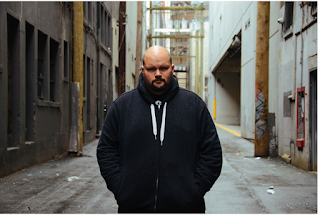
 I first met Sam Wiebe at a Shamus awards dinner, where his book The Last of the Independents was nominated. As nice a person as you’re likely to meet, Sam is among the foremost keepers of the P.I. flame in his generation. It’s a treat on two levels to see he has a new book out: the book will be outstanding, and I’ll have an excuse to ask him back on the blog.


Sam’s newest is Sunset and Jericho which debuted April 15.


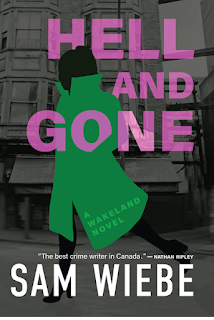
One Bite at a Time: Welcome back, Sam. Its always fun to talk with you. You were last on the blog in March of 2022 for Hell and Gone. Whats been happening with you since then?


Sam Wiebe: Sunset and Jericho has occupied most of that year, as well as a standalone crime novel I’ve been working on. Some family drama as well, the fallout from a relative who was robbed at gunpoint in her home. 2023 already feels like it’s been six years long!


OBAAT: The new Wakeland novel is Sunset and Jericho. That sounds like its a corner in Vancouver, though Im not ruling out the possibility its an Old Testament story in which Gloria Swanson figures prominently. Tell us about it.


SW: Sunset and Jericho is my favorite title I’ve come up with, and I think it fits the book, a modern day old school detective novel. It refers to two beaches in Vancouver, and the two bodies found on them that get the novel rolling.


OBAAT: Whats been going on with Wakeland and Chen since Hell and Gone, which was a trying time for them. (No spoilers, but you can tease.)


SW: Sunset and Jericho finds Wakeland pursuing a group of killers who, like him, are dismayed at the way the city seems to be changing, to only cater to the rich. What happens when you have more in common with the killers you’re chasing than with your wealthy clients?


Though Dave knows how they feel, he doesn’t give in to the same kind of violence. But someone close to him does.


OBAAT: You like to place Wakeland in crises of conscience. Id describe what he dealt with in Hell and Gone, but you wove it so inextricably into the story anything I say would be a spoiler. What do you look for when pulling things together, and does the crisis of conscience come from the story, or do you build the story around the conscience issues you want to explore?


SW: The story should take precedence at all times—a detective novel should be fun to read, should have great characters in dynamic and challenging situations. But I also like there to be something more—not a message, or some profound idea, but some record of how things were in 2023.


Hell and Gone was about dealing with violence in its immediate aftermath. Sunset and Jericho is about the long-term, simmering effects of rage and resentment, and what happens when those boil over.


OBAAT: Last year you mentioned David Milchs Idea of the Writer” lectures. I didnt mention it then, but I discovered those videos about the time the Deadwood movie came out. Watched them all, took notes, and compiled into a binder the bits that resonated most with me. (Bookmarked the videos in my browser, as well.) It changed my approach to writing for the better. The Beloved Spouse™ and I talk regularly about resting transparently and prepared spirits. What was your biggest takeaway from those videos? (Note to readers: They are available on YouTube.)


SW: Coincidentally, Milch hosted those talks during the last writer’s strike. I found them inspirational—you just don’t hear many people culling from both a deep vein of personal experience, as well as a long literary tradition.


The point I return to is simply that if you want to write, you should just do that, from a place of enjoyment and gratitude. Writing is hard work but it’s fucking fun.


OBAAT: Whats next on your agenda?

SW: I don’t know what the future holds for Wakeland (or his author). Giving as little away as I can, Sunset and Jericho provokes a crisis that might be an ending, or the start of a new chapter. I hope people come onboard—and Sunset and Jericho is the perfect book to do so.


Thanks, Dana!

Thursday, March 17, 2022

Interview with Sam Wiebe, Author of Hell and Gone


I met Sam Wiebe at Bouchercon in Raleigh through mutual friends. We shared a table at that year’s Shamus dinner, where I learned he’s as good a guy as he is a writer. Sam is the award-winning author of the Wakeland novels, one of the most authentic and acclaimed detective series in Canada, including Invisible Dead, Cut You Down, and the new one, Hell and Gone. Sam’s other books include Never Going Back, Last of the Independents, and the Vancouver Noir anthology, which he edited. He has won the Crime Writers of Canada award and the Kobo Emerging Writers prize, and been shortlisted for the Edgar, Hammett, Shamus, and City of Vancouver book prizes. His original film/tv projects have been optioned, and his short stories have appeared in ThugLit, Spinetingler, and subTerrain, as well as anthologies by Houghton-Mifflin and Image Comics. You can follow him on Twitter (@sam_wiebe) and learn more about him on his web site.


One Bite at a Time: Welcome back, Sam. It’s always a treat to have you. Give us the quick and dirty on your new book, Hell and Gone.


Sam Wiebe: Thanks so much, Dana. Here’s the pitch:


An act of public violence breaks out on the street in the early morning. Wakeland witnesses the violence from his office, getting a look at the shooters as they drive off. He leaps into action—literally jumping down from the fire escape to perform first aid on the wounded. A hero.


But when he enters the building where the shooters came from, he sees something so beyond his experience that when the police ask him what he witnessed, Wakeland refuses to say.


Soon Wakeland is caught between a ruthless police chief and a pair of gang leaders, all of whom want the shooters found, no matter the cost in human life.


The only way for Wakeland to come to grips with this is to find the shooters—before they find him.


OBAAT: Correct me if I’m wrong, but a common thread through the Wakeland books is that, for all its multiculturalism, Vancouver is very much an exclusive society. Am I right to pick up on that, or am I reading things onto the books that aren’t there?


SW: Vancouver is a far more troublesome place than the postcards lead one to believe. Harm reduction, gentrification, gang warfare and systemic racism—these are at the forefront of Hell and Gone. As Wakeland says, “We are where the West ends.”


OBAAT: Wakeland’s partner, Jeff Chen, straddles a line between his Chinese ancestry and the white Vancouver executive class. Where did the idea for Jeff come from?


SW: I didn’t want Wakeland to have a sidekick—my feeling is, if you’ve got a seven-foot sociopath with bad tattoos and a stockpile of weapons on speed-dial, you’re probably don’t have to do much detective work.


But I did want someone who contrasts and compliments Dave, a partner with a different understanding of the city.


Jeff Chen is a family man, a businessman, the opposite of Wakeland in a lot of ways. Their differences make their partnership all the stronger. If Dave is Steve Wozniak, Jeff would be Steve Jobs.


But Jeff has a secret: the financing for their business came from community leader and suspected gangster Roy Long. When Wakeland finds this out, it will stress their partnership to its breaking point.


OBAAT
: The past couple of books has taken Wakeland south of the border for insights on some particularly bad shit. Is this a metaphor for the US’s pervasive influence on Canadian business and society, or just that the plot logically took you to Baja Canada?


SW: I love America (I’m trying not to sound like the beginning of The Godfather…). My heart lies with the American style of detective novel, the focus on people rather than puzzles. That’s the tradition I write in.


I’ve spent a lot of time in Washington State and Oregon, and I’d just done a road trip to Raleigh when I started Hell and Gone. Culture doesn’t stop at the border, and neither does Wakeland.


OBAAT: Your debut novel, Last of the Independents, yet you abandoned PI Michael Drayton for Dave Wakeland, a partner in a large agency. Why the change in course?


SW:


Several reasons, having to do with how Last of the Independents ends, the darker subject matter I wanted to cover needing a different tone, and the nature of publishing. Making Wakeland part of a successful detective agency was a way to open up to different stories.


I look at Last of the Independents as my ‘demo tape.’ But Hell and Gone is the best detective novel I’ve written.


OBAAT: You and I are both great fans of David Milch. (Deadwood, NYPD Blue, etc.) What is it about his work that resonates so strongly with you? (In case you aren’t yet aware, his memoir, Life’s Work, drops in September.)


SW: He deserves much better praise than I can muster on a Tuesday morning, but here goes.


Before I’d really committed myself to writing, I found myself in a college class next to a guy who’d just sold a screenplay. He told me about Milch’s “Idea of the Writer” lectures, which you can find online. As someone who never had a writing mentor—had never really met a novelist until I was in my twenties—those lectures were very helpful to me.


OBAAT: If you could look back and give aspiring novelist Sam Wiebe one piece of advice, what would it be?


SW:  Learn as much about how the business works as possible, so that its ups and downs disrupt your writing as little as possible. It’s easier to “make a living as a writer” if you’re smart with money and averse to debt.


OBAAT: And now for the traditional final question: what’s next?


SW: Hell and Gone is out March 8th, and I’m thrilled with the response so far. I’ve got a standalone thriller on submission, and I’m revising Wakeland 4 right now.


Thanks, Dana!


Friday, July 6, 2018

Stuck in the Middle, Guest Post by Sam Wiebe

Sam Wiebe is the author of the Vancouver crime novel, Cut You Down, Invisible Dead, and Last of the Independents. Wiebe's short stories have appeared in Thuglit, Spinetingler, and subTerrain, and he was the 2016 Vancouver Public Library Writer in Residence. He lives in Vancouver.


(Yawn.)

That’s from Sam’s website bio. It’s accurate, as far as it goes. What it doesn’t tell you is how Sam has won awards and may well be the tip of the spear that brings private investigators back to their deserved position at the apex of crime fiction. Sam didn’t just stumble onto this. He’s as thoughtful about the craft as any writer I know, so I was delighted when he agreed to be this week’s guest poster.

One more thing few people know about Sam: Even though he’s from Vancouver, he has an
affinity for hush puppies. (Not the shoes, dumbass. The food.) Find some from Claude Cooper’s and Sam will follow you anywhere.

*  *  *  *  *  *  *  *
Stuck in the Middle

“If you want to write commercially, abandon pretense and go for the throat.
If your field is literature don’t worry about the market.”
Jack McClelland, shared to me on Facebook via John McFetridge

I’ve been thinking about this quote a lot lately, as I try to figure out where my career is going.

I’m lucky. I’ve written only the books I wanted to, and the response to them has been overwhelmingly positive. But I’m also not sure where to go from here.

There isn’t a lot of advice for the mid-career writer. Other than a couple columns—Chuck Wendig’s was pretty good—it’s not an area that attracts a lot of philosophizing. People want to know how to break in, or how to make millions overnight. Few people want to know how to sustain a writing career once you’ve breeched the walled city.

As Harlan Ellison wrote, “The trick is not to become a writer; it is to stay a writer. Day after day, year after year, book after book.”

I didn’t know anything about the publishing world when I started. (Not much has changed.) It’s a problematic business, especially when success is measured by two things which might not help, and may actually hinder, a sustained writing career: giant advances and first week sales. It’s a business that moves slowly, when it moves at all, and a business in which writers are not often ‘looped in’ with marketing and publishing decisions that affect their fates. (There are several columns to be written on these topics, by people much smarter than I am.)

To go back to the McClelland quote: I’ve never worried about the market, but the genre I write in is commercial to some extent. I think of myself sometimes as being in the middle, between someone writing just for themselves and just for an audience. It comes back to the advice of “write the book you want to read.”

The middle is a dangerous place to be, career-wise. Your work is in market competition with books written for no other reason than to sell. On the other hand, as a genre writer, you’re shut out of a lot of the protections and awards that gild the careers of “literary” writers. You have to make your own opportunities, but at the same time, you’re writing something you care about. Any business success serves only to sustain a writing career so you can write more things you care about with fewer distractions.

Writing comes first, business second, but the distance between those isn’t as big as I’d once believed, and they’re interrelated in ways I’m only now appreciating.

Anyway, there’s no conclusion to this, no, “And here’s where I learned sales don’t matter…” We all have books to write and bills to pay, and I love to see conversations about doing both.

(Editor’s Note: Sam has expressed things here I’ve thought quite a bit about myself. Expect to see more on this topic from him and me in the near future.)

Monday, January 30, 2017

Enough is as Good as a Feast

A while back I discussed the often overlooked benefits of Facebook. Today we look at another: free blog fodder. A couple of weeks ago Sam Wiebe left the post below. I commented at the time, but said even then this deserved a whole blog post.

Here is Sam’s “inciting incident:”

Insomniac question: which of these would you choose and why?
1. Would you rather make a lot of money doing something you dislike...
2. ...or a 'comfortable' amount doing something you don't mind/kind of enjoy...
3. ...or a slightly above subsistence level doing exactly what you want?

There was a time when my answer would have been—and was—Option 3. In my trumpet days I was perfectly happy playing what gigs I could get and teaching. I would never have made more than I needed to live on—I wasn’t that good—but I would have been happy.

For a while.

Number 3 is okay if you don’t have other obligations and don’t mind working until you die because you don’t have enough saved—and may not have paid enough into Social Security—to feel comfortable retiring. Even had I not sought more permanent employment when The Sole Heir™ came along, my days as a musician were numbered. I need some idea of where and when my next paycheck is coming. I need to know I could meet my obligations. I was fortunate to be married to a woman who didn’t mind (too much) that I wasn’t really pulling my weight financially. I did what I could to be a decent house husband to pick up some of the slack, but it was an untenable long-term position for someone of my disposition.

It took me a while to drift into Option 2, but that’s where I belong. I have a good job now, saving for retirement. The Sole Heir™ is a grown woman. The house almost paid for. The job takes a consistent 40 hours a week, but I work almost exclusively at home, so there’s no commute. No waking at the crack of dawn, no fighting traffic. The work is usually interesting. I enjoy and respect the people I work with. It’s also not so draining that I’m not ready to write in the evenings, nor am I too tired to read for at least an hour before turning in. It’s a perfect situation for me. I might not have chosen Option 2 when I was young, but experience is a wonderful teacher for those who pay attention.

Option 1 is the one slot I’ve not filled, and yay, me. Even when I was too young to know better I understood that was not the way to go. Life is too short, and we only get one. Americans too often live to work, pushing everything else to the background and rationalizing it by buying things or hoarding money. Employers say, “Your family will just have to understand.” I say, “You have to understand. The only reason I’m here is for my family.”

An old Russian proverb says, “Enough is as good as a feast.” While my eating habits clearly haven’t internalized that message, I’ve always been pretty good with it. All my bills are paid, home maintenance is pretty well up to date, I’m saving money, I have time to spend on the things I care about most, and I’m not getting my balls broken on a daily basis. People I respect respect my writing and I enjoy the process.


Yeah, I’m in a pretty good place. Good thing, too. I’m too old for the rest of that shit.

Monday, July 11, 2016

Twenty Questions With Sam Wiebe

Several writers a year writers emerge who are “the next big thing” or “someone to pay attention to” or…the list of hackneyed phrases goes on and on. So I was less than impressed when Sam Wiebe’s debut Last of the Independents got a lot of buzz and award nominations. Another Flavor of the Month, I figured. People I trusted talked him up so I didn’t dismiss him out of hand, but, still. I have a hard enough time keeping up with the writers I already know I like.

Sam and I have several mutual friends and we got to talking at Bouchercon in Raleigh; I also went to his panel. This is not just some typist sitting at a keyboard pecking out whatever comes to mind. (True, no writer says he is, but read some of their stuff.) So I weakened. Bought Last of the Independents. Didn’t read it right away. No need to rush into anything.

Wow. That’s a hell of a book.

I see no reason to fart around on Invisible Dead. After reading what Sam has to say here, neither should you. There’s a lot more going on here than typing.

One Bite at a Time: Tell us about Invisible Dead.
Sam Wiebe: On the surface it's a detective novel about the search for a missing woman. While investigating the disappearance of Chelsea Loam, Dave Wakeland finds himself crossing paths with bikers, crooked lawyers, captains of industry--dangerous men who will stop at nothing to keep their secrets safe.

OBAAT: Readers love to ask where authors get their ideas and most authors reply with something along the lines of “we’re tripping over them. The trick is to find the idea that works best for me.” What made this idea worth developing, and how much development from the original germ was required?
SW: I think even as I was finishing up Last of the Independents, I knew that I wanted to write a book about missing women--one missing woman, specifically, and hopefully illustrate some of the systemic problems in the city.

OBAAT: How long did it take to write Invisible Dead, start to finish?
SW: I started the book in the summer of 2012. Between then and now, the book found an agent and then a publisher, and went through edits. Publishing is a slow business, as you know.

OBAAT: Where did Dave Wakeland come from? In what ways is he like, and unlike, you?
SW: He comes from Vancouver--I know that's not quite what you meant, but that's my answer. Like me he has a conflicted view of the city he lives in, loving it but being very troubled by aspects of it. He's a bit of a smart-ass, too, which is a whole-cloth fabrication and in no way reflects on the author.

OBAAT: In what time and place is Invisible Dead set and why was this time and place chosen?
SW: Vancouver, present day. I chose that because there isn't a lot written about here and now. When Vancouver figures in movies or film, it's usually as a stand-in for New York or Los Angeles--think movies like Jason Takes Manhattan and Rumble in the Bronx. I wanted to not only feature the city as the city, but show how I see it, as honestly as I can. 

OBAAT: How did Invisible Dead come to be published?
SW: Through the hard work and good grace of my agent, Chris Bucci, and my editor, Craig Pyette.

OBAAT: Last of the Independents received nominations for just about every award it qualified for. Aside from the necrophilia, have you ever tried to pin down what it is about that book that resonates with so many people?
SW: Every few months you see another article proclaiming "the death of the private eye novel." I think the PI novel speaks to really important concerns about business, ethics, society and human nature, in a way that a cozy or a police procedural can't. No other type of mystery is so specifically about work--what we do for a living and how we feel about it, to paraphrase Studs Turkel.

OBAAT: When I asked how your life experiences prepared you to write crime fiction you replied—this is a direct quote—“No clue.” While I cherish your honesty I’ve read Last of the Independents and there’s clearly something about crime fiction that resonates with you. Let’s spitball a little. What do you think it is that allows you to catch the tone and actions so well?
SW: Really it's just about trying to read widely and when you talk to people, really listen to what they say, how they say it, and what they don't say.

OBAAT: When last we spoke you had started re-reading Ross Macdonald’s Lew Archer series. What is it about that series that brought you back? How did you view the books on second look? Not as good as you remembered? Better? Did different things jump out at you?
SW: It was a treat. I think MacDonald is brilliant on setting and character. I like how un-heroic Archer becomes. He loses more fist-fights and gun battles than he wins, and his victories tend to be about revelation instead of resolution--he gets to the truth because he's willing to pay the psychic cost.

OBAAT: How often do you write?
SW: Five pages or 1000 words a day, when I'm working on a draft. A similar set amount when I'm editing. I try not to take days off.

OBAAT: Endings are hard and can make or break a book. Americans as a whole tend to like happy endings, and those are the books that tend to sell best. What do you look for in an ending? 
SW: Resonance. An answer to the question posed by the book. The director Paul Thomas Anderson said he goes for "the saddest happy ending possible." I take that to mean an ending which satisfies the audience's curiosity, yet doesn't strain credulity.

OBAAT: Who is your intended audience?
SW: I try not to worry about that. I will say that middle-aged women are one of the most unfairly stereotyped demographics--the idea that they only read cozies, or abhor realistic depictions of violence, or any of the old canards, are in my experience complete bullshit.

OBAAT: What do you hope readers will take away from your books?
SW: I don't know. If all a reader gets from a book is entertainment, who am I to say that's wrong? I do enjoy when Vancouverites tell me the book accurately reflects the city. That's a good feeling.

OBAAT: Here’s a loaded question for you, just to provoke a response: How do you battle writer’s block (if this happens to you)?
SW: Writer's block usually comes at the same point in the manuscript--the middle. "Second act problems" are common because, like the hero in the hero's journey, you the writer have set out on this impossible task and found yourself at a point where you either need to innovate or fail. That's a good thing! It means when you do find a solution, it'll be original, and it'll come from the material rather than being forced on it.

OBAAT: Last time you cited your primary influences as “Francis Ford Coppola, David Milch, Bret "Hitman" Hart. Also my parents.” I know my influences change over time. Has anyone or anything worked its way into your toolkit lately?
SW: I just read E.M. Forster's A Passage to India and holy shit is that a great book. Also Marilynne Robinson, whose essays on religion and philosophy are brilliant. In crime fiction, it's been great to see the field become a bit more diverse. Writers like Danny Gardner, Henry Chang, SG Wong, and Naomi Hirahara, are bringing different sensibilities to the field.

OBAAT: What moves you most in a work of literature?
SW: I like being surprised, when the surprise is credible and drags you deeper into the story. TV shows like Deadwood, The Wire, or Breaking Bad are great at thwarting expectations in a way that you can't anticipate. Deadwood especially--the most violent characters are shown to be capable of great sensitivity and even grace.

OBAAT: Who is your favorite fictional hero or heroine? Your favorite antihero or villain?
SW: I like heroes that are themselves no matter the cost, and I don't like supernatural villains--the scariest monsters are the ones walking upright, in broad daylight, among us. I could probably put Falstaff down for both hero and villain, since his character is so multifaceted. Lew Archer comes to mind as a hero. For villains, the protagonist in Joyce Carol Oates's Zombie is terrifying.

OBAAT: Approximately how many books do you read in a year? How do they break out by genre? Heavily crime? Non-fiction? “Literary” fiction?
SW: It depends. When I'm working on the draft of a novel I'm usually reading research, or fiction that's markedly different. Then when I'm between drafts, I can indulge in crime fiction.

OBAAT: What author, living or dead, would you most like to meet, and what would you like to know?
SW: David Milch, easy. He recently gambled away the fortune he made on Deadwood and NYPD Blue--we're talking tens if not hundreds of millions of dollars. And when he was interviewed recently, he was back writing. I think that's heroic, in a way--accept your mistakes and get back to the writing. No matter how much you succeed or how much you fuck up, the blank page awaits.

OBAAT: What are you working on now?
SW: I just sent book three off to my publisher a couple weeks ago. I have two scripts I'm working on, a few stories...I find the only way to keep from overthinking and worrying is to just focus on the next thing. So much of the writing business is out of a writer's hands, it's better to focus on what can be controlled--the quality of the next thing you write.


Monday, November 9, 2015

Promotion (Self and Otherwise)

Before we get into my best recent reads, a brief moment of self-promotion. In fact, not even that. More like a grateful acknowledgement of a generous review. Jochem Vandersteen is a Dutch writer who is as active as anyone I’ve heard of in promoting PI fiction. A fine writer himself, he has not only edited two anthologies of PI shorts (The Shamus Sampler, foreword by Reed Farrel Coleman; and The Shamus Sampler II, foreword by Timothy Hallinan), he is the tireless owner/editor/author of the excellent Sons of Spade blog. Mijnheer Vandersteen recently flattered The Man in the Window with a review.

An excerpt:
I'm so glad Dana King decided to continue to write these Nick Forte books... He's just really good at it, understanding which dose of the legacy to follow and what new parts to add…There are multiple twists in the end, two cool sidekicks, good action scenes and some pretty nifty Chanderlisms in this book, adding up to a perfect PI read.

The entire review is available on Sons of Spade, along with a nice comment from Jack Getze, author of the Austin Carr series. (Big Numbers, Big Money, Big Mojo, and Big Shoes.)

Kind words are always appreciated, but kind words from those whose work one respects are the best of all.

Now to our regularly scheduled program.

I Used to be in Radio, Larry Matthews. A memoir that will hit every emotion, delivered in a matter-of-fact style that brings home the full effect. Matthews started in radio when he came back from Vietnam, mostly in the DC area. The first part of the book describes how he sort of fell into the business, and moved from station to station looking for the perfect gig. Much of it is laugh out loud funny and shows that WKRP in Cincinnati was not a stretch. A more mature Matthews finds himself freelancing in Washington, doing business reports for NPR and news stories for a variety of other stations, until a story on child pornography gets its hooks into him. He has a semi-informal agreement with a magazine to write a story, but doesn’t think to notify the authorities of the research he’s doing, and…well, you have an idea of where this leads. In Matthews’s case it led to a year and half in federal prison, after an arrest and trial story that would piss off the Dali Lama. Matthews’s mistakes are logistical, not moral, but seeing what’s coming doesn’t make it any easier to watch. Why this hasn’t been optioned for a movie is beyond me. Think A Civil Action or The Insider.

Every Contact Leaves a Trace, Connie Fletcher. Next to The Beloved Spouse™, Connie Fletcher may be the closest I have to a Muse. I read one of her books every year and never fail to come away with new appreciations. She gets law enforcement to talk to her the way they talk to no one else. Asked about research at my Bouchercon panel this year, I summed it up by saying, “I read everything Connie Fletcher writes.” This time she let the pros tell how CSI really works. If you have any interest in how law enforcement actually operates, hers is the series to read.

The Hot Countries, Timothy Hallinan. No one is more consistently excellent than Tim Hallinan. I’ll have more to say about The Hot Countries next week.

Last of theIndependents, Sam Wiebe. Hell, yeah, it won awards. Wiebe’s debut shows all the polish of a veteran as he makes the traditional tropes his own. He’s also at home in not trying to make Vancouver into LA, letting the unique qualities of his setting carry their parts of the story without trying to shoehorn them into anything.

For years James Crumley’s The Last Good Kiss has been acclaimed as having the greatest opening in crime fiction. Now there’s a competitor: The younger Thomas Kroon leaned forward on the clients’ bench and said, “There’s no real polite way to say this, Mr. Drayton. Someone’s fucking our corpses and we’d like it to stop.”

Thursday, November 5, 2015

Twenty Questions With Sam Wiebe


Sam Wiebe is one of those writers people tell you to watch out for. No, not the way your mother used to tell you to watch out for people. I mean in a good way. His debut novel, Last of the Independents, won the 2015 Kobo Emerging Writer's Award for Fiction and the 2012 Unhanged Arthur Award for Best Unpublished First Crime Novel. The book was also nominated for both the Arthur Ellis and Shamus Awards for Best First Novel. His short fiction has appeared in Thuglit, Spinetingler, and Criminal Element's Malfeasance Occasional e-collection.

Sam lives in Vancouver

One Bite at a Time: Tell us about Last of the Independents.
Sam Wiebe: I like to think of it as an update on the classic private eye novel. The book covers PI Mike Drayton's search for the missing son of a junk dealer, someone who buys and sells secondhand goods. Along the way Mike encounters a rogue's gallery of shady characters who know more than they let on, and finds himself tested as to how far he's willing to go to find this child.

Also, there's some necrophilia.

OBAAT: Where did you get this idea, and what made it worth developing for you? (Notice I didnt ask Where do you get your ideas? I was careful to ask where you got this idea.)
SW: I finished grad school heavily in debt, pissed off, and without a job. A lot of my friends were in similar positions. I thought a private eye novel would be a cool way to look at how work informs our lives--a lot of those in-between jobs, off the grid jobs, are disappearing, and for people like myself who don't want a nine-to-five job, making a living has become a bit precarious. At least that's what I felt when I was 28....no, I still feel that way.

OBAAT: How long did it take to write Last of the Independents, start to finish?
SW: A year, maybe.

OBAAT: Where did Michael Drayton come from? In what ways is he like, and unlike, you?
SW: He's like me in that he's something of a workaholic--his identity is tied to his work. For a lot of people that's not the case--they work to live, have hobbies, etc. Also his sense of humor is pretty much mine, for good or ill. He's got a worse temper, though.

OBAAT: In what time and place is Last of the Independents set? How important is the setting to the book as a whole?
SW: Vancouver, present day. Setting is really important--there aren't a whole lot of great crime novels set here, and I'd like to help put Vancouver on the crime fiction map.

OBAAT: How did Last of the Independents come to be published?
SW: I entered it in the Crime Writers of Canada manuscript contest sponsored by Dundurn Press. The book won, and Dundurn published it. All told it took about four years.

OBAAT: What kinds of stories do you like to read? Who are your favorite authors, in or out of that area?
SW: This summer I started rereading the Ross MacDonald Lew Archer series. I just picked up the Women Crime Writers of the Forties and Fifties box set curated by Sarah Weinman, and I can't wait to crack that. For contemporary writers, I like Tana French, Peter Temple, James Ellroy, Michael Chabon...there's so many greats. Fellow Canadians like John McFetridge, Dietrich Kalteis, Owen Laukkanen, Robin Spano and Linda Richards are all great, too. And I can't wait to start David Swinson's The Second Girl. That looks REALLY good.

OBAAT: What made you decide to be an author?
SW: It sounds silly, but I tried pretty hard NOT to be an author. When I was younger I just wanted to play drums. But Vancouver is an expensive city, and a lot of my bandmates moved away, and I found myself going back to my first love of writing. I mean, I ALWAYS wrote, but suddenly it was put up or shut up time.

OBAAT: How do you think your life experiences have prepared you for writing crime fiction?
SW: No clue.

OBAAT: What do you like best about being a writer?
SW: The hours. I like to work a lot, but when and where I feel like it, preferably from the couch, in a flannel shirt, with some coffee or tea.

OBAAT: Who are your greatest influences? (Not necessarily writers. Filmmakers, other artists, whoever you think has had a major impact on your writing.)
SW: Francis Ford Coppola, David Milch, Bret "Hitman" Hart. Also my parents.

OBAAT: Do you outline or fly by the seat of you pants? Do you even wear pants when you write?
SW: My outlines tend to be pretty flimsy and provisional. Usually I have an idea for a scene, maybe an ending, and then it's a matter of working backward to give that scene meaning. Although in the case of Last of the Independents, I got to the ending and changed it completely--the original ending seemed false, and I had to be honest with where the story was taking me.

OBAAT: Give us an idea of your process. Do you edit as you go? Throw anything into a first draft knowing the hard work is in the revisions? Something in between?
SW: I write by hand, pen and paper, and then transcribe as I go. It's not the most efficient process, but I think it allows a little more attention to be paid to word choice, and it definitely frees you from distraction. Plus you have an extra chance to edit as you type it up.

OBAAT: Do you listen to music when you write? Do you have a theme song for this book? What music did you go back to over and over as you wrote it, or as you write, in general?
SW: Yeah, usually jazz or alt-rock. I don't listen to lyric-heavy music when I write. I still have my Last of the Independents playlist, actually--a lot of John Lee Hooker, Heart, McCoy Tyner, and Mark Lanegan.

OBAAT: As a writer, whats your favorite time management tip?
SW: It's not about how much you get done in a day, it's how many days you put in. I try for a thousand words a day.

OBAAT: If you could give a novice writer a single piece of advice, what would it be?
SW: I was just writing about this on my blog. New writers sometimes try to cover up their feelings of insecurity to gain entry to the group of writers--you see that a lot at Bouchercon, and last year I definitely fell in that category. Just remember that it's those feelings of insecurity and fraudulence that ARE your ticket into the group--that everyone's been where you are.

OBAAT: Generally speaking the components of a novel are story/plot, character, setting, narrative, and tone. How would you rank these in order of their importance in your own writing, and can you add a few sentences to tell us more about how you approach each and why you rank them as you do?
SW: I mean, Aristotle said plot was more important than character, because a character-driven book would meander or cover incidents that aren't dramatic. Who am I to doubt Aristotle? The truth is, most of what a reader thinks of as character is really plot, and what they think of as plot is just bad plotting. If it's well-plotted, it seems driven by the characters. One of the paradoxes of writing, I guess.

OBAAT: If you could have written any book of the past hundred years, what would it be, and what is it about that book you admire most?
SW: Can I say that I'd write the same book, but I'd make more people buy it? I'm pretty proud of Last of the Independents. Other than that...it's not a book, but I'm a huge fan of Deadwood and The Wire. I think those are the great American novels of the last twenty years, and it would've been cool to work on them.

OBAAT: Favorite activity when youre not reading or writing.
SW: Sleeping, making coffee, walking around the city. Not at the same time.

OBAAT: What are you working on now?
SW: My second novel, Invisible Dead, comes out in June. I have a few short stories coming out, and I'm just working on the draft of my next novel. And of course reading through the giant stack of books I picked up at Bouchercon. Thanks again for the copy of A Small Sacrifice, Dana, and thanks for inviting me to do this!