Showing posts with label benoit lelieve. Show all posts

Friday, April 14, 2017

Mindless Entertainment

Today's entry in this week’s entirely Benoit Lelieve-inspired series focuses on “mindless entertainment.” It’s in quotes because the thesis of Ben’s post is there is no such thing as mindless entertainment unless we will it to be so. I might have disagreed with that, but not after reading his essay.

To his primary point, it makes sense to say no one is going to spend months or years of their lives and possibly millions of dollars creating something without thought, and any thought the creator put into the project is there for the taking. Whether the audience chooses to do anything with it is entirely up to them.

Saying creators put thought into their projects says dick about the depth of said thought. Most mainstream entertainment seems to make a point not to make the audience think too hard, often by making it relatively easy for the average viewer/reader/listener to pretend deeper ideas aren’t there. Benoit’s choice of the Rambo movies was spot on, as they have much more going on, especially in the original, than most viewers care to pick up on.

The “mindless entertainment” argument often turns on whether people should demand more. This is a common topic of arguments, usually one-sided, because people who are at least relatively happy with the status quo aren’t the ones bitching about it. Those who are most unhappy are the more artistically minded themselves: writers and film students and musicians and whoever else looks at the creative process from the production side. Seems those on our side are always upset about the quality of what’s out there. How mind-numbing it is—different from mindless—and how our entertainment should be better. I used to do it myself on a regular basis.

Guess what? The people who control what gets into the mainstream don’t give a shit. Nor should they. We’re outliers. We occupy a niche market that serves is pretty well, all things considered. One has to know where to look, but modern technology makes it possible for us to find our favorites and never have to leave the house. (True, we should do what we can to support independent booksellers, but that’s a different discussion.)

There are some things we oddballs need to make peace with. One is that there’s lots of room in entertainment between “mindless” and “challenging” and that’s the way the world wants it. People work hard. They have a lot going on. They’re tired physically, mentally, and emotionally. They want to laugh along with the Barones and the Connors and those Seinfeld assholes because they have relatable problems and it’s nice to see those problems have humor in them if looked at the right way. (Full disclosure: I liked all three of those shows a lot.) They’re happy with Law and Order and CSI because they’d like to go to bed feeling like they saw a serious problem solved that will make everyone a little safer, how realistic the shows are be damned. Just because you or I won’t watch them doesn’t make the others wrong.  

We outliers have to take some responsibility for the appeal of simplistic entertainment. I didn’t read fiction for years after getting out of school because people who knew what was best for me decided much of the fiction I should read in junior high and high school was deadly dreary stuff for a kid growing up in a working class Western Pennsylvania town. Much of it was great literature, too, but I wasn’t ready for it. I wonder how many kids grew into adults who wanted nothing to do with books, fine movies, and classical music because well-meaning people wanted to “expose” them to such things crammed them down the kids’ throats until they gagged on it. Making them look for the symbols and themes of a book and never once mentioning how much they should just let the story sweep them up, to take away from it as much as they wanted.

Maybe sitting in the back yard on a warm day with a cold drink letting the breeze play over you qualifies as mindless entertainment. But anything you feel like discussing later engaged the mind on some level. Some engagement is deeper and more detailed. There’s room—and need—for both.

Life is hard and it’s short. Be happy, at whatever level of intellectual engagement you choose.

Monday, April 10, 2017

Understanding Art

Benoit Lelieve is one of the people who keeps me from getting old. While he’s young enough to be my son—okay, my nephew, maybe—his blog Dead End Follies routinely provides fodder that keeps me looking at things in a fresh light and exposes me to others I might otherwise have missed. While his tastes and interest are not always my own (see the age difference comment above), his writing on more universal issues, filtered through our dissimilar backgrounds, is always thought-provoking. This isn’t the first time he’s stimulated a response that required more thought and space than could fit into a comment, and it will not be the last.

A few weeks ago he wrote about the difficulty of understanding art. (Pause inserted while you read his piece, which would be worth reading even if it weren’t helpful for understanding what I wrote below.) As with all such discussions, the crux of the matter is defining what art is, as it’s impossible to understand anything if one can’t define it. Therein lies the rub. Art is like beauty (and, not coincidentally, often has “beauty” somewhere in many of its definitions) in that it is in the eye of the beholder. What is art to me may not be art to you, and the guy down street agrees with neither of us, though he’s a cretin, so fuck him.

Does intent matter? Maybe. Probably not. J.S. Bach didn’t intend for his cantatas to become timeless works of art. He just needed music for Sunday’s service. On the flip side are countless writers, singers, songwriters, actors, sculptors, painters, on and on with pretentions of creating art. Their definition of art is sometimes whatever they create and, oh my god, is this a “my shit doesn’t stink” crew to have to deal with. So, no, intent doesn’t matter a whole lot.

Another question that comes up—often raised by snobs—is whether art is more “noble” than entertainment. Even if that’s true—a point on which I am not sure—there’s also no bright line there. Doesn’t art need to entertain its audience on some level? Since its medium (listening, viewing, reading) is not required for life—and by “required” I mean like food and water and air—can’t we say there must be some reason for people other than the creator to partake, and that reason is to be entertained? Devotees of Gabriel Garcia Marquez are likely not entertained by his writing in the same way as Bruce Springsteen’s fans are by the Boss’s work, but each has qualities in their creations that engage others, and we can think of that engagement as entertainment as easily as anything else.

Now, there is entertainment and there is entertainment. “Mere” entertainment doesn’t challenge the audience. (See Benoit’s comments about the TV show Numb3rs. See? I told you to read his piece.) If one engages with a book or movie or piece of music but is not compelled to think about it afterward as more than a good time, it succeeds as entertainment, but it is not art. Art is when the experience gets one to thinking about more than what was on the surface. I enjoy Ray Donovan, but when each episode is over any discussion focuses on what happened, what went well, and what they might have done better. Compare that to The Wire or Deadwood or NYPD Blue, where The Beloved Spouse and I talk about all of the above and how it affected us. What it made us think about we hadn’t thought of before, and what it made us re-evaluate.

I argue that no one can fully “understand” art. It’s too dependent on one’s previous experience and background. I have friends whose opinions I trust and respect, whose work I enjoy and value, who get moist about the virtues of X-Men or Batman, or any of a number of members of the DC or Marvel universes; I think they’re fucking comic books. That doesn’t make me wrong, nor them. It doesn’t even mean either of us is mistaken. It just shows there’s more each of us may still have to learn, and having more to learn—and a desire to continue to learn it—is always a good thing.


Maybe that’s all we need to understand about art. It’s what makes us want to keep growing.

Monday, March 27, 2017

Psycho Sidekicks

Benoit Lelieve, writing in Dead End Follies on March 14, took aim at “Ten Non-Racial Bullshit Stereotypes [He’s] Tired of Seeing.” (Editor’s Note: If you aren’t reading Dead End Follies, well, I don’t know what to tell you. Putz.) I agree in general with the list, the differences not so motivating I feel the need to write up one of my own.

I am inclined to comment at length on one of them. Number Six, to be precise: Friendly Psychopaths, or, as they are so often depicted, the psycho sidekick.

We all know who they are. Mouse. Hawk. Bubba Rogowski. Joe Pike, though Robert Crais has taken some of the edge off Pike in more recent novels. These are the guys who’ll do the stuff the author (or publisher, or, more likely, the marketing department) is afraid to have the protagonist do, lest the readers think less of him. They also serve a valuable role in providing information the protagonist can’t get on his own, sauntering into scenes with a key piece of evidence at just the right time.

The concept is a cheat when done badly, which is too often the case. Hence Benoit’s fatigue with the archetype. When done well these characters can serve a purpose beyond authorial convenience by giving the protagonist a peer to play off of. Yes, Spenser has Susan and Patrick Kenzie has Angie, but there are things they can say and do with Hawk and Bubba they’d rather not discuss elsewhere. Topics such as, “How are we gonna kill this guy?” Angie’s okay for discussing “Should we kill this guy?” and Susan…well, Susan’s mostly a pain in the ass. I never was able to figure out why Spenser discussed anything with her.

Another type of psycho sidekick has sprung up relatively recently, those that are not inherently violent. My favorite example is Sean Chercover’s Gravedigger Peace, sounding board for private eye Ray Dudgeon. (Another Editor’s Note: I know Sean is doing well with his thrillers and I couldn’t be happier for him, but I hope he hasn’t given up on Ray and Gravedigger. That’s a kick-ass combination.) I’m also a big fan of Tommy Owens from Declan Hughes’s Ed Loy series, but Tommy is more of a fuck-up than a psycho. He serves the role of providing information more than does Gravedigger, but both play valuable roles as off-kilter sounding boards for their protagonists.
 
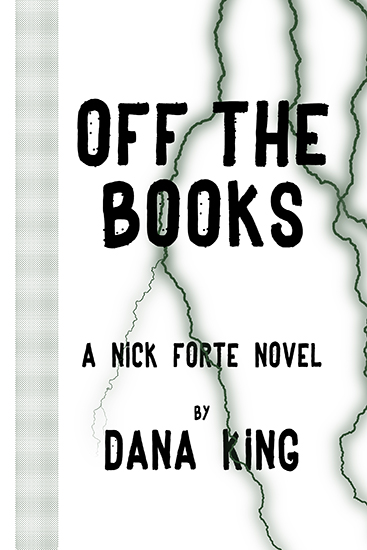
It’s been a while since I first started writing Nick Forte stories, and the only one of these sidekicks I knew at the time was Hawk, which is fine. He’s the gold standard. I wanted Forte to have a sidekick but wanted the sidekick to be more of an homage to Hawk than a rip-off. Timothy Alston Satterwhite is a man who makes his living by hurting people, yet has a unique affection for Forte and those close to him. The nickname of “Goose” wraps up the homage aspects of his character.

I was always careful not to have Goose do Forte’s dirty work. In the first book, A Small Sacrifice, Goose offers to kill a man who has to die if Forte is to live. They’re not planning a showdown; an execution is in the works. Goose talks to Forte, tells him how it will change him, and how there might not be any going back. Forte can’t bring himself to ask his friend, and then finds he lacks what he needs himself to seal the deal.

Forte’s life and moods become darker as the series progresses. Goose remains the constant, always trying to reel his friend in. It’s been a conscious decision, hoping to do something different with a character who could easily be a stereotype.

I’ve even tried to move the classic relationship in the opposite direction. In Grind Joint, Forte appears as a “guest star,” who happens to be visiting his parents when things break bad in his old home town, assuming the role of psycho sidekick to his cousin, Penns River detective Ben “Doc” Dougherty. My favorite scene between them, in which Nick escalates a confrontation his cousin had under control, ends like this:

“I’m sorry, cuz,” Nick said. Doc knew from his tone he meant it more for him than for himself. “You called the meeting. I should’ve let you run it.”
“It’s okay, Nick. You’re right about shaking their tree. I just didn’t want to put you on the line. There are things about Volkov you don’t know.”
Nick still looked to where Yuri’s car had gone. Some of the light that shone from his eyes, made him a friend to children and dogs everywhere, had disappeared. Doc couldn’t identify what replaced it, and didn’t want to.
“It’s okay, Benny,” Nick said. “There are things about me you don’t know.”


I understand Benoit’s distaste. It’s too easy to use the Friendly Psycho as a crutch. It’s also a valuable archetype in crime fiction. We just have to continue to find ways to keep it vital. I hope I’m succeeding.