Showing posts with label robert b. parker. Show all posts

Thursday, August 18, 2022

Is Robert B. Parker Overrated?

 I recently re-read Robert B. Parker’s Double Deuce after having been away from his work for quite a while. I followed up with the first of Ace Atkins’s Spenser books, Lullaby. This brought me to two conclusions:

1.   Atkins taking over the franchise was an improvement over the later Parker books

2.   Parker wasn’t as good as he’s often made out to be


Blasphemy, I know. I have my reasons.


The early Spenser books, up through about Looking for Rachel Wallace, are excellent. They’re tight, they’re reminiscent of Chandler in a good way, and the suspense holds through to the end. Especially in Rachel Wallace, there’s a true sense of danger and suspense.


After A Catskill Eagle, not so much.


Spenser and Hawk become almost cartoonish superheroes, wisecracking their way through violent encounters that I can’t take seriously because they don’t appear to. This is particularly grating when the situation calls for treating the antagonist with some seriousness, such as in a negotiation where they need or want something. I’m all for graveyard humor, but Spenser and Hawk just bullshit. It’s generally high-quality bullshit, but that’s all it is.


Let’s look at Double Deuce, since that’s fresh in my mind. Using David Mamet’s screenwriting technique of reading the book, putting it in a drawer, then going with one’s memory, here’s what Double Deuce is about:

·       Spenser is hired as security for a housing project

·       Spenser and Hawk sit around in cars bullshitting, waiting for something to happen

·       Spenser and Hawk prevail


Spenser and Hawk morph into such badasses that there’s no sense of danger directed toward them. It’s as if Spenser was Superman and there was no kryptonite.


There are other issues.


Among the better aspects of Lullaby is the refreshing lack of screen time for Susan Silverman and Pearl the Wonder Dog. I’m not a shrink, and I don’t know what either Frasier or Niles Crane would say about Spenser and Susan (or of Parker and his wife Joan, for that matter) but this is not a healthy relationship, and it gets tedious. Parker too often stops a story to show cloying interludes where Spenser and Susan flirt eruditely to show off their intellect and taste (to each other?) and Spenser makes something to eat.


Spenser can cook, as Parker reminds the reader often and in intimate detail. The books became less about stories as the series went on and more about the filler of Susan and cooking and bullshitting that didn’t really move things along.


“It’s a PI novel. Even you have to admit they’re character studies of the detective.” Good point. Read enough Spenser novels and you’ll find the cooking and the attention to attire and the woke male elements are all there is. There is little or no nuance to the character. He never changes.


Add to that something that appears obvious to me, though I know there are those who will argue: by the end, Parker was mailing them in. I once took a 300-page book out of the library, started reading it after I got home from a writers group meeting, and finished by bedtime. I am not a speed reader. There was more white space than book, and not just because Parker wrote a lot of dialog. The margins and space between the lines were enormous.


For a man who wore his wokeness so much on his sleeve well before woke was a thing, he also had a lot of archaic tendencies. Appaloosa, the first Virgil Cole / Everett Hitch book, is an excellent story well told. (This series also tapers off book by book.) The relationship between Cole and Allie is much the same co-dependent bullshit as with Spenser and Susan.


The Sonny Randle novels, written ostensibly to show a strong woman, not only portray Sonny as Spenser with internal plumbing, she might as well be an alcoholic. Not because of her drinking, but because the books are inevitably about how much Sonny doesn’t want to call on her ex-husband and his mob connections to save her, while we know all along that’s exactly what she’s going to do.


Robert B. Parker made a ton of money from his novels, and deservedly so. He gave a lot of people, including me, much entertainment over the years. I’m happy when any writer gets paid, so I’m glad to see the series have continued on with other authors, though I wonder if maybe at some point the Parker heirs might want to find real jobs. Popularity doesn’t make one great. We can all name writers who have sold even more books than Parker who, frankly, don’t write all that well. (Not that I’m going to name any here. Sour grapes and all.) Parker struck a chord that resonated with a lot of people, but, in the end, his body of work is not impressive enough to mention him with the greats such as Hammett, Chandler, Macdonald, Crais, or Lehane.

Wednesday, March 21, 2018

"Stick With 'Said," He Admonished Gravely.


3. Never use a verb other than “said” to carry dialogue.
4. Never use an adverb to modify the verb “said.”
(Elmore Leonard, “Elmore Leonard’s Ten Rules of Writing)

This is no bullshit. If you’re looking for ways to be clever and unique try writing better dialog. If the urge is overcoming you to have a character announce, assert, declare, disclose, express, maintain, reply, report, retort, respond, reveal, state, suggest, affirm, allege, divulge, exhort, imply, opine, relate, or remark, just lie down until it passes. All you’re doing is drawing attention from the important points of the story while the reader looks up “asseverate.”

I’m firmly in the “said” camp. Have been for as long as I’ve been a serious writer. (Pause inserted while readers consider whether I qualify as a serious writer….Okay, long enough.) I occasionally hear other writers rationalize that “said” gets boring and some variety is needed. To them I say, “You’re wrong.” “Said” is the invisible word. In the context of a dialog attribution, the eye passes over it like a warm breeze on the beach, disturbing one’s attention not at all.

Granted, there are pitfalls. Even the great Robert B. Parker was not above carrying a good thing too far, as in this excerpt from his otherwise excellent Western, Resolution:

“Why’s it swole?” Virgil said.
“’Cause she’s lame,” Blue Shirt said.
“Wasn’t swole when I sold her,” Pink Shirt said.
Virgil took a long breath through his nose.
“Where’s the horse?” Virgil said.
“Out front,” Blue Shirt said.
“Lemme see her,” Virgil said.

Now he’s violating the rule that prohibits using the same word too often too close together, even when it’s an “invisible” word. He could have saved one “said” by adding Virgil’s second line of dialog to the small bit of stage business that breaks up the dialog. (Editor’s Note: What follows is not in any way an attempt to improve on Robert B. Parker. I will throw down on any man who even implies I think I could improve on Parker. This is attempt to dissuade those who not already in the “said only” school from using it as an example of why other attributive verbs would be better.)

Virgil took a long breath through his nose. “Where’s the horse?”

Now it’s still obvious Virgil is speaking and we saved one example of driving “said” into our brains like a 10p common nail.

Parker does have a challenge here, as there are three people in the conversation. He can’t just leave the attributions out altogether. Well, he could, as each speaker has a distinctive point of view, but Blue Shirt and Pink Shirt aren’t in the book enough for us to have a good idea about them beyond this exchange. (Which is their only appearance.) Anything that causes the reader to have to think about who’s speaking takes them out of the story which is, by definition, a problem.

He could make use of some stage business, which he almost did by having Virgil take a long breath through his nose. One can also rephrase a comment so the speech appears as narrative.

Virgil asked why it was swole.
“’Cause she’s lame,” Blue Shirt said.
Pink Shirt crossed his arms in disgust. “Wasn’t swole when I sold her.”
Virgil took a long breath through his nose. “Where’s the horse?”
“Out front,” Blue Shirt said.
Virgil started walking. “Lemme see her.”

This may or may not be any better, or even as good. It does break up the scenery a little without slowing things down too much.

I’m making such a big deal of this because I agonize over dialog attributions. Breaking up the dialog to show some little action, not going too long in even a two-person conversation without mentioning who is speaking. Whatever I think will work. What troubles me more than anything is leaving the attribution to the end of the sentence so the reader may have to read the line again in the proper character’s voice if she didn’t pick it up on the first pass.

This last bothered me quite a bit on my final draft of the work-in-progress until I lucked into a solution. First, a brief digression. I know quite a few authors who don’t like to read fiction when they’re working on a book. They’re afraid the other author’s voice may creep into their own work. I understand that but disagree. To me, reading other fiction while working on a book is like taking a continuing master class. Not that I want to rip them off (not that I never do, either), but I’m often reminded of things I wanted to make sure are in my book but may have been forgotten as I focused on other details.

What happened here was different: I learned something. I was reading James Ellroy’s White Jazz when the answer to my dialog attribution problems fell into my lap. The particular question I had was how not to slow things down in a multi-character conversation by adding stage business when none would likely take place, yet still make it clear.

A colon.

Long a staple of stage and screenplays, dialog attribution by means of a colon works well in novels, too. Here’s an excerpt from White Jazz, where first-person narrator Dave Klein eavesdrops on a conversation between Touch, Rock, and Glenda from behind a door.

Smells: cotton, stale perfume. Dark going gray—I saw a bed and bookshelves. Voices—hug the door—listen:
Glenda: “Well, there is a precedent.”
Touch: “Not a successful one, sweetie.”
Rockwell: “Marie ‘the Body’ McDonald. A from-nowhere career, then this kidnapping out of nowhere. The papers smelled publicity stunt quicksville. I think—”
Glenda: “It wasn’t realistic, that’s why. Her hair wasn’t even mussed. Remember, Mickey Cohen is bankrolling our movie. He’s hot for me, so the press will think gangland intrigue right off. Howard Hughes used to keep me, so we’ve got him for a supporting play—”
Touch: “’Keep,’ what a euphemism.”
Rock: “What’s a euphemism?”
Touch: “Lucky you’re gorgeous, ’cause you’d never make it on brains.”

Another half a page like that. Granted, Ellroy’s style isn’t for everyone, but look what he accomplishes. Three people more or less talking over each other in a rapid-fire conversation. Three people the narrator can’t see. I’d never try to pull it off for that long, but the scene flies.

So now I have another tool available for judicious use. Like anything else, I have to be careful not to overuse it. Just like “said.”


Monday, March 27, 2017

Psycho Sidekicks

Benoit Lelieve, writing in Dead End Follies on March 14, took aim at “Ten Non-Racial Bullshit Stereotypes [He’s] Tired of Seeing.” (Editor’s Note: If you aren’t reading Dead End Follies, well, I don’t know what to tell you. Putz.) I agree in general with the list, the differences not so motivating I feel the need to write up one of my own.

I am inclined to comment at length on one of them. Number Six, to be precise: Friendly Psychopaths, or, as they are so often depicted, the psycho sidekick.

We all know who they are. Mouse. Hawk. Bubba Rogowski. Joe Pike, though Robert Crais has taken some of the edge off Pike in more recent novels. These are the guys who’ll do the stuff the author (or publisher, or, more likely, the marketing department) is afraid to have the protagonist do, lest the readers think less of him. They also serve a valuable role in providing information the protagonist can’t get on his own, sauntering into scenes with a key piece of evidence at just the right time.

The concept is a cheat when done badly, which is too often the case. Hence Benoit’s fatigue with the archetype. When done well these characters can serve a purpose beyond authorial convenience by giving the protagonist a peer to play off of. Yes, Spenser has Susan and Patrick Kenzie has Angie, but there are things they can say and do with Hawk and Bubba they’d rather not discuss elsewhere. Topics such as, “How are we gonna kill this guy?” Angie’s okay for discussing “Should we kill this guy?” and Susan…well, Susan’s mostly a pain in the ass. I never was able to figure out why Spenser discussed anything with her.

Another type of psycho sidekick has sprung up relatively recently, those that are not inherently violent. My favorite example is Sean Chercover’s Gravedigger Peace, sounding board for private eye Ray Dudgeon. (Another Editor’s Note: I know Sean is doing well with his thrillers and I couldn’t be happier for him, but I hope he hasn’t given up on Ray and Gravedigger. That’s a kick-ass combination.) I’m also a big fan of Tommy Owens from Declan Hughes’s Ed Loy series, but Tommy is more of a fuck-up than a psycho. He serves the role of providing information more than does Gravedigger, but both play valuable roles as off-kilter sounding boards for their protagonists.
 
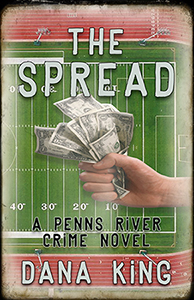
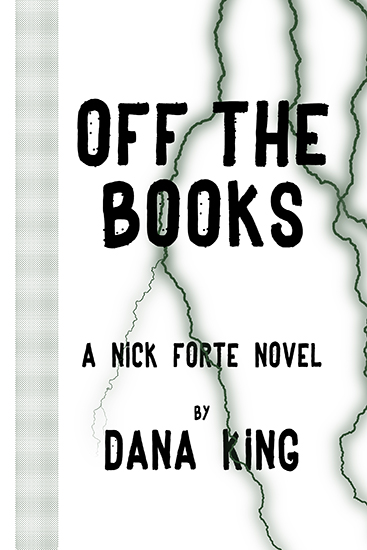
It’s been a while since I first started writing Nick Forte stories, and the only one of these sidekicks I knew at the time was Hawk, which is fine. He’s the gold standard. I wanted Forte to have a sidekick but wanted the sidekick to be more of an homage to Hawk than a rip-off. Timothy Alston Satterwhite is a man who makes his living by hurting people, yet has a unique affection for Forte and those close to him. The nickname of “Goose” wraps up the homage aspects of his character.

I was always careful not to have Goose do Forte’s dirty work. In the first book, A Small Sacrifice, Goose offers to kill a man who has to die if Forte is to live. They’re not planning a showdown; an execution is in the works. Goose talks to Forte, tells him how it will change him, and how there might not be any going back. Forte can’t bring himself to ask his friend, and then finds he lacks what he needs himself to seal the deal.

Forte’s life and moods become darker as the series progresses. Goose remains the constant, always trying to reel his friend in. It’s been a conscious decision, hoping to do something different with a character who could easily be a stereotype.

I’ve even tried to move the classic relationship in the opposite direction. In Grind Joint, Forte appears as a “guest star,” who happens to be visiting his parents when things break bad in his old home town, assuming the role of psycho sidekick to his cousin, Penns River detective Ben “Doc” Dougherty. My favorite scene between them, in which Nick escalates a confrontation his cousin had under control, ends like this:

“I’m sorry, cuz,” Nick said. Doc knew from his tone he meant it more for him than for himself. “You called the meeting. I should’ve let you run it.”
“It’s okay, Nick. You’re right about shaking their tree. I just didn’t want to put you on the line. There are things about Volkov you don’t know.”
Nick still looked to where Yuri’s car had gone. Some of the light that shone from his eyes, made him a friend to children and dogs everywhere, had disappeared. Doc couldn’t identify what replaced it, and didn’t want to.
“It’s okay, Benny,” Nick said. “There are things about me you don’t know.”


I understand Benoit’s distaste. It’s too easy to use the Friendly Psycho as a crutch. It’s also a valuable archetype in crime fiction. We just have to continue to find ways to keep it vital. I hope I’m succeeding.

Monday, March 31, 2014

Sleeping With Veronica Lake

Authors continuing series created by others is the rage right now. Among the first was Max Allan Collins, finishing up Mickey Spillane’s Mike Hammer series. (This is a bit of a special case, as Collins had worked hand-in-glove with Spillane for years, and was asked to complete the unfinished Hammer novels by The Mick himself.) Ace Atkins is continuing Robert B. Parker’s Spenser series at the behest of the Parker estate. More recently, Raymond Chandler’s Phillip Marlowe has been resurrected by Benjamin Black, who isn’t even really Benjamin Black, but John Banville. (As if who’s writing these books lacks complication already.) Parker himself was an early adopter, having completed Chandler’s unfinished manuscript of Poodle Springs, and penning his own sequel to The Big Sleep, Perchance to Dream.

The only issue I have with this trend is mild disappointment that the reading public is too timid in its tastes to try something new, even after their favorite author has shuffled off his mortal coil. (This should also be an ego check for authors who write series; they love your characters more than they love you. Get over it.) Maybe a reader of one of Atkins’s Spenser novels will be tempted to try a non-Spenser book by the same author. One can only hope.

While I’m good with the idea in principle—anything that pays writers is a good thing, almost by definition—I won’t be reading any of them. No offense to the writers mentioned above, or others who may be earning a living doing the same thing. It’s a matter of authenticity.

L.A. Confidential is one of my favorite movies, as close to a perfect crime film as I can think of. A key plot line involves a stable of prostitutes who pass themselves off as famous actresses of the day, even if a little plastic surgery is required. Ava Gardner. Rita Hayworth. Kim Basinger plays a hooker who passes for Veronica Lake. (And, as Russell Crowe says in the movie, “looks better than Veronica Lake.”) Men will pay premium prices to have sex with these “actresses.”

Here’s the thing: sleeping with a hooker who looks like Veronica Lake isn’t sleeping with Veronica Lake, even if the hooker looks better. Even if she’s better in bed. It ain’t her.

I’ve not read any Atkins or Black yet. I may well do so, when my backlog sorts itself out a little. If/when I do, it will be a book with a world and characters they created. Just as I want the original Chandler or Parker, I’ll want these authors’ unfiltered best, to lose myself in their world, instead of hopelessly trying not to compare them to someone else.

Monday, March 3, 2014

February’s Reads

Before we begin, a brief reminder that the audio book of Grind Joint is now available on Amazon, audible.com, and iTunes. Mike Dennis has done an excellent job of capturing the aura of Penns River and the attitudes of the characters.

Not as many recommended reads from February as in January, but 1.) January was an exceptional month, and b.) February is shorter.

Herbie’s Game, Timothy Hallinan. I scored an advance copy of this one, and you’re jealous, even if you don’t know it yet. The best of Hallinan’s Junior Bender books, with the same humor plus a little deeper level of character development. The series started in this direction with The Fame Thief, and the momentum continues to build. All four Bender books are great stories and fun reads, but this one steps it up a notch. (Launches in July 2014, when a more detailed review will be available.)

Appaloosa, Robert B. Parker. I stopped reading the Spenser books the last few years of Parker’s life; I had the impression he had started mailing them in. His interest in the Virgil Cole/Everett Hitch novels may have been why. Great pacing, spot on dialog, and the dry style Parker had evolved toward is perfect for the setting. Using Hitch as Dr. Watson to Cole’s Holmes was inspired. Looking forward to reading the next in the series, after how this one ended. Highly recommended. I’m not sure why Cole becomes so enamored of Allie, but maybe that’s because Renee Zellweger played her in the movie. (The movie is also highly recommended. Ed Harris and Viggo Mortensen more than make up for the dubious allure of Ms. Zellweger.)

Whiplash River, Lou Berney. I stumbled—almost literally—onto Berney’s Gutshot Straight at Bouchercon Indianapolis: the line to work one’s way through the book tables stalled with me in front of it. (For what it’s worth, how Indianapolis handled the free book situation was perfect. Attendees got tickets (Three? Five? I forget.) to be redeemed at an exhibition of authors sitting at tables where the books could be inspected and the authors chatted up. I read every book I got there. I can’t remember the last time I read a book I got in my MWA bag.) I finally got around to Whiplash River and was delighted to find Berney suffered no sophomore jinx; it’s at least as good. Berney combines Elmore Leonard-like characterizations with Carol Hiaasen plotting without ripping anyone off; Berney’s voice is his own. If you haven’t read either book yet and you like Leonard or Hiaasen at all, you really need to catch up.

Star Island, Carl Hiaasen. Speaking of Hiaasen, my reading of him went on hiatus for a while after Nature Girl, where I felt he’d qualified for Raymond Chandler’s comment: “he knows all the tricks and has nothing to say.” (Hmmm. Looking back, I see I read Nature Girl seven years ago. It wasn’t that disappointing.) Star Island is Hiaasen back in vintage form: characters who stand in as satirical archetypes (though Chemo’s prosthesis is a bit much), dialog that sounds almost unintentionally funny, a plot just goofy enough to make you know you’re suspending disbelief and digging it, and laugh out loud moments. He moves away from his usual Florida developer subject this time—though a prominent subplot skewers it again, literally—to give the world of celebrity and paparazzo “journalism” his own unique perspective. Skink also makes an appearance, which should be enough for Hiaasen fans to want to look this one up.

Wednesday, October 2, 2013

Where Do Ideas Come From?

I saw Robert B. Parker at a book signing many years ago. He told a story of being on one of those morning wake-up shows all television stations have, sharing a spot with Elmore Leonard. They were sitting in the Green Room, passing the time, and agreed the question they least liked answering was, “Where do you get your ideas?”

Ten minutes later, on camera, the helmet-haired blonde hostess’s first question was to Parker: “Where do you get your ideas?”

“Utica,” he said. “There’s a little store there. Lots of writers use it.”

The hostess accepted that as the most logical answer in the world, then turned to Leonard, “And how about you, Mr. Leonard?”

“Same place.”

This story came to mind at Bouchercon when I saw Reed Farrel Coleman on a panel, and the topic of where ideas come from was raised.

“Schenectady,” he said, then did Parker one better. “Too bad this conference wasn’t a couple of weeks earlier. We missed the end of summer idea sale. Now they already have the Christmas ideas in.”

Monday, July 13, 2009

Appaloosa

The Western is the archetypal American story, the progenitor of the hard-boiled and noir schools. Few genres can get away with running the same tropes past an audience over and over again as well as the Western, when it’s done right.

Appaloosa is based on a novel written by Robert B. Parker as a break in the routine of writing Spenser novels. Any movie starring Ed Harris (who also directed), Viggo Mortensen, Jeremy Irons, and Renee Zellweger has to be good, right? (Well, maybe not Renee Zellweger. More on her later.)

Harris and Mortensen play the standard wandering lawmen, moving across the West to clean up towns as needed. Irons is the ruthless cattle baron. We know as soon as Irons shoots the old marshal down in cold blood two minutes into the movie that there’s going to be a final confrontation. The fun is watching the twists and turns of getting them there. And there’s a lot of it, and of them.

The laconic dialog Parker has made almost an affectation in his recent Spenser novels serves the characters well here. Harris’s Virgil Cole and Mortensen’s Everett Hitch are classic Western sidekicks; you can imagine Burt Lancaster and Kirk Douglas in these roles fifty years ago. They understand each other without having to say a word, and both are good enough actors to make sure the audience understands, too.

As director, Harris was fanatical about authenticity. The window glass is period quality, and Harris makes several subtle references to it. (Having a horse and rider pass by the window while filming Cole indoors, to let an attentive viewer see the distortions caused by flaws in the glass is one example.) A tan line on Martensen’s forehead when he removes his hat. Nothing too obvious, set out like Easter eggs for those with their heads wholly in the movie.

Irons is his usual excellent self as the heavy, menacing and greasy at the same time. Lance Henriksen makes a brief appearance in the role Richard Boone would have played in the Lancaster-Douglas version and does his usual yeoman service.

It’s Renee Zellweger who’s the fly in Appaloosa’s ointment. The character is obviously there as a plot device, to cause friction down the road. It’s to everyone’s credit she doesn’t cause the overly predictable plot complications, save one, which actually works well for advancing the story. The problem is, there was no reason for her character to be in the town of Appaloosa in the first place, and there’s certainly no reason for the hard-bitten Virgil Cole to fall for her so quickly.

Let’s face it, Renee Zellweger is not an attractive woman. Maybe if you saw her in the mall she’d look okay compared to the overweight, belly shirt-wearing trailer trash coming out of the NASCAR Store, but not by movie standards. Even for a movie that works so diligently for authenticity, a woman who looks like her is not going to land a man like Virgil Cole with so little effort, even if she’s the local gold standard. Salma Hayek, okay. Even dirtied up after a long train ride, she’d make a man accept a lot of life complications. Not Renee Zellweger. (IMDB research shows Diane Lane was the original choice for the part. She could let a man agree to some complications, too. It still would have been nice to know why the character came to town at all.)

Still, a movie well worth seeing. The acting is superb, and the story goes in directions that aren’t always expected, with twists to make the less than unexpected palatable. A lot about Appaloosa deserves more than the 6.9 IMDB gives it. It’s a solid 7.5 without Zellweger.