Showing posts with label james d.f. hannah. Show all posts

Thursday, April 18, 2024

Part Two of My Conversation With James D.F. Hannah

 Welcome back for the conclusion of my conversation with Shamus Award-winning author James D.F. Hannah. Latecomers can catch up with what happened last week here.

OBAAT: Interesting thing about your Lee Child “airport reads” comment. People tend to use that term as dismissive, but there’s a unique skill set to writing that kind of book and still have it hold the interest of people like us who expect more than a way to kill time. No less an authority than Leonard Bernstein, possibly the greatest musician this country ever produced, once said his greatest frustration was that he never wrote a hit song. He admired those who could crank them out and had nothing dismissive to say about their work. To me, if pure entertainment is something Bernstein held such respect for, I’m not going to knock it.

JDFH: What Bernstein did was obviously high art. It was important, and we assigned a particular value to it. But it was necessarily of greater value than a Top 40 song? The question becomes what do you value, doesn't it? Are we creating for the ages or are we filling the down time in other's lives? We study Shakespeare as a great artist, but we forget he wrote for the common man of his time, and filled his plays with not just monumental monologues and imagery, but also with dirty jokes and double entendres. Cornell Woolrich and Chester Himes were pulp novelists in their days, but now we discuss the themes and their importance to modern crime fiction.

As always, it goes back to Elmore Leonard, who wrote more effortlessly than almost any author. What's his quote? "If it sounds like writing, I rewrite it."

Leonard is one who straddles that line between pure entertainment and critical respect. Obviously no one's ever done this particular thing better than Leonard, though. No less than Martin Amis called Leonard "a literary genius," and I've always thought it was because he brought a great joy to the page. He loved entertaining people. He loved the way words could sing on a page. The rhythm of patter and the sudden burst of violence. There was never a greater message he was striving for than to keep you reading to the end of the page.

This could almost roll back to a conversation we've had, about politics inherent to various novel genres. There's the apocryphal quote by Samuel Goldwyn about movies and "If you want to send a message, call Western Union." What are your thoughts on the role of artistry and "messages"? 

OBAAT: Elmore Leonard was a genius at what he did so I’m going to set him aside here. I believe Goldwyn’s alleged comment is what someone would say who cared about the bottom line and nothing else; an MBA comment. We see it all the time in television. I’m old enough to remember when commercials fell between segments of programs; now it seems as though they drop in a little programming to fill the void between commercials. I’m sure it was always this way, but they’ve now dropped any pretense.

I turned off the movie Maestro half an hour in, in large part because it too overtly tried to be “artistic” to the detriment of telling a story. That doesn’t mean I don’t like a little art in my entertainment, but it needs to be subservient to the story. Clint Eastwood is a master at this. Unforgiven and Mystic River are great stories he tells with artistic directorial touches that never interfere with the enjoyment of those who aren’t interested in them.

Speaking of Mystic River, Dennis Lehane is the master of telling a story that has a message. In addition to Mystic River, The Given Day, and especially his newest, Small Mercies, there are definite messages that the reader can choose to ignore if all they care about is the story.

That’s the art of it: to send the message without writing a screed. My early Forte novels are entertainment built off premises I thought were worth exploring, even if the final product was different from the original intent; The Stuff That Dreams Are Made Of was supposed to be about the memorabilia industry. Once I started writing Penns River I began to feel as though I needed to speak for towns like those I grew up in. I also knew that if the story alone wouldn’t hold readers’ attention, any point I wanted to make would be lost, so I tried to fit that aspect in between the lines as much as possible.

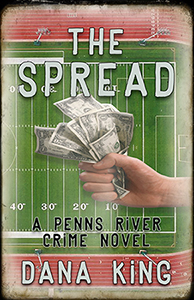
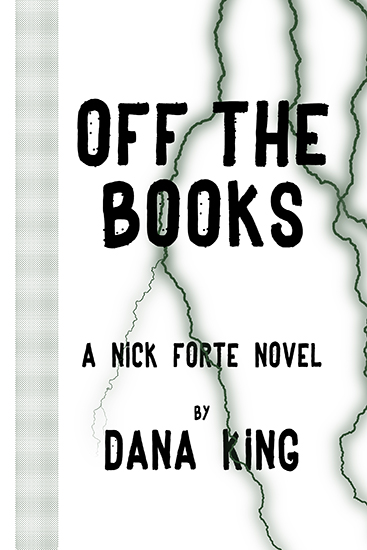
Now I’m more inclined to take a “message” and find a plot I can craft a story around to describe it. Bad Samaritan looks into misogyny and men’s rights activists; White Out deals with white supremacy; The Spread is built on the corrosive properties of the ever-increasing gambling culture; the new Forte, Off the Books, is largely about human trafficking. While not nearly as good as Lehane at this, I like to think if you asked someone what each of those books are about, most will describe the story, but some will mention the underlying message. That’s what I’m shooting for.

You’re no stranger to this. The Henry Malone books exist in a culture of poverty and institutional neglect that is often overlooked, and you do a wonderful job of creating imperfect yet empathetic characters. Is that what you set out to do, or do you find your just went to write a story and these qualities couldn’t help but come out?

JDFH: Eastwood is such a great reference point for this, because I've read a lot about his directorial style—basically keep the camera in focus and trust the actors to do their job—and his trust begins with the writers to deliver a story and strong characters. There are several anecdotes where he hired on to direct a movie and rather than film the script filtered through the notes of various executives, he went back to the writer's first draft, to the purest form of the vision, and that's what he made. 

As someone who just read Off the Books, I can see where there's a message in the book, but it never gets in the way of the story. I think that's important, because when creators in any medium forget the primary goal is to entertain, then you end up with something akin to those educational films from our youth, the ones that warned us about safe driving or the evils of drug use.

When I started work on Midnight Lullaby back in 2014 (Christ but has it actually been ten years?), what was important to me was putting on the page an Appalachian experience I understood. I was a journalist for many years in southern West Virginia, and I knew it was a complex region that couldn't be defined in broad strokes. Good, bad, or indifferent, Appalachia isn't just Hillbilly Elegy—a trash book that oversimplifies economic and cultural struggles in an area that has suffered at the hands of others while also being its own worst enemy. You're talking more than a century of complex factors that have played into Appalachia being what it is today, and I wanted whatever I put on the page to reflect that. Politics, economics, religion, all of these things have made Appalachia what it is today, and you have to be able to talk about that if you're going to talk about the region, the same way writers like S.A. Cosby or Eli Cranor or Attica Locke talk about the changing face of the rural south.

This said, yes, story is first and foremost in every book. But I never wanted the characters to be cookie-cutter; they're influenced by environment, but there's always more to people. Bobbi Fisher in Midnight Lullaby, the family of marijuana growers in Complicated Shadows, Crash in The Righteous Path and the later Malone books, the pregnant couple in Because the Night—they're all fighting to exist on their own terms, against a world that wants them to be nothing more than someone else's expectations.

Talking about not comparing yourself to other writers, but does anyone do this type of thing better than Daniel Woodrell? Books like Winter's Bone or Tomato Red are filled with heartbreaking characters trapped under generations of disadvantage, but they remain full-throated individuals with hopes and dreams and aspirations, who refuse to be explained away by others.

On a side note: If you haven't seen the movie American Fiction, I can't recommend it enough. It's very much about the tendency of culture to reduce people to stereotypes, and it tells this story while also exploring some fascinating family dynamics. Great, great stuff.

#  #  #

That was a lot more fun than I expected, and I expected a lot. Look for more of these in the future.


Thursday, April 11, 2024

A Conversation with James D.F. Hannah, Author of the Shamus-Winning Henry Malone Novels

 I’ve known Shamus Award winning author James D.F. Hannah since before I knew he was James D.F. Hannah. We’ve had many long-form conversations at conferences, sometimes alcohol-fueled, sometimes not. When I heard a comment of his on a podcast a while back I knew I needed to get into it with him. Since we weren’t going to see each other for a while, I started an e-mail thread that became more wide-ranging than I expected, much as our in-person conversations typically do. This week’s blog begins the conversation, which will conclude next week.

One Bite at a Time: Jimmy, thanks for stopping by. A few weeks ago you appeared on Terrence McCauley’s podcast Spies, Lies, & Private Eyes. The entire event is well worth our readers’ time, but you made a comment that particularly resonated with me when you compared the current thriller concept of constantly raising the stakes to the relatively lower stakes in your Henry Malone novels. I don’t have the exact quote, so forgive me if I don’t phrase it well, but the gist was that the average person rarely has to break government codes to defuse a bomb that will ignite a nuclear holocaust, so you don’t deal with things like that. Your stories may have what seem to be lower stakes, but they’re still life and death for those involved. Do I have that essentially right, and would you care to elaborate?

James D.F. Hannah: That's basically spot on. The books that interest me are never that near-operatic storytelling where the whole world is at risk, where there are biological weapons or computer codes or a billion dollars at stake—because how do you relate to that? My ideal stakes are finding out what a character will do for a few thousand dollars and a used car. What pressures can you put someone under that they'll do the worst for the least? 

Plus, I grew up in eastern Kentucky, reading Lawrence Block and Ed McBain and Robert Parker and Sue Grafton, and just the idea of a city felt exotic. But those writers really wrote about comparatively small stakes: Saving Paul Giacomin (Early Autumn), find a missing daughter (B Is for Burglar), or just maintaining a semblance of civilized order (basically all of the 87th Precinct novels). Plus, the main characters were relatable and human and (at least for a while for Parker and Spenser) fallible. As an early reader that felt like something I could attach to more than whatever was going on in most Ludlum novels.

But I know in your own work, you lean toward the relatable protagonist and the smaller stories that nonetheless are huge and vital to the characters. Your Penns River novels combine the scope of McBain's 87th Precinct books or Joseph Wambaugh's various California cop novels with the rhythms of a small town, so something about those smaller stakes draws you also, doesn't it?

OBAAT: Absolutely. I don’t think of my books – your books, all the books we’re talking about here – as having “smaller” stakes; I think of the stakes not being as broad in scope. Ludlum or Brad Thor may place thousands/millions/billions of lives at stake, but none of that matters to Mitch Fisher if Henry can’t find Mitch’s sister Bobbi.

And the motives of the grand stakes novels are typically…what? Millions or billions of dollars? Megalomaniacal impulses? Eeee-vil? (Bwahaha.) Bad things typically are done for relatively small or personal reasons, what Hannah Arendt called “the fearsome, word-and-thought-defying banality of evil.”

You and I agree, but we are clearly outliers; the big bucks are in potentially apocalyptic thrillers. That’s what people prefer to read, and I cannot for the life of me figure out why. Do you have any ideas?

JDFH: The easy answer is escape. Consider Reacher, for example. He's this outsized piece of fantasy fulfillment, for both men and women. He's intelligent, he's the size of a semi, he's attached to nothing and yet also fiercely loyal, he doesn't talk much, and wherever he goes, there's trouble, and he's there to fix it. He makes someone like Spenser—once the high-water mark for an infallible protagonist—look like Kramer from Seinfeld. Plus, you can read a Reacher novel and enjoy it and almost immediately forget it and move on to something else. Nothing lingers from a Reacher novel, nor it is intended to.

And if it sounds like I'm picking on the Child brothers and Jack Reacher, I'm not, and even if I was, I'm sure they've made more than enough money to salve those particular wounds. I've enjoyed several Reacher books, and other writers working in that genre. These are termed "airport reads" for a reason. They're the books you gift your dad at Christmas. The stakes are big, and they're entertainment, and not meant to be much more than that. I never feel a need or desire to return to these books, to relive passages I enjoyed, or to savor the closing pages.

I can't say the same for books where the stakes are merely life or death for a handful of characters I've come to love over a few hundred pages. Think about Scudder's final confrontation with James Leo Motley in A Ticket To the Boneyard, or the revelations at the end of Ross Macdonald's The Chill. For something more recent, consider the gorgeous poignancy of the last chapters of S. A. Cosby's Razorblade Tears, or the utter heartbreak at the end of Ivy Pochoda's Sing Her Down. These are endings which hang with you because you feel the immediacy of their lives, where you understand big-ticket heroism is easy; it's tougher in the smaller strokes.

But I think a larger answer is also the Marvel problem—where every Marvel movie seemed to be about saving the world, or saving the universe, and after a while, once you can't raise the stakes any further, do the stakes even matter? You know they're saving the world in the end, so then what? 

Whereas for me, some of the most successful Marvel properties were the series—Daredevil, Jessica Jones, Luke Cage. Here you had those street-level stakes. Okay, sure, eventually there were ninjas, but you had flawed and vulnerable characters who were broken and made mistakes. No, they weren't your next-door neighbor, but they were more relatable than a six-five slab of muscle with a buzz cut.

Or what about the Nolan Batman movies, and The Dark Knight? That movie works for a variety of reasons, but chief among them is the point toward the end where the two boats are rigged with explosives and you see these characters wrestling with a decision. Sure, there's plenty of points where Batman has to save the city—he's always saving the city—but for me, the best storytelling wrestles with these ethical quandaries, and that's tougher to do on the larger scale.

Now, storytelling seems to be expected to always be those bigger stakes, and it doesn't leave much room for the smaller questions to be asked, but oftentimes, those are the things which make the story worth telling to begin with.

#  #  #

Come back next Friday for the second half of my conversation with James D.F. Hannah.

Thursday, June 22, 2023

Spring's Favorite Reads

 City Primeval, Elmore Leonard. It had been years since I read this. I’ve been meaning to get around to it and the impending release of FX’s Justified extension got me off my ass. A wonderful book, maybe Leonard’s best crime novel. It was also made to order for Raylan Givens to stand in for Ray Cruz. City Primeval shows all the things that made Leonard a legend, and should serve well in Graham Yost’s and Timothy Olyphant’s hands.


Because the Night, James D. F. Hannah. Hannah may have to make more room in his house for awards if he insists on writing books like this. He manages to pay homage to the PI tradition at the same time as breaking new ground, never allowing things to seem stale or asking us to suspend too much disbelief. Henry Malone and Woody are a pair worthy of the best PI/sidekick duos, and Crash is a brilliant addition to the series.


The Johnson County War, Bill O’Neal. Class warfare in America is nothing new. Rustling was a problem in 1892 Wyoming, but the big cattlemen felt as if all the government land was theirs by divine right and resented homesteaders and small ranchers who staked legal claims. The cattlemen’s methods became so overbearing juries refused to return rustling convictions. The big boys then hired gunmen from Texas to kill anyone they decided had to go, rustler or not. The locals fought back. This is a meticulously research and fascinating look at an episode many thought only happened in movies.


Safe and Sound, J.D. Rhoades. I’ve been reading his books for years, off and on, but a while back I noticed they were getting so good I needed to take a more comprehensive look. Turns out they were always that good. Safe and Sound is part of the Jack Keller series and has all the action one could want without ever putting a reader in a position of thinking “Oh, really?” Rhoades is now on the list of people I need to make sure do not fall through the cracks.


The Big Sleep, Raymond Chandler. It’s The Big Sleep. Damn right I liked it. Again.


Sunset and Jericho, Sam Wiebe. The Wakeland series keeps getting better, and it was good to start with. This one deals with politics and money (hard to do a story about politics that doesn’t involve money these days) and, while a fascinating study of the pressures between the haves and have nots, it’s not soon going to show up on the Vancouver Chamber of Commerce’s reading list. Which is even more reason you should check it out.


Thursday, June 15, 2023

An Interview With James D. F. Hannah, Author of Because the Night

James D.F. Hannah is the Shamus Award-winning author of the Henry Malone series of private investigator novels, among other things. His story "No Man's Land" was selected for Best American Mystery and Suspense 2022, edited by Steph Cha and Jess Walter. Other short fiction has appeared in Playing Games, edited by Lawrence Block; Under the Thumb: Stories of Police Oppression, edited by S.A. Cosby; Trouble No More; Rock and a Hard Place; Shotgun Honey; Crossing Genres; and The Anthology of Appalachian Writers.


He lives in Louisville, where the bourbon he hasn’t drunk yet is.


One Bite at a Time: Your upcoming Henry Malone novel, Because the Night, drops June 19 from Down & Out Books. I’ve seen an ARC and it’s likely to get another Shamus nomination. What’s it about?

James D.F. Hannah: Because the Night follows up the events of the previous Malone novel, Behind the Wall of Sleep, where Henry was offered a chance to run for sheriff by Wallace “Bada” Bingham, owner of the local strip club, The Cherry Bomb. While he’s in the midst of the campaign, he’s asked by a pregnant woman at an AA meeting if he’ll look for her boyfriend, an ex-con who’s gone missing. Henry finds out his missing person case overlaps with a homicide being investigated by Jackie Hall, a state police lieutenant and probably the last trooper in the state who still likes Henry. In the course of the investigation, Jackie’s nearly killed, and Henry goes seeking revenge. He gets caught in a series of betrayals where friends become enemies and he finds himself part of an unlikely alliance in an effort to catch the man who shot Jackie and to bring down a criminal empire.


OBAAT: A lot of books put me off because the protagonist consistently makes wrong decisions just to raise the stakes. Henry Malone makes as many unfortunate decisions as anyone, yet you manage to ground them in such a manner that I can always understand why he did it, even while recognizing this is likely to break bad for him. How do you keep from falling into the trap so many others do?

JDFH: I’ve joked that the Malone books are a series of Pinocchio stories, where the goal is for Henry to grow up and become a real man. Part of that growth is making mistakes. I’m obviously a huge fan of Robert B. Parker and the Spenser novels, but during the series, Spenser eventually became infallible. He was always the smartest, strongest, toughest guy. Thus, he had no growth; there was nowhere for him to go. For Henry to stay interesting for me, and I hope for the reader, he’s got to keep growing as a character, and in that comes making mistakes, but also in the pursuit of him doing the best he can. That’s always Henry’s goal, to be a better person, typically in spite of himself.


OBAAT: Henry Malone is a former West Virginia state trooper and a recovering alcoholic with a bad knee and nine fingers, yet I, who was none of the above, feel empathy for him, never sympathy. I know it’s no accident, but how do you pull that off?

JDFH: Henry’s not really in that Raymond Chandler model of “down these mean streets a man must go who is not himself mean, who is neither tarnished nor afraid.” He’s very often an asshole, and he has a complicated series of relationships, ranging from Billy, his father, to Lily, his girlfriend, to Woody, his AA sponsor. Plus, Henry is a character of scale. He’s not Reacher or Jack Ryan—the guy you call to find a missing nuclear device and returns as a blank slate in the next book. When Henry finds himself in circumstances which require violence, he doesn’t become Rambo. He ends up damaged by these experiences, and they become part of his personal history, and they affect how he reacts to the world.


OBAAT: Why are the Malone stories set in West Virginia? Why not Kentucky or western Virginia or North Carolina or eastern Tennessee?

JDFH: Honestly, it was born out of necessity. I spent most of my first 40-plus years living in eastern Kentucky or southern West Virginia, with 16 years straight in the latter. I’d spent years trying to write a crime novel with no luck, because I thought they had to be set in a big city, and my metropolitan experience was, to be blunt, limited. So when it came time to start writing what became Midnight Lullaby, the first Malone novel, I decided I’d take the tropes I loved from PI fiction and just transplant them into West Virginia. And while I don’t live in West Virginia any longer, so much of it is just ingrained in me, and it’s easy to fall back into the rhythm of that storytelling and that environment.


OBAAT: Woody is not the typical psycho sidekick. He’s also a recovering alcoholic – Henry’s sponsor, in fact – and the voice of reason, right up until he dips into his substantial store of armaments and opens vats on whoop-ass on bad guys. What’s his backstory?

JDFH: Man, I wish I knew that myself. Woody started out as a one- or two-scene character in Midnight Lullaby, and the further I got into the book, the more I realized Henry needed someone to play off of, and Woody became an increasingly important character in the book. The benevolent sociopath is pretty stock in PI fiction since Parker introduced Hawk in Promised Land—you’ve got Robert Crais and Joe Pike, Walter Mosely and Mouse, S.A. Cosby and Skunk—but I wanted Woody to also function as a Jiminy Cricket (again with the Pinocchio references) who can be funny and earnest and balance against Henry’s abundance of bad ideas while also providing both a strong arm and those aforementioned armaments when needed. But outside of an anecdote he shares at the end of Complicated Shadows, Woody hasn’t offered much backstory, and I’m content with him staying mysterious. I’m sure at some point his past will come calling, and I’ll probably be as surprised as anyone.


OBAAT: Henry has two primary female influences in his life. Lily Wilder, the local high school principal; and Charlotte “Crash” Landing, the current sheriff, who he is running against for the office. Both are outstanding characters. (I confess to having a mini-crush on Crash, maybe because she is unattainable.) Both serve important roles in the story, yet neither reads like a character created to fill a role. Tell us a little about them.

JDFH: When I decided to give Henry a steady romantic relationship—the dating pool in Parker County is fairly small—I didn’t want that character to be Susan, Spenser’s partner, who became so perfect after a certain point that I dreaded when Parker would describe how slowly she ate. Lily couldn’t be around just to affirm Henry and his decisions, or to tell him how great he is, but she could tell him she loves him—the way a real partner would. She has her own interior life and her own opinions and no problem whatsoever in saying when Henry’s being an idiot.

Crash showed up in a non-Malone book, The Righteous Path, and I loved writing her. Since she became the acting sheriff at the end of that book, it made sense for her to play a role in these most recent Malone novels. She’s young, she’s smart, she’s grounded, and she’s very good at her job. She’s a wonderful contrast to Henry, and the dialogue exchanges between them are some of the most fun ones in the book.


OBAAT: What’s next?

JDFH: Right now I’m working on a standalone novel set during the week of the 1976 bicentennial. There’s a first draft completed, with a lot of revisions planned. I’m also hoping to explore Crash a little more in—fingers crossed—a series of short stories; we’ll see how that goes.


Thursday, March 18, 2021

James D. F. Hannah, Shamus Award-Winning Author of Behind the Wall of Sleep


James D.F. Hannah and his protagonist , Henry Malone, knocked on the door of the Private Eye Writers of America’s Shamus Awards last year when She Talks to Angels earned a nomination. This year Jimmy kicked it down and won the best Paperback Original category with Behind the Wall of Sleep, placing him at the front of the line of PI writers redefining the genre for the 21st Century.


Jimmy is in Amsterdam with the PWA-sponsored “Sexapalooza” tour, but he wanted to honor his acceptance of my interview request, so he sent his right-hand man, Chad Williamson, to handle the interview. Don’t feel slighted. I have it on good authority that Jimmy doesn’t do anything without Chad knows about it.


One Bite At A Time: Chad, thanks for making time for us today. The Henry Malone books cover some unusual ground for PIs, namely Appalachia. The books read as a bit of a cross between Robert B. Parker and Daniel Woodrell. Tell us a little about Jimmy’s background and how it played into Henry’s character and the series setting.


Chad Williamson: Well, Jimmy’s obviously an extremely troubled soul, and a childhood spent running his old man’s stills affected him deeply. But he managed to pull together a bit of a life in newspapers—mostly in delivery—and was a big fan of Banacek in his youth, so he thought writing PI novels seemed fun. He also occasionally plays in traffic, though, so he’s easily amused, one can tell, and perhaps doesn’t always think everything through. 

The Author.
(Image courtesy of U.S. Marshal's
Service, WITSEC Division


But in all seriousness, the Appalachian setting came about because it was just too damn hard to write about anywhere else. You grow up next to a one-lane holler road your entire life, and your first time in the big city all you want to do is ride an escalator, you come to realize you are not destined to write the next Bonfire of the Vanities. Crime novels, PI stories, felt like a natural fit, but to do them right, they needed a voice that felt comfortable, so setting them in West Virginia just happened.


OBAAT: The Malone books contain all the PI tropes people look for and love, but set on their sides a little due to the location, as Henry spends less time going down mean streets than mean two-lane roads. His clients live in doublewides rather than mansions. Is this freeing, limiting, or a little of both?


CW: Both. Entire communities in Appalachia would be considered “the bad part of town” anywhere else, but it would also imply there’s enough there to justify an entire town. Eastern Kentucky and Southern West Virginia are made up of blink-and-you-miss-it communities that still offer plenty of work for an enterprising PI, except it’s hard to find anyone with enough money to pay the bills. That said, we’re talking about an area where, in two years, drug companies shipped nine million doses of opioid painkillers to a pharmacy in a town of less than 400 people, where unemployment rates are some of the highest in the nation and test scores are among the lowest. There’s a hunger and desperation prevalent within Appalachia that opens up opportunities for storytelling.


OBAAT: One of my takeaways from the series is something the TV show Justified hinted at but didn’t do a lot with: the hills have their share of criminals, but the same proportions of good people can be found there as anywhere else. What’s different from suburbia is the number of people forced into the gray areas of legality due to pressures they have no real control over. Did I come up with that on my own, or is that part of the intent?


CW: You’re spot on. I grew up in a holler in eastern Kentucky where gunfire was as common as sunrises, but you never saw a police car; things got settled in their own way, not in a way that could be confused with being legal, but may have resembled justice. The police were the providence of “town folk,” those who had such exotic providences as sidewalks and streetlights.


But much of this particular chunk of Appalachia is a land of absentee landlords, where for generations the money all left the area via coal trucks and barges, and your fortunes were based entirely on what coal was selling per ton. Coal has been dying a painful death for more than a generation, and fracking took its place but offers a fraction of the jobs, but you still have all these people who’ve been told there was no need for them to go anywhere else, or to push harder than they needed to, because coal would always be there for them. They went all-in on the bet and they’ve lost, and now the struggle becomes how to stand by the Appalachian principle of remaining headstrong and steadfast and not budging an inch when everything under your feet is crumbling. The options aren’t always pretty, but they’re people who’ll do what they think they have to do.


OBAAT: I’ve heard that Jimmy is functionally illiterate and that you actually read everything he “reads” to him. Who does he enjoy listening to most?


CW: Like everyone, Jimmy loved S.A. Cosby’s Blacktop Wasteland and David Heska Wanbli Weiden’s Winter Counts. I also heard he’s looking forward to new Laura McHugh (What’s Done in Darkness) and Heather L. Levy (Walking Through Needles).


OBAAT: Illiterate as he is, I understand Jimmy also dictates the books to you for typing and editing. Given your intimate knowledge of his process, who would you say are his strongest influences?


CW: Robert B. Parker is the most obvious; he named the setting for the Malone books “Parker County,” after all, so he’s rather blatant. But he’s fond of folks like Loren Estleman and the Amos Walker novels, Bill Pronzini’s Nameless series, Dennis Lehane, Sara Paretsky, and of course the late Sue Grafton, who was from Louisville. But his biggest influence in a decision to tell stories is probably Ed McBain, who wrote the 87th Precinct novels so well for so long.


OBAAT: You and I met at Bouchercon in Dallas. I never did catch up with Jimmy, though I have it on good authority the hotel bartender had strict orders not to serve him. What’s it like playing Remington Steele for James D.F. Hannah?


CW: It’s like an especially awkward marriage where you become comfortable answering to another man’s name.


OBAAT: What are you and Jimmy working on now?


CW: We’re hoping to have the sixth Henry Malone book out early next year, and we’re also working on a stand-alone 70s crime novel set in Kentucky, because it’s always good to write what you know.