Showing posts with label jochem vandersteen. Show all posts

Friday, June 26, 2020

Jochem Vandersteen, Author of Crimes And Riffs: Roadie, Metalhead, PI.


This is Jochem Vandersteen’s fifth interview on OBAAT and each one has been a pleasure. Born and living in The Netherlands, Jochem is as ardent an advocate for American private eye fiction as anyone living. A good review or year-end mention on his  “Sons of Spade” are notable accomplishments and I’m proud to have received both.

Jochem is a writer of note his own self. In addition to two anthologies of PI fiction. (The Shamus Sampler and The Shamus Sampler II), Jochem has published short stories and collections featuring protagonists Noah Milano, Vance Custer, Mike Dalmas, and his newest creation, Lenny Parker. Jochem treads the line between homage and moving the genre forward with aplomb and I’m always interested in what he’s up to. Now you can catch up with him, as well.

One Bite at a Time: Jochem, it’s always a treat to have you on the blog. I hope everything is well with you. Your new book is a collection of your Lenny Parker stories, Crimes And Riffs: Roadie, Metalhead, PI. Talk a little about what readers can expect in the stories. We’ll get to Lenny in a minute.
Jochem Vandersteen: You can expect longer short stories (not yet novelettes
though) divided into small chapters. I first published those at my blog, “Sons of Spade.” They are to a degree standard PI stories but take place partly in the heavy metal subculture and have sometimes a humorous feel although stuff gets dark sometimes as well.

OBAAT: Lenny Parker is described as a “roadie, metalhead, PI,” with PI coming last. Where did you get the idea for him and how did he get into the PI business?
JV: They say you should write what you know. Well, as a metalhead myself and writer for a Dutch webzine about heavy music I know all about the world of heavy metal. I really wanted to set a story in that world. Inspired by other private eyes with part-time gigs I figured a roadie would be a good job that wasn’t full-time enough so offered some chances for the character to do some PI work as well. From that Lenny Parker was born. Lenny started his PI work at a larger PI form, gaining the experience legally needed to start your own PI firm there. At times the daughter of his original boss acts kind of like his muscle and even brains when Lenny needs some of that.

OBAAT: You are as dedicated a devotee of PI fiction as anyone I know, and the entire field respects you for it. I remember what a thrill it was when one of my books made your year-end list in “Sons of Spade” and when you invited me to contribute a story to the second Shamus Sampler collection. What originally drew you to this uniquely American genre and how does it maintain its strong appeal?
JV: I’ve always liked heroes. While I like superheroes I found in the PIs a more relatable kind of hero as a young man. Aside from that I like fast, action-packed reads but detest long fight scenes and a focus on hardware. I like dark stories, but need some lighter moments as well. I like stories that are ripped from the headlines but don’t beat you down with morals. The private eye genre offers me all of that.

OBAAT: Have you ever thought of writing a PI who must go down the mean streets of Amsterdam or Rotterdam?
JV: Not really. I’m not even a fan of PI stories that take place in other places than the USA. I think the PI is as connected to the States as the cowboy is. I have been tinkering around with characters in my home country but if those ever come out they will be in my own native language and not feature private eyes.

OBAAT: You like protagonists who have unorthodox backgrounds. Noah Milano is the scion of a mob family. Vance Custer is a literary Travis McGee who will take on a case if for the book rights. (What’s not to love about a badass writer?) Lenny Parker we already talked about. What draws you to these kinds of characters and how do you come up with them?
JV: You need to do something original to stand out when you want to tell traditional tales but stand out. That is why I try to think of original angles to the backgrounds of my characters. You forget to mention my vigilante character Mike Dalmas who is blackmailed by the cops to take on some missions for them. I guess these kind of things are what I look for in other characters as well. It’s what drew me to Steve Ulfelder’s Conway Sas, A.J. Devlin’s Jed Ounstead and Steve Hamilton’s Nick Mason or even Lee Child’s Jack Reacher. All fairly standard lone wolf PI-like types who either have a different background or just something different / special than just a fedora and an office with their names stenciled on the door.

OBAAT: You’ve focused on short stories. Any plans for a novel?
JV: Writing a novel takes a long time. With a fulltime job, writing reviews for my blog and for the Dutch webzine I don’t have much of that. I like short stories and novelettes. I can get to the point, leave out the parts people skip and tell as many stories as I can. I have been doing a few false starts on a novel though. So yeah, I might write one in the future. I have started a few that might make it to the finish line.

OBAAT: What’s next?
JV: I will continue writing Lenny Parker episodes on my blog. That is something that comes pretty much without effort. I hope the sales of the collection will give me some extra energy to write more and finish that novel we were talking about.


Friday, May 12, 2017

A Conversation With Jochem Vandersteen

Jochem Vandersteen is a rare bird, a Dutch aficionado of private eye fiction. A rock music reporter by day (by night?) he’s the founder of a group of hardboiled writers known as the Hardboiled Collective. Jochem made his bones in crime fiction in two ways. He’s the owner of one of the pre-eminent blogs for PI fiction, Sons of Spade; and writes his own stuff, best known for the Noah Milano series of novellas and stories. His newest Noah Milano novella is Serving Justice.

Jochem’s the kind of guy with enough things going on that he lends himself to a more conversational approach to an interview, so I was delighted when he agreed to take some time out of busy schedule to chat with me.


One Bite at a Time: It’s been a while since we heard from Noah Milano. What’s he up to this time?
Jochem Vandersteen: The security specialist business is slow. That's why he decides to do some process serving for Maxwell Slim, his dad's lawyer who has gotten him out of some jams in the past. When he clashes with a MMA fighter and stumbles on a dead body stuff gets nasty. Also, it's his birthday! All of this can be found within the pages of the new novella, Serving Justice.

OBAAT: It’s been a while since you’ve been here, too. What have you been up to lately?
JVS: Living life, working, taking care of my family and finding the energy to write again. Sometimes the fact I get good reviews but sales stay low can drag me down a bit. Luckily I read some good PI fiction lately that sparked my energy.

OBAAT: Your blog, Sons of Spade, has earned an intercontinental reputation. What is it about private detectives that winds you up so much?
JVS: I like mystery, I like action. PI's combine that. Also I love the fact that in most PI stories you really follow the story through the eyes of the protagonist, making you live his life within those pages.

OBAAT: Who do you consider to be the cream of the crop in PI fiction?
JVS: In the past of course Raymond Chandler. After that Andrew Vachss, Dennis Lehane, Robert Crais, Robert B. Parker, Todd Robinson, Dave White, Alex Segura, Les Roberts.

OBAAT: It’s traditional for PIs to have done something else first. Usually they’re cops. Noah has a different pedigree. What did he do before he turned Shamus?
JVS: His background is pretty unique. I didn't want him to be a cop or soldier, so I thought... Who would have criminal contacts and who would be able to fight off the bad guys? A criminal of course! I also love redemption stories (like the Xena tv show) and from that the idea was born that Noah Milano would be the son of a big mobster, looking to better his life because his mother asked him to just before she died. One of the main plot drivers of the stories is how hard it is for Noah to do his work as a security specialist but still stay far away from the man he used to be.

OBAAT: I was in an interesting Facebook chat a few weeks ago, talking about detectives and their psycho sidekicks. Some of your favorites have them, some don’t. What’s your thought about detectives who have helpers like Hawk or Mouse or Bubba Rogowski to handle some of their dirty work for them? Does Noah have one?
JVS: Noah has one, maybe two. Tony Hawai is his buddy but also a small-time crook. He's more of an informant than a real pyscho sidekick though. Kane, Noah's mentor, taught Noah all his fighting skills and works for Noah's mobster father. He doesn't hesitate to kill or torture when necessary. That's not to say Noah doesn't cross the line himself every now and then. The main reason Kane is there is to connect Noah to his darker past and because... psycho sidekicks are just insanely cool!

OBAAT: Your taste in PI writers run the gamut from Chandler through Parker to younger writers like Dave White and Todd Robinson. What do you think has changed most over the years?
JVS: Stories have gotten a bit deeper I guess. More character development. More influences from the thriller genre or with female PI's the chick-lit genre. Basically though I think nothing has changed that much, really. It's still about loners out for justice, just like I like it.

OBAAT: When did you first decide you wanted to write PI fiction?
JVS: When read my first Spenser novel I guess, back when I was an early teen. When I later read Dennis Lehane's Gone Baby Gone I was inspired to really go ahead and do it. His characters felt so young, fresh... It showed me that a PI doesn't have to be into jazz and be in his forties, I could relate to them more so I decided I could write about a PI I could relate to as well. Ironically I am in my forties myself, I still listen to metal and punk rock, not jazz though.

OBAAT: I can see Noah’s unorthodox background causing him trouble, though. Fictional cops and PIs have a history that alternates between cooperation and animosity. Noah’s background and family must make that even tougher. Does he also have problems with clients who come to him to skirt the law, assuming he’s still connected somehow?
JVS: Yeah, that played a part in some of the short stories like can be found in Tough As Leather. There's also a lot of trouble he runs into because the cops, especially his nemesis Detective Williams, still want his hide. He can't count on much cooperation from them, so he has to use his more criminal contacts or his best friend, Medical Examiner Minnie.

OBAAT: I’m in the process of re-reading Declan Hughes’s All the Dead Voices. Hughes spoke at Bouchercon several years ago and gave an impassioned plea in favor of private detective novels, arguing that, when done right, they are the highest form of crime fiction. Reading one of his books provides a compelling argument in that direction. Do you agree with Declan? Either way, why do you agree, or disagree?
JVS: I guess they can because of the chance to do a good character study. I'm not sure other crime novels can't be just as good. Just depends on the writer. I'm not in this racket to be the highest form of crime fiction. Just to serve up some very good entertainment.

OBAAT: To me, the core difference between a traditional PI story and much of current Elmore Leonard-George V. Higgins-influenced crime fiction is the first person vs. third person point of view. The PI can put his or her thoughts directly into the mind of the reader, but can only transfer knowledge he or she is privy to. Multi-POV stories allow the reader to know more than any of the characters, but lose a little of the intimacy of speaking directly to the reader. You’re a PI guy to the core. How to you take advantage of those strengths and try to minimize the weaknesses?
JVS: It's cool to see the story through the eyes of the PI and I find it comes very naturally to write that way. I try to take the reader along the ride and make the voice entertaining. I find the voice of the first person PI just more entertaining. Also, I think it prevents people from skipping parts because they're just not interested in the other character whose POV you follow. Also, there are no clues given away like that. Basically I see more strengths than weaknesses in the first person POV.

OBAAT: What can we expect from Noah in the near future?

JVS: Not sure yet. Right now I'm writing my first Cash-novella, where an ex-cop gets out of jail after being wrongfully imprisoned there for killing his family. Now free, he wants to find clues to the real killer and ends up being hired to track down the missing daughter of a mobster. Don't worry, Noah will be sure to return in another short story, novella or whatever. He's been with me so long I won't every let him go.

Monday, November 9, 2015

Promotion (Self and Otherwise)

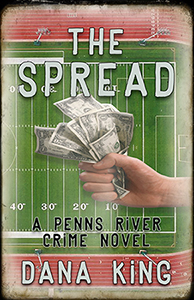
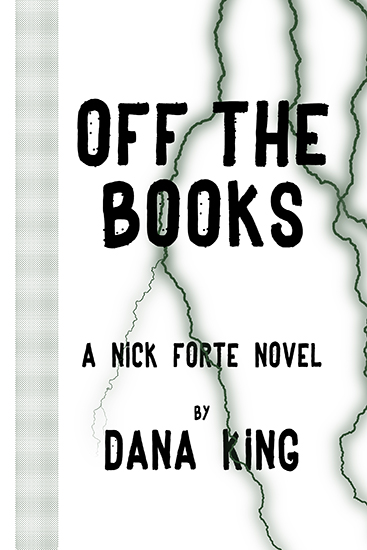
Before we get into my best recent reads, a brief moment of self-promotion. In fact, not even that. More like a grateful acknowledgement of a generous review. Jochem Vandersteen is a Dutch writer who is as active as anyone I’ve heard of in promoting PI fiction. A fine writer himself, he has not only edited two anthologies of PI shorts (The Shamus Sampler, foreword by Reed Farrel Coleman; and The Shamus Sampler II, foreword by Timothy Hallinan), he is the tireless owner/editor/author of the excellent Sons of Spade blog. Mijnheer Vandersteen recently flattered The Man in the Window with a review.

An excerpt:
I'm so glad Dana King decided to continue to write these Nick Forte books... He's just really good at it, understanding which dose of the legacy to follow and what new parts to add…There are multiple twists in the end, two cool sidekicks, good action scenes and some pretty nifty Chanderlisms in this book, adding up to a perfect PI read.

The entire review is available on Sons of Spade, along with a nice comment from Jack Getze, author of the Austin Carr series. (Big Numbers, Big Money, Big Mojo, and Big Shoes.)

Kind words are always appreciated, but kind words from those whose work one respects are the best of all.

Now to our regularly scheduled program.

I Used to be in Radio, Larry Matthews. A memoir that will hit every emotion, delivered in a matter-of-fact style that brings home the full effect. Matthews started in radio when he came back from Vietnam, mostly in the DC area. The first part of the book describes how he sort of fell into the business, and moved from station to station looking for the perfect gig. Much of it is laugh out loud funny and shows that WKRP in Cincinnati was not a stretch. A more mature Matthews finds himself freelancing in Washington, doing business reports for NPR and news stories for a variety of other stations, until a story on child pornography gets its hooks into him. He has a semi-informal agreement with a magazine to write a story, but doesn’t think to notify the authorities of the research he’s doing, and…well, you have an idea of where this leads. In Matthews’s case it led to a year and half in federal prison, after an arrest and trial story that would piss off the Dali Lama. Matthews’s mistakes are logistical, not moral, but seeing what’s coming doesn’t make it any easier to watch. Why this hasn’t been optioned for a movie is beyond me. Think A Civil Action or The Insider.

Every Contact Leaves a Trace, Connie Fletcher. Next to The Beloved Spouse™, Connie Fletcher may be the closest I have to a Muse. I read one of her books every year and never fail to come away with new appreciations. She gets law enforcement to talk to her the way they talk to no one else. Asked about research at my Bouchercon panel this year, I summed it up by saying, “I read everything Connie Fletcher writes.” This time she let the pros tell how CSI really works. If you have any interest in how law enforcement actually operates, hers is the series to read.

The Hot Countries, Timothy Hallinan. No one is more consistently excellent than Tim Hallinan. I’ll have more to say about The Hot Countries next week.

Last of theIndependents, Sam Wiebe. Hell, yeah, it won awards. Wiebe’s debut shows all the polish of a veteran as he makes the traditional tropes his own. He’s also at home in not trying to make Vancouver into LA, letting the unique qualities of his setting carry their parts of the story without trying to shoehorn them into anything.

For years James Crumley’s The Last Good Kiss has been acclaimed as having the greatest opening in crime fiction. Now there’s a competitor: The younger Thomas Kroon leaned forward on the clients’ bench and said, “There’s no real polite way to say this, Mr. Drayton. Someone’s fucking our corpses and we’d like it to stop.”

Thursday, June 12, 2014

Jochem Vandersteen Discusses The Shamus Sampler 2 And More

Jochem Vandersteen is the creator and master of the Sons of Spade web site, dedicated to private investigator fiction. In addition to being a tireless seeker and promoter of new PI fiction, Jochem is no mean hand at it himself. His Noah Milano series, where the scion of a Mafia family addresses his mother’s dying wish to go straight, yet can’t quite get as clean as he’d like despite his best efforts, is as original an outlook as I’ve seen. His Mike Dalmas stories are great pulpy fun, and a new character, Lenny Parker, shows great promise.

Jochem has branched out into including other writers in anthologies of PI fiction. His most recent collection, The Shamus Sampler 2, launched last week. I can’t brag on it too much—I’m one of the contributing authors, and it would be indelicate of me—suffice to say it’s a solid and varied look at the genre. I read it over the weekend and can honestly say I am flattered to have been included.

Jochem took time from his busy schedule of being Jochem to answer some questions about himself, and The Shamus Sampler 2

One Bite at a Time: You’re Dutch, born and raised. How did you become so fascinated with American private eye fiction?
Jochem Vandersteen: I guess it all started seeing the Spenser For Hire TV show and finding a translation of a Spenser novel in the library the next day back when I was a kid. I loved the tough guy pairing of Spenser and Hawk and found his views of manhood inspirational. Several years later I became a fan of comics, horror, and sci-fi but when I walked into a bookstore at a train station I spotted a Spenser paperback, picked it up and got hooked again. From that I went looking for other PI books to read, having run out of Spensers and found out it wasn’t just the writing I liked but also definitely the genre. So I guess you can blame it all on the great Robert B. Parker.

OBAAT: Is there Dutch PI fiction, by which I mean stories about Dutch detectives set in The Netherlands?
JV: There is hardly any Dutch PI fiction. In reality we have some PIs working here, but the genre is not very popular here. Probably because PI’s here don’t carry a gun and thrillers focusing on female writers thrive much better here. That’s why I write in English.

OBAAT: How did the Sons of Spade blog get started?
JV: I figured it might serve to promote my debut novel, The White Knight Syndrome. I soon found out PI writers are a great bunch of guys always happy to do an interview and supply review copies. With all the sounds of the gene dying I started a personal crusade to get people to read more PI fiction.

OBAAT: Apart from Dashiell Hammett (obviously), who do you consider to be the pinnacle of the PI genre, both past and present?
JV: Of course you can’t beat Hammett or Chandler… But as you can see from the first question I really admire Robert B. Parker. He showed us that the PI can be a modern kind of guy and still be tough. Without him I just don’t think there would still be written as much PI fiction as there is now. His prose is always so lean and mean, his characters so lively… There might have come better writers in the genre after him, but no one has left a bigger mark.

OBAAT: What prompted you to branch out into editing anthologies?
JV: There are a lot of PI writers whose work deserves to be noted, but the old anthologies of the Private Eye Writers of America that I used to love don’t come out anymore. So I figured, why not try to publish a PI anthology myself?

OBAAT: How were the authors for the Shamus Sampler anthologies chosen?

JV: Some were old friends, some reacted to my call for submission. All know how to write a lean and mean story featuring private eyes.

OBAAT: What do you like best about putting the anthologies together?
JV: Discovering cool new authors.

OBAAT: What do you like least?
JV: Not much really. Getting people to read it sometimes feels like work a bit. I have to say my pals Keith Dixon and Sean Dexter have been a great help getting it all out in print. It would have been a much harder job without them.

OBAAT: You’ve established a considerable footprint in the world of PI fiction, as proven by your ability to get heavyweights such as Reed Farrel Coleman and Tim Hallinan to write the forewords of your collections. How does that feel?
JV: It feels so great to communicate with the writers I admire. Imagine an actor on a small stage show e-mailing with Robert DeNiro… The fact writers like Reed or Timothy Hallinan are willing to help me out shows me my work is appreciated.

OBAAT: Do you feel the blog and the anthologies compete for attention with your own fiction, or do they complement it?
JV: They complement it. More lovers of PI fiction mean more potential readers for me, so that means more reasons to write my own fiction. I do have to admit it becomes harder and harder to find the time with all these other doings.

OBAAT: Tell us a little about your own fiction.
JV: I write mostly PI fiction myself such as the Noah Milano series. That one focuses on the son of a mobster looking for redemption and working as a security specialist to find it. I also published some pulpy hardboiled action stories in the Mike Dalmas series and have dabbled in superhero fiction and some horror stuff. I also have a story by myself in the second Sampler, featuring roadie / PI Lenny Parker. Right now I’m working on a new series as well.

OBAAT: What’s next for you?

JV: I am currently writing the first in a new series of novellas featuring Vance Custer, a true crime writer who is willing to investigate your case… as long as he gets the book and movie rights.

Thursday, June 5, 2014

The Shamus Sampler II Is Now Available

Indefatigable promoter of PI fiction and friend of the blog Jochem Vandersteen has done it again. Literally. Following up on the success of last year’s The Shamus Sampler (a collection of PI shorts, foreword by Reed Farrel Coleman), Jochem and his Sons of Spade blog have released The Shamus Sampler II. (Anyone interested in what’s going on with PI fiction right now needs to keep an eye on SOS.)

This is a first class e-book, from the excellent cover by Keith Dixon through the foreword by Timothy Hallinan (author of the Poke Rafferty thrillers and Junior Bender series) and the (mostly) solid assemblage of authors: Nick Andreychuk, Michael W. Clark, Peter DeChellis, Michael Koenig, Nick Quantrill, Graham Smith, Ben Solomon, Gareth Spark, Phillip Thompson, Mark Troy, Will Viharo, and Jochem himself. I even managed to sneak in a Nick Forte story while the Quality Control folks weren’t looking.


The Shamus Sampler II is available for Kindle for the ridiculously low price of $2.99. That’s a mere 23 cents a story. (Twenty-one cents if you include the foreword, which you should, because it’s really good.) Buying a copy is like stealing, without the potential downside of spending five years pondering your life errors as Big Bubba’s Bathroom Bitch.

Monday, February 17, 2014

Twenty Questions With Jochem Vandersteen

Jochem Vandersteen is an indefatigable proponent of the art of the private eye novel. His Sons of Spade blog is among the most complete resources on the Internet for keeping up with who’s doing what in the realm of PI fiction. No slouch as a writer himself, Jochem’ s PI, Noah Milano, is an intriguing twist on the tradition: a scion of a Mafia family who promised his dying mother he’d go straight. Having spent his formative years in apprenticeship to run the family business, Noah’s straight skills lack breadth, so he becomes a PI. He is distrusted on both sides of the law, having to build his circle of who he can trust out of those who trust him. It’s an idea I wish I had thought of.

Jochem’s newest Noah Milano story is Death Business.

One Bite at a Time: Tell us about Death Business.

Jochem Vandersteen: It’s my new Noah Milano novella and on sale here: http://www.amazon.com/Death-Business-Noah-Milano-Novella-ebook/dp/B00I7QW66U/ref=sr_1_1?s=digital-text&ie=UTF8&qid=1391767744&sr=1-1

It’s the story of ex-gangster Noah Milano investigating the death of a Hollywood gossip columnist.

OBAAT: Where did you get this idea, and what made it worth developing for you? (Notice I didn’t ask “Where do you get your ideas?” I was careful to ask where you got this idea.)

JVS: I think it actually started with the title. I heard those words somewhere and thought it would make a cool title. I realized Noah’s friend and Medical Examiner Minnie was in the death business and I figured it might be a good idea to have her start the investigation that would get Noah into the usual trouble. I always like to make the most of the LA setting so decided to write about the death of a Hollywood gossip columnist. From there the characters and events took on their usual lives of their own…

OBAAT: How long did it take to write Death Business, start to finish?

JVS: I think about a year. There’s been time spent on editing the Shamus Sampler, writing some superhero fiction and blogs aside from that of course.

OBAAT: What’s the back story on the main character or characters?

JVS: Noah Milano is the son of a big gangster boss. When his mom got killed he promised her on her death bed he would try to find redemption for the criminal stuff he did for his dad and to make an honest living. That honest living turns out to be working as a security specialist. Minnie is his best friend since kindergarten, ever since he dealt with some bullies for her.

OBAAT: In what time and place is Death Business set? How important is the setting to the book as a whole?

JVS: It is set in today’s Hollywood. The setting is very important because it deals with celebrities, their secrets and our obsession with them.

OBAAT: How did Death Business come to be published?

JVS: I wrote the story, asked my pal Sean Dexter to help me out with the edits and cover and then self-published it.

OBAAT: What kinds of stories do you like to read? Who are your favorite authors, in or out of that area?

JVS: Basically I of course love the kind of stories I write, so hardboiled detectives. You can check out those favorites at my blog http://sonsofspade.blogspot.com. Some favorites are Charles Collyot, Nathan Gottlieb, Les Roberts, Robert B. Parker, Lee Child, Robert Crais, Dennis Lehane, Josh Stallings and Andrew Vachss. I also like occult detectives and comic books.

OBAAT: Who are your greatest influences?

JVS: Robert B. Parker, Dennis Lehane, Robert Crais and Les Roberts.

OBAAT: Do you outline or fly by the seat of you pants? Do you even wear pants when you write?

JVS: I do wear pants when I write. At least when the curtains are open. I pretty much fly by the seat of my pants. It worked for Robert B. Parker, so it should work for me.

OBAAT: Give us an idea of your process. Do you edit as you go? Throw anything into a first draft knowing the hard work is in the revisions? Something in between?

JVS: I try to edit every page right after writing because the work is so boring. And I have a really great editor in Sean Dexter.

OBAAT: If you could give a novice writer a single piece of advice, what would it be?

JVS: Do it for the love of writing, not the money.

OBAAT: Favorite activity when you’re not reading or writing.

JVS: That’s not fit for print.

OBAAT: Which do you take to bed at night, the money earned or the good review?

JVS: The good review. There’s not enough money earned.

OBAAT: Would you stop writing if someone paid you enough money so you’d never have to work again, on the condition you could also never write again?

JVS: That’s not an option. Writing is my life.

OBAAT: If you were just starting out, which would you prefer: 1. Form your own indie publishing house and put your work out in paper and e-book yourself? 2. Go with a small or medium traditional house that offers very little or no advance, a royalty that is only a fraction of what you'd get on your own, and also makes no promise of any type of publicity push, keeping in mind that you also will lose the publishing rights for a period, sometimes indefinitely? 3. Go with a Big Six or legacy publisher that offers a larger advance, legitimate review possibilities, entrance to industry literary awards, and exposure on the shelves of brick and mortar stores. Pick one and say why.

JVS: I’m afraid the last one. It would be nice to make a living out of writing and with the first two options that’s not much of a choice.

OBAAT: Beer, mixed drinks, or hard liquor?

JVS: I like beer (Duvel, Corona, Guinness) and Jack Daniels.

OBAAT: Baseball or football?

JVS: None of the above. I don’t follow sports.

OBAAT: What question have you always wanted an interviewer to ask, but they never do?

JVS: There’s a Swedish female volleyball team waiting around the corner needing a massage, can you come and help me out?

OBAAT: What’s the answer?

JVS: Let me ask my wife.

OBAAT: What are you working on now?

JVS: I am currently writing the first Vance Custer story. It’s about a true crime writer who will investigate your case if he gets the rights to the story. Really like the character so far. He’s a tad less hardboiled than Milano. And here’s a secret… I envision crime writer Ace Atkins starring as Vance when I write.

Friday, August 9, 2013

Coming Up For Air

With an e-book recently released and a dead tree scroll due out in a few months, promotion has been on my mind. Unfortunately, it has been almost exclusively self-promotion, which always makes me feel a little like a politician, which is to say, unclean. I spend a lot more time reading other people’s stuff than writing my own—with good reason—so it’s time to give credit where it’s due.

Patti Abbott is hard to keep up with because she’s everywhere. Her most recent efforts include, “Floes the Ice” in Shotgun Honey, as well as “Won’t You Pardon Me?” in Plots With Guns. Her novel in stories, Home Invasion, currently has a five-star rating and is available for Kindle for $0.99. Her blog, Pattinase, covers topics from forgotten books to good things to say about Detroit to music to television, films, and whatever else comes to mind. I stop by several times a day.

Paul Brazill never sleeps. In addition to posting daily on his fine blog, You Would Say That, Wouldn’t You? he released two books in July, which is allegedly a vacation month. A Knife and a Quill says of Gumshoe, “The adventures of this PI feel like they rolled out of a Tom Waits song.” Of his newest, Guns of Brixton, Out Of the Gutter Online says, “Brazill has a knack for larger-than-life characters, tar-black humor, and sharp plots, and Guns of Brixton offers a great deal of all that.” McVoices has nominated Death on a Hot Afternoon as Alternative Crime Book of the Year.

Gerard Brennan is about as busy as Patti and Paul. (I’m sensing a pattern here and feeling like a bit of a piker as I do so.) He has a couple of new novellas vying for public attention. I read Welcome to the Octagon yesterday and kept thinking of what a good movie this story of a MMA fighter and single father would make, partly because it has a perfect plot for a movie, and for how well the descriptions of the fights put me on the inside. His newest, Wee Danny, is picking up good reviews faster than I can find links for them all. Save yourself some trouble and just get a copy.

Jochem van der Steen has a different perspective on private investigators. Noah Milano is the scion of a Mafia family who tries to make amends by becoming a straight PI, which isn’t always as easy as Noah would like it to be. Primarily a series of “novelettes,” Jochem’s treatment of what many would call a uniquely American genre proves those who would say that are nuts. I read and enjoyed Scoundrel and Redemption a lot; Noah’s newest is the novella, Guilt. Anyone wishing to keep up with what’s going on in Pi fiction should take a look at Jochem’s blog, Sons of Spade.

Steve Weddle is co-creator of Needle Magazine, as well as my favorite writing blog, Do Some Damage. Steve has been posting kick-ass short fiction all over the place for quite a while, and his first novel, Country Hardball is available for pre-order. There will be more on this one as the date approaches.

Jim Winter writes the Nick Kepler series of detective stories, set in Cleveland. (And I still read them; that’s how good they are.) His collection of short stories, The Compleat Kepler, does a superb job of universe building, showing Kepler in multiple situations. His newest novel, Bad Religion, starts out as the story of a shady preacher, but drags Kepler into a whole lot more.

There are others to catch up with; stay tuned.

Tuesday, December 4, 2012

The Next Thing I Hope Doesn’t Suck

Friend of the blog (and a pretty dandy PI writer his own self) Jochem vanderSteen tagged me to participate in the current writers’—meme? Chain letter? I’m a little reluctant to use the official title (“The Next Great Thing”), but I am grateful to Jochem for thinking of me.

So, here you go:

What is the working title of your next book?

Resurrection Mall.

Where did the idea come from for the book?

This is the first thing I’ve ever tried to write based on no more than a title. I was looking for story ideas to re-start a PI series I had set in Chicago. When I heard Dixie Square Mall—where the famous chase scene in The Blues Brothers was filmed—was finally to be demolished, I had the idea of a preacher buying the shell and rebuilding it as a religious-themed mall. Hence the name.

What genre does your book fall under?

Crime fiction, primarily a police procedural.

What actors would you choose to play the part of your characters in a movie rendition?

Timothy Olyphant would do well as Ben Dougherty, the lead cop. Easy-going on the surface, dry sense of humor, not as country as Raylan Givens.

I have to credit The Beloved Spouse for the others. George Dzundza (Law and Order, The Deer Hunter, Crimson Tide) would be great as either police chief Stush Napierkowski or Detective Willie Grabek.

Kevin Spacey would be great as retired spook / former PI / casino head of security Daniel Rollison. Of course, Kevin Spacey is always great

What is the one-sentence synopsis of your book?

A televangelist opens a religious-themed mall as a counterweight to a small town’s casino and finds small towns are more dangerous and complicated than he thinks.

Will your book be self-published or represented by an agency?

There is no contract at this time. If I don’t get one, I’ll self-publish.

How long did it take you to write a first draft of the manuscript?

I’m about halfway through, so I estimate three to four months.

What other books would you compare this story to within your genre?

I consciously try to avoid such comparisons, even with myself. I steal borrow from a lot of people.

Who or what inspired you to write this book?

It was originally intended to be a character study for a PI series I was working on. I got halfway through that first draft and realized the story was better suited for a fictional small town I also have involved in a series.

What else about the book might pique the reader’s interest?

Small-town crime is, I believe, an underappreciated venue, except in cozies. This book is definitely not a cozy. There are layers of things going on, and life around the citizens—especially the cops—is changing faster than anyone is comfortable with.

Monday, November 12, 2012

Scoundrel

I‘m not sure what to call Jochem vanderSteen’s Noah Milano stories. They live in a niche between short stories and novellas, reminiscent of what Raymond Chandler used to call “long stories” when he was serializing some of them for Black Mask. This is appropriate, because vanderSteen is writing throwback PI literature for the 21st Century and doing it quite nicely. His newest effort is Scoundrel. (Or is it “Scoundrel?” Where is Ms. Hutchison to tell me when to italicize and when to enclose in quotes when I need her?) In it, vanderSteen continues to build on the advancements of the previous stories.

Noah Milano is the son of a mob boss and was following in the family business until he promised his dying mother otherwise. No dummy, he didn’t become a scuba instructor or high school art teacher, where what he’d learned and who he’d met before getting straight couldn’t help him; he put out a shingle as a private investigator. This places him on a thin and moving line, having to decide how much help he needs—and is willing to accept—from his old life. The police don’t buy his story of having seen the light and harass him while they try to figure his angle.

In Scoundrel, Milano is helping a young, pregnant woman. Her pregnancy is the result of a one-night stand with a man who gave her a fake name. She wants to keep the baby, wants no part of the father in their lives, but does think he should have to pay her something for child support. If Milano can find him.

Well, he does—not much of a story if he didn’t, right?—after following a trail of used and abused women long enough to have legitimately titled the story Piece of Shit, “scoundrel” not a strong enough word for this guy. How he does it, and what happens after he does it, are the kinds of things you find out by actually reading the story, so hustle on over to Amazon and pick yourself up a copy.

Each of the Milano stories I’ve read get a little grittier and a little more involved. vanderSteen is more willing than many to draw characters who aren’t bad, but live lives no one would be proud of, and to describe them unapologetically. He has worked hard to overcome the disadvantage of writing highly vernacular prose in his second language; little of the early self-consciousness remains in his word choices. His love of the genre is evident, both in the Milano stories and in his blog, Sons of Spade. He’s going to keep getting better, and where he takes this could get even more interesting.