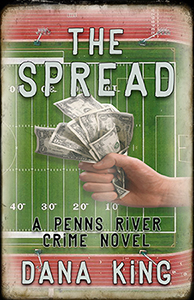
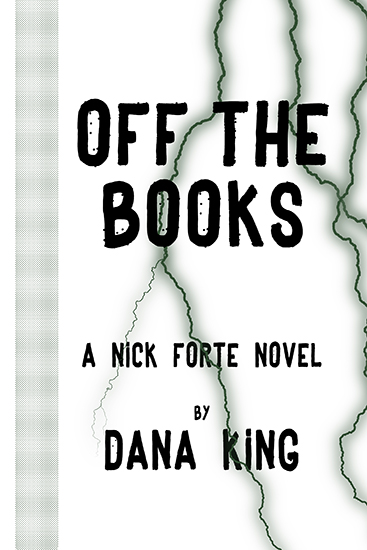
This alleged rejection by a Chinese financial magazine was sent in by a friend. Probably a legend, but still funny.
We have read your manuscript with boundless delight. If we were to publish your paper, it would be impossible for us to publish any work of lower standard. And as it is unthinkable that in the next thousand years we shall see its equal, we are, to our regret, compelled to return your divine composition, and to beg you a thousand times to overlook our short sight and timidity.
Friday, February 20, 2009


Sunday, February 15, 2009
Twenty Random Things About Me, by Sam Spade
1. After drinking with the Fat Man, I now sometimes say, "When."
2. I don't miss Archer. He used to eat lunch at a cheap Mexican joint and fart all afternoon.
3. I don't have to try to look tough. I always wear shoes two sizes too small. My feet are killing me.
4. My draft board classified me 4-F when they caught me coming out of Mitchell Brothers at four in the morning wearing nothing but a leather vest and chaps. I said I was working under cover. I don't think they believed me.
5. I wish San Fransisco had Thai Town. I hate Chinese food.
6. Sometimes I wonder how things would have turned out if I had met Joel Cairo under different circumstances.
7. I can talk out of the other side of my mouth if I want to. I just never want to.
8. I might have played the sap for Ingrid Bergman.
9. I never said that "Stuff that dreams are made of" bunk. Polhaus made that up so people would think we were tight.
10. Mrs. Spade didn't raise any children dippy enough to make guesses in front of a district attorney and a stenographer, but I do sometimes roll naked on the beach in the moonlight.
11. I put little umbrellas in the glass whenever I drink alone, even if it's straight bourbon.
12. I'm jealous Mike Hammer gets all the broads.
13. Some days I think I should have stayed a Continental Op.
14. That smart ass Jake Gittes drives up from LA twice a year just to ask me what it was like in "the old days." I hate him.
15. Some people think it's deep, but I have no idea what that Flitcraft story means.
16. Sometimes late at night I think about Iva Archer and Effie Perrine together.
17. I invented the word "gunsel" but no one gives me credit for it.
18. I smelled Brigid's undies when I searched her room.
19. Marlowe is always working on chess problems, but I whip his ass whenever we play.
20. I knew Brigid was lying, and I never thought $200 was more than enough to make it all right. That was all Archer's idea, the hound.
(Thanks to John McFetridge for the idea.)
Thursday, February 12, 2009
Sean O'Brien on The Given Day
Sean O’Brien has written a rambling, somewhat disjointed piece for The Times Online titled “Laws of the Thriller: Sean O’Brien on the ups and downs of thriller writers.” (Thanks to Sarah Weinman’s terrific blog, Confessions of an Idiosyncratic Mind, for making me aware of this. While we’re at it, Happy Birthday, Sarah.) Where “laws” comes in is debatable, and O’Brien seems more interested in finding downs than ups, but he’s a critic. He may consider it part of his job to be controversial, and all of his criticisms are of matters about which reasonable minds may differ.
Almost all.
He devotes a good-sized paragraph to Dennis Lehane’s latest, The Given Day, which I read a few weeks ago. He makes several comments I disagree with, all of which fall under the “reasonable minds” disclaimer above. There is, however, one comment that makes me wonder if he read the same book I did:
“…the political dimension of the book – Boston is teeming with socialist, Marxists, syndicalists, Wobblies and anarchist bombers – causes Lehane some anxiety. He repeatedly takes an oath of loyalty to capital by denouncing and deriding the ideas and the characters of the Left.”
Where O’Brien sees this anxiety in Lehane’s writing escapes me. The book clearly is on the side of the workers. Comments to the effect that the Communists and Socialists spend too much time drinking and arguing are in the context of law enforcement’s efforts to lump those groups together with anarchists as “bomb throwers.” The point of the description is to show the relative harmlessness of the political groups when compared to the violence advocated, and perpetrated, by the anarchists.
Lehane makes this clear by depicting the efforts of law enforcement and the political establishment to associate these “subversive” groups as a way to maintain the status quo of the social order in place as the book begins. Lehane has been quoted as describing his politics as “left of Canada;” nothing in The Given Day would cast doubt on that. Class warfare is a key theme throughout the book, and it’s plain where his sympathies are. It’s one thing to differ about quality, something else to get the point of the book so completely wrong when the author has made it so plain. O’Brien might as well say Steinbeck took the side of the banks in The Grapes of Wrath.
I’ll confess to being in the tank for Dennis Lehane’s work since I read A Drink Before the War; I think The Given Day is brilliant, worthy of the five year wait. That doesn’t mean I’m right. On the other hand, O’Brien’s comment in a respected publication has missed the mark by such a wide margin that one must wonder if The Times has joined the Obama Administration as organizations in need of an overhaul to their vetting processes.
Wednesday, February 11, 2009
Reviewing the Reviews
Book reviews have received a lot of attention lately, largely been because newspapers are dropping them faster than a banker can endorse a bonus check. Various web sites are picking up the slack. Most online booksellers post reader reviews, which may be of dubious merit. Some are written by the writer’s friends; others may be written by competitors with an ax to grind before placing it directly between the author’s shoulder blades.
Other sites dedicated to the review and discussion of books and writing. Some are strictly amateur affairs, and show it. Some are the work of dedicated volunteers whose quality of product is hardly amateurish. Still others are professional operations deserving the respect previously accorded only to the traditional print media.
As the primordial ooze of Twenty-First Century book criticism sorts itself out, another, often ignored question comes to mind: what is a book review? Based on what I’ve read, some are little more than plot synopses, with a brief coda to say, “It’s okay,” or “Don’t bother.” Others are more like book reports, summarizing the story, discussing a theme or two, and maybe concluding with a recommendation.
Another category discusses the writing, and its various strengths and weaknesses. These can also be a mixed bag. Some are little more than opinion pieces without example or justification, telling more about the reviewer than about the book. Others cite examples to back up their opinions, though even those who strive to be objective are prone to cherry-pick only citations that support their opinions.
Authors, readers, and reviewers all read this blog. What do you look for in a review? What are the primary reasons for having book reviews at all? If we can stipulate all reviews should pass the Twenty-Five Dollar test (Is this book worth $25?), should the reader expect more than a synopsis and recommendation?
Tuesday, January 20, 2009
Something Worth Remembering
Writers have been known to remark on what hard work it is to finish a book. Successful writers sometimes comment on the difficulties of cranking out a book a year. In the press kit for her now book, A Darker Domain, no less an authority than Val McDermid lays it out:
People sometimes remark that I must work hard to produce a book a year. They look offended when I laugh. Then I explain. And they get it.
Both my grandfathers were miners. The one who only had daughters rejoiced that no child of his was going to have to spend a working life underground. Deep underground in the heat and the stink and the filth and the danger, they knew what hard work was, my grandfathers.
The next time any of us, myself included, feels the need to complain about a writer’s plight, we should stop, get on our knees, and thank whatever higher power we choose that we have the privilege, and the leisure, to be able to write.
Monday, January 12, 2009
Do You Hear What I Hear?
The sole discouraging aspect of my initial Bouchercon trip last October was learning how many writers toss a book if they’re not into it within two or three pages. As someone who likes books that break the story to me gently, I am inclined to write that way, and it was disconcerting to think even other authors wouldn’t give a book any more of a shot than an editor only looking for the next blockbuster.
I felt a little better when John McFetridge pointed out in a Crimespace discussion that writers were likely to toss a book quickly if the writing itself didn’t appeal to them; they were more forgiving about how quickly the plot or action unfolded. I felt a lot better when it finally occurred to me that I do exactly the same thing, except I don’t often get to stop reading, since many of the books I read are for reviews. (I finish all the others, too, but that’s an OCD issue.)
I got to pondering this off and on between and during naps while I had mono over the holidays, and realized it’s voice that does it for me. The plot has a certain level of interest it has to maintain, but I can forgive a lot if the voice captures me. Same with the characters, setting, descriptions. A writer who gets me wrapped up in his use of the language will get me every time.
The proposed trailer for John’s new book is a good example. I know nothing about this book beyond what’s in the trailer, which isn’t much. That’s enough. I saw enough in the voice of those first several lines to know I want to read the rest of the book. It doesn’t hurt that I’m already in the tank for John, having read his first two books, but that just reinforces why people are most likely to buy books by authors they’ve read before: they like the writing.
I’m not parochial in my taste for voice. I love Ed McBain and Raymond Chandler, Elmore Leonard and James Lee Burke, John Connolly and Carl Hiaasen. A certain amount of indigenous humor is always nice, with realistic dialog and characters who are believable as people, but I like to read writers whose voice fits into my head as comfortably as an old pair of slippers on my feet, where I know I’ll be taken care of for however long he wants to hold my attention. He can tell me any story he wants.
What about you? Is it voice? Plot? Non-stop action? Don’t forget to say why. You might surprise yourself.
Wednesday, December 31, 2008
A Happy Holidays meme
Sandra Ruttan over at On Life and Other Inconveniences has posted a Happy Holidays meme and invited people to tag themselves, so here goes...
What's the most original Christmas gift you received?
The same as every year: my beloved Spousal Equivalent makes me a personalized desk calendar. This year's theme is Monty Python and the Holy Grail. Previous years have included Deadwood and Blazing Saddles. Every year she come up with something new to make them fun.
What book did you get for Christmas?
Death was the Other Woman, by Linda L. Richards
The Last Good Kiss, by James Crumley
The best thing about the holidays...
Relaxing with my daughter and the Spousal Equivalent, with no one having anyplace else they needed to be, or any pending tasks.
The worst thing about the holidays...
Mononucleosis.
Something you did this year for the first time, or first time in a long time.
Got Mono.
Do you have a New Year's resolution?
Don't get mono anymore.
I'll do the same as Sandra did: I won't tag anyone, but feel free to tag yourself. Just a leave a comment below to let me know you did, and where to find you.
Subscribe to:
Posts (Atom)